Daily kanji practice sounds like a small thing, yet it decides whether a language stays with you or fades by March. Most learners start with a burst of energy. They study for two hours on a Saturday, feel proud, and then skip the whole of the next week. A better rhythm is smaller and plainer: five characters each morning, about ten minutes, the same cup beside the page.
This guide builds that rhythm step by step. You will see why five is the right number, what a ten-minute session contains, and how recognition turns into recall. It then covers travel days, missed mornings and the long middle of any habit. It ends with a desk set for the morning and a Japanese breakfast bowl to begin the day well.
Five new characters a day is a pace most people can keep. Spend about ten minutes on a session, and meet yesterday’s five again first. Small, steady practice beats a long weekend session, because each character returns before it fades.
Why Daily Kanji Practice Outlasts the Weekend Session
Memory does not reward effort alone. It rewards return. A character you meet once in a long session is gone within days, however hard you concentrated. A character you meet for a few minutes on five separate mornings begins to stay. That is the simple logic behind daily kanji practice, and it is the reason short sessions beat long ones.
Researchers have studied this for more than a century. A 2006 review in Psychological Bulletin, by Cepeda and colleagues, pooled hundreds of experiments on verbal recall. Spreading practice over time beat cramming it into one sitting. Kanji fit that finding well, because each one carries a shape, a meaning and at least one reading to hold.

There is also a human reason. A weekend session needs an open afternoon, good mood and spare energy. Ten minutes needs none of those. It fits before the commute, beside the kettle or on the train. Because it asks so little, you can repeat it on tired days. And the days you repeat are the days that count.
Why Five Kanji a Day, and Not Ten
Five is a deliberately modest number. It sounds almost too small, which is exactly why it works. Ten new characters a day looks twice as productive, but the cost shows up on day four. By then the pile of half-known characters has grown larger than any morning can absorb, and the habit starts to feel like a debt.

Five new kanji a day leaves room for a second job, which is meeting yesterday’s characters again. That second job matters more than the first. A learner who adds five new characters and skips the return visits ends the month with a long list and a thin memory. A learner who returns first, and adds new characters second, ends it with a smaller list that holds.
The arithmetic is kind, too. Five a day sounds small, yet it adds up to 150 characters in a month. Over a year, that is far more than most learners ever manage with bursts. One character a day, by contrast, feels gentle but stretches the path out for years. Five sits in the middle: light enough to survive a bad week, and fast enough to feel like progress.

So the rule is simple. Five kanji a day, return visits first, and a hard stop when ten minutes are up. If you finish early, close the page. If a character feels shaky, it will come back tomorrow anyway. Nothing is lost, and the next session begins with a small win instead of a backlog.
You may also like

The Ten-Minute Morning, Minute by Minute
A routine needs a shape, or it dissolves into good intentions. Here is a ten-minute shape that works with any five kanji, from any source. It has four short parts, and each one has a single job. Keep the same order every day, and the order itself becomes a cue that the habit has begun.
Minutes one to three: yesterday’s five
Start with the characters from yesterday, before you look at anything new. Say the meaning aloud for each one. If nothing arrives within two seconds, count it as missed, however familiar it looked. That small honesty is what turns a glance into practice. Then check the answer, and move on without comment.

Minutes four to seven: the new five
Now meet today’s characters one at a time. Read the meaning and the reading, then look at the shape for a full breath. Notice the parts it is built from. Give each character a short cue of your own, such as a picture or a phrase. A cue you invent sticks better than one you borrow, even if it sounds a little silly.

Minutes eight to ten: one more look
Finish by covering the meanings and running through today’s five once more. Do not aim for perfect. The goal is to leave the session with a sense that the characters are familiar, not a pile of unfinished business. Then close the page. Stopping on time is part of the method, because it makes tomorrow’s start easy.
That is the whole session. It has a return visit, a new meeting and a quick check, and each takes only a few minutes. Many learners find the hardest part is not the kanji but the stopping. Treat the ten-minute limit as a promise to yourself, and keep it on the days you want to do more.
Recognition First, Then Recall
Two skills hide inside the word learning. Recognition is seeing a character and feeling that you know it. Recall is producing the meaning before the answer appears. Most learners rate the first highly and neglect the second. That is why a stack of cards can feel easy for weeks, and then feel impossible the moment a real sign appears.

The fix is to practise recall from the start, even when it feels clumsy. Cover the meaning. Say it aloud. Only then look. This is harder than flipping a card, and it should be. Struggling for a second is the work, not a sign that something has gone wrong. A character you have fought for stays far longer than one you have merely recognised. If you want memory tricks to go with the practice, our guide to how to remember kanji has several.

Recognition still has a role, and it comes first. In the early days, a character you have never met cannot be recalled, so you simply meet it. After a day or two, switch the job. Look at the meaning, and try to see the shape in your mind. Over a month, that small switch from meeting to retrieving is where most of the gain happens.
The Daily Cards: Five Kanji Waiting Each Morning
Building your own daily set is possible, but it costs time before you have learned anything. You choose the characters, write the cards and decide the order. Many routines die in that preparation. A ready set removes the friction, so the first minute of the morning is spent on kanji rather than on admin.
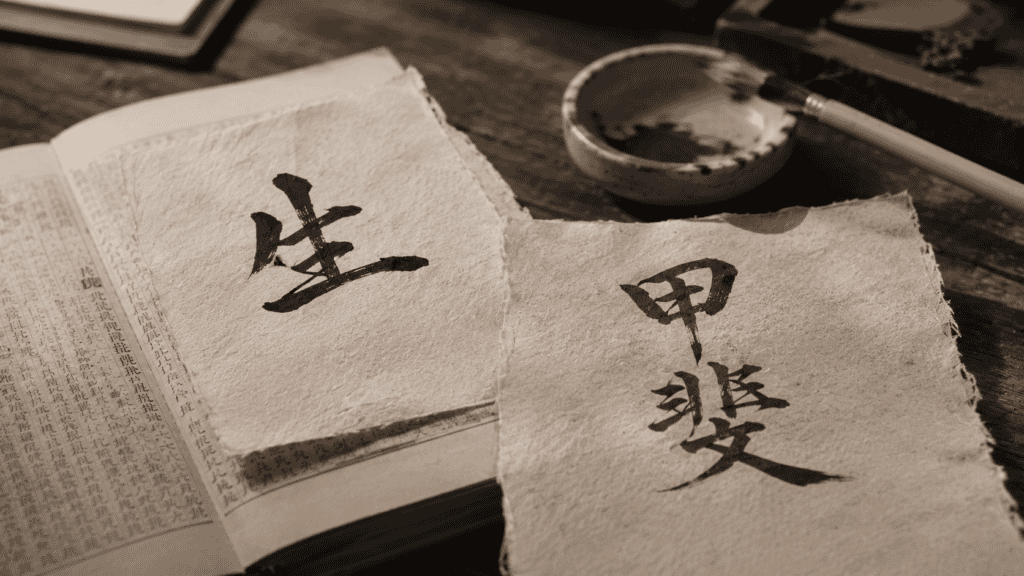
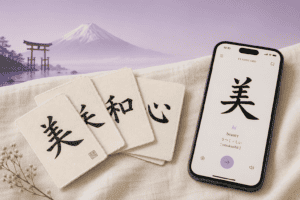
That is the job of the daily kanji flashcards. The tool opens on five characters a day, 365 days a year. Each card carries the reading, the meaning and a short memory cue. A session closes inside ten minutes, which matches the shape above almost exactly. Nothing needs an account, and nothing needs installing.
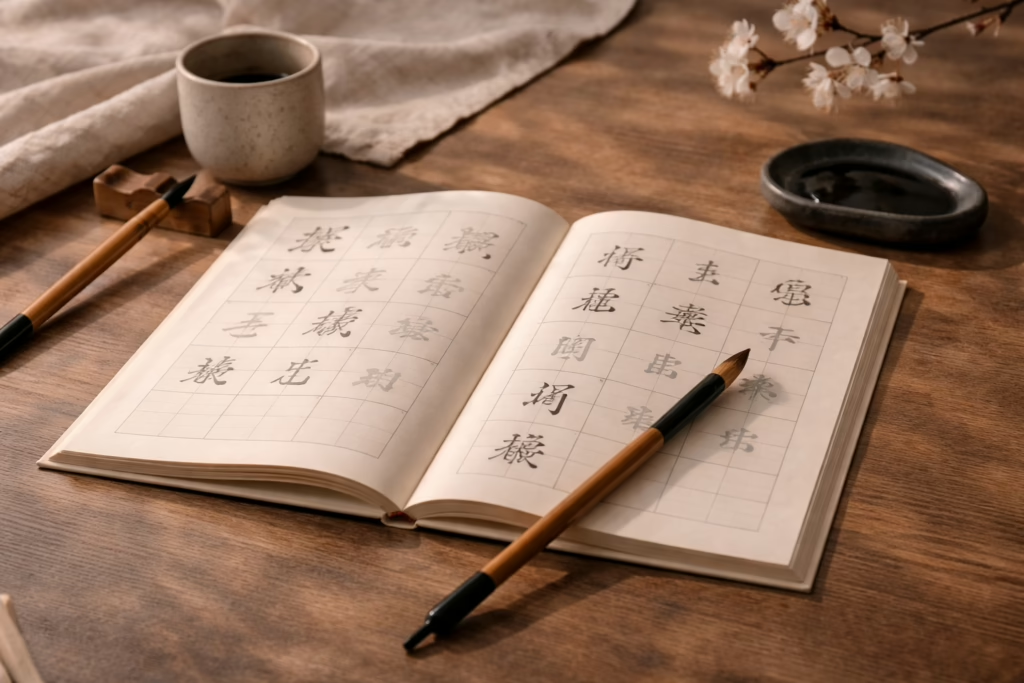
The numbers on the page are worth understanding. It counts 1,095 kanji across a year, which looks like a lot for five cards a day. The trick is in how the five are made up. Each morning, three cards are new and two are returning visits. Of the three new ones, two come from the workbooks and one is a name or rare kanji. Over 365 days, that is 730 workbook kanji plus 365 name and rare kanji, and the total comes to 1,095.
Because yesterday’s characters keep returning, the set rotates rather than piling up. That is the same pattern you used in the ten-minute morning, built into the tool. If you want the full set, start with today’s five kanji and let the habit do the rest.
Ten Proverbs to Carry With You
A printable folio of ten Japanese proverbs, each set in kanji with its reading and a line on where you will hear it.
Fitting Kanji Into a Real Week: Travel Days and Missed Mornings
A routine is tested by the bad days, not the good ones. Sooner or later you will oversleep, catch an early flight or spend a morning in a meeting. A plan that only works on calm days is not a plan. So decide in advance what a short day looks like, and write it down where you will see it.

The two-minute version
On a short day, do only the return visits. Run through yesterday’s five, say the meanings aloud and stop. It takes about two minutes and protects the part that matters most. New characters can wait until tomorrow without any harm. The habit survives because you showed up, however briefly, and that is the only thing the habit needs.

When you miss a morning
If you miss a day, do not double up the next morning. Simply resume with the next set, and let the missed characters return in their usual turn. Doubling creates a pile, and a pile creates dread. The missed day is already gone. What matters is the next one, and the one after that, each handled in the same small way.
Kanji on a travel day
Travel is the best test of all, and it is also a gift. On a trip to Japan, every sign becomes a card. Practise your five on the train to the airport, then look for them on station boards, menus and shop fronts. Seeing a character you learned that morning on a real street is a small thrill. It also fixes the shape in a way no desk ever could.
Keeping the Habit Past Day Thirty
The first week runs on novelty, and the second on pride. Somewhere around day twenty-five, both run out, and only the routine remains. This is the point where many learners simply stop. It helps to know in advance that the dip is normal, and that it passes if you keep the sessions small.

Tie the habit to something that already happens. The kettle, the first coffee or the walk to the station will all do. Psychologists call this stacking a new habit on an old one. You do not need to find the time, because the old habit has already claimed it. The kanji simply ride along, and soon the cup itself becomes the reminder.

Mark the days, too, with something small and visible. A tick on a calendar, a line in a notebook or a pin on a board all work. The chain of marks is a record you can see, and it feels worse to break than to keep. Do not chase a perfect streak, though. A missed day is a pause, and the chain can always start again.
When day thirty arrives, look back at the first page of your notebook. The characters that once felt strange now feel like old acquaintances. That change is gentle, but it is real, and it is the whole point of daily kanji practice. You did not cram anything. You simply returned, again and again, until the shapes were yours.
A Morning Bowl to Begin: Natto Gohan
Habits like company, and few mornings are plainer than natto gohan. Natto (nattō) is fermented soybeans, sold in small tubs with a packet of sauce and a packet of mustard. Typically, the Japanese eat it at breakfast, spooned over warm rice. It takes five minutes, needs no cooking skill and sits well beside a routine built on small, repeatable mornings.
The flavour is bold, and the texture is famously sticky. Some people love it at once, and others come to it slowly. A good way in is to start with a small portion, stir it well and add a little scallion. Either way, it is worth tasting at least once. You will find it among many other traditional Japanese dishes on home tables.
You may also like


The method is almost too short to write down. Stir the natto with chopsticks until it turns pale and airy. Stirring adds air, which softens the texture and lifts the flavour. Then spoon it over warm rice. The full steps are in the recipe below, and they fit comfortably inside the minutes before your session begins.
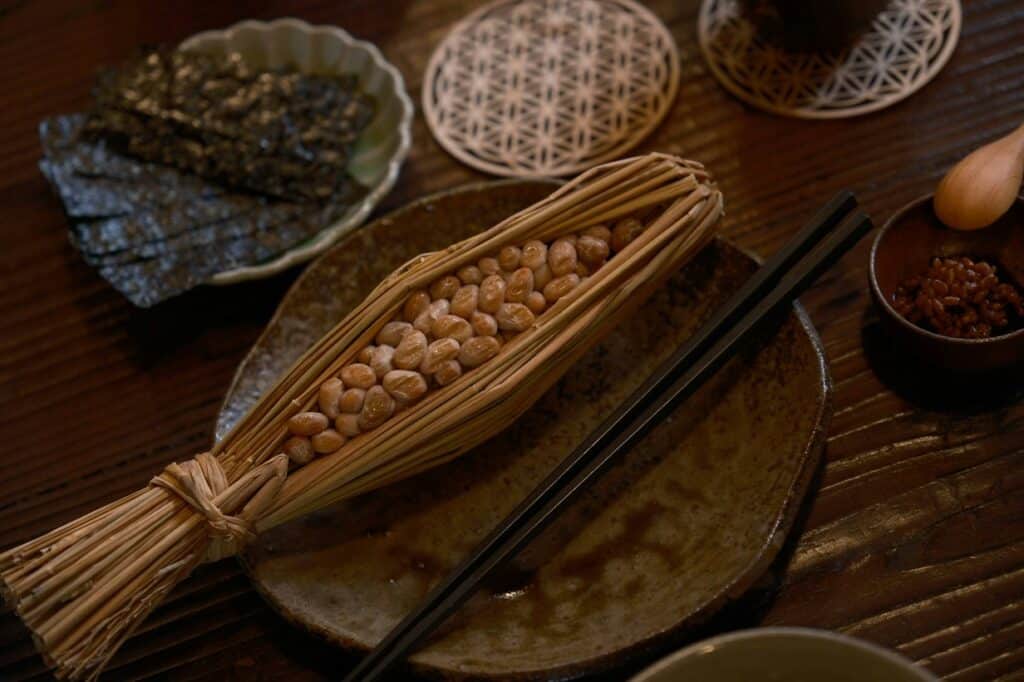
Natto Gohan — fermented soybeans over warm rice
Spoon one tub of natto into a small bowl and stir it with chopsticks for about thirty seconds, until the beans turn pale and stringy. Add the sauce and the mustard from the packet, then stir again. Spoon the natto over a bowl of warm short-grain rice, scatter thin scallion rings and a few strips of nori on top, and eat it straight away with a cup of green tea.
Eat the bowl before the session, not after. A warm breakfast and a cup of tea give the morning a gentle opening, and the kanji follow without any sense of effort. That small ritual is part of the habit too. When the bowl, the cup and the cards come in the same order each day, the whole morning begins to run on its own. Many learners say the bowl becomes the signal, the first sign that the day has begun and the kanji are close behind.
Objects for the Morning Desk
A routine is easier to keep when the desk is ready for it. You do not need much. A good cup, a way to keep time and a lamp for dark winter mornings will do. The idea is to make the first minute frictionless, so that sitting down feels like the natural next step and not a decision. Each of these objects does one small job. The cup marks the start, the timer marks the end, and the lamp makes the hour pleasant when the sky is still dark. Together they turn a vague intention into a place and a time. Choose them once, set them out, and the objects will remind you each morning without a word.
Mino Ware Yunomi Tea Cups — a handleless cup for the first sip
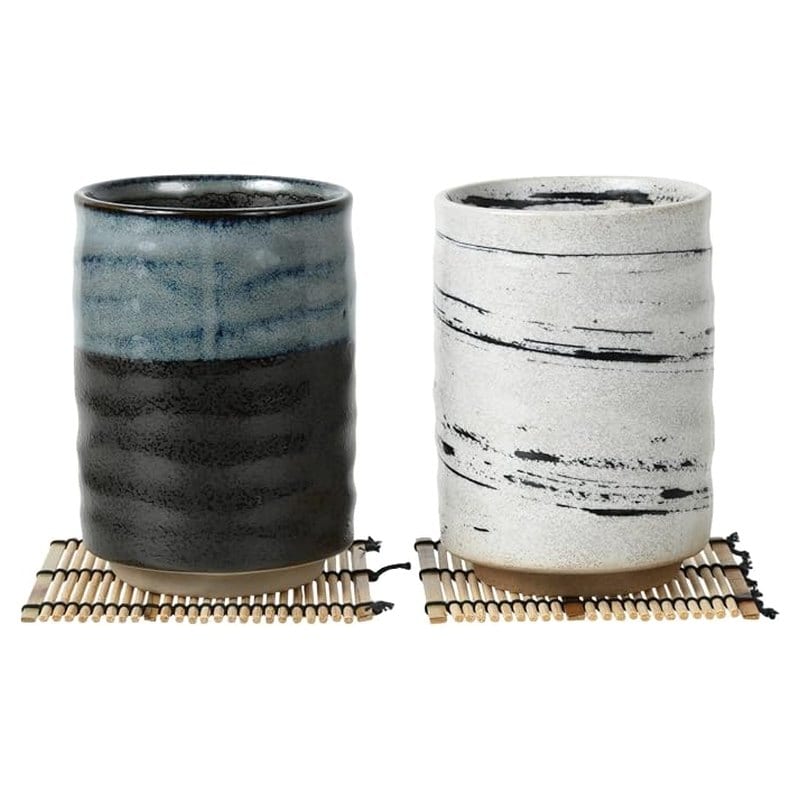
A yunomi is the everyday Japanese tea cup: tall, handleless and made to be held in both hands. The Mino ware yunomi set comes from a pottery region in Gifu that has made tableware for centuries. Each cup is sized for a full pot of green tea, so it lasts through the whole ten minutes. The pair arrives with a bamboo coaster, which protects the desk and gives the cup a fixed place. A cup with a fixed place becomes a cue, and the cue starts the habit before you have decided anything at all. Hand-thrown tea cups also make a good morning gift to yourself.
Time is the second object. Ten minutes feels different when you can see it passing. A silent visual timer takes the guesswork out of stopping, which is the hardest part of the routine. You set it, begin, and when the colour has gone, the session is over. There is no clock-watching and no negotiating with yourself about one more character. This matters more than it sounds. Most routines do not fail at the start. They fail in the middle, when one more minute turns into twenty, and tomorrow’s session begins to feel like a burden. A visible end keeps the whole thing light, and it spares you the small daily argument about when to stop.
Time Timer Home MOD — ten minutes you can see
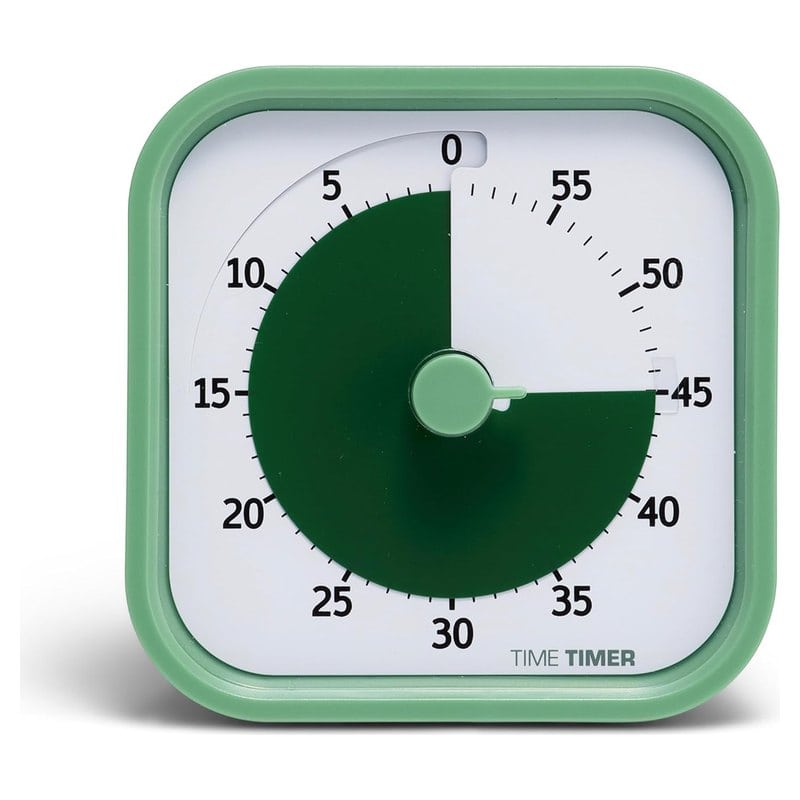
The Time Timer Home MOD shows time as a red disc that shrinks as the minutes pass. There is no ticking and no alarm that startles the room, only a silent change you can read at a glance. Turn the dial to ten, and the whole session sits inside that disc. It suits a shared flat or a sleeping household, and it stays on the desk without looking like a gadget. For a routine built on stopping on time, it does its single job very well. Many parents use the same timer to help children finish homework, and the logic is identical: a visible end makes starting easier.
The last group is small, and each piece earns its place. A pen for the one-line daily note, a tin of good sencha for the cup and a lamp for dark mornings. None of these is a learning tool. They are the plain furniture of a habit, the things that make a desk a place you want to return to every single day. A pleasant desk does steady work in the background, because you want to sit at it. And wanting to sit down is most of what a morning routine needs in order to survive the winter months, when the morning is dark and the bed is warm.
Three Pieces for the Morning Table

A first fountain pen with a fine nib, for the one-line note after each session.
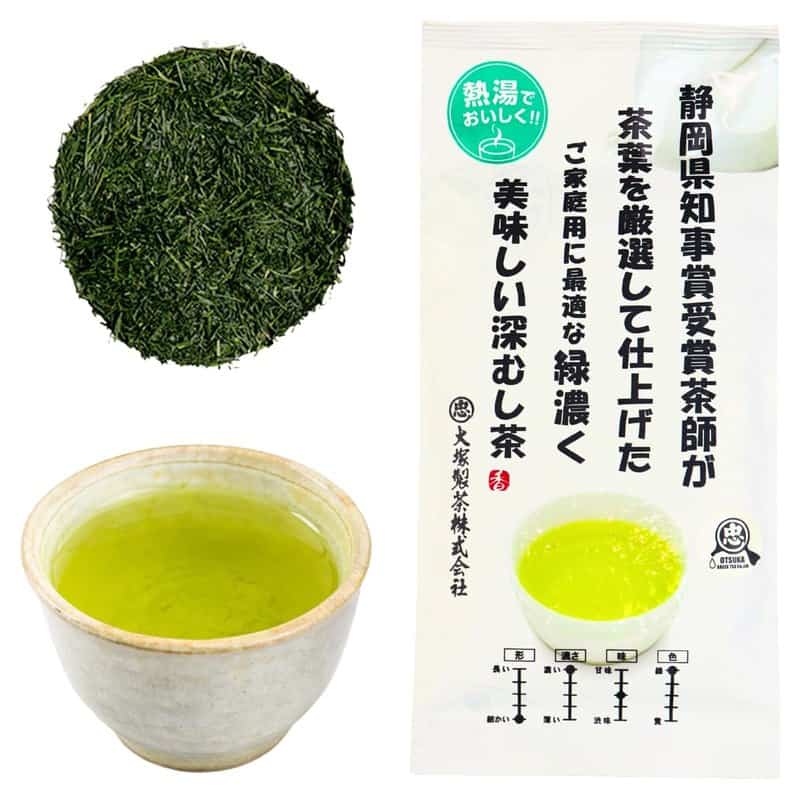
Japanese green tea in loose leaf, for the cup that starts the morning.

A dimmable lamp with warm light, for dark winter mornings at the desk.
Keep the set small, and keep it in one place. A cup, a timer and a lamp are plenty. If the desk is cluttered, the first minute becomes a tidying job instead of a kanji session. Put the things where your hands will find them, and let the room do some of the remembering for you.
Starting Tomorrow at Your Table
You do not need a perfect plan to begin. You need five characters, ten minutes and a morning. Choose the spot tonight, set out the cup and decide that tomorrow starts with yesterday’s five. If the habit feels small, that is the right size. Small habits are the ones that are still going in spring.
If you want to go deeper once the rhythm holds, two guides pick up where this one stops. Our piece on how to review kanji sets out the longer schedule, and our guide to learning 2,000 kanji in a year shows where five a day can lead.
The Three Rules to Keep
Remember what the whole method rests on. Return before you add. Stop when the ten minutes end. Treat a missed day as a pause rather than a failure. These three small rules carry more weight than any app, any deck or any burst of weekend energy. They keep the characters coming back, and a character that keeps coming back becomes yours.
Tomorrow Morning
So tomorrow morning, pour the tea and open the page. Say yesterday’s meanings aloud and give each one two seconds. Then meet the new five, and close the session on time. Do that for thirty mornings, and the strange shapes on a station board begin to look like old friends. That is daily kanji practice, and it asks only for a few minutes each day.
When the habit has taken hold, the rest of Japan opens too. Menus become readable, signs become small puzzles and travel turns into something you take part in. A trip planned around that new confidence feels different, because you can read the street you walk down. That is where the small daily effort finally pays you back.
Recommended
The kanji do not ask for much. They ask to be met again, and again, in a short and gentle session. Keep the session small and the desk ready, and let the mornings stack up. A year from now, you will not remember the effort, only the fact that you stayed. That is the whole secret of daily kanji practice, and it is a plain one.
One last thing is worth saying plainly. Nobody keeps a routine by willpower alone. People keep it because the first step is small, the setting is pleasant and the end is clear. Build those three things into your mornings, and the routine becomes part of how the day begins. The characters will follow, a few at a time, until they are simply yours.
Mornings Worth Planning a Trip Around
A daily habit travels well. In Japan, mornings have their own character: a bakery opening on a side street, a station filling with commuters, a tea shop lifting its shutters. A morning spent reading signs you once found strange is a pleasure of its own. It turns a place you visit into a place you understand a little.
We build days around moments like that: a private lesson with a calligraphy teacher, a slow breakfast in a ryokan or an hour in a stationery shop in Tokyo. Every itinerary follows your pace and your interests, with the practical details handled for you. The characters you learned at home become places, meals and conversations.
A Journey Planned Around Your Mornings
We can plan days around the details that matter to you: an early walk to a tea shop, a private calligraphy lesson in Kyoto, a morning in a Tokyo stationery shop. Every itinerary is built around your pace and your interests.
Plan Your Custom Japan ItineraryQuestions Worth Asking
How many kanji should I practise a day?
Five new characters is a pace most people can keep. Add a short return visit to yesterday’s five before you begin. That gives you a session of about ten minutes, which fits before work or beside the kettle without crowding the day.
Is five kanji a day enough?
Yes, because the pace is steady and the characters return. Five a day adds up to about 150 in a month. Learners who try ten often stall by the fourth day, while learners who keep five tend to keep going.
How long should daily kanji practice take?
About ten minutes is plenty. Spend the first few minutes on yesterday’s characters, the middle on the new ones, and the last on one more look. Stop when the time is up, because stopping on time keeps tomorrow’s start easy.
What if I miss a day?
Do not double up the next morning. Simply resume with the next set, and let the missed characters return in their usual turn. A missed day is a pause, not a failure, and the chain of mornings can always begin again.
Is one kanji a day too slow?
It is gentle, but it stretches the path out for years. One a day builds the habit well, yet it leaves little room for return visits. Five sits in the middle: light enough to survive a bad week and fast enough to feel like progress.
Can I practise kanji on my phone each morning?
Yes. A phone works well for short sessions, because it is always with you. Say each meaning aloud before you look at the answer. That keeps the practice active, and it works on a train just as well as at a desk.