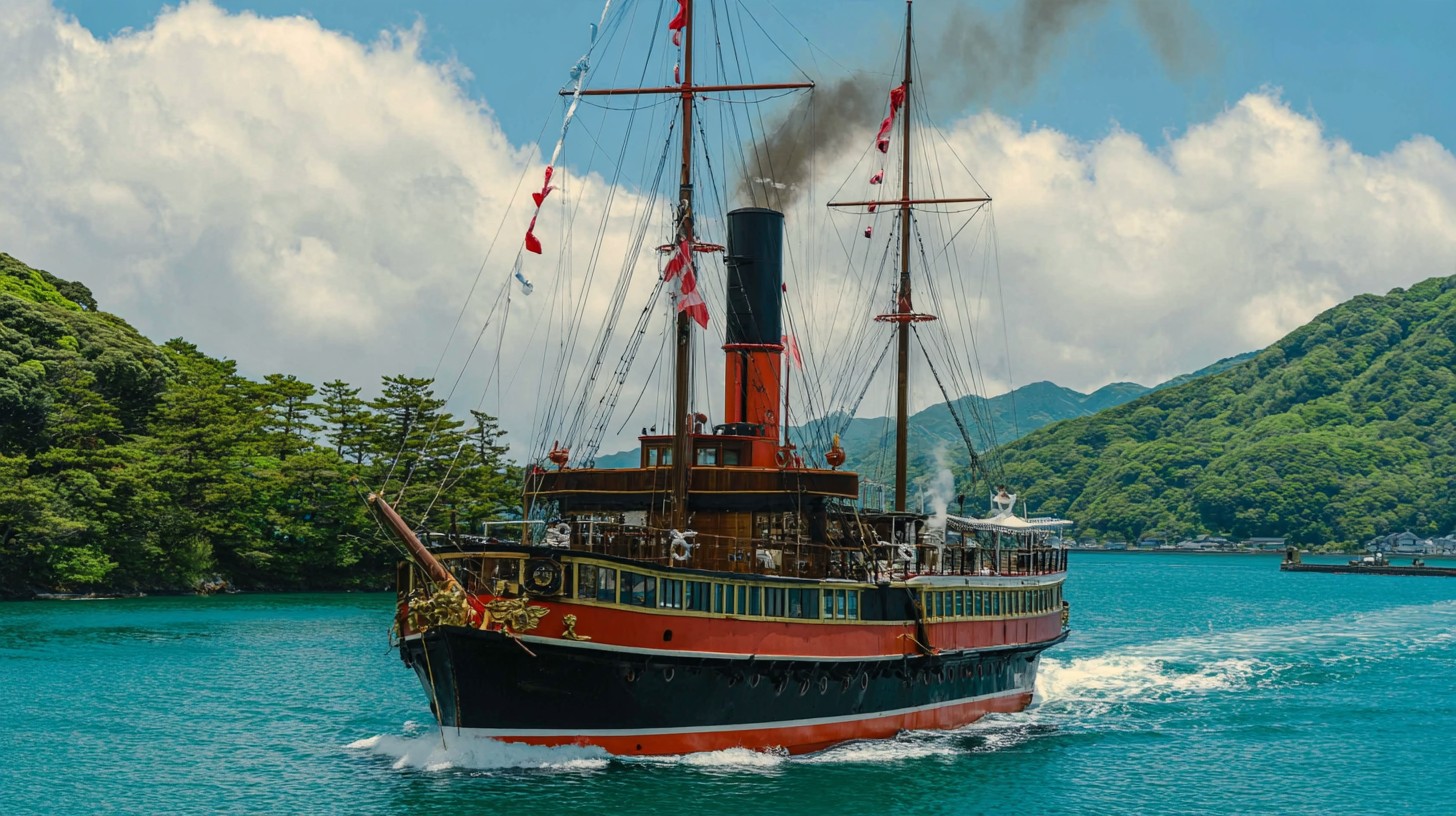
The black ships Japan saw on 8 July 1853 were four American warships, and they arrived without a single sail set. Smoke rolled from two of them while they towed the others into Edo Bay. Then local fishermen and officials watched them come in. Within fifteen years, the government that had ruled from Edo for more than 260 years was gone.
This guide follows that story from the first smoke on the horizon to the day a young emperor took the shogun’s place. First, it separates the record from the legend, and it answers the question our short film leaves open. It also shows where to stand on the same shores today, from a stone monument at Kurihama to the harbor at Yokohama.
What were the black ships?
The black ships, or kurofune, were the dark steam-powered warships of Commodore Matthew Perry’s US Navy squadron. They reached Edo Bay in July 1853 and forced Japan to talk about trade after more than two centuries of tight limits on foreign contact. As a result, their arrival began the chain of events that ended shogun rule in 1868.
What Were the Black Ships of Japan?
The Japanese word is kurofune, which simply means black ships. People used it for Western vessels long before Perry. Portuguese trading ships, for example, had earned the name in the sixteenth century. In 1853, however, it settled on four American warships and stayed there.
Smoke explains the name best. Nobody in Edo Bay had ever watched a coal-fired steamship, and the dark plumes marked them from far away. As a result, the color of the smoke gave the squadron its popular name. Accounts differ on how dark the hulls were, so the smoke is the safer explanation.
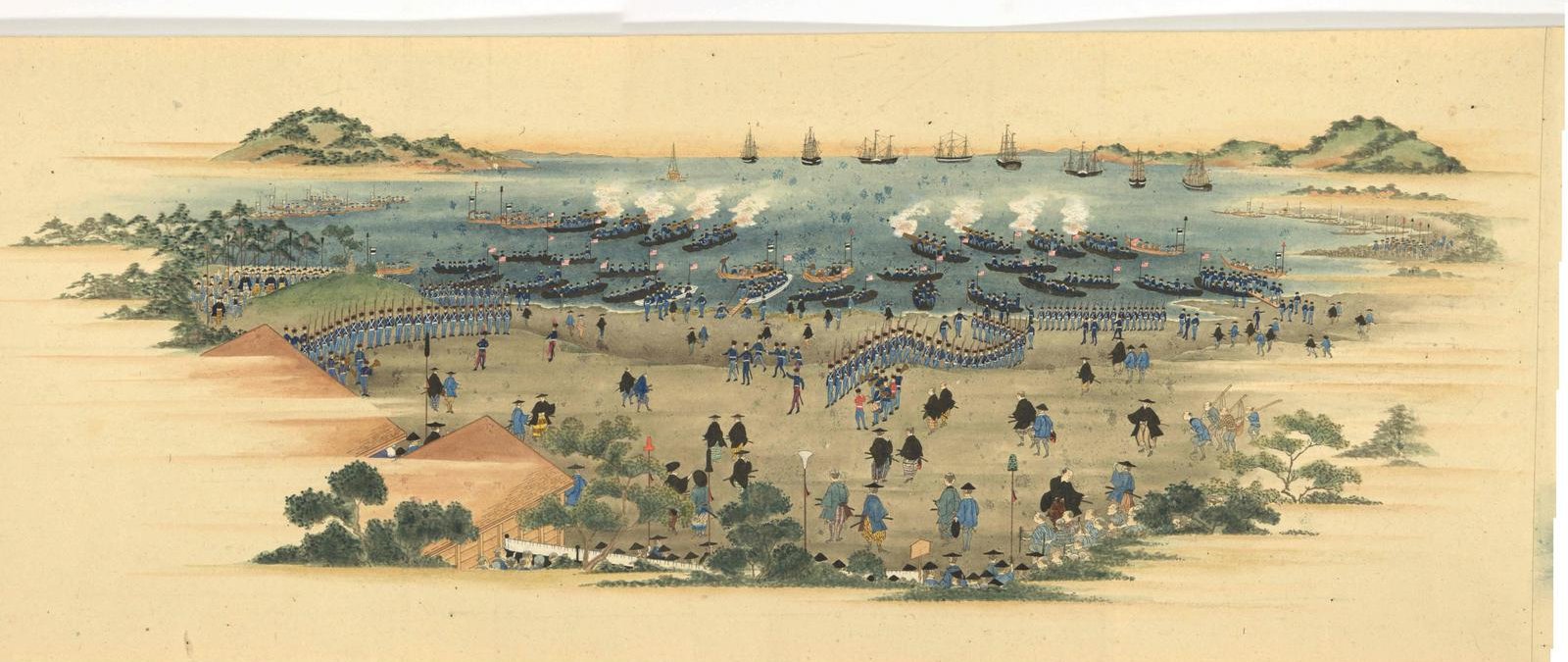
Meanwhile, Japanese artists recorded everything they saw. Handscrolls, woodblock prints and quick sketches passed from hand to hand within weeks. The British Museum holds one long scroll that follows the second visit in 1854, with portraits of the officers, drawings of the uniforms and the guns. Because of this, those pictures are our best view of how Japan looked back at its visitors.
You may also like

Why Japan Was Closed Before 1853
Still, Japan was not sealed. In 1639 the shogunate expelled most foreigners, and for about two centuries trade went on through a narrow channel. Only Dutch and Chinese ships could call, the US Office of the Historian notes in its account of the opening of Japan. It sent every other ship away.
The Tokugawa shoguns had ruled since 1603, and the system worked for them. Local lords, called daimyo, answered to Edo. They had to spend alternate years in the capital, while their families stayed behind as a kind of guarantee. Peace lasted so long that the system began to feel permanent.
Foreign ships had tried the door before. Officials had already turned away more than two dozen American ships between 1790 and 1853. For this reason, Perry did not plan to ask politely and leave. Instead, he planned to arrive in strength and to come back for an answer.
8 July 1853: Four Ships in Edo Bay
First, Perry’s squadron anchored off Uraga at the mouth of Edo Bay, the modern Tokyo Bay. The four ships were the Susquehanna, the Mississippi, the Plymouth and the Saratoga. Because two were steamers, they could tow the two sailing ships in. The MIT Visualizing Cultures project describes the scene as four warships under a cloud of black smoke, with no sail in sight.
However, Perry would hand his letter only to senior officials. So on 14 July he went ashore at Kurihama, a little south of Uraga. Once ashore, he led a landing party that MIT counts at about 300 officers, marines and musicians. Two senior officials received a letter from President Millard Fillmore, and the squadron left on 17 July, promising to return for a reply.
Fillmore had addressed the letter to the emperor, which showed how little Washington knew about the way Japan was run. In practice the shogun held the power. Meanwhile, the emperor lived in Kyoto, with almost no say in daily government.
Fear, then curiosity
At first, Edo reacted with alarm. Rumors spread, and prints of the ships sold quickly. Then the alarm turned to curiosity. People wanted to know how the engines worked and who these visitors were.
1854: Perry Returns and the Treaty of Kanagawa
Then Perry came back as promised. The black ships Japan had feared in 1853 returned in February 1854 as a far larger squadron. According to the MIT essay, it numbered nine vessels, more than 100 guns and a crew of close to 1,800. So it is easy to see why the shogunate chose to negotiate.
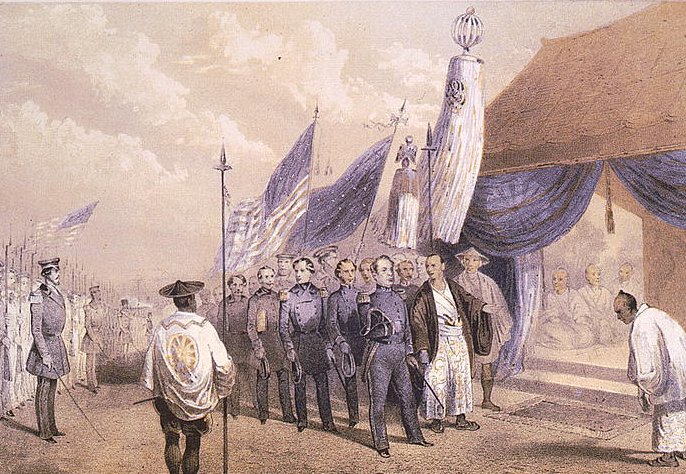
Talks took place at Yokohama, then a small fishing village. The two sides then exchanged gifts. The Americans brought a miniature steam locomotive, among other presents, while the Japanese hosts answered with gifts of their own and a sumo display. Both sides signed the treaty at Kanagawa on 31 March 1854, according to the Office of the Historian.
Its terms, however, were modest. Japan agreed to help shipwrecked American sailors and to open two ports, Shimoda and Hakodate, for supplies. Japan also let an American consul live at Shimoda. Trade was not yet part of the deal. Still, the principle had changed. The country that had turned foreign ships away for two centuries had now opened its first gap.
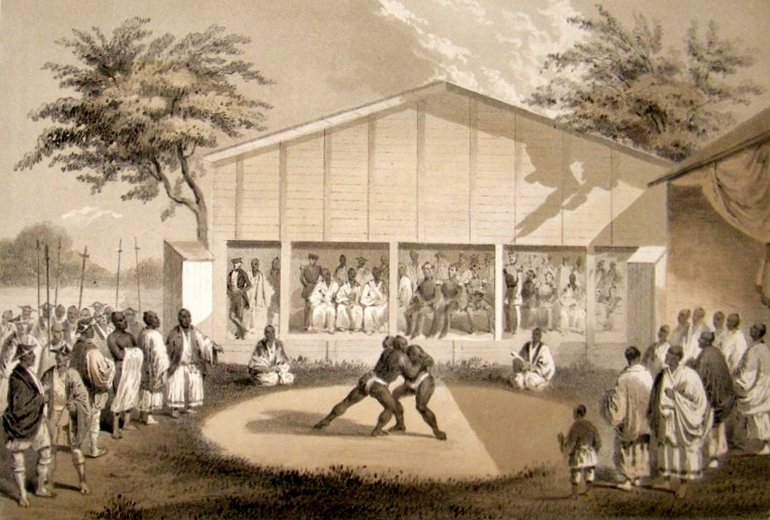
Because both sides left written records, this part of the story stands on firm ground. Perry’s own narrative appeared within two years, and Japanese scrolls recorded the same days from the other side. Reading them together, however, gives a fuller picture than either gives alone. The three books below sit closest to them.
Perry’s Account and the Opening of Japan
The official account of the squadron, compiled from Perry’s own journals.
A modern study of the expedition and the phrase that has described it ever since.
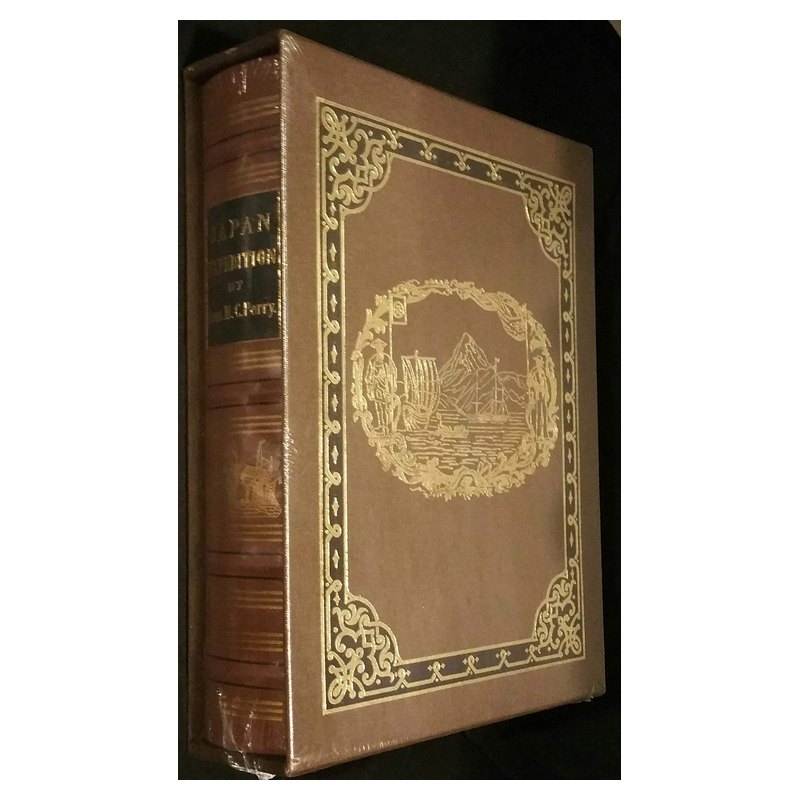
Perry’s own words on the voyage, the talks and the people he met.
Harris, Yokohama and the Treaties That Followed
Still, Kanagawa was only the start. In 1856 Townsend Harris arrived at Shimoda as the first US consul to a Japanese port. Two years later he negotiated the Harris Treaty of 1858, which the Office of the Historian calls the first true commercial treaty between the two countries. It opened more ports to trade the following year.
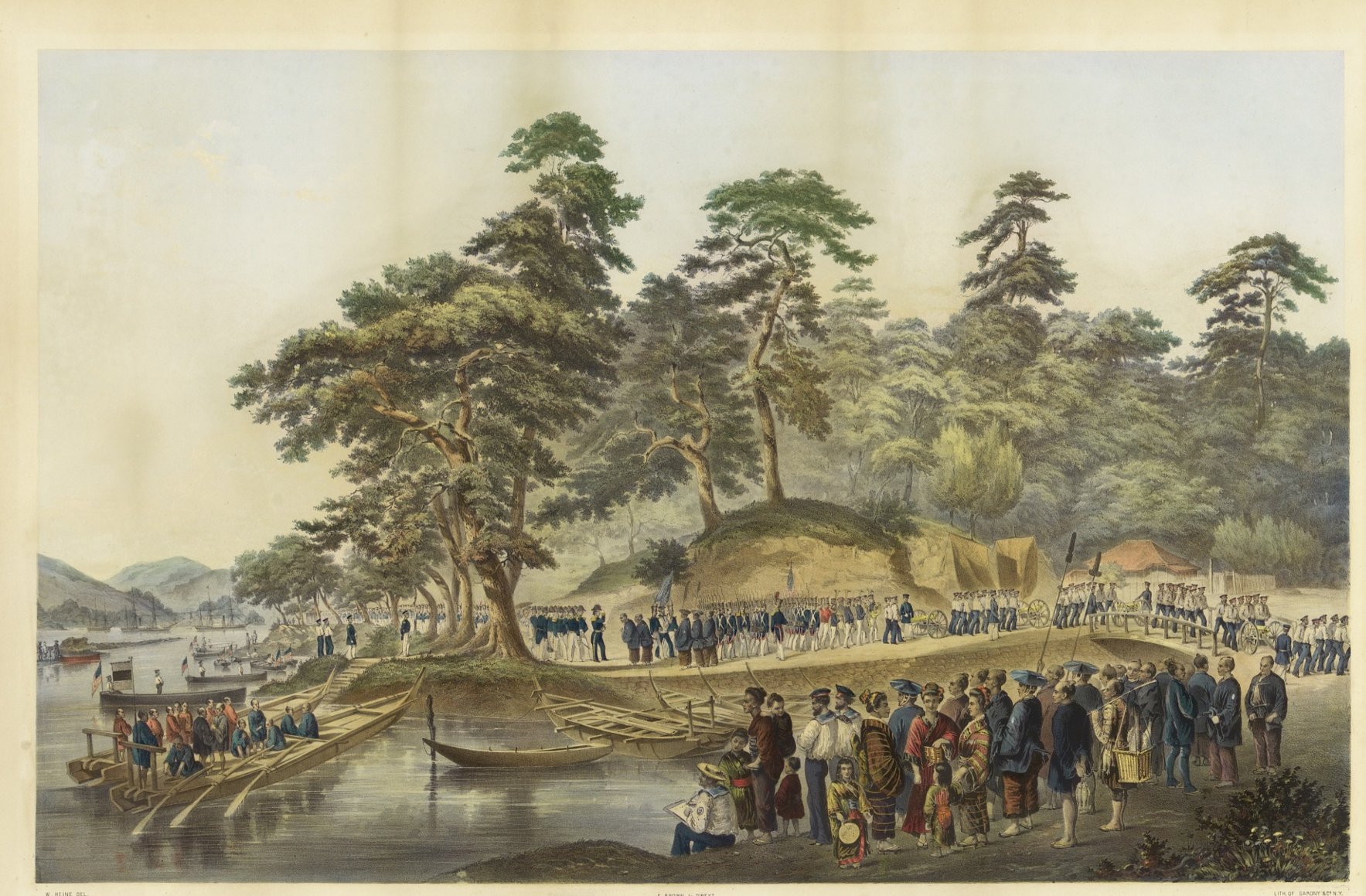
When the ports opened, Yokohama, the fishing village of 1854, became the main gateway for foreign trade. The city of Yokohama’s own port history page describes a rural village that turned into a treaty port after the Harris Treaty. Wharves went up near today’s Osanbashi, and goods moved between ships and shore by barge.
In fact, the change was fast and visible. Foreign merchants then set up trading houses, and Japanese artists printed scenes of them as a new kind of news. For example, one 1861 triptych shows the sales room of a Yokohama trading house, with foreign buyers and Japanese clerks bargaining side by side.
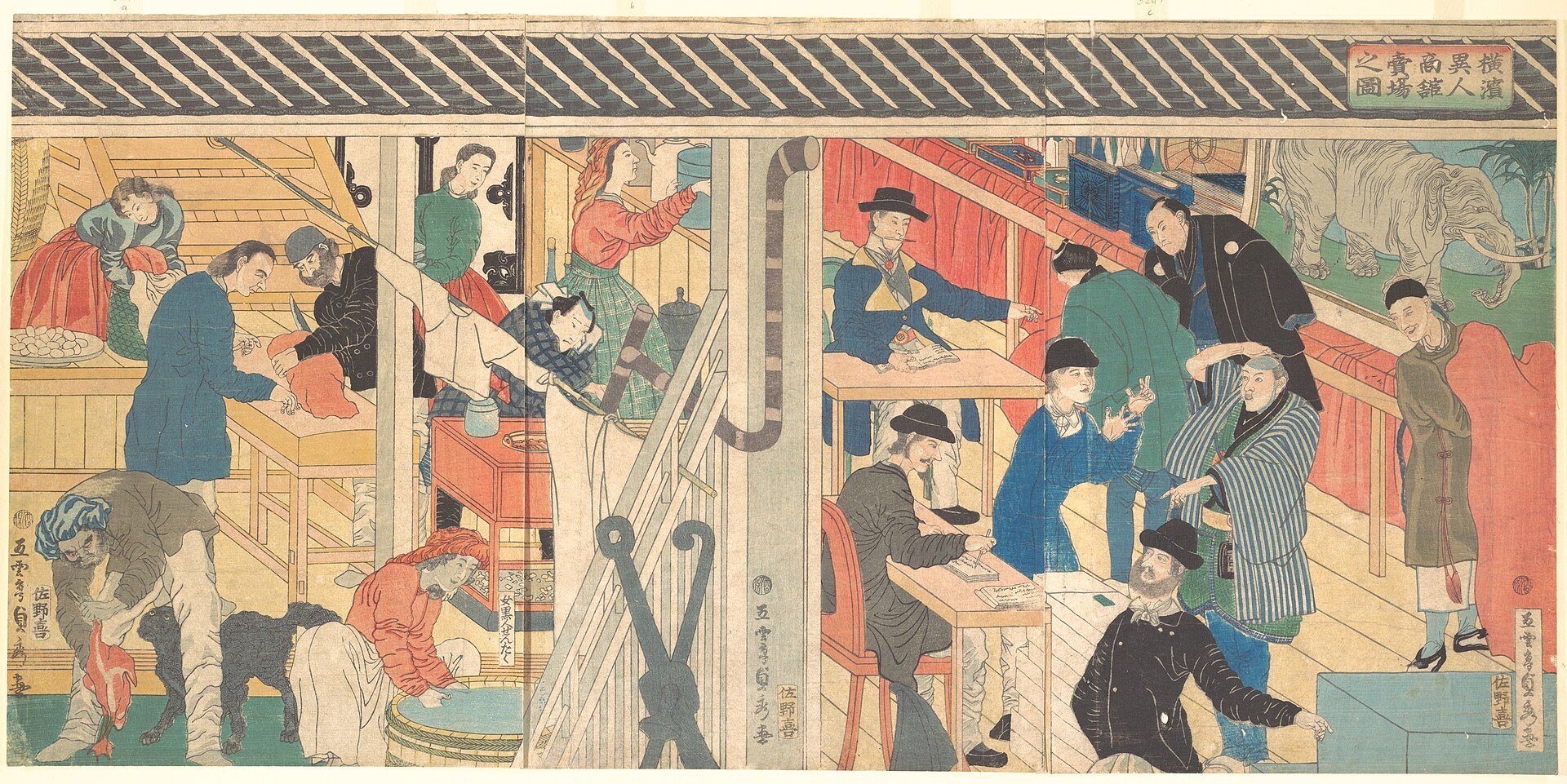
Meanwhile, the shogunate paid a price at home. Because the treaties favored foreign traders, many samurai saw them as a humiliation. As a result, anger gathered in the western domains, and it gathered around one slogan: revere the emperor, expel the barbarians.
What Is Record and What Is Legend
Popular accounts tend to flatten this story into a single day. So a few points are worth separating.
The black hulls
The record says the smoke was black and the name was older than Perry. The legend says all four ships had black paint and that the name came from nothing else. In fact, accounts differ on the paint. Overall, the black ships Japan remembers were as much about smoke as paint.
“Opened by force”
Perry carried heavy guns, and he used the threat. Yet the record shows careful ceremony as well. First, he landed with a band, presented a letter, waited for an answer and signed a treaty. The shogunate also chose to talk, and its choice shaped what followed.
“The shogun fell at once”
But the shogunate did not collapse in 1854. Instead, it lasted another fourteen years. Many things wore it down, from unequal treaties to unrest in the western domains. The black ships were the spark, not the whole fire. For a view of how those domains and the old samurai order gave way, see our essay on how Japan’s old hierarchy became a modern state.
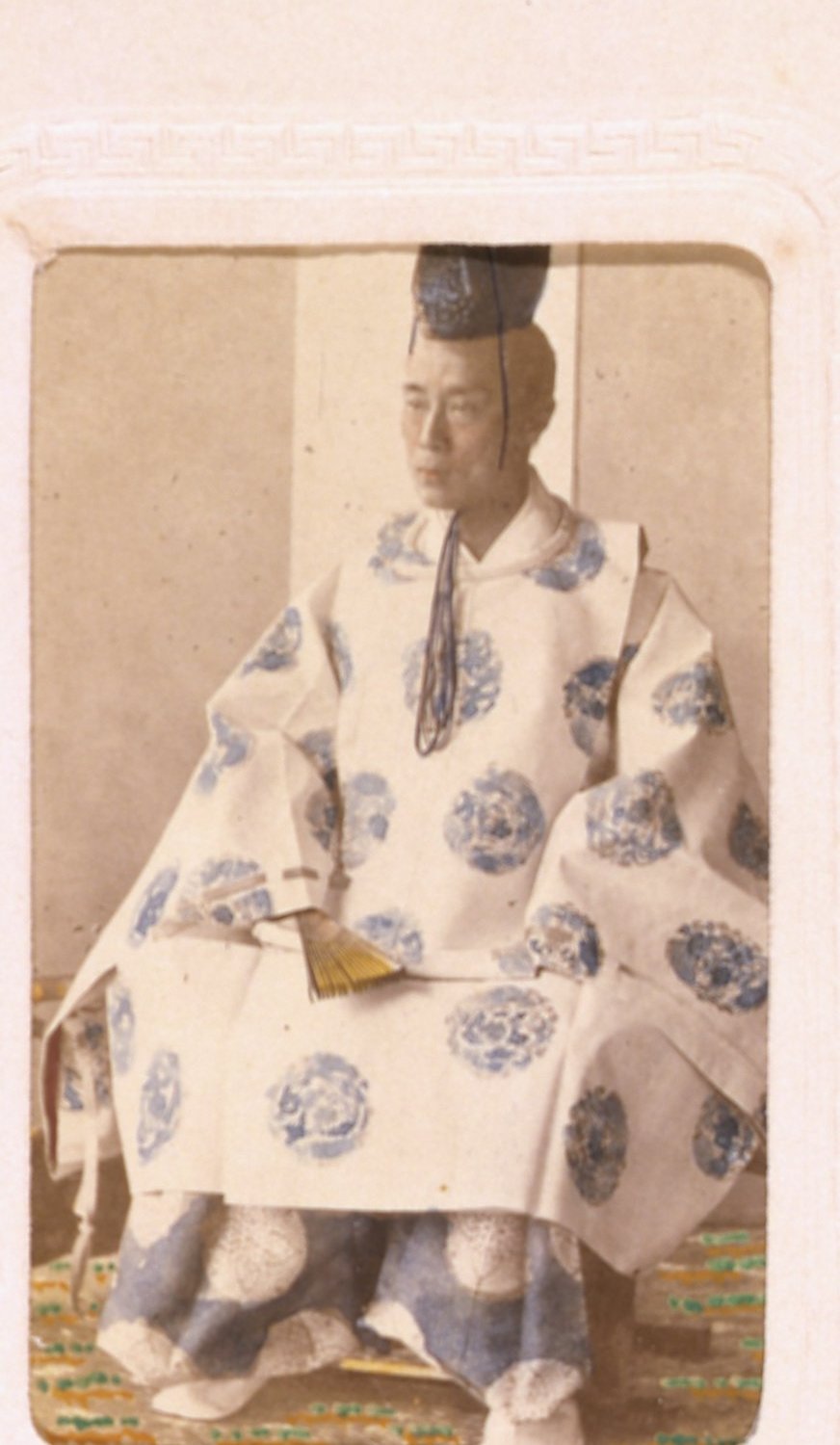
The last shogun, Tokugawa Yoshinobu, led the shogunate in its final months. He tried to reform it from within, but his rivals in Satsuma and Choshu (Chōshū) saw reform as too little and too late. So they looked for a way to remove him without taking blame for ending Japan’s oldest line of rulers.
Ten Proverbs to Carry With You
A printable folio of ten Japanese proverbs, each set in kanji with its reading and a line on where you will hear it.
Who Took the Shogun’s Place?
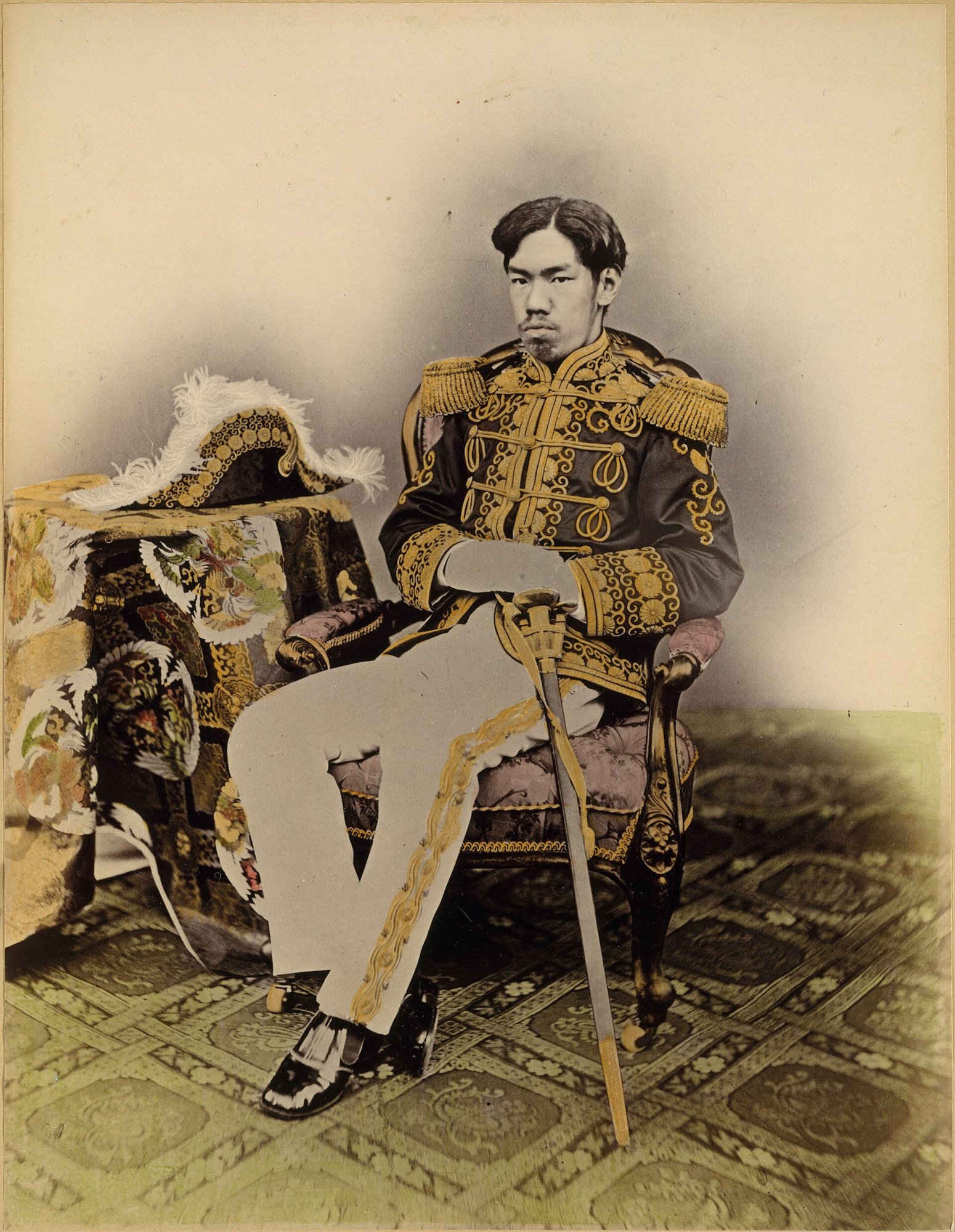
Short answer: the emperor, through a small group of former samurai who governed in his name. The young Emperor Meiji (Mutsuhito) was still a teenager when the change came. Most of the men who ran the new state were samurai from Satsuma and Choshu. One court noble stood beside them.
November 1867: the shogun hands back his power
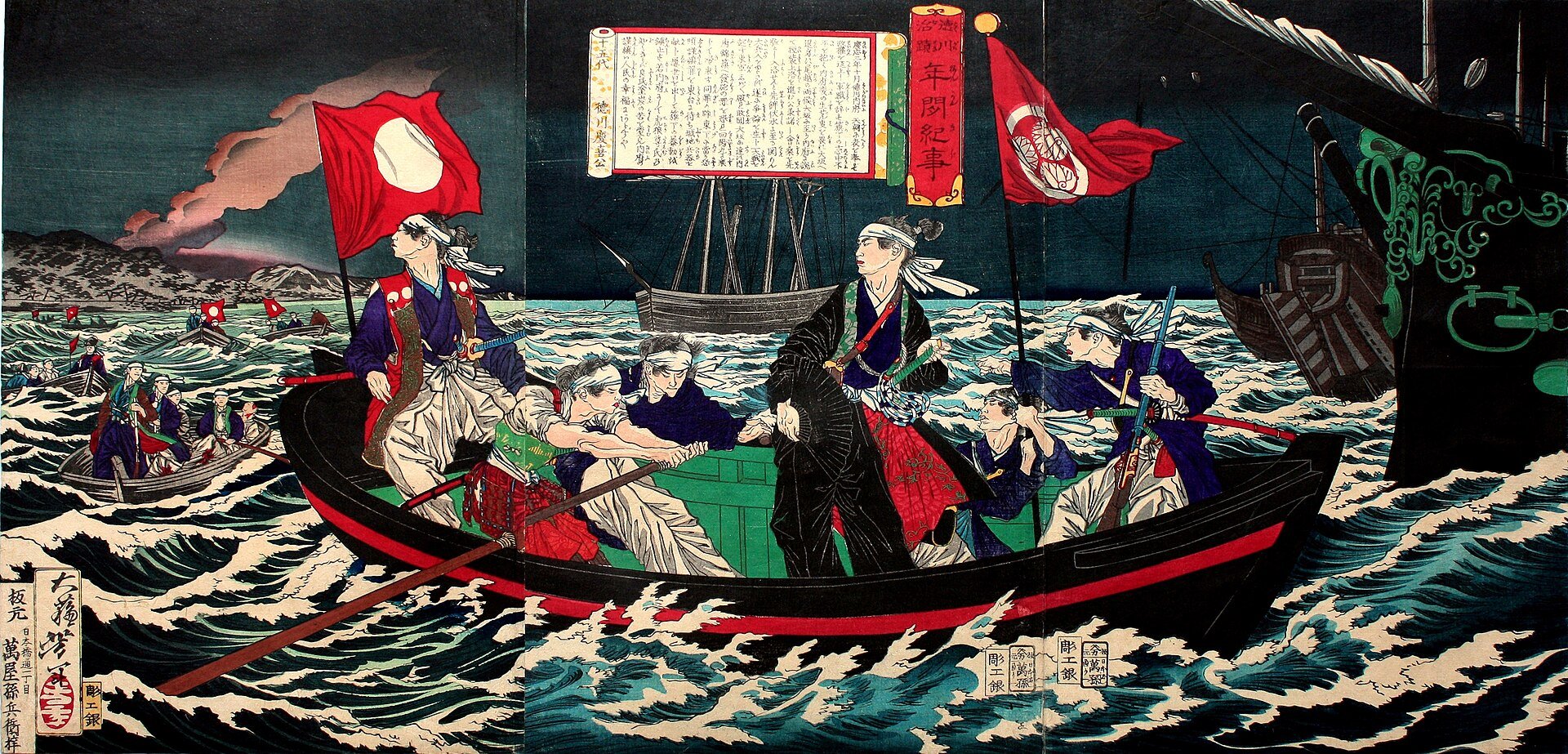
In November 1867 Yoshinobu announced that he would return political power to the throne. Historians call the step taisei hokan (taisei hōkan). According to nippon.com’s account of the Meiji Restoration, he did so peacefully. He may also have hoped to keep a leading place for the Tokugawa house in a council of lords.
3 January 1868: the proclamation
However, his rivals did not agree. On 3 January 1868, men from Satsuma and Choshu took control of the palace in Kyoto. An edict then announced the restoration of imperial rule. The Tokugawa house, in turn, lost its lands and offices. Then fighting broke out at Toba-Fushimi, south of Kyoto, later that month. The shogunate’s army lost, and Yoshinobu fled to Edo.
Spring 1868: Edo opens without a fight
Next, an imperial army marched east. Katsu Kaishu (Kaishū), a senior shogunate official, met Saigo Takamori (Saigō Takamori) to arrange the handover of Edo Castle. So Edo avoided an attack. Nippon.com calls it the peaceful and unconditional surrender of the castle. A city of about a million people escaped battle.
Who actually ran the country
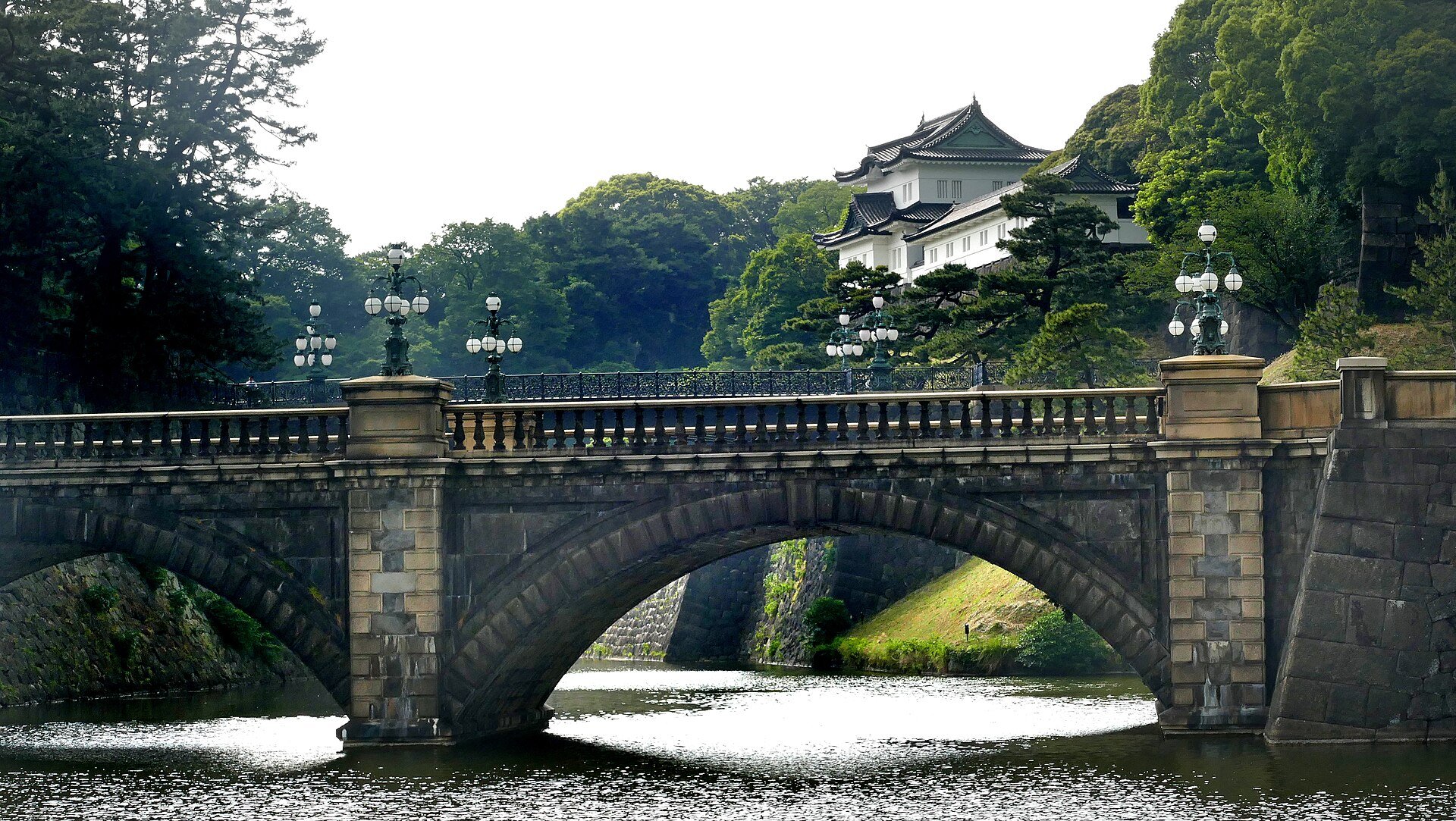
The emperor reigned, but a small circle governed. Okubo Toshimichi (Ōkubo Toshimichi) and Saigo Takamori came from Satsuma. Kido Takayoshi came from Choshu. Iwakura Tomomi, a court noble, linked them to the throne. The new government set out its goals in the Charter Oath of 1868, which promised public discussion and good relations with other countries. That year the government changed the era name to Meiji and renamed Edo as Tokyo (Tōkyō), the eastern capital. The emperor moved into Edo Castle, which became the Imperial Palace.
Still, the change did not end in 1868. The Boshin War ran until June 1869, when the last holdout surrendered at Hakodate. Then, in 1871, the old domains vanished, replaced by prefectures under a central government. In 1876 the government swapped samurai stipends for bonds and banned the wearing of swords. So the Meiji Restoration was less a single event than a reorganization that took about ten years. For the modern institution that came out of it, our guide to how Japan’s imperial family works today picks up the thread.
You may also like
Those two essays cover the crown and the class system the Restoration changed. The shogun’s answer to the black ships was slow, and the empire’s answer was fast. Indeed, within four years of Edo’s surrender, Japan had a railway. In October 1872 the emperor rode Japan’s first railway, opened in 1872, from Shimbashi to Yokohama. The toy engine that Perry gave in 1854 had become a real line.
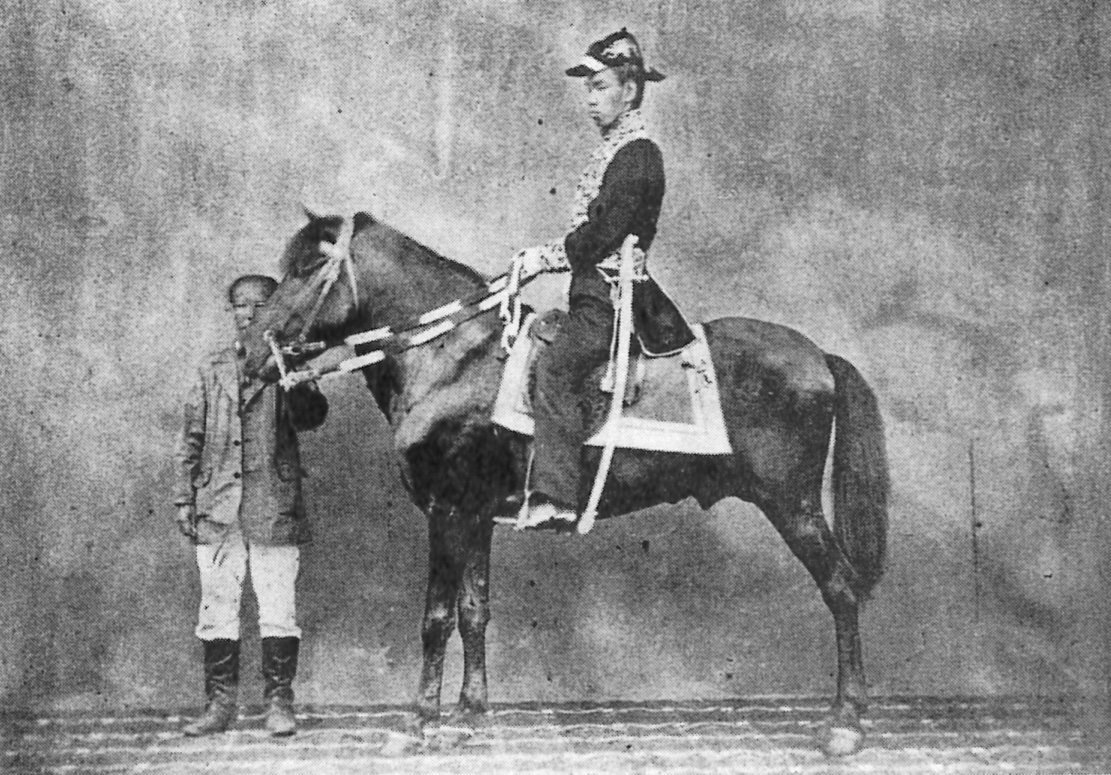
Reading further
History books give the outline, and a few are very good on the people. Beasley sets out the Restoration step by step. Jansen follows one man, Sakamoto Ryoma, through the same years. Gordon places it all in the longer story of modern Japan.
Three Books on the End of the Shogunate
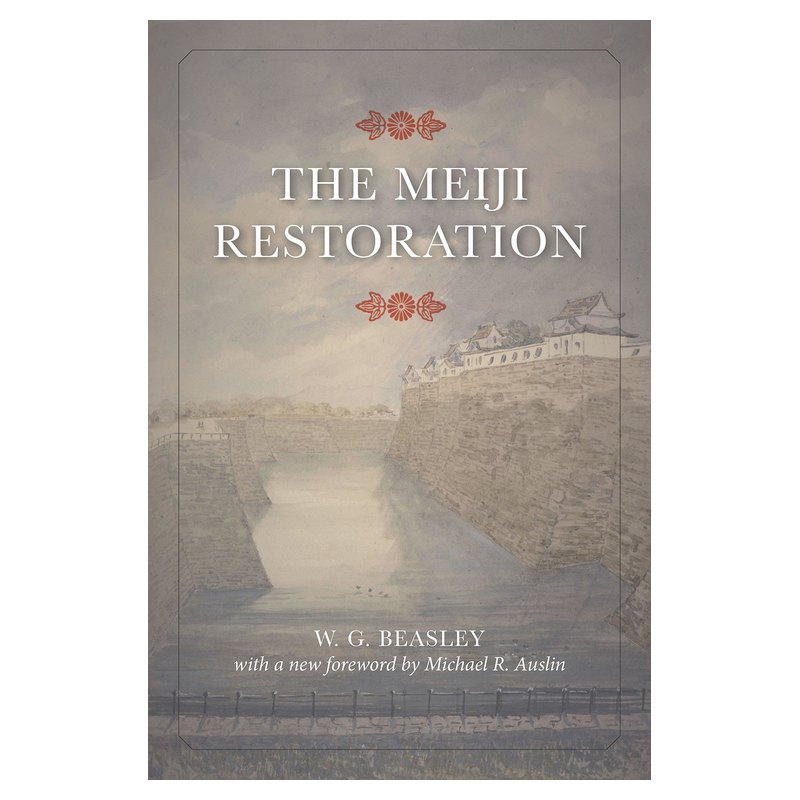
A classic narrative of how the shogunate fell and the new state took shape.
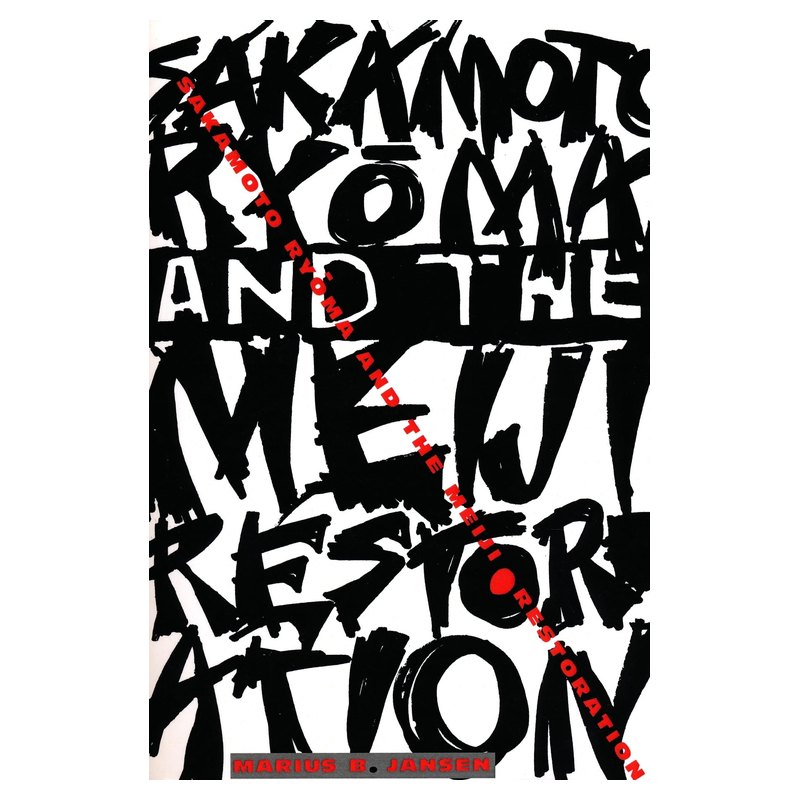
One man’s path through the years of conspiracy, war and reform.
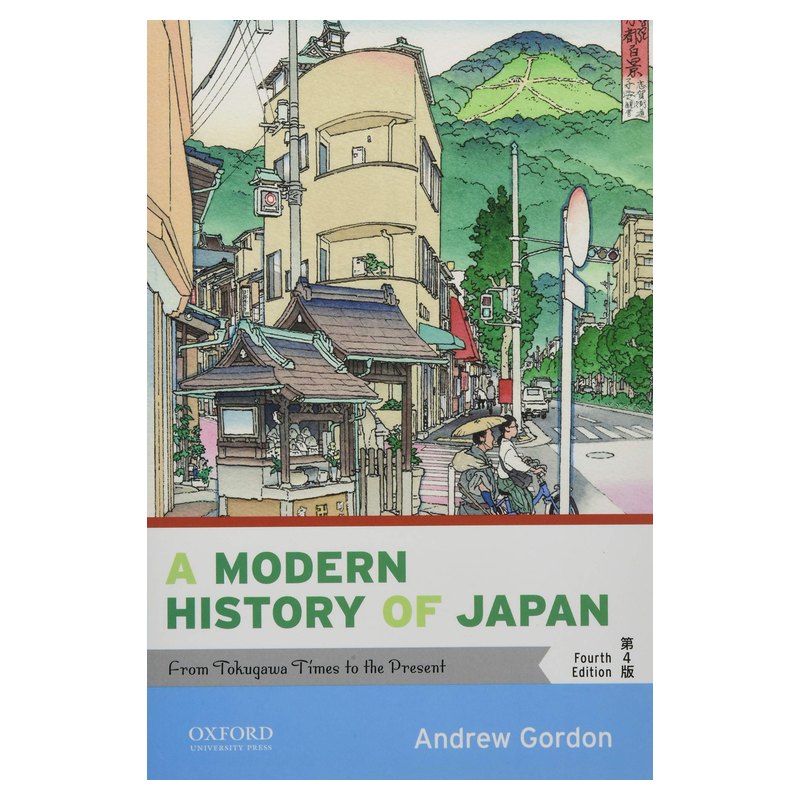
A clear survey that puts 1868 in the long arc from Edo to today.
Reading about the Restoration changes how you see Tokyo. Walls that once ringed a shogun’s castle now frame an imperial garden, and the moat that guarded it still holds water. Streets that were Edo’s merchant quarters still follow their old lines. Seen this way, the modern capital is a layer cake of the shogun’s city, the emperor’s city and the new one.
A walk through Yanaka, the old town that survived shows what the older city felt like at street level, and it needs little more than an afternoon. Few cities stack so many chapters of one story within a single day’s walk, which is why the Restoration is so easy to trace on foot.
Where to See the Black Ships Japan Left Behind
The places where black ships Japan history happened are easy to reach from Tokyo. Three of them fit within a day trip. Together they cover the landing, the treaty and the port that grew from it.
Kurihama Perry Park, Yokosuka
Perry’s party came ashore at Kurihama on 14 July 1853, and a stone monument marks the spot. The monument and the small Perry Memorial Hall sit in Perry Park, on the shore. According to the city of Yokosuka, the hall opens from 9:00 to 16:30, charges no admission and closes on Mondays. From Tokyo or Shinagawa, take the JR Yokosuka Line or the Keikyu line to Kurihama, and then walk or take a short bus ride. A Perry Festival with fireworks takes place there in summer, so check the city’s calendar.
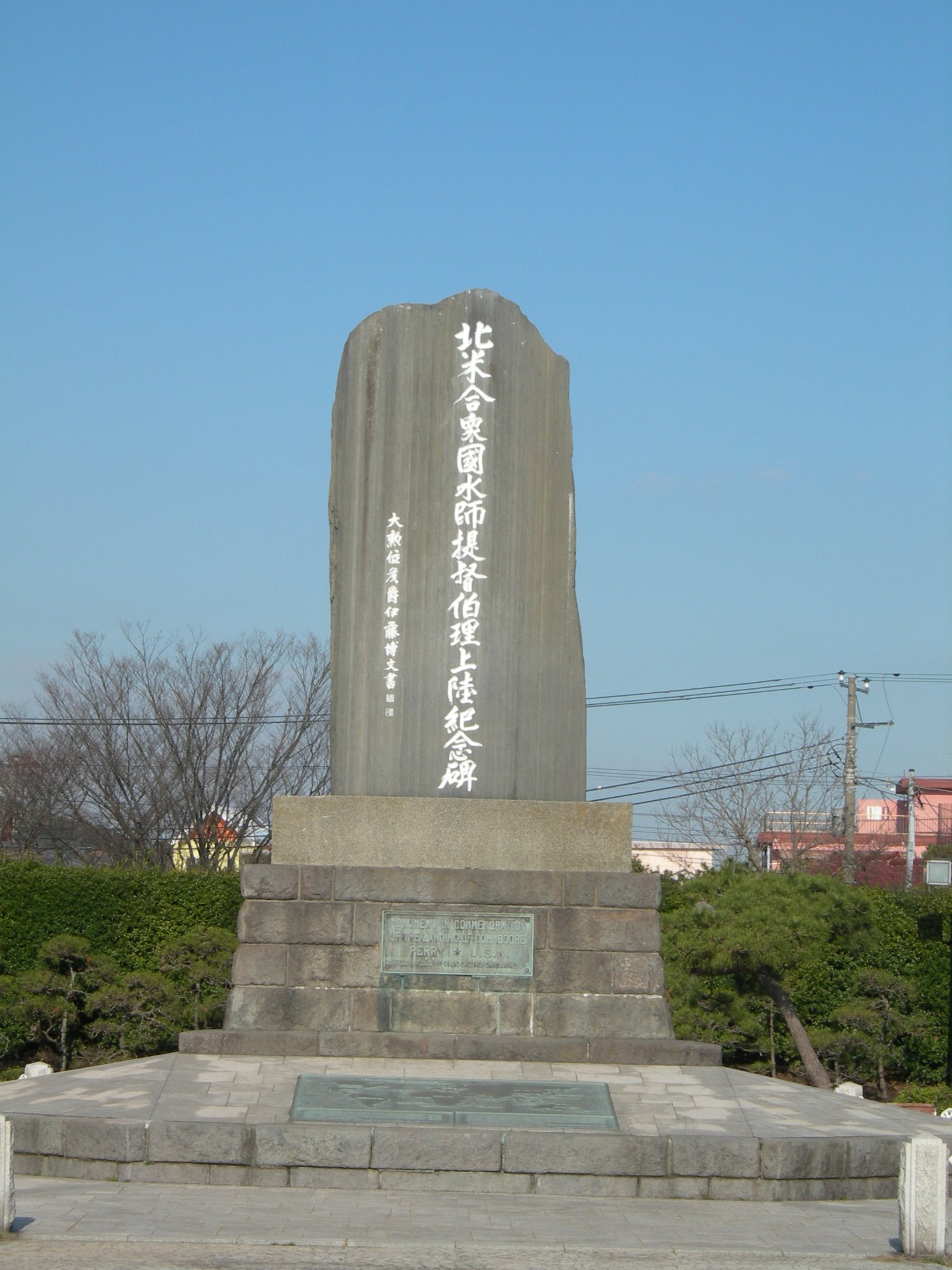
The monument is plain and tall, and it dates from 1901. When you stand there and look across the water, the bay is the same one that held four steamships in 1853. The visit takes about an hour, and it pairs well with a lunch in Yokosuka.
Shimoda, on the Izu Peninsula
Shimoda is farther away but richer in detail. It was one of the two ports opened in 1854, and Harris lived there as consul. The Shimoda History Museum, a short walk from Izukyu-Shimoda Station, holds more than 1,000 artifacts, including Perry’s personal possessions, early photographs and woodblock prints, according to the Japan National Tourism Organization. The Odoriko limited express runs from Tokyo to Izukyu-Shimoda in about two and a half to three hours, and JR East gives the trip as 2 hours 49 minutes.
A canal-side street known as Perry Road runs through the old town, lined with cafes and small shops. In mid-May, Shimoda holds its Black Ship Festival, with a parade, marching bands and a reenactment of the treaty signing. The Izu coast also offers onsen inns for an overnight stay.
Yokohama: the archives and the port
Yokohama is where the story ends up. The Yokohama Archives of History stands beside Kaiko Hiroba, the square where Perry landed for the 1854 talks, and the building is the former British consulate. According to the Kanagawa prefectural tourism site, it opens from 9:30 to 17:00 and closes on Mondays. Its displays follow the opening of the port, and it is a short walk from Nihon-odori Station.
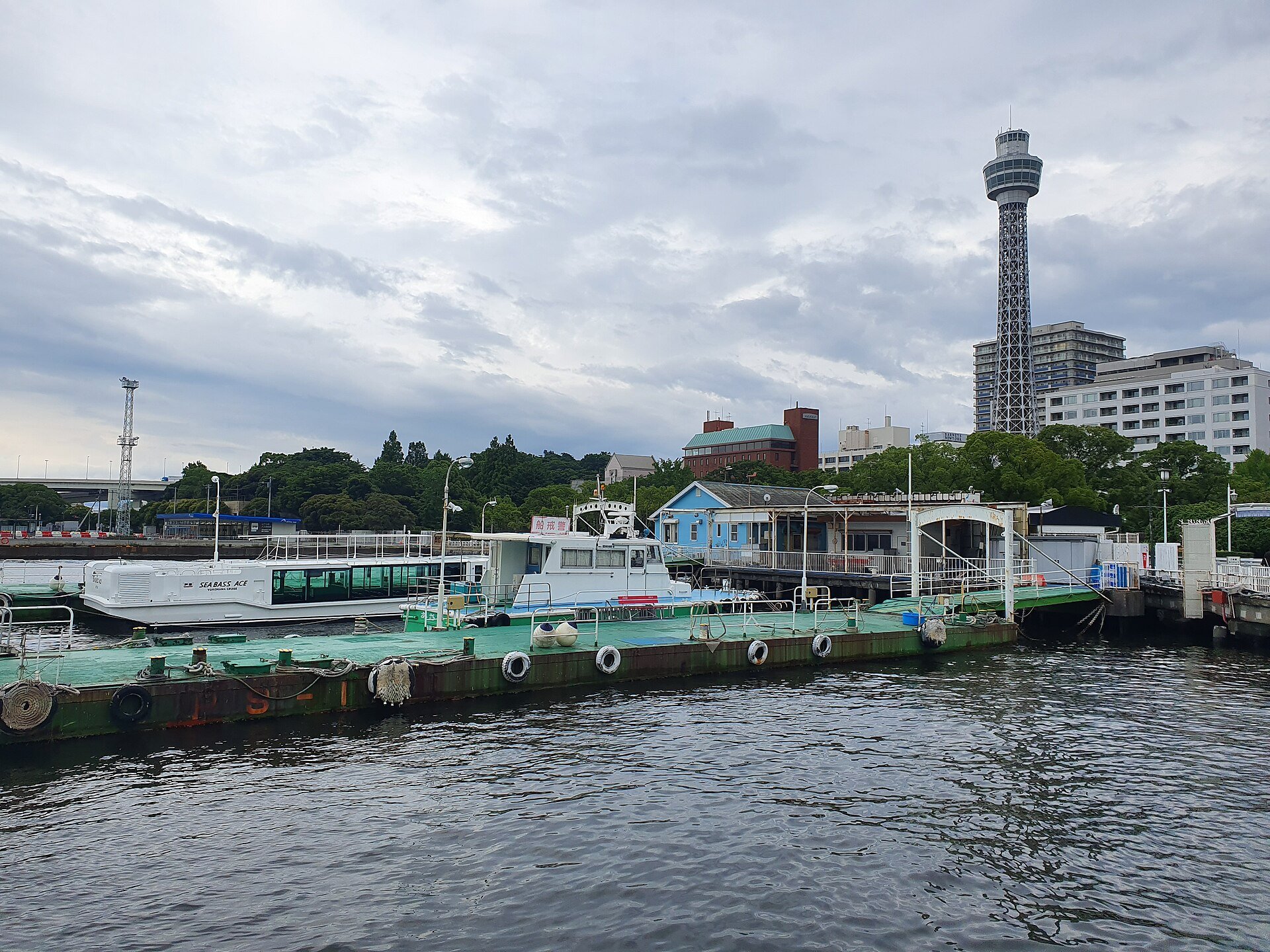
The harbor is the other half of the visit. A walk along the water takes you from Osanbashi to Yamashita Park, with the Marine Tower rising behind the trees. The sea bus from the Yamashita pier gives a view of the port from the water. These shores are where the 1859 port opened, and the city has grown out of it.
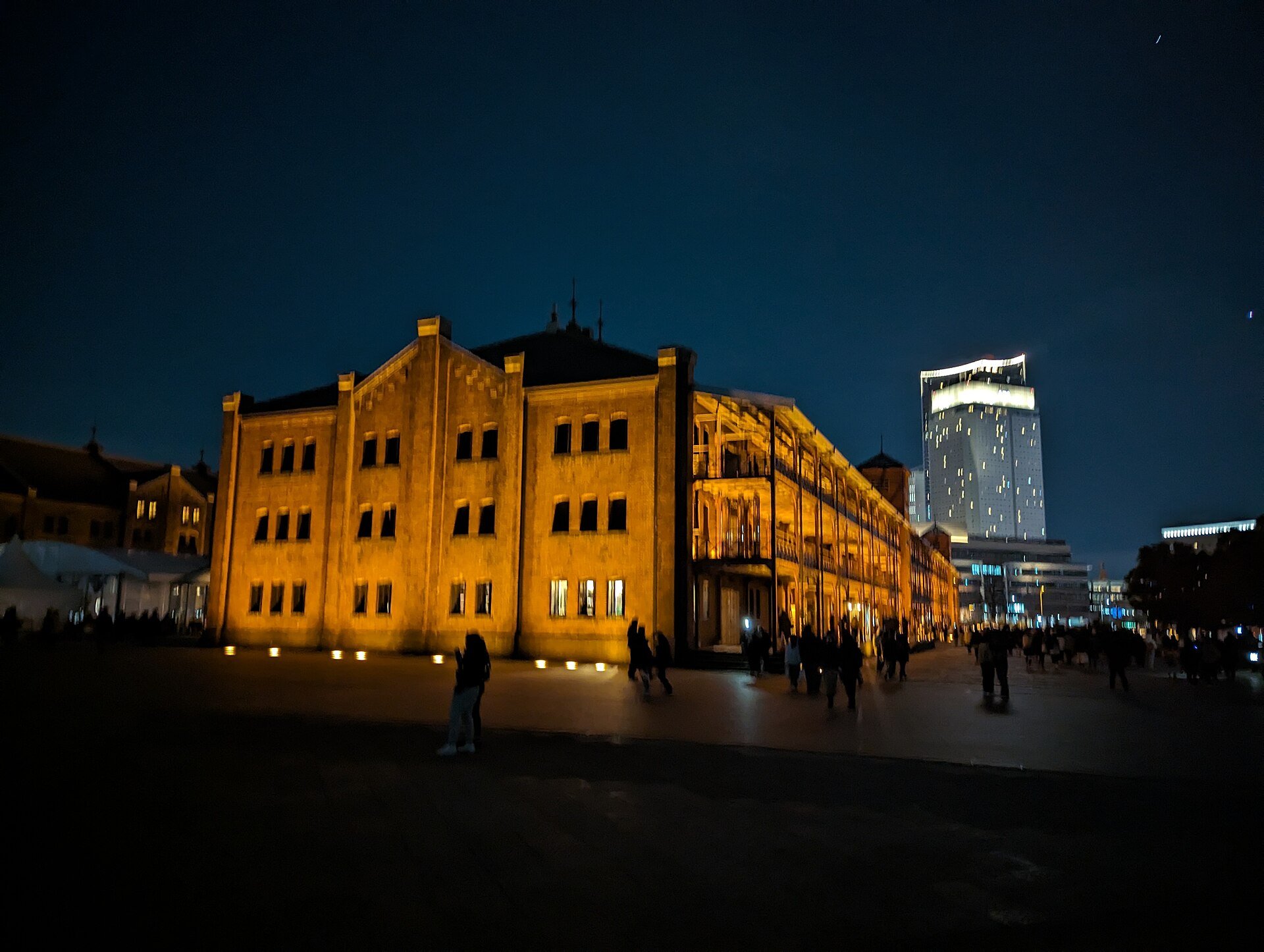
The Red Brick Warehouse is a short walk along the waterfront. Builders finished it as a customs warehouse in the early twentieth century, and it is now a quarter of shops and cafes. In the evening, its brick glows amber against the dark.
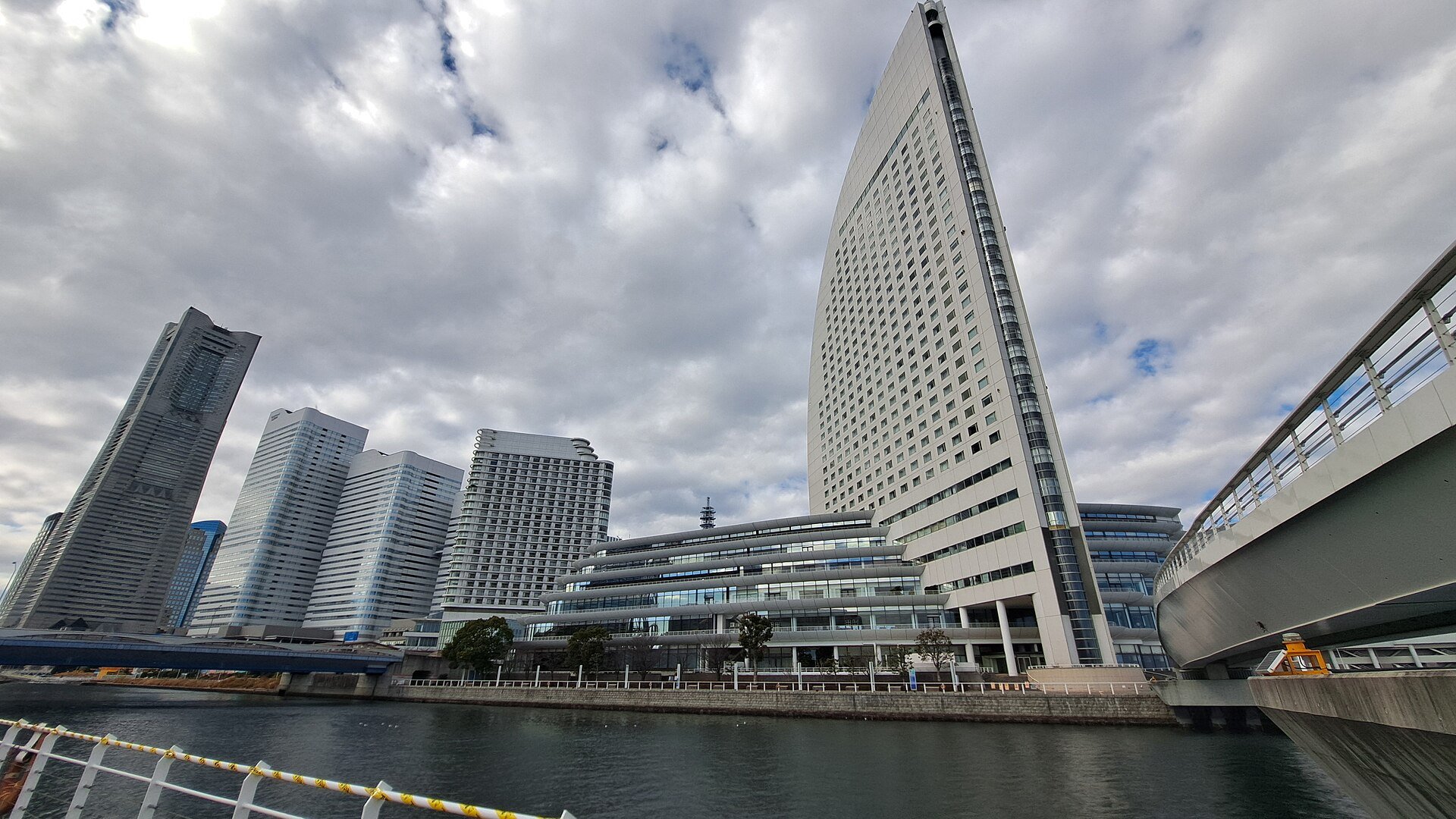
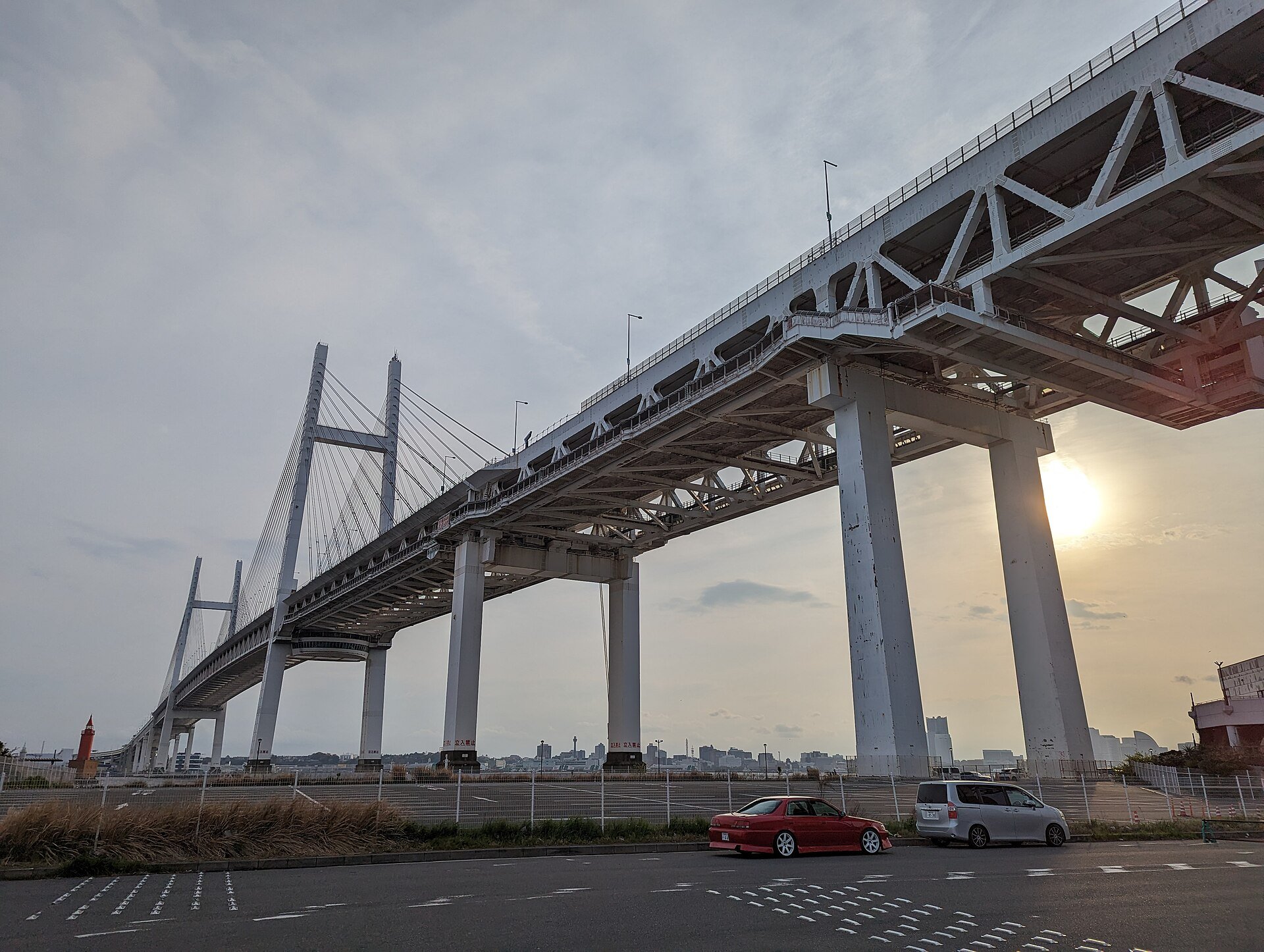
Beyond the warehouse, Minato Mirai rises along the same shore. Its towers show how far the harbor has come since a fishing village watched four ships. Yokohama Bay Bridge, farther out, spans the water where the 1854 squadron anchored. Seen from below, its towers and cables make a fitting end to the walk.
Pictures of the port
The port left a rich record in pictures. In the 1860s, artists printed scenes of foreigners and their ships, a genre known as Yokohama-e, and the sheets sold as fast as the news. Hiroshige’s views of Edo show the other side of the story, the capital as it looked before 1868, with its bridges, canals and rain. Seen together, the two kinds of print mark the before and after. The books below pair those pictures with the wider story of how Japan became modern.
Prints of the Port and the Old Capital
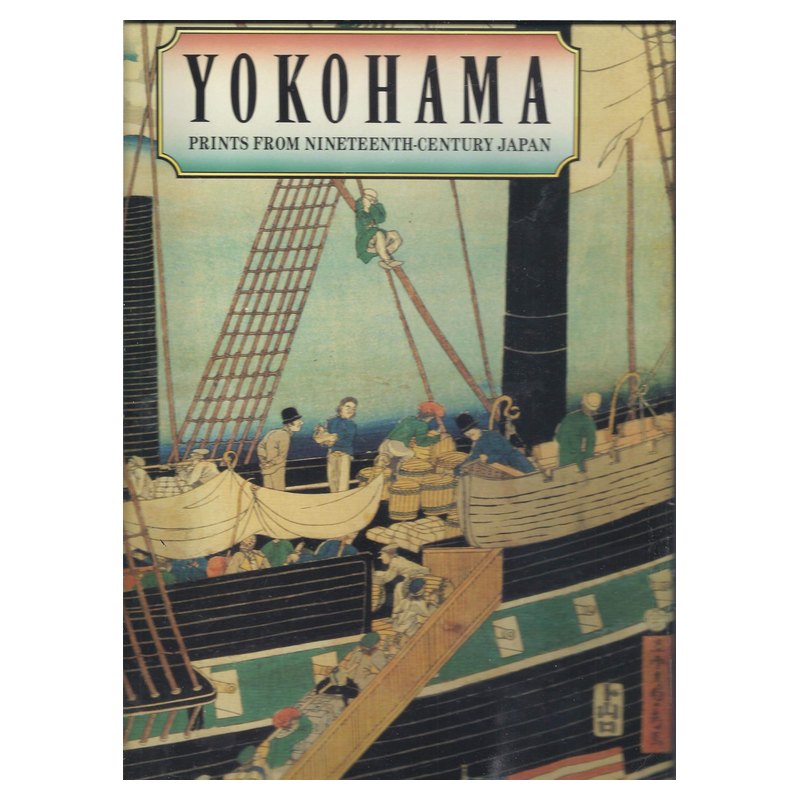
Woodblock prints of the new port, its foreign residents and their ships.
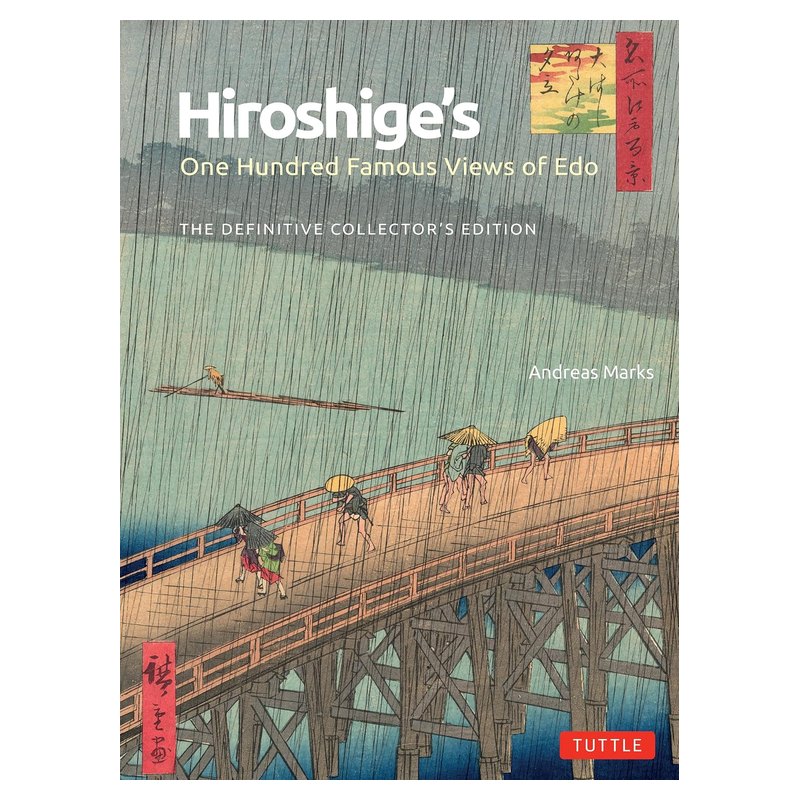
The city of the shoguns in its last decades, one view at a time.
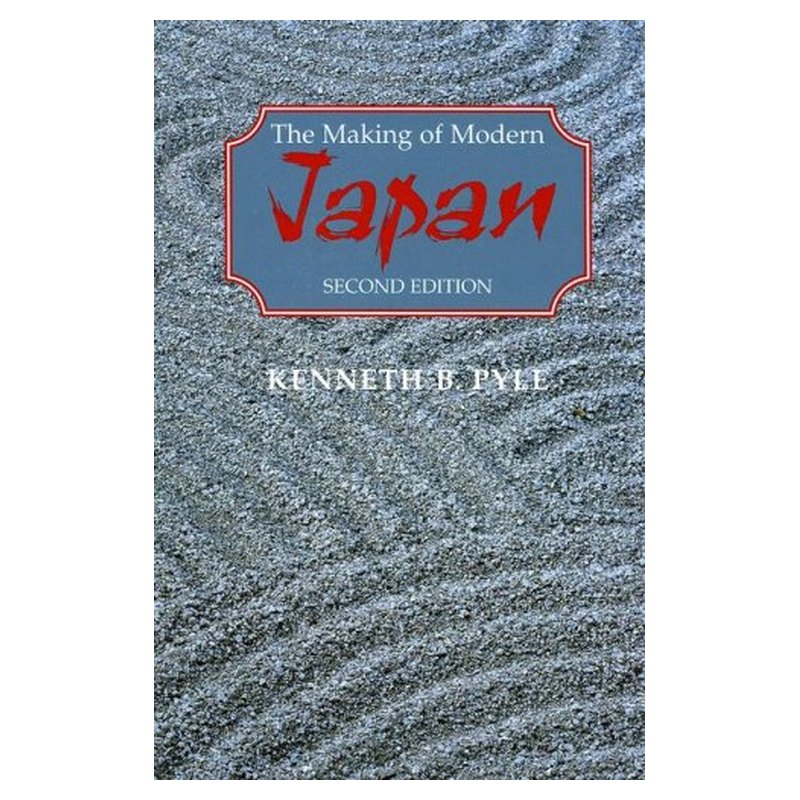
A thoughtful history of the nation that came out of the Restoration.
Before you plan the route, know that each site has its own opening days. Check the museum calendars, and see our guide to regional rail pass options if you plan several train days. Allow a full day for Kurihama and Yokohama together. If you want Shimoda as well, make it a separate overnight.
Gyunabe: The Beef Pot Yokohama Invented
One more thing came ashore with the black ships: the taste for beef. Beef had long been rare on Japanese tables. After the port opened, that began to change. The Kanagawa page on gyunabe traces gyunabe to the opening of Yokohama Port in 1859, when beef dishes eaten in the foreign settlements gave local cooks an idea.
The dish is simple. Beef simmers in a sweet and salty sauce with green onion, tofu and mushrooms, and diners dip each piece in raw egg. Unlike sukiyaki, the beef is not seared first. The recipe below follows the version published on Food in Japan, with US measures added.
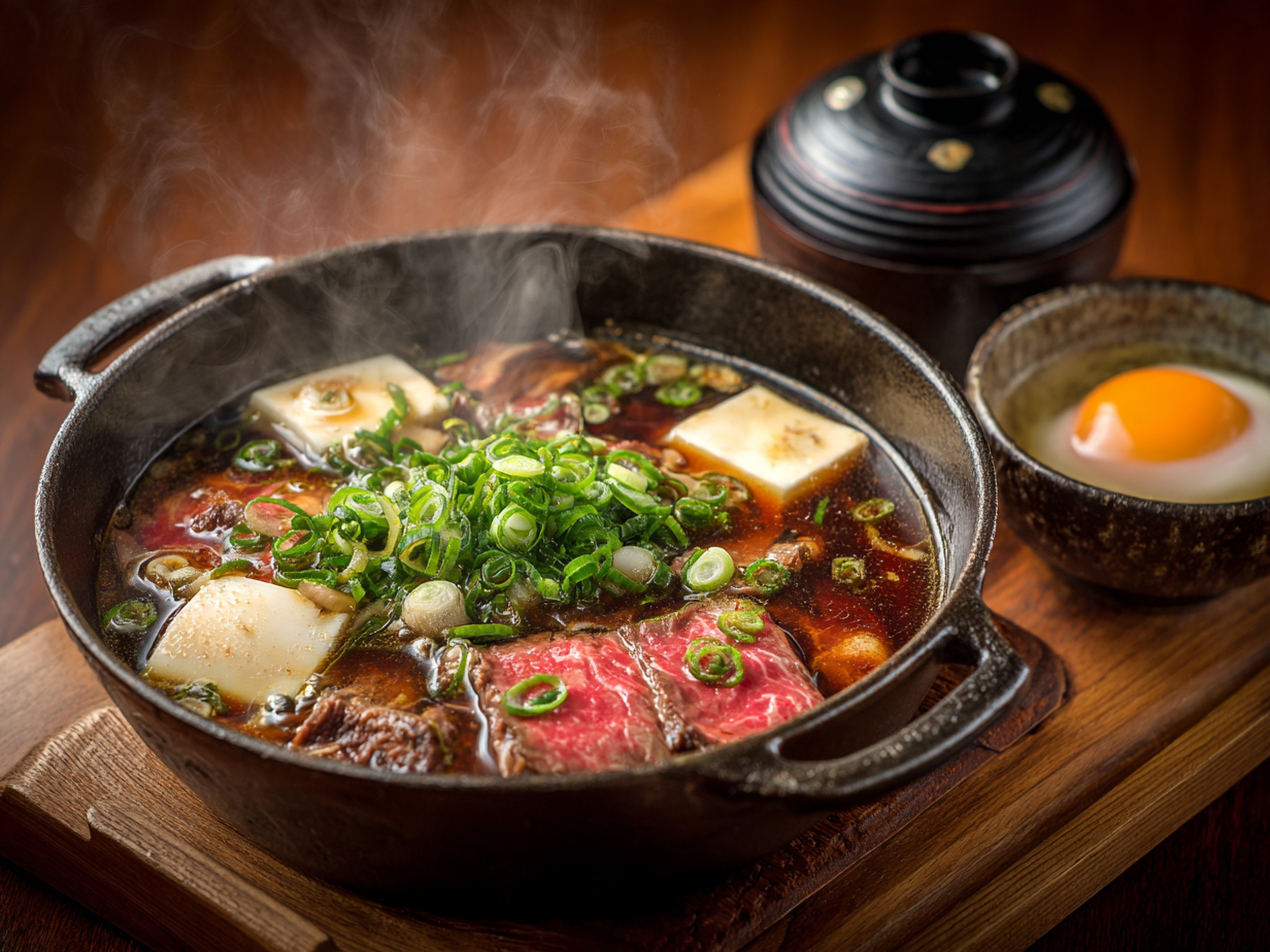
Gyunabe Recipe: Yokohama Beef Hot Pot
For four people, bring one and a half cups of water, three tablespoons of soy sauce, one tablespoon of mirin, two tablespoons of sugar and five grams of bonito flakes, a small handful, to a boil. Let it steep for ten to fifteen minutes, then strain. In a small bowl, stir eighty grams of red miso, about one-third cup, with one tablespoon of sugar and half a tablespoon of mirin. Set the miso paste and a chopped green onion in the center of a shallow pan. Arrange 300 grams (about 10 ounces) of thinly sliced beef, 100 grams (3.5 ounces) of chrysanthemum greens, six shiitake mushrooms and a block of grilled tofu cut into eight pieces around them. Pour in the sauce and simmer until the beef is just cooked. Beat four eggs into small bowls and dip each piece before eating.
The result tastes of its moment: a Japanese dish built around an unfamiliar ingredient. Diners share it at the table and eat it slowly, one dipped piece at a time. At home, it makes a good supper after a day with the guidebook.
What the Black Ships Left Behind
The black ships Japan met in 1853 did not make the country modern on their own. Samurai, merchants, scholars and an emperor all did that work. They did something smaller and more important. They ended the pretense that the country could stay as it was.
That is why the story still holds. A government that looked permanent fell in fifteen years, and a new one built a railway in nineteen. The same shores offer a calm place to think about change, and about how a country answers a challenge it did not choose.
For a traveler, the lesson is practical. Go in the order of the story. Begin at the Kurihama stone, move on to the Yokohama waterfront, and finish at the palace moat in Tokyo. Each stop answers one question, and together they answer the whole. Allow time at each, since a stone, a print or a harbor view does most of the explaining.
Recommended
To keep that thought, write it down. A short entry each evening makes a trip easier to recall. For a guided way to do it, the Shoshin Journal offers ninety days of prompts in beginner’s mind.
Planning a trip along the old bay
The tools below help with the practical side of a trip, from a first route to the notes and photographs you keep along the way. Each suits travelers who want to look closely at a place and remember it well. Use them alongside the museum calendars, and let the season set the pace. A good plan leaves room for a day that runs long, a missed train or a view that deserves another hour.
A trip along the old bay works best when someone else handles the details. The Kurihama stone, the Yokohama archives and the harbor walk fit neatly into one day, while Shimoda rewards an overnight stay. Our team can place you in Tokyo for the festival dates and match the train times to the museum hours. In addition, we can leave slow afternoons for the water and the Red Brick Warehouse. We also handle the small things that make such a day run smoothly, from train times to museum hours and a table for dinner by the water. Tell us which parts of the story matter most to you, and we will shape the days around them.
A Japan trip that follows the story of 1853
Our team builds custom itineraries around the places where history happened. Expect unhurried days, timed museum visits and evenings by the water in Yokohama.
Plan Your Custom Japan ItineraryQuestions Worth Asking
What were the black ships in Japan?
The black ships, or kurofune, were the dark steam-powered warships of Commodore Matthew Perry’s US Navy squadron. Four ships reached Edo Bay in July 1853, and nine returned in 1854. Their thick smoke gave them the name, and their arrival ended more than two centuries of tight limits on foreign contact.
When did Perry arrive in Japan?
Perry reached Uraga, at the mouth of Edo Bay, on 8 July 1853 and came ashore at Kurihama on 14 July. He left on 17 July and returned in February 1854 with a larger squadron. Both sides signed the Treaty of Kanagawa on 31 March 1854, opening Shimoda and Hakodate to American ships.
Who took the shogun’s place in 1868?
The emperor took the shogun’s place, but a small circle of former samurai governed in his name. The young Emperor Meiji took power by edict on 3 January 1868. Leaders from Satsuma and Choshu, among them Okubo Toshimichi, Saigo Takamori and Kido Takayoshi, ran the new government with a court noble, Iwakura Tomomi.
Why were they called black ships?
Coal-fired steamers sent up thick dark smoke, which Edo Bay had never seen, and the name stuck. The word kurofune was also older, used for Western ships in earlier centuries. Accounts differ on how black the hulls were, so the smoke is the safer explanation for the name.
Where can I see black ships sites from Tokyo?
Kurihama Perry Park in Yokosuka holds the landing monument and a small memorial hall, reached by train from Tokyo. The Yokohama Archives of History and the harbor lie close to Kannai. Shimoda, with its History Museum and Perry Road, is farther away on the Izu Peninsula and suits an overnight stay.
What happened to the samurai after the Meiji Restoration?
The samurai class was wound down over about eight years. In 1871 prefectures replaced the domains. In 1876 the government swapped hereditary stipends for bonds and banned wearing swords in public. Many former samurai entered the army, the civil service or business, while some rose against the new government.