Were ninjas real? Yes, although the real ninja looked very little like the figures in films. They were spies, scouts and castle guards, and many of them farmed by day. The black suit, the throwing stars and the puff of smoke came later, mostly from the stage and from novels. What the record shows is plainer, and in some ways more remarkable.
This guide separates what the documents say from what the theatre invented. It then follows the people of Iga and Koka (Kōka), two mountain regions of central Japan, through the war that ended their independence. Along the way it points to the places where their story can still be seen.
Were ninjas real?
Yes. The real ninja, or shinobi, were spies and scouts who served lords in Japan from the 14th century to the 19th. They came mainly from Iga in Mie and Koka in Shiga. The black costume and the throwing stars are later inventions, taken from the stage and from novels, not from the records.
Were Ninjas Real, or Only a Legend?
The honest answer has two halves. Real people did real jobs. However, the image most of us carry is mostly legend. Sorting one from the other is the whole task of this guide.
Researchers at Mie University’s International Ninja Research Center use the older word shinobi. They describe men who gathered intelligence for the lords they served, with activity running from the 14th century to the second half of the 19th. In the Edo period, they add, many worked as low-ranking samurai or privileged peasants, and many stood guard in castles and castle towns.
So, were ninjas real in the sense the films mean? Not quite. The record gives us spies, guards and informants. Legend gives us wall-walkers, smoke bombs and assassins in black. A simple rule helps while reading. If a claim comes from a document written near the time, treat it as record. If it comes from a play, a novel or a film, treat it as story.
You may also like

Those two essays frame the ideas behind this guide. The first explains ma, the meaningful pause that good watchers learn to hold. The second sets the samurai world in which the shinobi worked. With that background, the next section looks at what the shinobi actually did.
What Real Shinobi Did
The oldest records
The Taiheiki, a military chronicle of the 14th century, holds the oldest record of a figure we would recognize as a ninja, as Prof. Yamada Yuji (Yūji) of Mie University explains. In it, a skilled shinobi starts a fire in Kyoto in the dead of night. Later, a Portuguese-Japanese dictionary printed in 1603, the Vocabulario da Lingoa de Iapam, defined a shinobi as a spy who enters a castle at night. Both points appear in a Nippon.com feature on his research.
That dictionary entry is useful. By 1603 a shinobi was an ordinary word for a spy, not a figure of myth. The job was to learn who was moving, where and in what numbers, and then to report to the lord.
A job that came with a day job
Most shinobi did not live in remote hideouts. They lived in villages, and they worked. Some farmed, some served in castles, and some held low samurai rank. The Mie University center notes that many guarded castles and castle towns. As a result, the best disguise was an ordinary life. A man who sweeps a castle courtyard hears a great deal.
The manuals
Their craft was written down, though not always in full. The best known manual is the Bansenshukai (Bansenshūkai), compiled in 1676 in 22 volumes, according to the same Nippon.com feature. A descendant of the Fujibayashi family put it together, drawing on the knowledge of both Koka and Iga. Even so, staff at a Koka museum told Nippon.com that the key points were passed on by word of mouth rather than written. Nothing in these texts describes a black suit.
For readers who want to go further, the three books below are the best place to begin. They are written by a historian of Japanese warfare.
Three Books on the Ninja
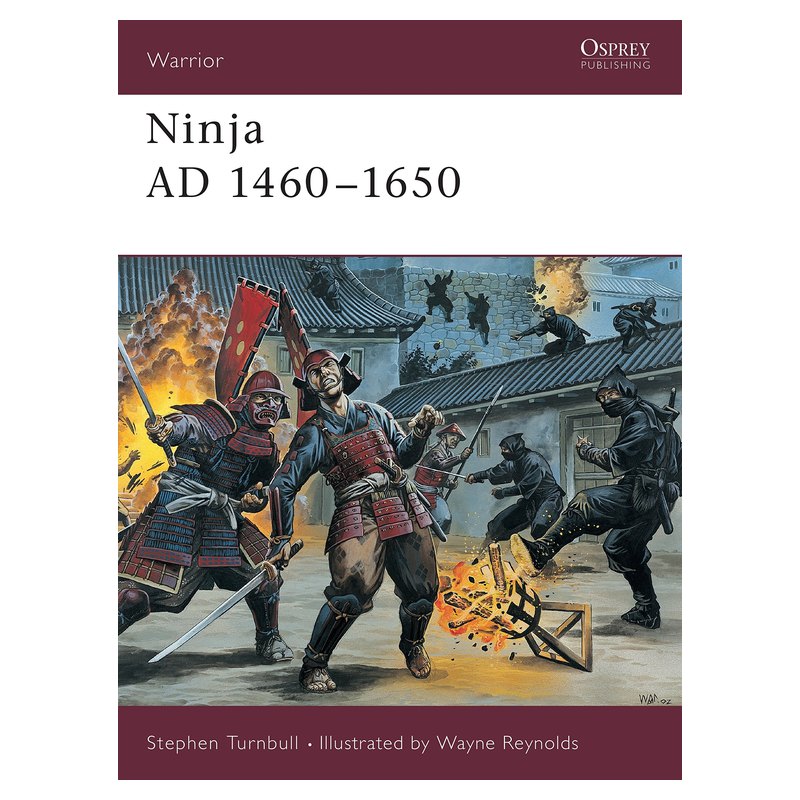
A short illustrated history of the shinobi, with the real tools and tactics of the period.
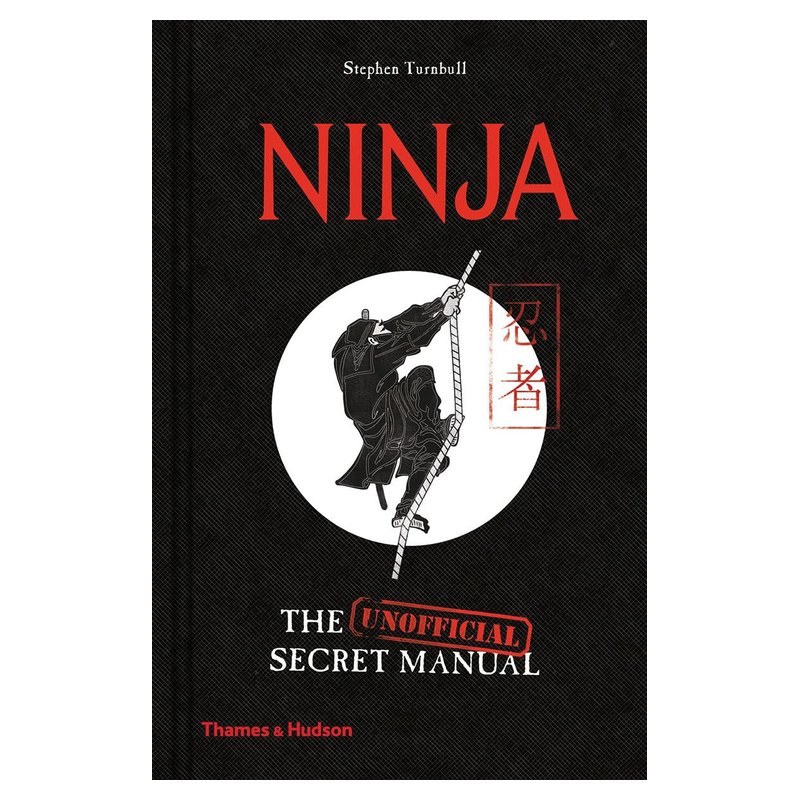
An illustrated guide to how the shinobi trained, equipped themselves and worked.
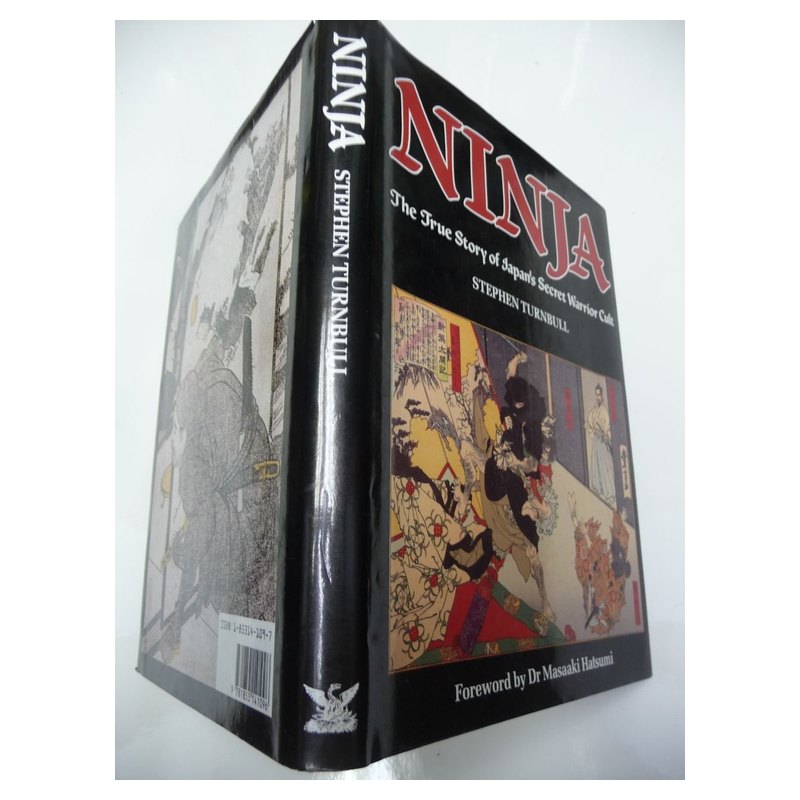
A history of the shinobi of Iga and Koka by a historian of Japanese warfare.
Read these with the sources above in mind. A good history of the shinobi keeps asking the same question: which document says so, and when was it written? That habit is worth borrowing. It turns a trip to Iga into a search for evidence, not for costumes. The real tools of the trade were plain, and plainness suits a craft built on staying unseen. It was never going to look dramatic.
Where the Black Suit Came From
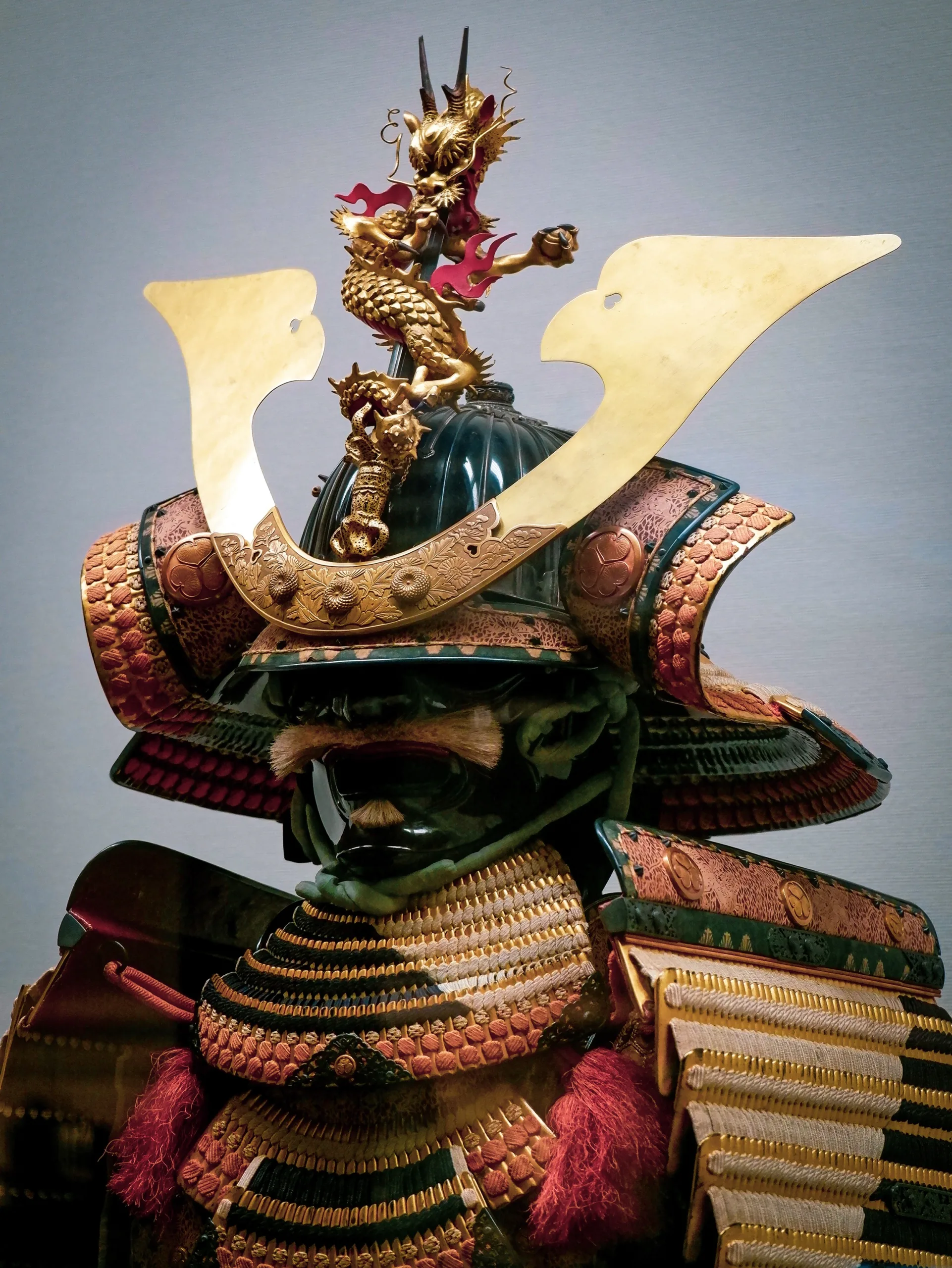
Were ninjas real if they never wore black? They were, and the real ninja dressed like everyone else. The famous suit is the easiest part of the legend to date. Mie University’s research center explains that from the early Edo period to the mid-18th century, ninja were drawn in ordinary civilian clothes. Then, from the mid-18th century, theatre plays began to show them in black outfits and masks, throwing shuriken. The costume was a signal to the audience. It told them, at a glance, that the character was a ninja.
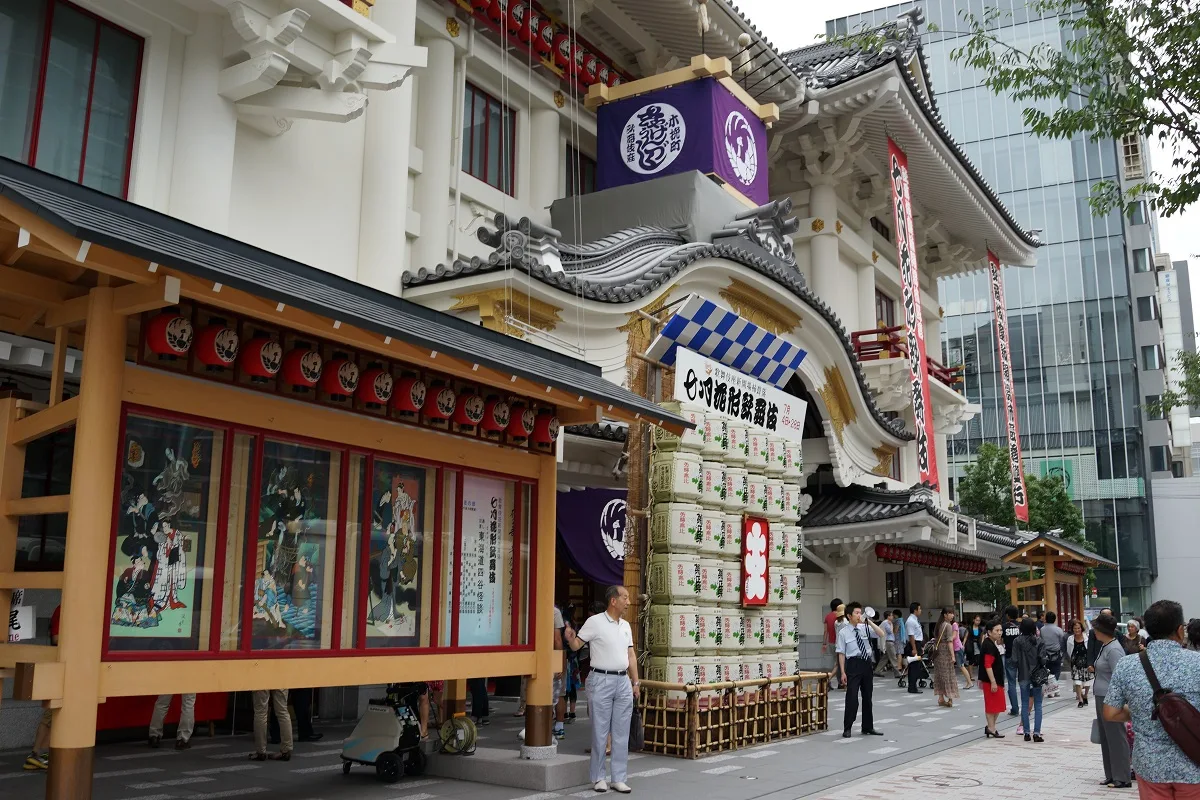
Popular fiction then finished the job. From the early 19th century, novels adopted the same outfit. In the Taisho era (1912-1926), a series of pocket-sized adventure books introduced the hero Sarutobi Sasuke, and a new generation grew up with the black-clad spy.

The logic of the real work points the other way. Nippon.com’s feature notes that a conspicuous uniform would not suit an undercover agent, and that no record shows ninja using shuriken in real life. Black cloth at night is easy to spot against a pale road. A farmer’s coat in daylight, by contrast, goes unnoticed anywhere. So the real ninja’s best weapon was looking exactly like everyone else.
Iga and Koka: Two Valleys That Ruled Themselves
Were ninjas real in Iga and Koka? The records say so. The shinobi’s homeland is two ranges of hills. Iga lies in Mie Prefecture, and Koka lies just across the border in Shiga. The two regions are neighbors, and the old Tokaido road ran through Koka on its way between Kyoto and Edo.
A place without a strong lord
Iga had a simple advantage. According to the Mie University center, no great daimyo held power there, so local warriors governed themselves. They developed ninjutsu as a means of defense. The mountain setting helped. Nippon.com describes the region as one with a strong sense of autonomy, where armed local bands resisted central authority and were often hired by the lords around them.
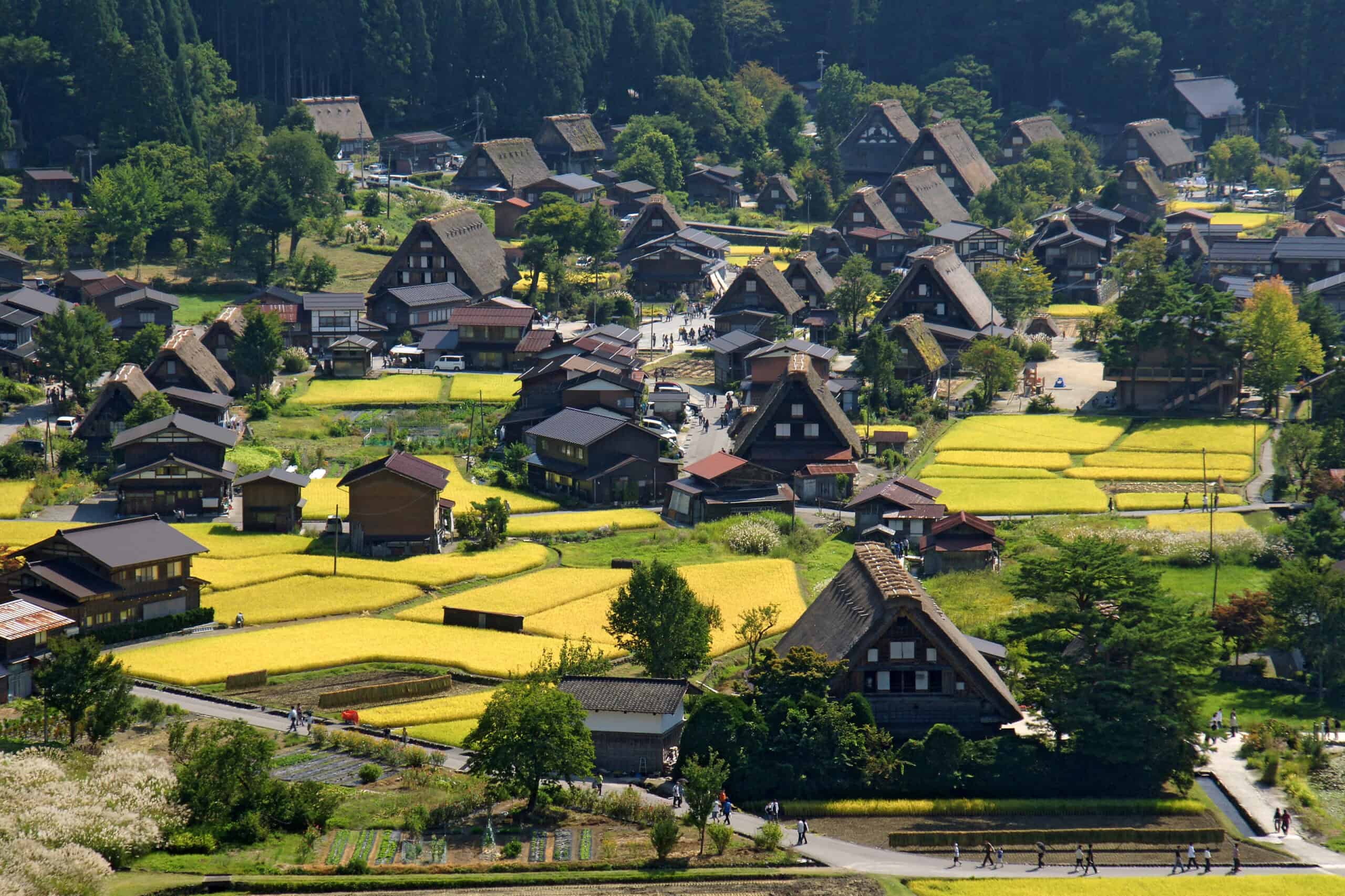
Koka worked in a similar way. A Nippon.com visit to a Koka ninja house notes that the Mochizuki clan led 53 ninja families there. The house itself dates from the late 17th or early 18th century. The families lived by farming and, in the Mochizuki case, by making and selling medicine, so the covert side of their work sat beside an ordinary trade.
Both regions sold their skills. Lords in neighboring provinces hired Iga and Koka men as scouts and raiders. By the 1570s, the strongest warlord in Japan had a reason to want the valleys under control. His name was Oda Nobunaga.
Three Books on the Warlord and His Era
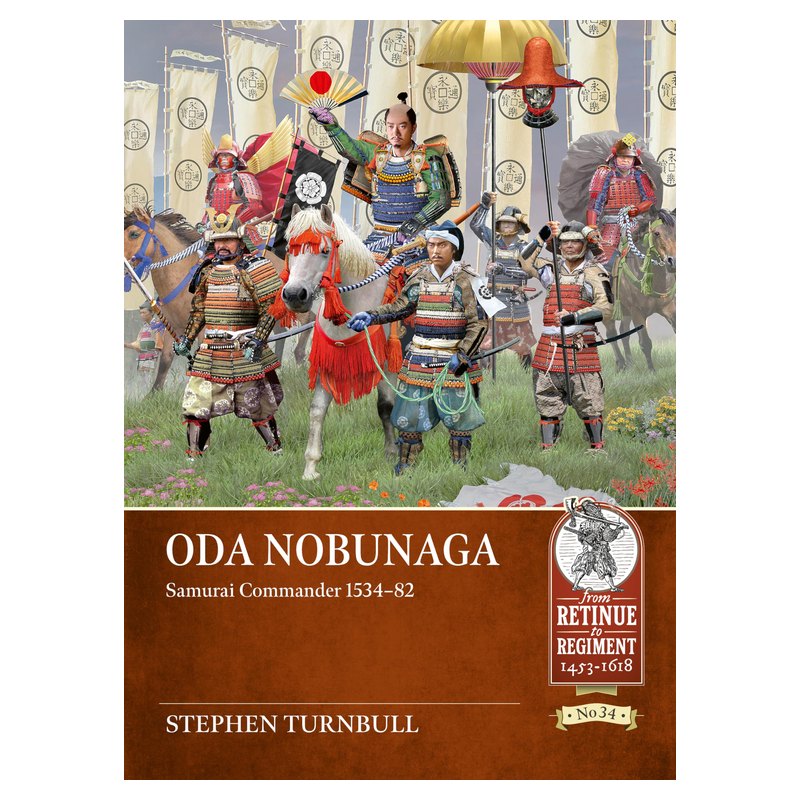
A concise life of the man who invaded Iga, with maps and period illustrations.
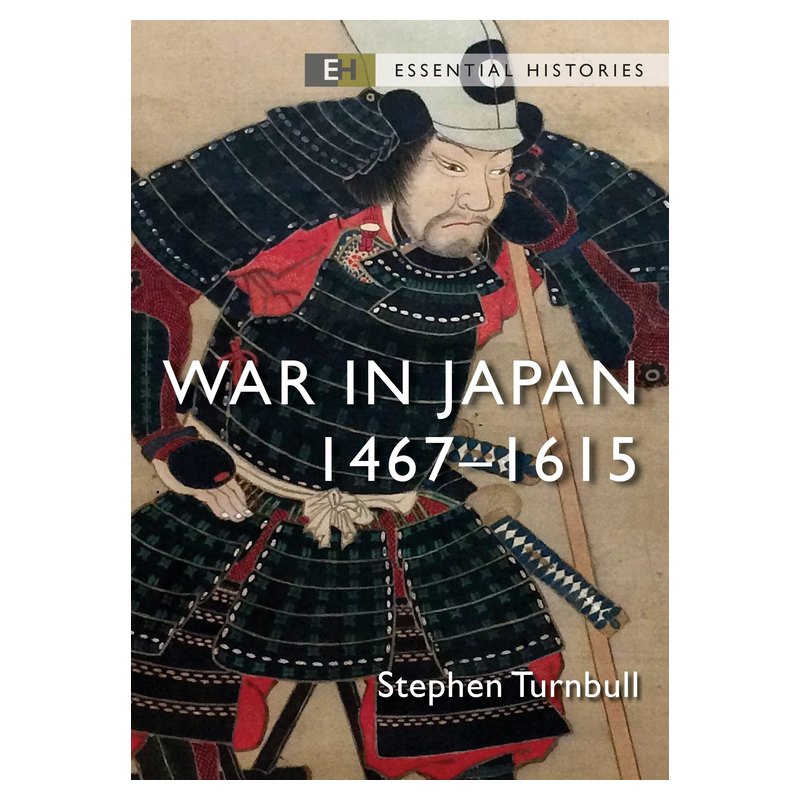
The long civil-war century in one volume, from the first fighting to the final peace.
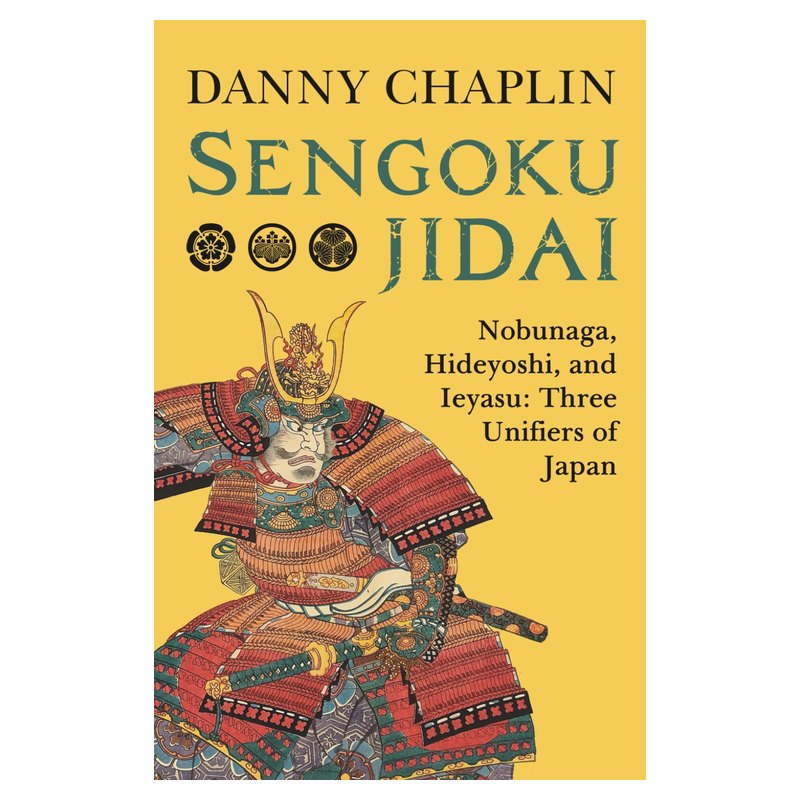
A narrative of the three unifiers, who each shaped what Iga became.
Nobunaga is the figure on whom the rest of this story turns. He rose from a minor family in Owari to dominate central Japan, and he met resistance with force. Iga was an obstacle of a different kind. It had no single castle to besiege and no single lord to defeat. Its hills made large armies slow and ambushes easy, which helps explain why the first attack failed. In that sense the valley was a threat to any ruler who wanted one orderly realm. To understand why he came back, it helps to know the man and the age. The three books above give both, and they place Iga inside the wider war.
A letter every second week: one idea worth keeping and one piece we think you should read.
What Happened to Iga After Oda Nobunaga Returned in 1581?
The short answer is that Iga lost its independence in a single autumn campaign. Yet the people did not vanish. They scattered, changed masters and, in time, became part of the Tokugawa order. The longer answer begins with a defeat.
The defeat that brought him back
In 1579, an Oda army led by Nobunaga’s son Oda Nobukatsu marched into Iga. The Iga fighters beat it with guerrilla tactics, according to the Samurai Museum of Berlin. The Mie University center also records this first Tensho Iga War as a victory for Iga over Oda troops. That is the 1579 result in our Short.
The autumn of 1581
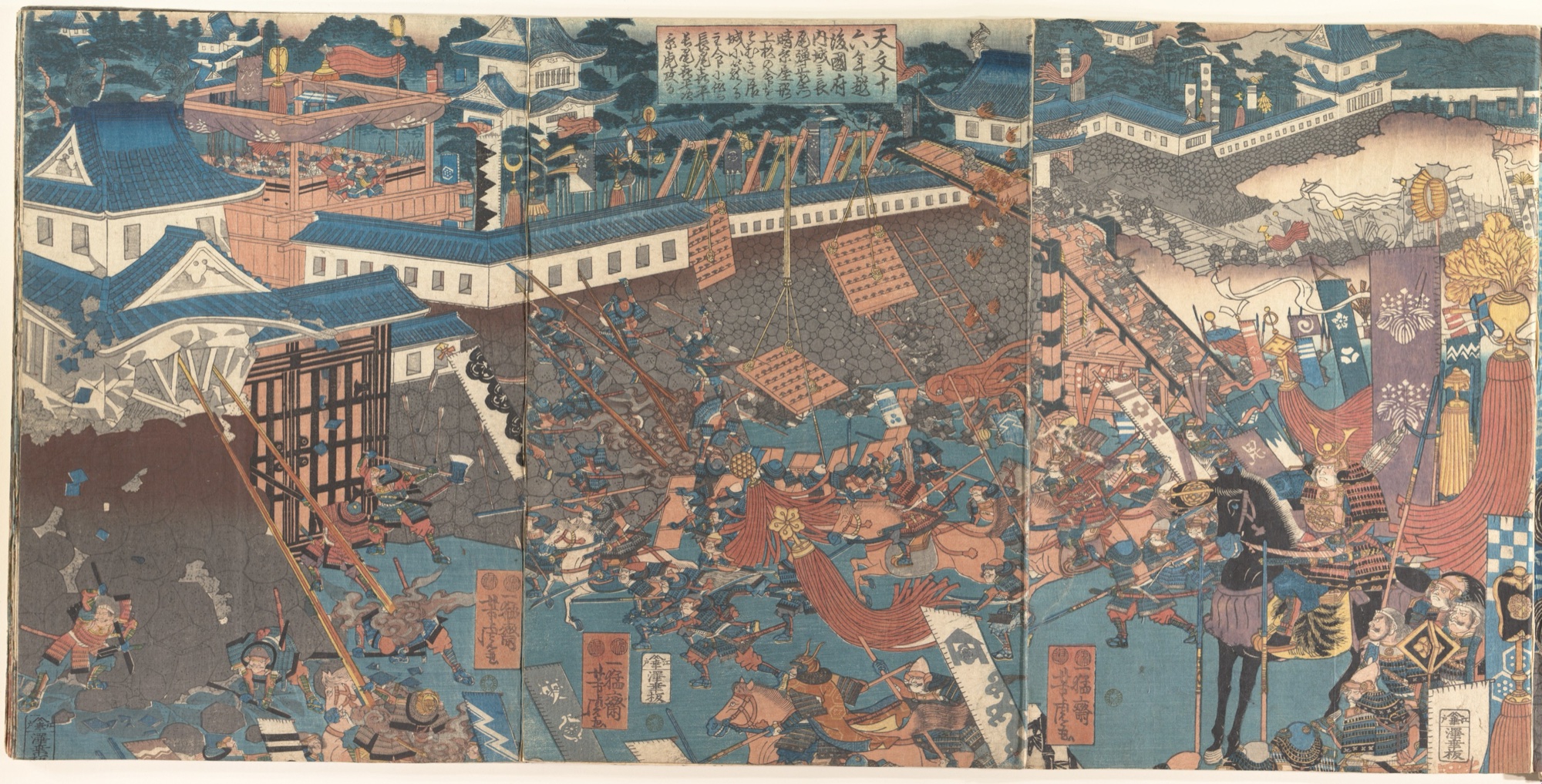
Nobunaga did not forget. Two years later, in the autumn of 1581, he sent a far larger force. The Samurai Museum of Berlin puts it at an estimated 40,000 to 60,000 men, and describes the Iga fighters as badly outnumbered. They lost. Nobunaga had the province burned, and its castles and villages lay in ruins.
Iga’s independence was over. Estimates of the army vary from source to source, so treat the figure as a range and not as a count. What matters is the scale. A region that had beaten one Oda army could not stand against a far larger second one.
You may also like
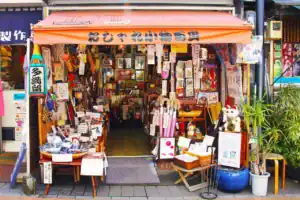
Those two essays suit the next stage of the story. The first shows how to use Kyoto as a base, which is how most visitors reach Iga. The second walks through Yanaka, a Tokyo district that survived later wars and fires. With that in mind, we return to the people of Iga.
The people who scattered
What was left? The valleys were no longer a self-governing league, yet the skills survived in the people. According to Japanese accounts, some Iga fighters returned to farming. Others went into service with lords elsewhere, since commanders still wanted trained scouts. Meanwhile, Koka men, who had not suffered the same defeat, kept their own traditions.
Then history turned. In June 1582, Nobunaga died, and the order he had imposed began to break.
The escape and the legend
The best known story concerns that summer. Ieyasu was in the Osaka region with a handful of retainers when news of Nobunaga’s death arrived. He needed to reach home safely through hostile country. Edo-period accounts say Hattori Hanzo (Hattori Hanzō), a Tokugawa vassal of Iga descent, led him through Iga and Koka with the help of local men.
Here, record and legend part ways. Nippon.com reports that Ieyasu did cross the mountains by the Iga route in 1582. However, the claim that Hanzo organized his protection has no firm historical evidence behind it. The same article adds that Hanzo, whose full name was Hattori Masanari, entered Edo with Ieyasu in 1590 and was probably not a shinobi himself but a commander of them. Tokyo’s Hanzomon gate, near their residence, still carries the family name.
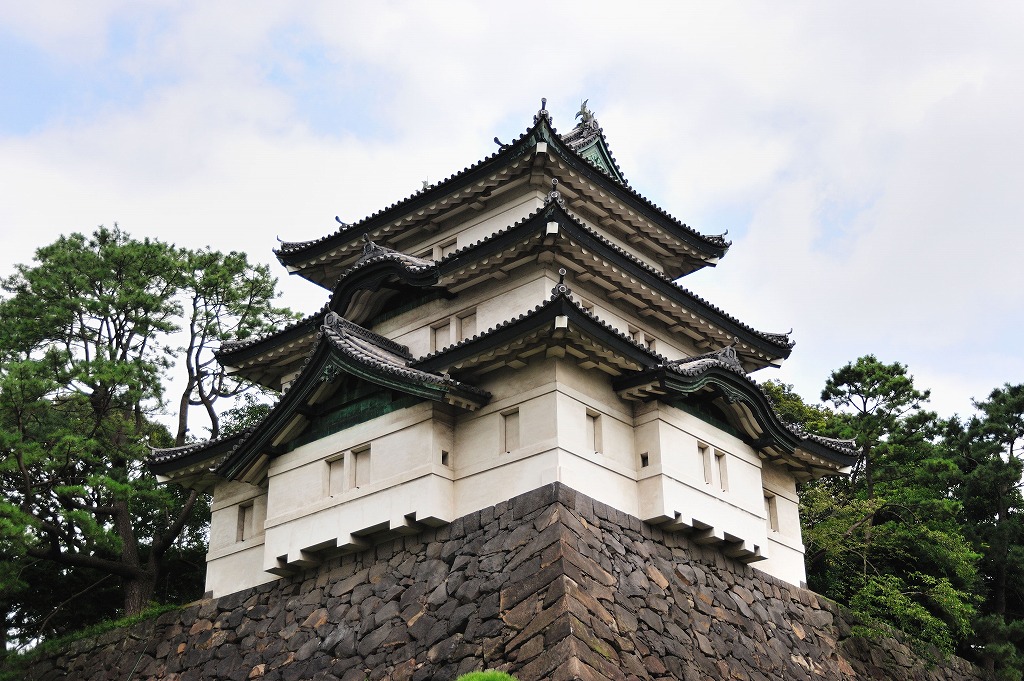
Beyond the legend sits a solid fact. The Samurai Museum of Berlin states that Ieyasu took about 200 Iga men into his service as the Iga-mono, and gave them a district of Edo called Yotsuya. That is the real afterlife of Iga’s fighters. They did not vanish. They became guards for the family that ruled Japan for 250 years.
A castle where the valley had been
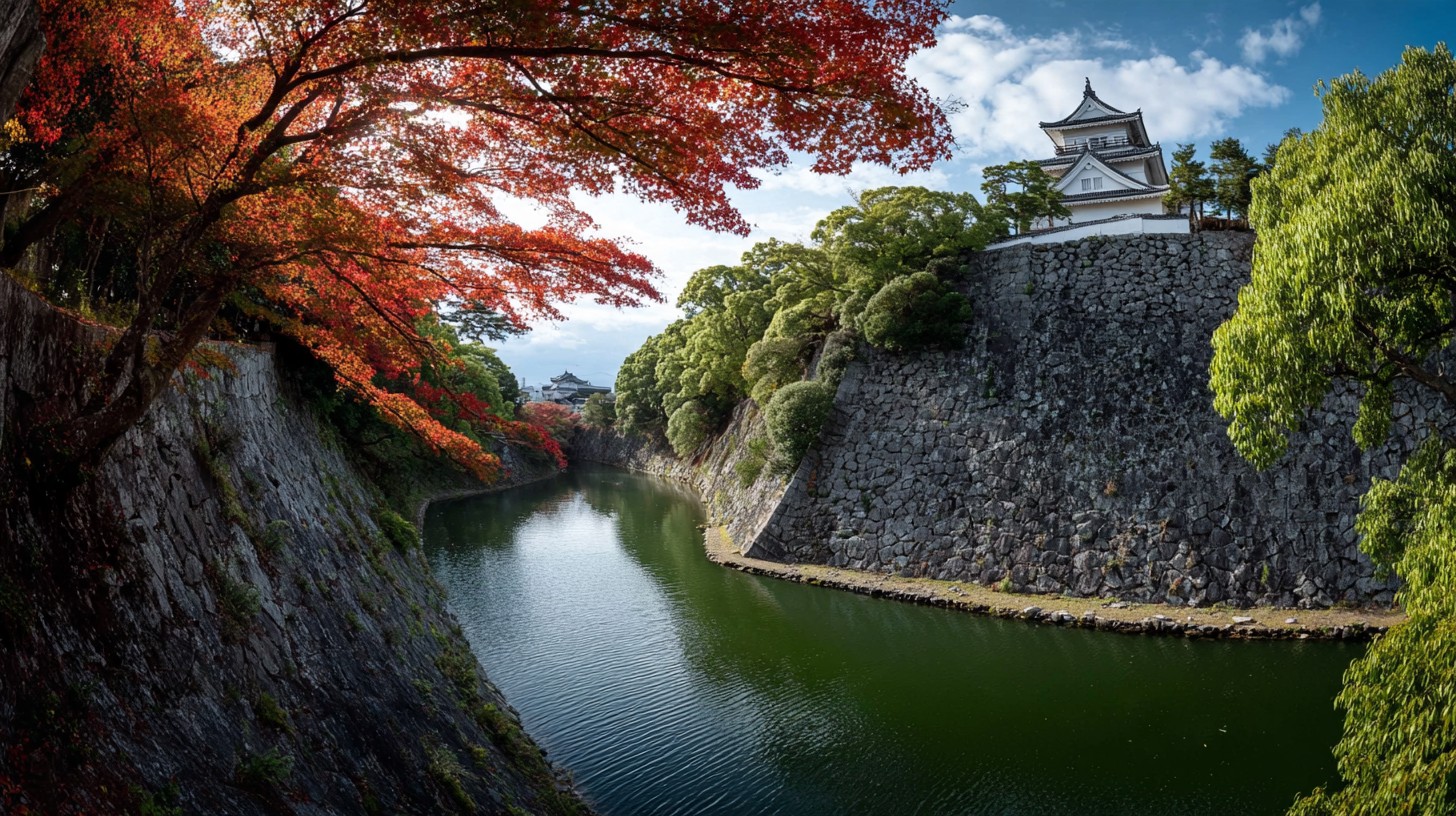
Iga’s land was handed to new lords. Tsutsui Sadatsugu began building a castle at Ueno in 1585. Later, Todo Takatora (Tōdō), who took over the province in 1608, rebuilt it on a grand scale. According to Mie’s tourism board, his stone wall stands about 30 meters high. His planned five-story tower fell in a storm in 1612. The present wooden keep dates from 1935.
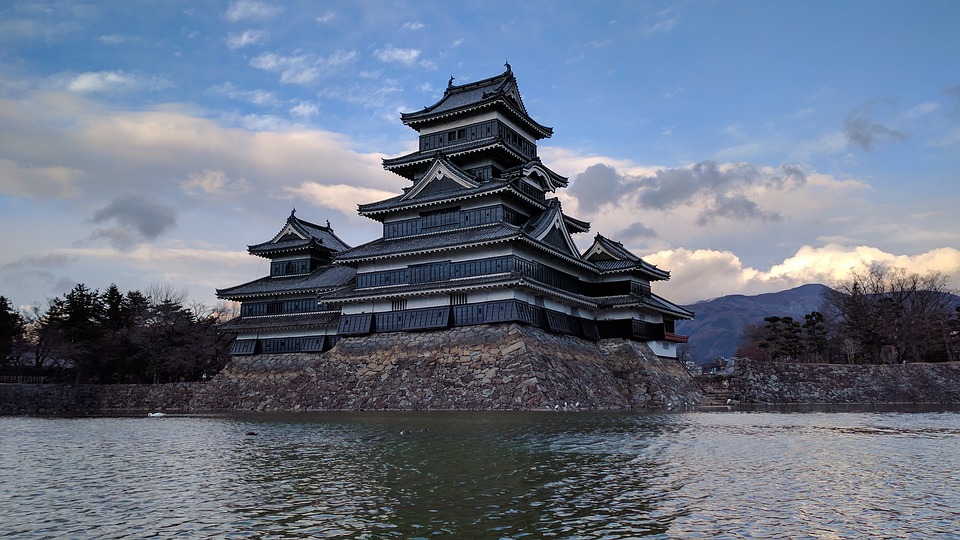
So the valley that once held out against Nobunaga’s son became a castle town. It is the most visible answer to our question, and you can stand beside it today.
The pause between two wars
One detail of this story is easy to miss. Two years passed between the defeat of 1579 and the invasion of 1581. During that pause, Iga had time to prepare and to doubt, and Nobunaga gathered a far larger army. The Japanese idea of ma, the meaningful interval, describes exactly this kind of gap, where the next event is being shaped in silence.
Where to See Ninja History Today
Anyone asking were ninjas real can test the answer on foot. Two regions repay a visit, and they sit on the same rail route. Both are easy day trips from Kyoto or Osaka, and neither needs a car.
Iga-Ueno, Mie
From Kyoto, take the JR Biwako and Tokaido line to Kusatsu, the Kusatsu line to Tsuge, and the Kansai line to Iga-Ueno. The journey takes about two hours, according to japan-guide’s access page, and one more short ride on the Iga Railway reaches Ueno-shi Station. From Osaka, Kintetsu trains run to Iga-Kambe, where the same Iga Railway continues to Ueno-shi. Allow one and a half to two hours, and check the current timetable. Most of the sights stand in and around Ueno Park, a short walk from the station.
The Iga ninja museum, formally the Iga-ryu Ninja Museum, is the first stop. Its ninja house is a plain farm dwelling fitted with traps, false corridors, concealed doors and escape routes, and a guide in ninja dress demonstrates each one. Another hall displays more than 400 ninja tools, and a separate hall covers the scientific analysis of old writings. A ninja show runs on some days, not every one. Weekday hours are 10:00 to 16:00 and weekend hours 10:00 to 16:30, according to the museum.

Next, walk up to Iga Ueno Castle. It opens from 9:00 to 17:00, with the last entry at 16:45, and closes from 29 to 31 December. Stand at the foot of the wall and look up 30 meters of fitted stone.
Koka, Shiga
On the Shiga side, the Koka Ninja House is the former home of the Mochizuki clan. The city of Koka says it was built more than 300 years ago for the ninja leader Mochizuki Izumo-no-kami. Inside, you will find trap doors, false walls and rooms built to guard against intruders, together with real ninja tools and a place to try throwing stars. Hours run from about 9:00 to 16:30, according to the city’s visitor page, so confirm them before you go. It lies about a 20-minute walk from Konan Station on the JR Kusatsu line, the same line the route to Iga uses.
Allow an hour inside. The house is small, so the demonstration of its tricks is the main event, and the shuriken throwing is a lighthearted end to the visit. Staff can explain what each feature was for, and why a farm family might want a wall that moved.
The road between them
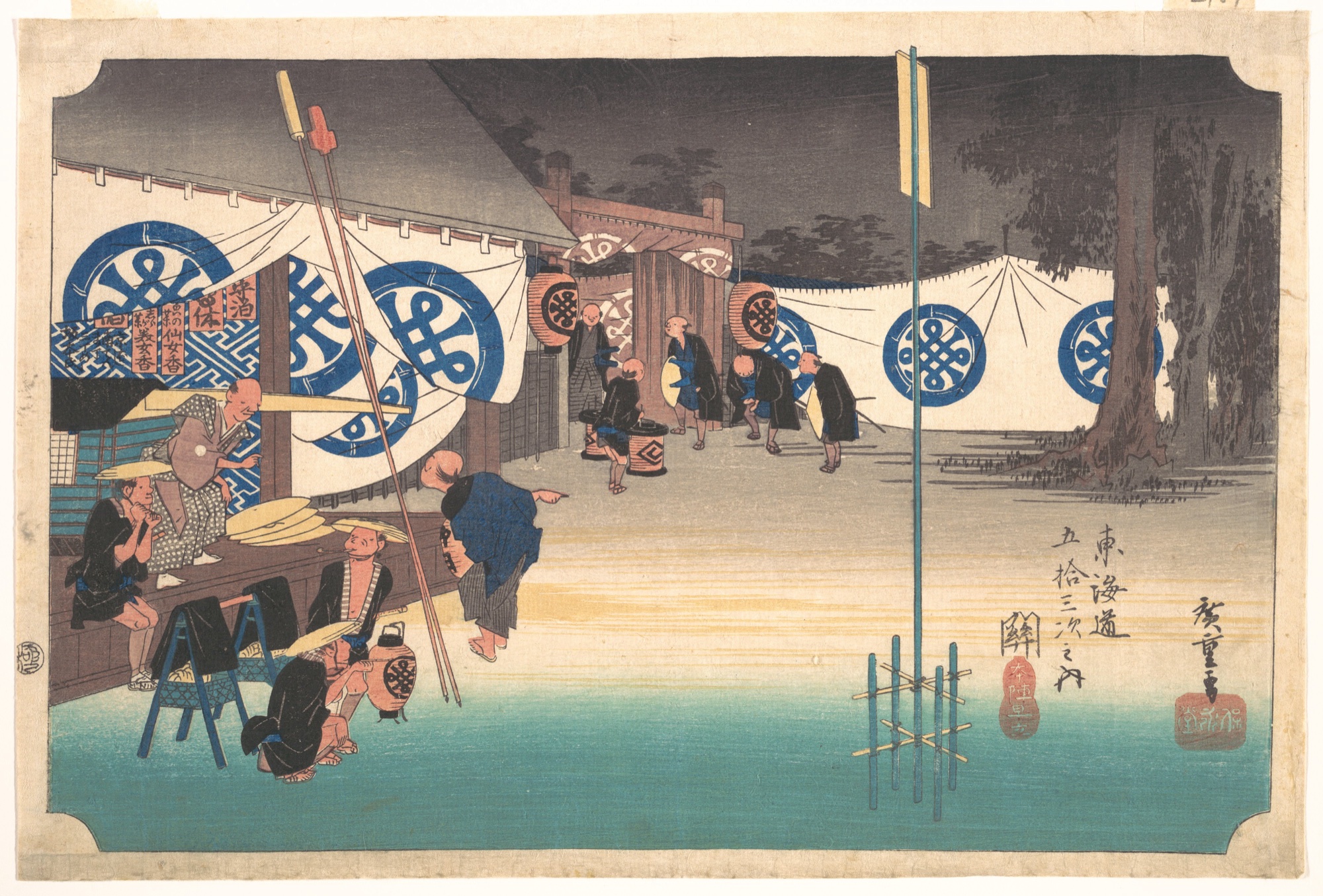
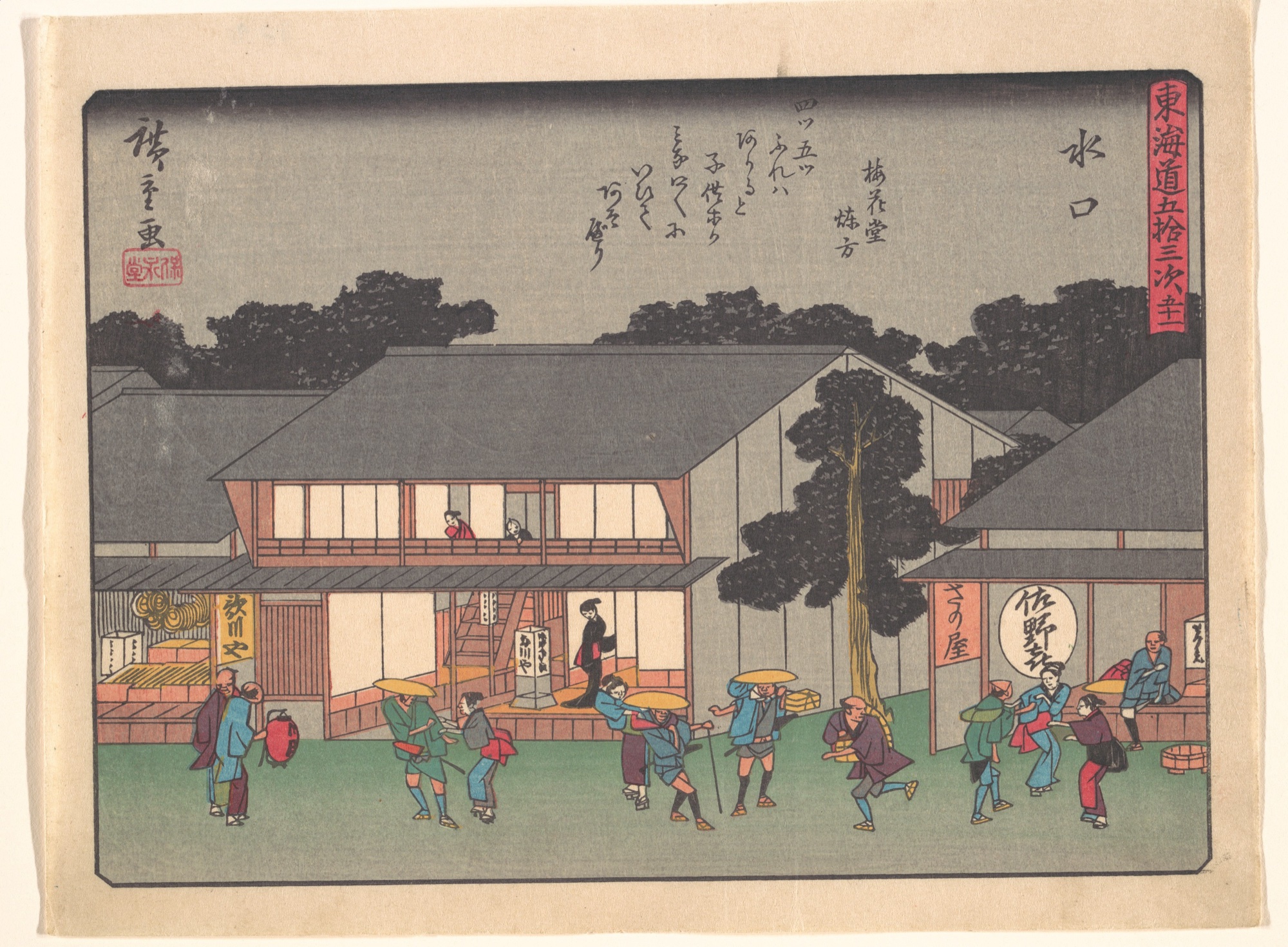
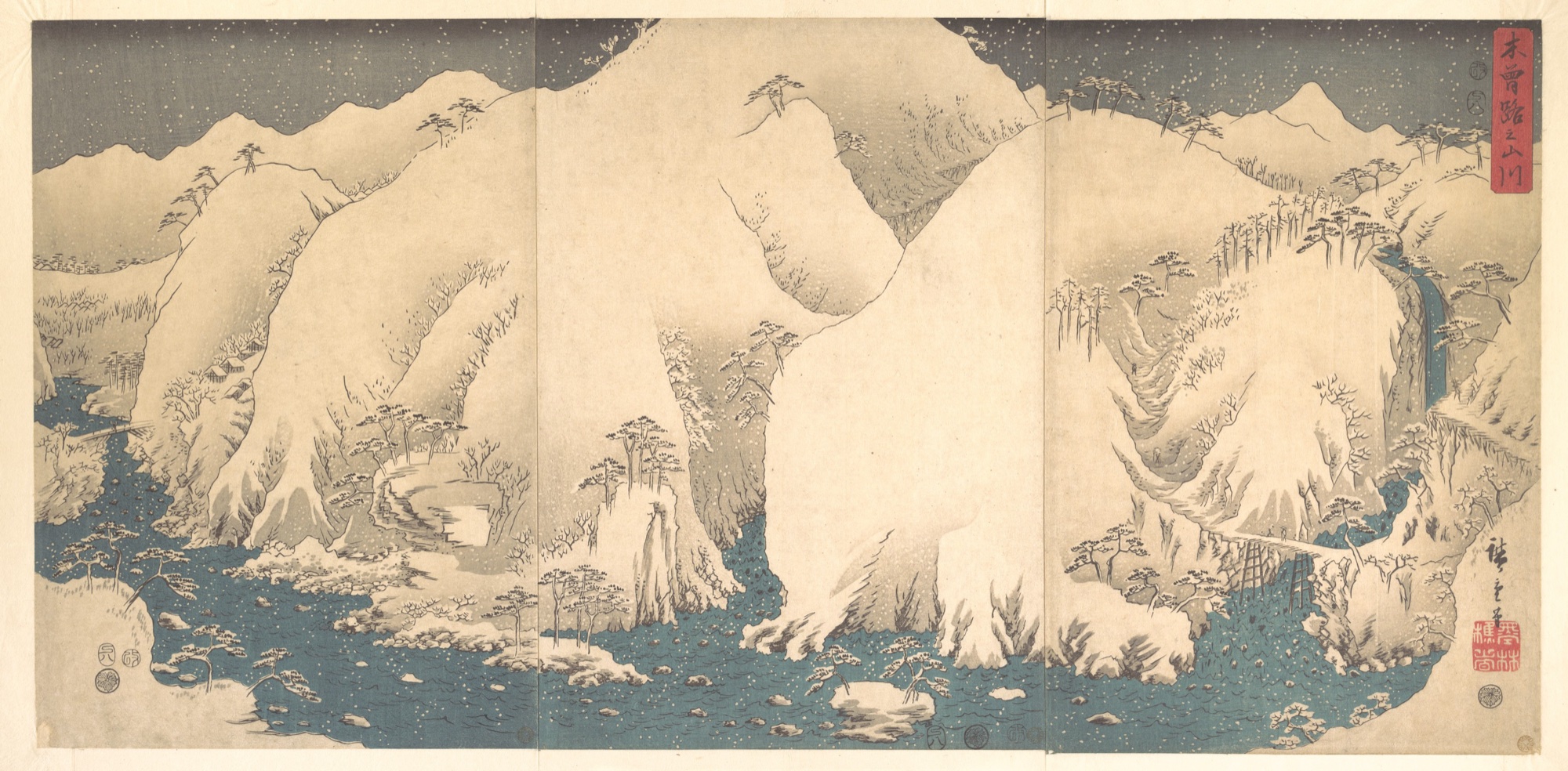
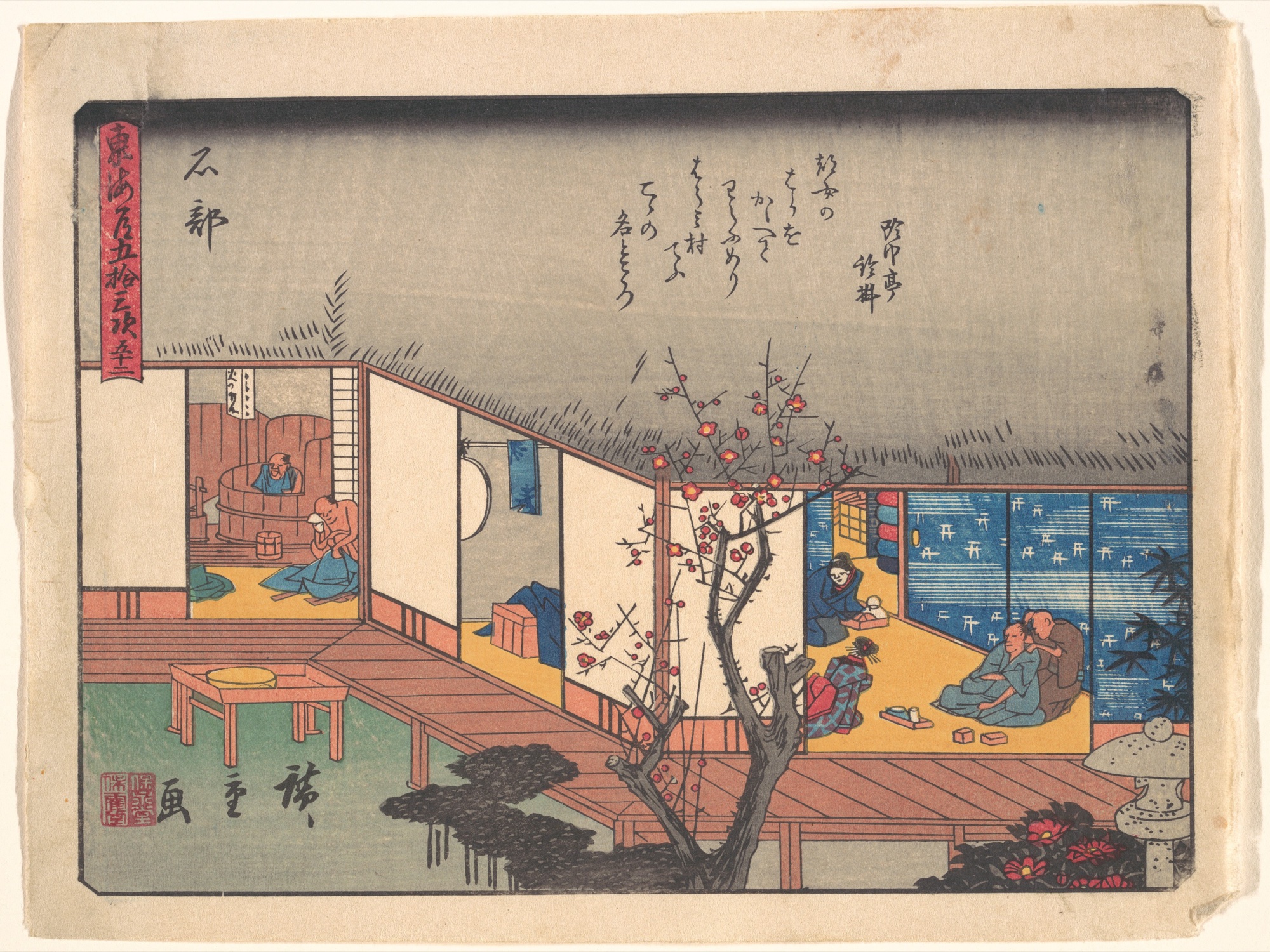
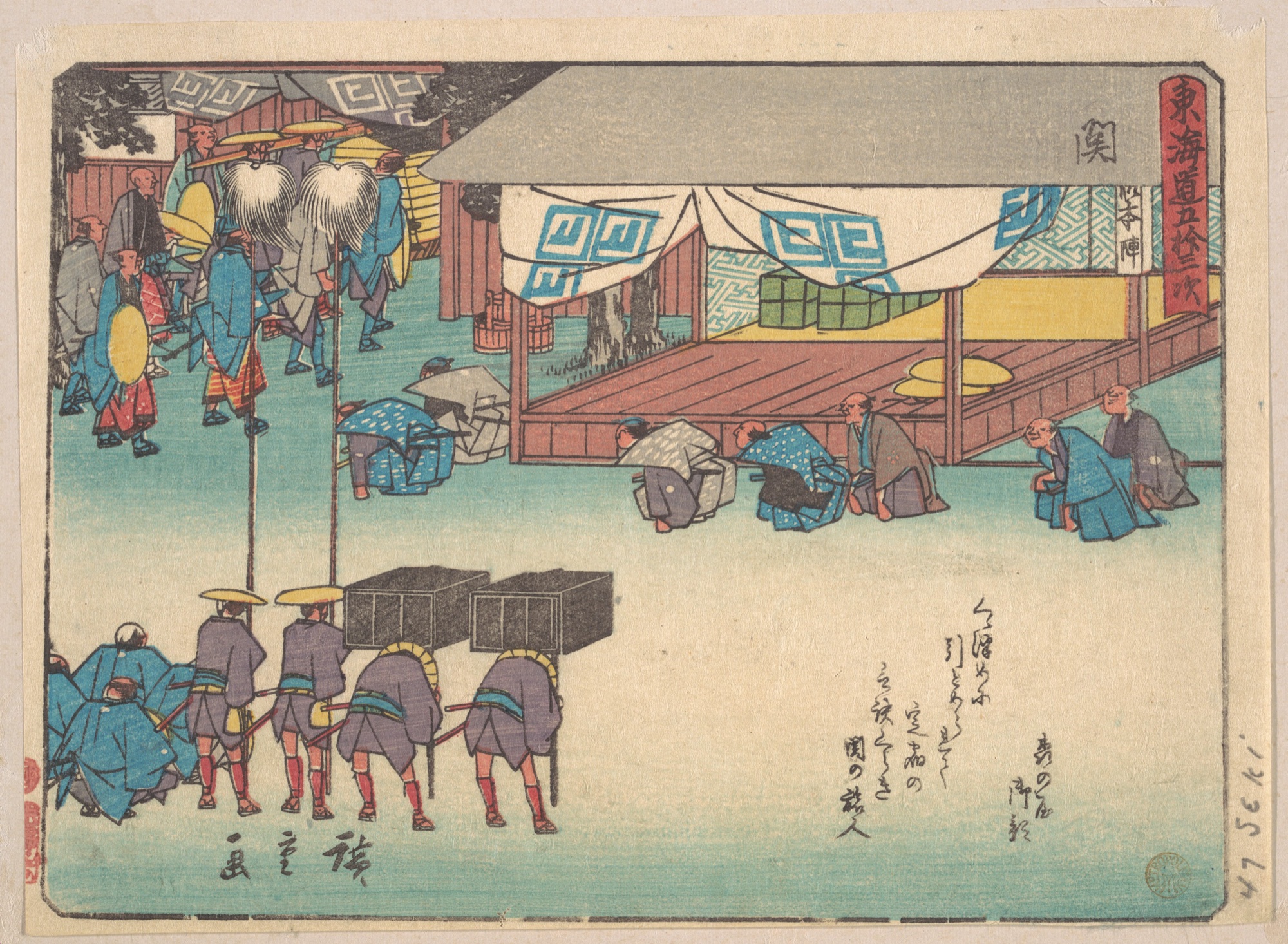
Hiroshige drew this country in his Tokaido series, and the prints make good company on the journey. Seki stands on the Mie side. Mizukuchi and Ishibe stand in Shiga. Each shows a post town and the travelers who passed through it. The road itself has changed far less than the towns around it, so the prints still help you read the land. You may notice that every scene is full of ordinary people on the road. That is exactly how the real shinobi once moved.
If you plan to see both regions, a good plan is to base yourself in Kyoto and give each one a day. Start early in Koka, because the ninja house closes before dusk. Then continue to Iga-Ueno, where the castle and the museum sit close together.
Books for the Castles and the Road
A history of the castle from early earthworks to the age of the great keeps.
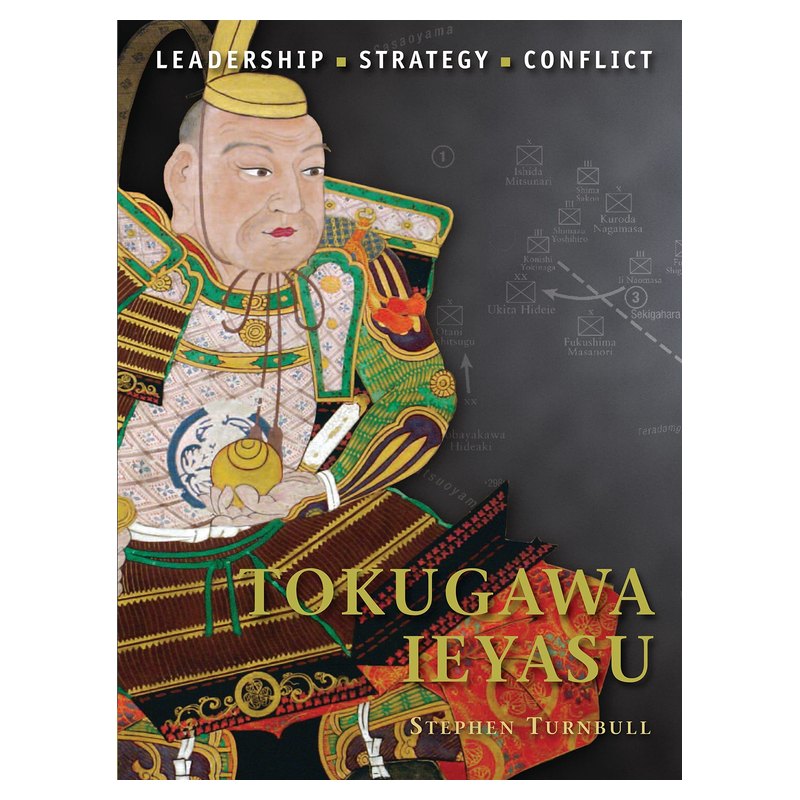
A short life of the man who took Iga’s fighters into his service and ended the civil wars.
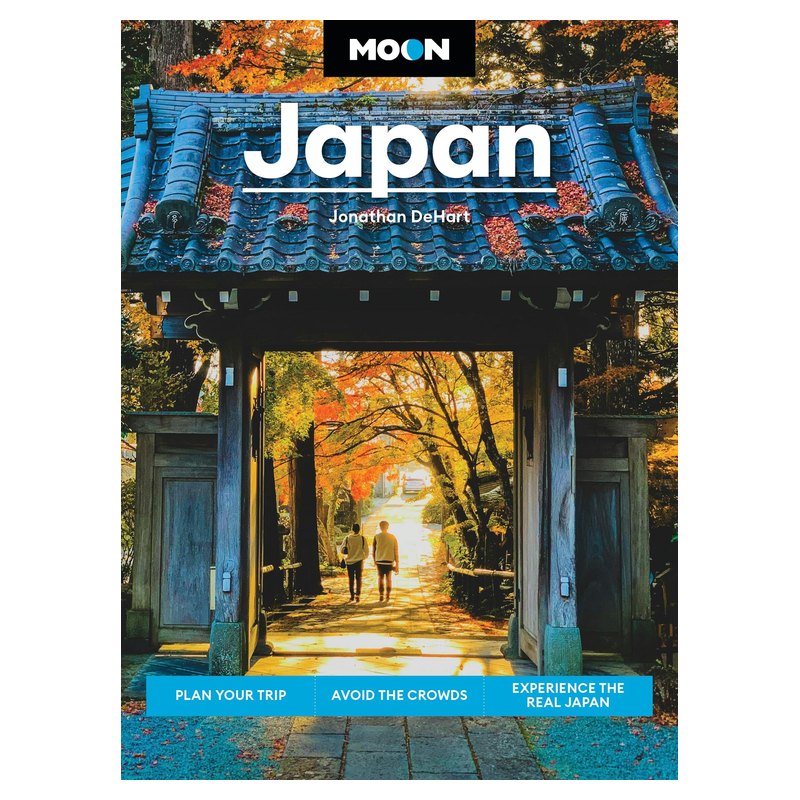
A current guidebook for the Kyoto and Kansai base from which Iga and Koka are reached.
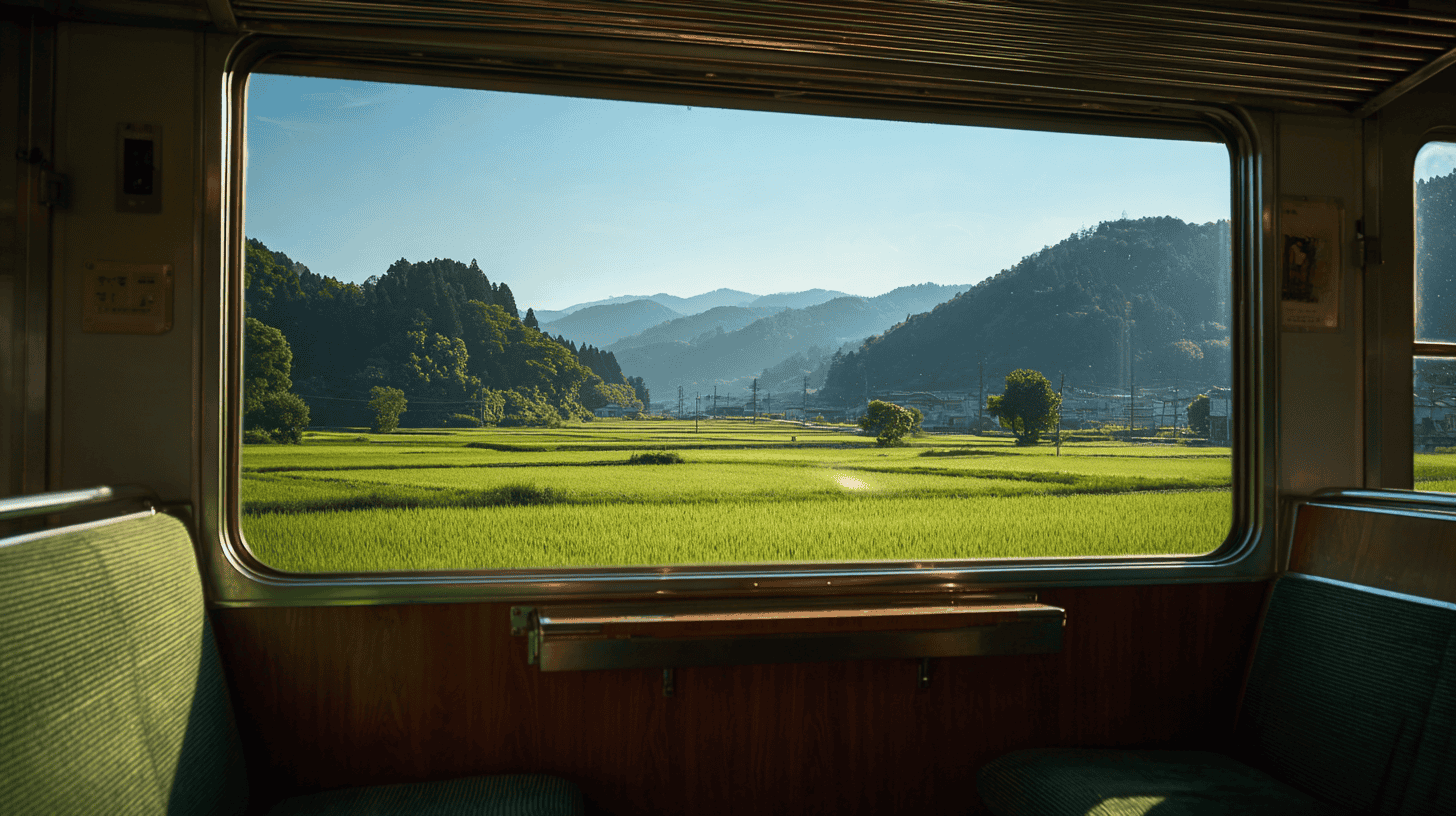
Bring one of them on the train. The ride from Kyoto to Iga passes through low hills and small valleys, and the castle book will make the walls at Ueno easier to read. Meanwhile, the guidebook covers the Kyoto and Kansai base from which both regions are reached.
What Iga Eats: The Ninja Biscuit and a Winter Stew
Iga has no coastline, so its cooks learned to make good food from vegetables, soy and preserved ingredients. The best known sweet is katayaki, a very hard baked sweet of wheat flour and sugar. Japan’s Ministry of Agriculture, Forestry and Fisheries (MAFF) records that it is said to have been a ration carried by Iga ninja, and that its present form is at least 200 years old. Fresh from the plate it is soft, but it hardens as it cools. People often soften it in a cup of Japanese tea.
A winter stew from the hills
For a recipe, we turn to noppei, a thick winter stew of the Iga region. MAFF’s regional cuisine pages record it as a representative winter side dish there, with an early mention in the cookbook Ryori Monogatari of 1643. Because fish was scarce inland, cooks treated soy products and fish cakes as delicacies. The stew below follows the MAFF recipe for four servings.
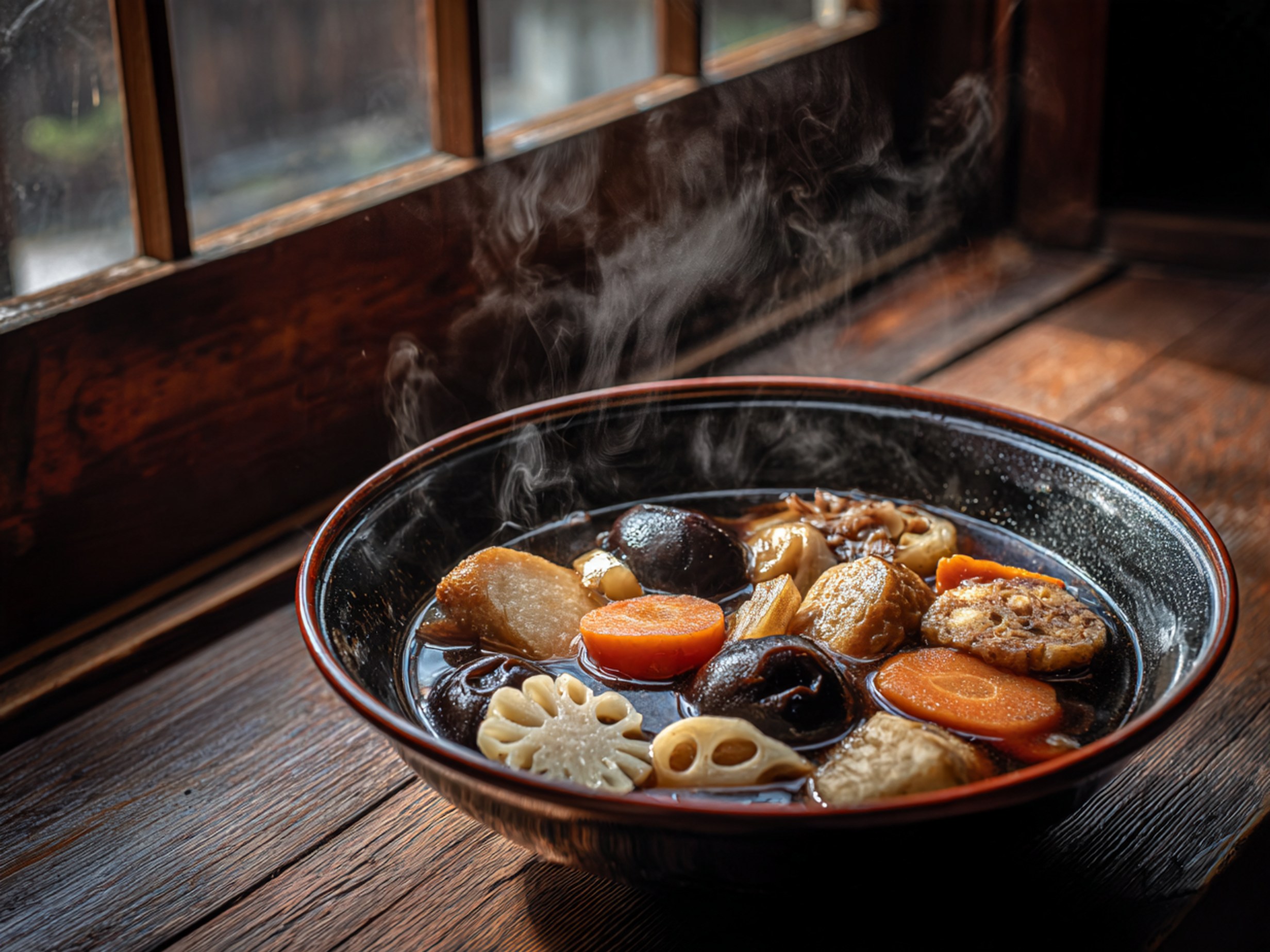
Noppei Recipe: Iga’s Thick Winter Vegetable Stew
Prepare the vegetables first. Peel four taro, half a carrot and a quarter of a daikon. Peel and slice one burdock root and half a lotus root. Parboil the taro, carrot, daikon, burdock and lotus root until just tender. Soak four dried shiitake in water, then halve them and keep the soaking liquid. Cut half a block of konjac, one sheet of fried tofu, one chikuwa, one kamaboko and half a bamboo shoot into bite-sized pieces. Simmer everything in 400 milliliters of dashi and 60 milliliters of the shiitake liquid. Season with 60 milliliters of mirin, 40 milliliters of sake, 60 milliliters of soy sauce, 30 grams of sugar and a little salt. Cook until the flavors meet and serve hot.
Noppei is a dish for a cold evening. Its flavor comes from dashi, soy sauce and mirin, and it suits a day spent walking the valley. As a result, it makes a fitting end to the trip. A single pot and about an hour are all it needs, and the recipe feeds four people.
It also helps to write things down. Notes made on the train, on the walk up to the castle and over a late lunch of noppei will bring the day back months later. The ninja house in particular rewards a travel journal, because its tricks are easier to remember when you have sketched them.
A quick diagram of a revolving wall says more than a photograph that you never look at again. Add the train times, the name of the stop and the weather. Those small facts are the first ones you forget. Even a few lines per stop turn a tour into a story you can retell, and they give the later pages of the notebook something to build on.

What the Shinobi Still Teach: Looking Closely
The shinobi’s real talent was attention. They watched, they waited and they let others talk. Everything in this story, from the 1603 dictionary entry to the Iga guards in Edo, points to the same habit. Learn what is in front of you before you act on it. That habit is just as useful for a traveler as it was for a spy.
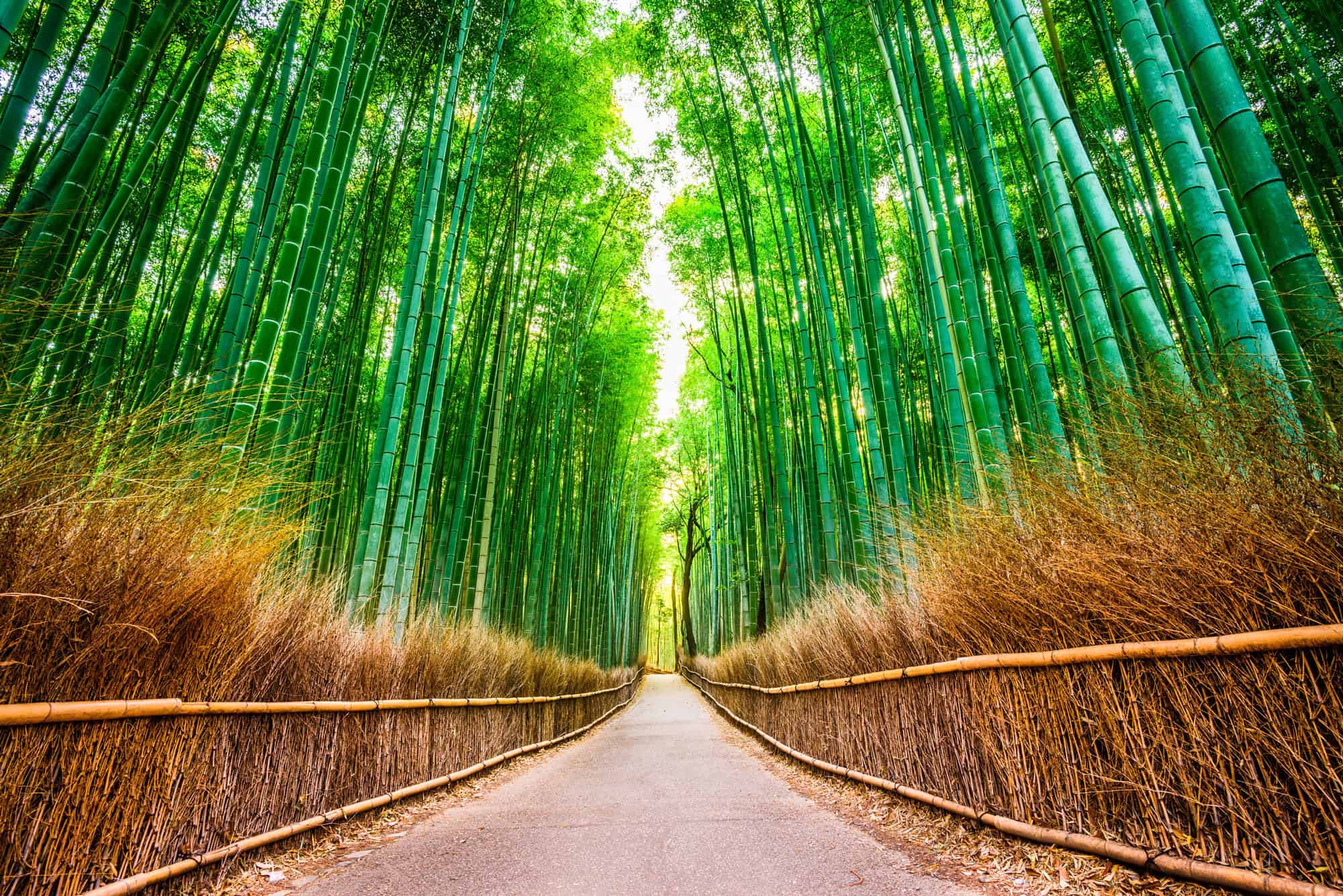
A visitor who looks closely sees the wear on a stone wall, the shape of a doorway and the way a village sits in its valley. The ninja house in Iga-Ueno rewards that kind of looking. Each trap and each turn of a corridor tells you how the place once worked, if you slow down enough to read it. For another well-kept samurai quarter, our Kanazawa guide is a good next step.
The Real Ninja, Seen Plainly
So, were ninjas real? They were, and the truth is more interesting than the costume. They were farmers, scouts and guards from two hill regions, trained by necessity and hired for what they knew. Their country fell in 1581, and the survivors went on to serve the family that ruled Japan for 250 years. The legend grew on the stage and in print, long after the real shinobi had gone back to their farms. For more old castles and towns, see our guide to World Heritage sites in Japan.
Recommended
That is the picture worth carrying to Iga and Koka. Look for the farmhouse, not the fortress. Look for the careful wall, not the costume. The real story is smaller than the legend, and it is easier to believe. It also asks more of the visitor, because the evidence is in the details: a hinge, a floorboard, a window set too high to see through.
Planning a trip around Iga and Koka
The tools below support the practical side of a trip, from a first rough route to the notes you keep along the way. A day in the hills makes a good break from Kyoto, and it adds a side of Japan that few guidebooks reach.


A trip to Iga and Koka works best when someone has timed the trains, the opening hours and the lunch. Our team can build that day into a longer itinerary, with a base in Kyoto or a night in Iga-Ueno, and a guide for the stories behind the walls. We can also pair it with other old towns, so that the trip has a shape. Tell us what you want to see, how much walking suits you and which season you prefer, and we will shape the days around it. We handle the bookings and the timing in advance. A good plan leaves room for the unplanned hour, too.
A Japan trip that reaches Iga and Koka
Our team builds custom itineraries that go beyond the usual cities. Expect unhurried days, well-timed trains and evenings in rooms that face a garden.
Plan Your Custom Japan ItineraryQuestions Worth Asking
Were ninjas real?
Yes. Ninja, called shinobi in the records, were real spies and scouts who served lords from the 14th century to the 19th. They came mainly from Iga in Mie and Koka in Shiga. The black suit and throwing stars came later, from the stage and novels.
Did real ninja wear black?
Not in the records. Mie University’s research center notes that ninja were shown in ordinary civilian clothes until the mid-18th century. Theatre then dressed them in black outfits and masks to mark the character, and novels adopted the look from the early 19th century.
What happened to Iga after 1581?
Oda Nobunaga’s army, estimated at 40,000 to 60,000 men, overran Iga in the autumn of 1581 and burned the province. Its independence ended. Many fighters farmed or served other lords, and Tokugawa Ieyasu later took about 200 Iga men into his service as guards at Edo.
Where can you see ninja history in Japan today?
Iga-Ueno in Mie has the Iga-ryu Ninja Museum, with a ninja house and more than 400 tools, and Iga Ueno Castle, whose stone wall rises about 30 meters. Koka in Shiga has the Koka Ninja House, the old Mochizuki home. Both lie within two hours of Kyoto.
Was Hattori Hanzo a real ninja?
Hattori Hanzo was a real Tokugawa retainer of Iga descent. Nippon.com reports that he was probably a commander of shinobi, not a shinobi himself, and that the story of him organizing Ieyasu’s 1582 escape lacks firm evidence.