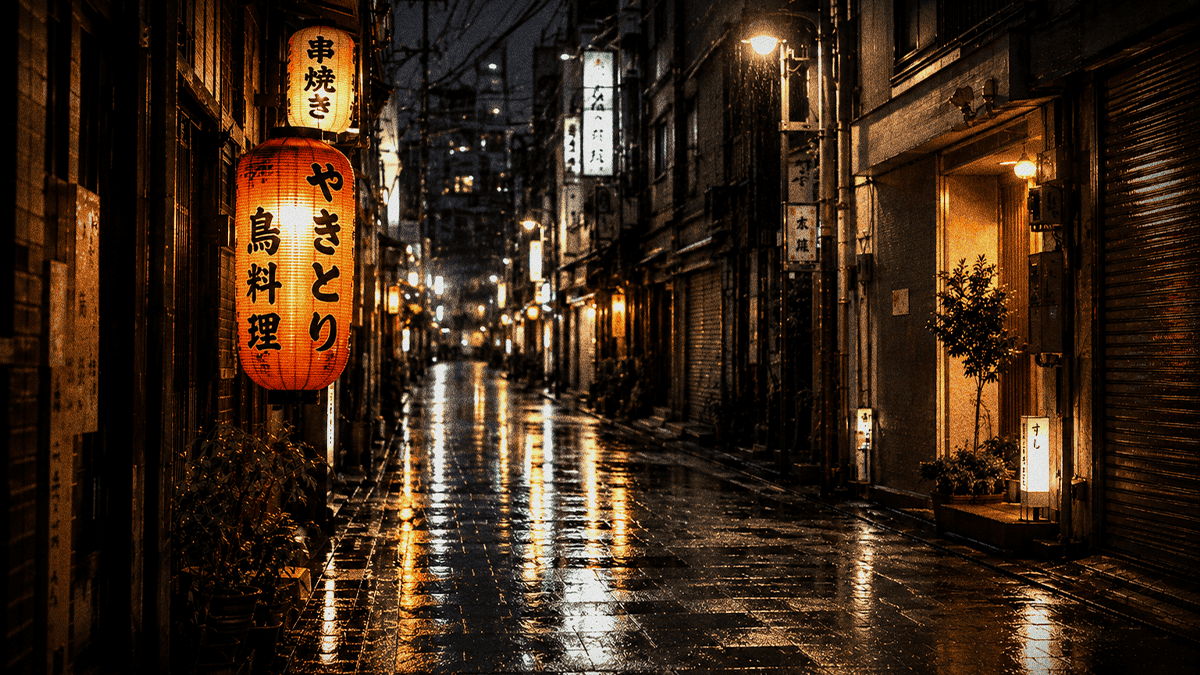
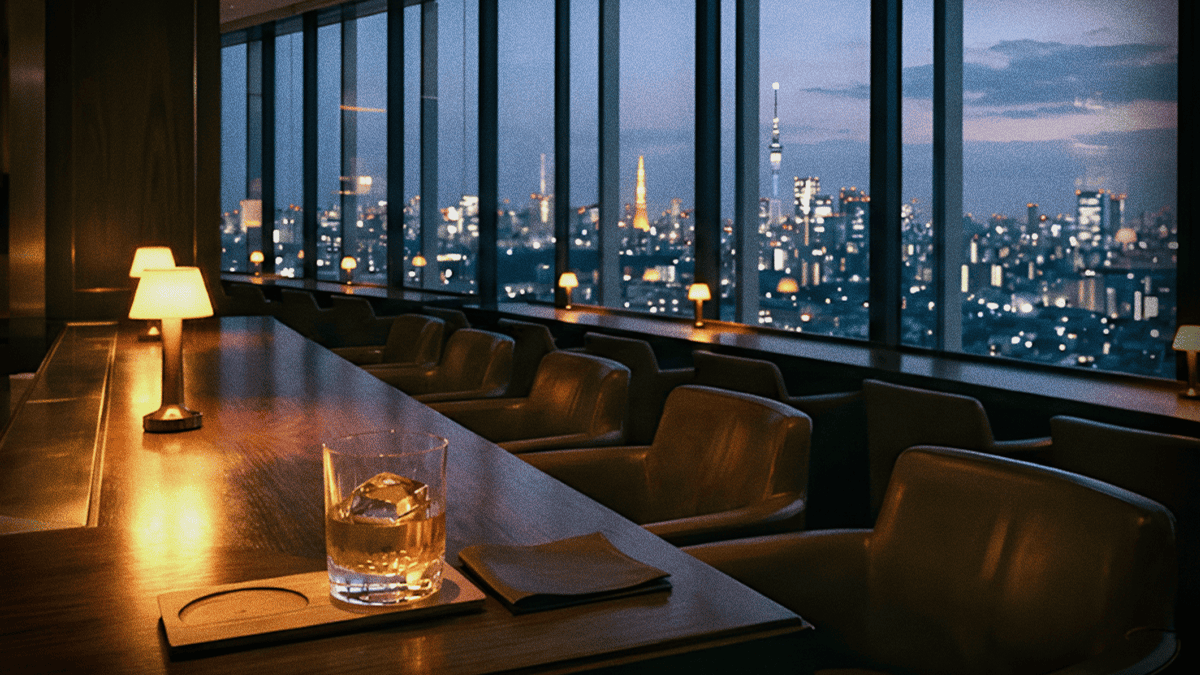
Somewhere around the fifty-second floor of a Shinjuku tower, a whisky glass catches the last of the light. The city below runs to the horizon in every direction. You have seen this room even if you have never left your own country, because a camera found it in 2003 and never quite let it go. That is the strange power of movies set in Japan. The country arrives in your imagination years before you do.
This guide gathers the movies set in Japan that shaped how the world pictures the country, from Kurosawa’s mud-splattered samurai to this decade’s streaming hits. It does something most lists skip, though. For every title, it tells you what was actually filmed here, what was built on a soundstage an ocean away, and where you can stand today. Screen travel has a name now, and a serious following — our approach to traveling Japan on your own terms pairs naturally with it.
Consider this both a watchlist and a map. Those two turn out to be different things more often than you would expect. One boundary before we begin: everything here is live action. Animated Japan is a universe of its own, and we cover it separately in our anime editorial.
The most famous movies set in Japan include Lost in Translation, Kill Bill, Shōgun, Seven Samurai, Godzilla, and Bullet Train — but fewer than half were mainly filmed there. The most rewarding real locations to visit are the Park Hyatt Tokyo, Gonpachi in Nishi-Azabu, Himeji Castle, Odawara Castle, and Kyoto’s working jidaigeki backlot.
Prefer the trip planned around the films for you? Begin a custom itinerary.
Why “Set in Japan” Rarely Means “Filmed in Japan”
Here is the quiet secret of movies set in Japan. Permission to shoot in public spaces has always been hard to secure here, so decades of productions built their Japan elsewhere. Tarantino raised his Tokyo restaurant in Beijing. The Shōgun team recreated 1600s Japan on the Canadian coast. Brad Pitt’s bullet train never left a Los Angeles soundstage. None of this diminishes the films. It simply means a traveler needs a better map than the credits provide.
The appetite for that map has never been larger. Expedia’s research into what it calls set-jetting found that most global travelers now report growing interest in screen-inspired trips. Moreover, the habit runs strongest among younger travelers planning around specific locations. Japan sits near the center of that movement, because so much beloved cinema lives here — in memory, if not always in fact.
So each entry below carries two layers. First, the film or series itself, and why it earned its place. Second, a plain-spoken routing note: what is real, what is not, and where to go. The gap between the two is where the good trips hide.
The Tokyo Icons
1. Lost in Translation (2003)
Sofia Coppola’s film remains the definitive portrait of Tokyo as an outsider first meets it: jet-lagged, tender, faintly unreal. Bill Murray’s fading actor and Scarlett Johansson’s adrift newlywed circle each other through the film. They drift past hotel corridors, karaoke rooms, and the neon wash of Shibuya. Two decades on, nothing has replaced it. Unusually for this list, nearly everything you see was shot on location.
The heart of the film is the Park Hyatt Tokyo, occupying the top fourteen floors of Kenzo Tange’s Shinjuku Park Tower. In December 2025 the hotel reopened after a nineteen-month restoration. It was the first comprehensive renewal in thirty years. The New York Bar returned to its original design, which means the room from the film is once again exactly the room from the film. Timing matters here. Most guides to the lost in translation hotel were written before the reopening, so they describe a construction site. You will find a landmark restored instead.
The Park Hyatt Tokyo in Shinjuku, reopened December 2025. The New York Bar on the 52nd floor admits non-guests in the evening, with a cover charge after the live music begins. Add the Shibuya Crossing and a karaoke room in Shinjuku to complete the film’s geography in a single evening.
2. Kill Bill: Volume 1 (2003)
The House of Blue Leaves sequence is one of the most famous fight scenes ever cut. It planted a specific image of a Tokyo izakaya into millions of minds: the timber balconies, the paper lanterns, the great open floor. Here is the twist every visitor should know before booking a flight. That room was a soundstage in Beijing. Tarantino built it from memory of a real restaurant he loved. Frankly, the real one is better company anyway.
The inspiration was Gonpachi Nishi-Azabu, a cavernous, lantern-lit izakaya on the corner of the Nishi-Azabu crossing, ten minutes from Roppongi. It grinds its own buckwheat for soba and runs a sushi counter upstairs. Better still, it stays open until three in the morning. Anyone searching for the kill bill restaurant tokyo fans talk about ends up here. The staff made peace with that long ago. Walk the mezzanine, order the skewers, and the film reassembles itself around you.
Gonpachi Nishi-Azabu, 1-13-11 Nishi-Azabu, Minato. Book ahead for dinner, or come late when the crowd thins. The fight scene itself was filmed in Beijing — the restaurant is the muse, not the set, and it is honest about the distinction.
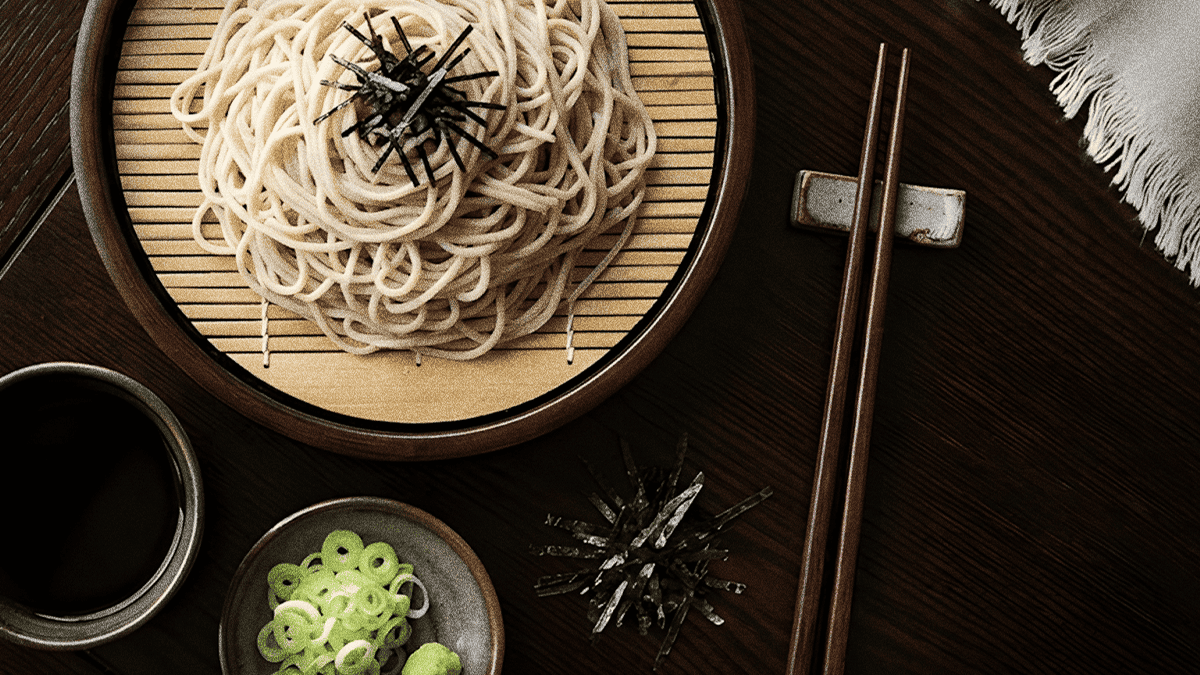
Zaru Soba with Homemade Mentsuyu
Gonpachi’s signature is hand-cut soba, and the chilled version is the easiest to honor at home. Warm half a cup of soy sauce with half a cup of mirin and a cup of water, add a small piece of kombu and a handful of katsuobushi, and let it barely simmer for five minutes before straining and chilling. Boil the soba until just tender, around four minutes, then rinse under cold running water while rubbing the strands to remove surface starch. Serve the noodles on a tray or plate scattered with slivered nori, with the chilled sauce alongside, scallions and a little wasabi stirred in as you dip.
3. Bullet Train (2022)

Brad Pitt’s luckless assassin Ladybug boards a night train from Tokyo bound for Kyoto, and mayhem follows through every carriage. The film is a candy-colored blast, drawn from Kōtarō Isaka’s novel, with Hiroyuki Sanada anchoring the ensemble. It is also, by some distance, the least Japanese production on this page. Filming happened almost entirely on Los Angeles soundstages. Only brief pickup footage came from Akihabara. Even the stations, the scenery, and Mount Fuji arrived by visual effects.
The route, however, is gloriously real. The Tokaido Shinkansen has linked Tokyo and Kyoto since 1964, departing many times an hour. Riding it delivers everything the film borrowed: the hush, the speed, the ekiben lunch boxes, the mountain sliding past the window. Sorting out tickets, passes, and seat reservations is its own small art. Helpfully, our guide to the JR Pass and Japan’s rail system walks through when the pass pays for itself and when point-to-point tickets win.
The real Tokaido Shinkansen from Tokyo Station to Kyoto, about two hours and fifteen minutes on the fastest services. Sit on the right side heading west for Mount Fuji. Buy an ekiben on the platform — the lunch box is half the ritual.
The New Golden Age of Japan on Television
Something shifted in the streaming era. Japan stopped being a backdrop for visiting Westerners and became the story itself, with Japanese-language series topping global charts. The four productions below did more for set-jetting interest in Japan than any tourism campaign of the decade, and they split cleanly down the middle: two were filmed here, two were not.
4. Shōgun (2024– )
The FX adaptation of James Clavell’s novel swept a record haul at the Emmys and single-handedly revived the prestige samurai drama. Hiroyuki Sanada’s Lord Toranaga and Cosmo Jarvis’s marooned English pilot circle each other through a Japan on the edge of civil war. The period detail reached a fidelity television had never attempted. A second season began filming in January 2026, set a decade after the first.
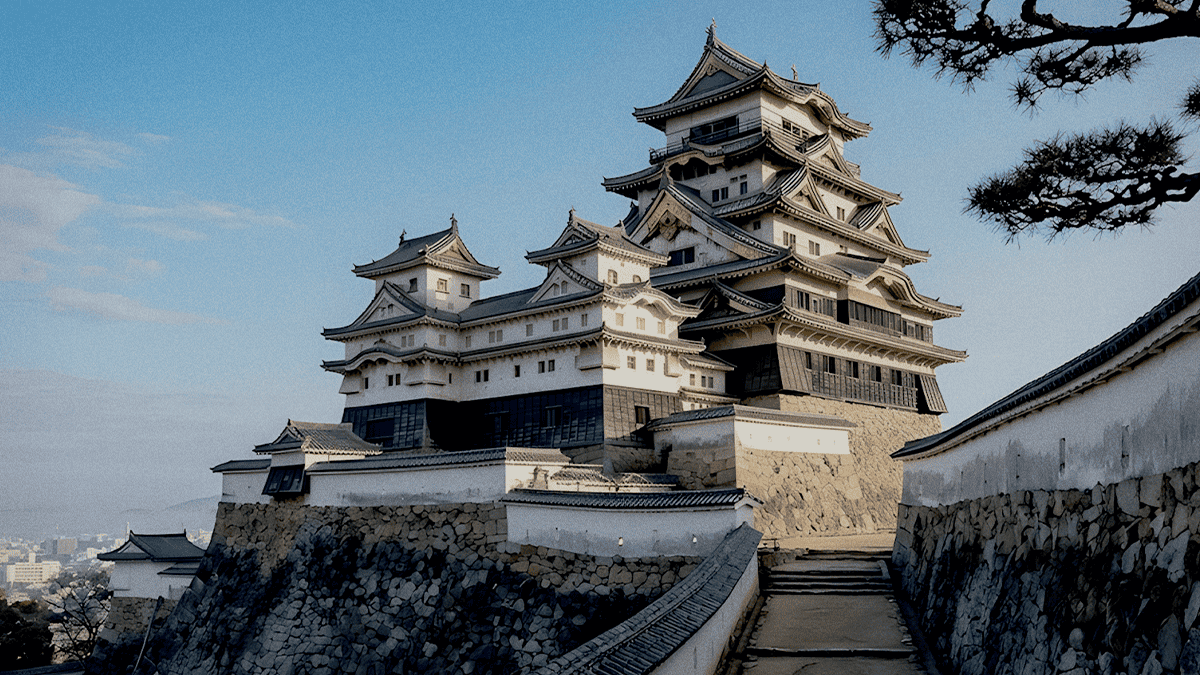
Every frame of it was shot in and around Vancouver. Anyone hunting shogun filming locations in Japan will come home disappointed, which makes this the clearest case on the list for routing by history rather than by production. The story shadows the real rise of the Tokugawa shogunate. Happily, the places tied to that era stand today. Himeji Castle is the finest surviving keep in the country, a white fortress that has never burned or fallen. Osaka Castle anchors the city where the fictional Council of Regents schemed. Kyoto’s Nijō Castle, begun by the real Toranaga’s counterpart, still has corridors built to chirp underfoot. Clavell’s original novel remains the deepest way in — eleven hundred pages that read faster than they look.
Himeji Castle, an hour west of Osaka by rail. Osaka Castle and its park. Nijō Castle in central Kyoto. All three are day-trip distance from one another along the same shinkansen corridor, and together they cover the world the series dramatizes.
5. House of Ninjas (2024– )

Netflix’s Japanese-made hit imagines the last great ninja family in reluctant retirement. They run a sake brewery and dodge their calling, until a rival clan resurfaces. It became one of the platform’s most-watched non-English series, and it earns a special place on this page for a simple reason. Unlike almost every other famous production here, it was actually filmed in Japan.
The Tawara family home in the series is Odawara Castle. The hilltop fortress sits an hour south of Tokyo and once guarded the approach to the Kanto plain. Production also worked around Fujinomiya, in the shadow of Mount Fuji, and on the storied stages of Toho in Tokyo. Odawara makes an ideal half-day trip. The castle museum covers the region’s real clandestine history. Meanwhile, the town below is famous for its kamaboko fish cakes and its access to Hakone.
Odawara Castle, thirty-five minutes from Tokyo by shinkansen. Climb the keep for the bay view the series uses, then continue into Hakone for the evening. Fujinomiya’s Fuji views round out a two-day version of the trip.
6. Tokyo Vice (2022–2024)
Based on Jake Adelstein’s memoir of reporting the crime beat for a Japanese newspaper, the HBO Max series is the great modern love letter to Tokyo at night. Ken Watanabe’s weary detective and Ansel Elgort’s hungry reporter move through a city of hostess clubs, yakitori smoke, and fluorescent newsrooms. Michael Mann directed the pilot, and it shows in every wet street.
The production shot on location across the capital, which makes tokyo vice filming locations some of the most findable on this list. Kabukichō’s neon canyons, the micro-bars of Golden Gai, and the business streets of Akasaka all play themselves. The series is effectively a walking tour with a plot. Go at night and start in Kabukichō. Then finish with a seat at a six-stool bar in Golden Gai, where the show’s whole atmosphere costs the price of a drink.
Kabukichō and Golden Gai in Shinjuku, ideally after nine in the evening. Akasaka’s esplanade by day. All real, all filmed on location — the rare case where the show’s Tokyo and the actual Tokyo are the same city.
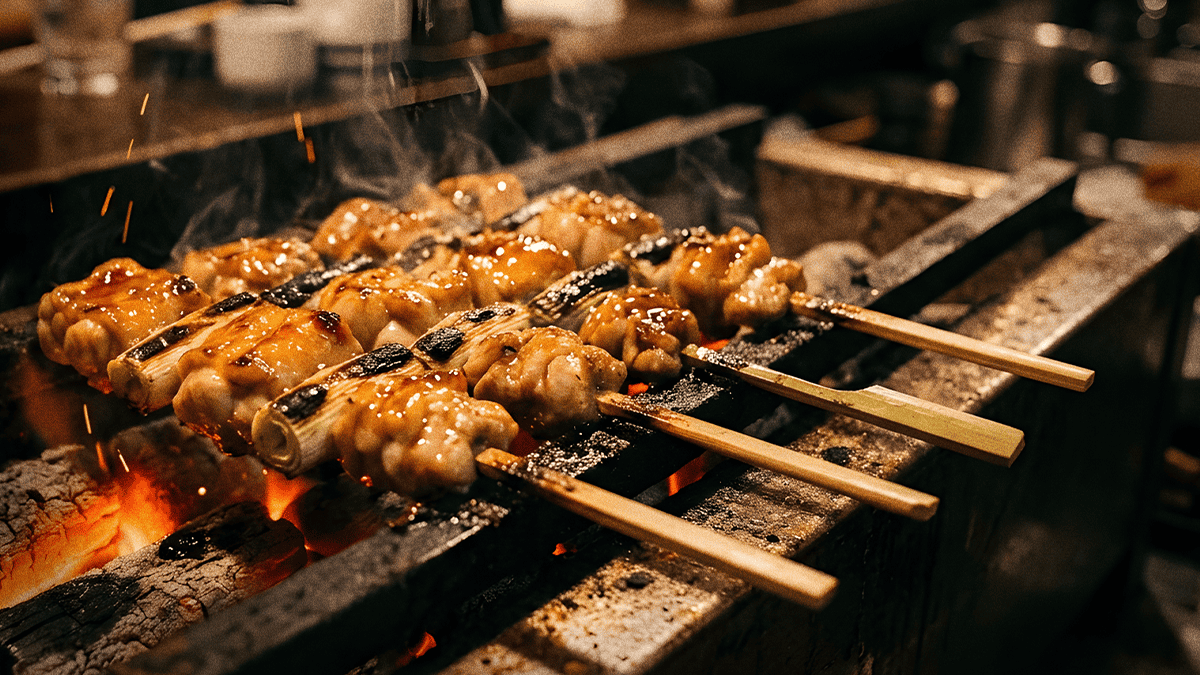
Negima Yakitori with Tare Glaze
The skewer smoke drifting through Tokyo Vice’s alleys is negima — chicken and scallion, glazed and grilled. Simmer equal parts soy sauce, mirin, and sake with a spoonful of sugar until it coats a spoon, which takes about ten minutes. Thread bite-sized pieces of chicken thigh onto soaked skewers, alternating with short lengths of scallion. Grill over high heat, turning often, and brush with the tare during the final minutes so the glaze lacquers rather than burns. Serve hot with the remaining sauce and a cold drink, the way the alley stalls do.
7. Alice in Borderland (2020–2025)

Netflix’s survival thriller opens with the single most arresting image in recent Japanese television: Shibuya Crossing, the busiest intersection on earth, utterly empty. Three friends emerge from a station bathroom to find Tokyo abandoned, and deadly games begin. Across three seasons it became a global phenomenon. It also pulled a measurable wave of visitors toward its locations.
The empty crossing required an honest magic trick. Shibuya never empties. So the production built a full-scale replica of the crossing on an outdoor lot in Ashikaga, north of Tokyo, matched down to the last billboard. Much of the rest used real locations across Tokyo and, in later seasons, Osaka. The satisfying visit is the real crossing at full Friday-night flood. The crush explains, better than any featurette, why the empty version stuns.
Shibuya Crossing itself, plus the surrounding station maze the characters run through. The replica set in Ashikaga was temporary. For the series’ Osaka chapters, the Dōtonbori canal district delivers the same electric density.
Half the pleasure of screen-led travel is the planning itself — matching an itinerary to the scenes that made you want to come. The logistics layer underneath, though, is where most film trips wobble. Which rail line reaches Odawara, and does the pass cover it? Where should the Tokyo base sit if the evenings belong to Shinjuku? How do the castle days connect without doubling back? None of these questions is hard, but each one answered late costs a morning. That layer is exactly what the cheat sheet below was built to settle before you land, on one printable page.
Trains, passes, IC cards, and the routes between every location in this guide — one printable page, sent in a single email.
The Classics That Built the Canon
Before the streaming hits, two bodies of work taught the world to picture Japan on screen. One gave cinema the samurai. The other gave it a monster with a conscience. Both remain living traditions rather than museum pieces, and both left doors a traveler can still walk through.

8. Seven Samurai and the Kurosawa Canon (1954– )
Akira Kurosawa’s tale of a farming village that hires seven masterless samurai remains the most influential adventure film ever made. Seventy years on, Hollywood is still remaking it, openly or otherwise. The 2024 restoration by Toho returned it to theaters worldwide, looking newer than films a fraction of its age. The Seven Samurai 4K edition built from that restoration is the version worth owning.
Kurosawa shot on Toho’s stages and in rural landscapes long since transformed. So the pilgrimage here is to the tradition rather than the coordinates. Kyoto’s Uzumasa district was the Hollywood of Japan for half a century. Its working heart survives as Toei Kyoto Studio Park — a full Edo-period backlot where television period dramas still film more than two hundred days a year. Visitors walk the sets between takes and watch staged swordfight performances. Occasionally, they stumble into an actual production. It is the one place in Japan where samurai cinema is a present-tense industry rather than a memory.
Toei Kyoto Studio Park in Uzumasa, five minutes from Uzumasa-Kōryūji Station. Allow three hours. Costume rental turns the visit into a walk-on role, and the surrounding neighborhood still holds villas from the studio era’s golden age.
9. Godzilla (1954–present)
The 1954 original was a grave film about a wounded country. Its descendant Godzilla Minus One carried that seriousness to an Academy Award seventy years later. In between, the king of the monsters flattened Tokyo so often that the city surrendered and made him a resident. No franchise is more woven into the fabric of one city.
Tokyo now keeps two shrines to its favorite destroyer, both secular and both delightful. A life-size Godzilla head looms over Kabukichō from the eighth-floor terrace of the Hotel Gracery Shinjuku, roaring on schedule through the afternoon. The hotel sells Godzilla-view rooms that stare straight into the teeth. Down in Hibiya, a bronze Godzilla statue commands a plaza near the Toho headquarters where it all began. The studio still gates the lot, but Hibiya Godzilla Square leans into the pilgrimage. Anyone searching godzilla hotel tokyo before a trip will land on the Gracery, and it delivers exactly what it promises.
The Godzilla head at Hotel Gracery Shinjuku, visible from the street at no charge and up close from the terrace café. The Hibiya statue and Godzilla Square, ten minutes from Ginza. Both fit easily into a single Tokyo day.
The Quiet Masterpieces
Not every screen Japan is neon and swordplay. A gentler current runs through recent film and television: small lives, long silences, food cooked with care. Quietly, it has become the most bookable genre of all, because its locations are ordinary places doing ordinary things. Which is to say, places that welcome you.
These are also the productions that reward slow travel most. A film-led trip built around this section moves at walking pace, eats well, and costs less than you would guess. If you would rather hand that routing to someone who does it professionally, our customized itinerary service builds trips around exactly these kinds of threads.

10. Midnight Diner (2016–2019)
A chef known only as Master runs a twelve-seat diner in a Shinjuku back alley. It opens from midnight to seven, and he cooks whatever his regulars ask for. Each episode follows one dish and one life. Netflix’s quiet anthology became a global comfort-watch. No production has done more to romanticize late-night Tokyo eating.
The diner itself is a set, built with loving precision. Its spiritual address, though, is real. The lantern-lit lanes of Golden Gai hold dozens of counter-only establishments serving a handful of customers deep into the night. The show’s premise — a tiny room, a master, a menu that bends to the guest — describes half the bars in the district. Find a stool and order simply. You are inside the show’s world without a ticket.
Golden Gai and Omoide Yokochō in Shinjuku, after dark. Choose bars with posted prices and no cover, and take a seat at the counter. The diner is fictional — the culture it portrays is on every corner.

Tamagoyaki, the Midnight Way
The rolled omelet is the classic ask at a late-night counter, and it forgives beginners. Whisk four eggs with three tablespoons of dashi, a teaspoon each of soy sauce and mirin, and a pinch of sugar. Heat a lightly oiled pan over medium, pour in a thin layer, and roll it toward you as it sets. Slide the roll back, oil the pan again, pour another layer under the roll, and repeat until the egg is used. Rest the roll for a minute, slice into thick pieces, and serve warm with a mound of grated daikon and a few drops of soy.
11. Perfect Days (2023)

Wim Wenders’ Oscar-nominated portrait follows Hirayama, a Tokyo toilet cleaner, through days built from routine. There are cassette tapes in a small van, sandwiches under the same tree, paperbacks before sleep. Kōji Yakusho won Best Actor at Cannes for a performance made almost entirely of contentment. No entry here argues more persuasively that an unremarkable Tokyo day is worth crossing the world for.
The film grew out of a real design project. The public toilets Hirayama cleans belong to The Tokyo Toilet initiative in Shibuya — seventeen small buildings by architects including Tadao Ando, Kengo Kuma, and Shigeru Ban. One famous pair has transparent walls that turn opaque when locked. All are public, mapped, and open to anyone, scattered through the wards the film drifts across. Tracing them makes a lovely half-day architecture walk. It doubles as a tour of the film.
The Tokyo Toilet sites across Shibuya ward, including the transparent pair in Yoyogi Fukamachi Mini Park. Add the Sumida riverside and the skytree views the film favors. Everything is public and unticketed.
12. Sanctuary (2023)

Netflix’s sumo drama arrived with no stars and left with a cult. A delinquent from Fukuoka joins a Tokyo stable for the money. He collides with the sport’s brutal hierarchy, then slowly discovers something worth fighting for. It filmed with real rikishi in supporting roles. Its unflinching look inside stable life did what polite documentaries never had: it made a global audience care about sumo.
Sumo’s world is compact and visitable. The national arena, Ryōgoku Kokugikan, hosts three of the year’s six grand tournaments. The surrounding district is effectively a sumo town: training stables behind sliding doors, statues of past champions, and chanko-nabe restaurants often run by retired rikishi. Some stables admit small groups to morning practice through arranged tours. Visitors watch in silence as the day’s training unfolds.
Ryōgoku Kokugikan during the January, May, or September tournaments, with day tickets released in advance. Off-season, a chanko-nabe lunch in Ryōgoku plus an arranged morning-practice visit covers the show’s whole world.

Chanko-Nabe, Stable Style
The wrestlers’ hotpot is less a recipe than a principle: everything good, one pot, shared. Bring six cups of dashi to a simmer with a quarter cup each of soy sauce and mirin. Season ground chicken with grated ginger and minced scallion, then drop it in as rough meatballs. Add chicken thigh pieces, wedges of napa cabbage, mushrooms, and firm tofu in stages so nothing overcooks, and simmer gently until the meatballs float and the cabbage collapses. Ladle into bowls as it is ready, and finish the broth with udon noodles the way the stables end every meal.
The gallery below gathers travel pieces our editors keep returning to — luggage that survives the shinkansen rack, layers for a Tokyo winter that swings between overheated trains and cold street corners, and the small kit that makes long-haul days easier. Film trips have their own packing logic. The days run long, the evenings matter more than usual, and a bag that moves easily through stations decides how ambitious the itinerary can be. Browse the gallery as loosely as you would a hotel-lobby shop, then carry on to the second reel of films below.
More Movies Set in Japan: The Second Reel
Eight more titles round out the canon, each with a shorter note and one honest routing line. Several are location-truth cautionary tales. A few are quiet triumphs of shooting the real thing.

13. The Last Samurai (2003)
Tom Cruise’s Meiji-era saga gave a generation its image of the samurai’s end, with Ken Watanabe earning an Oscar nomination as the rebel lord. However, most of its Japan was New Zealand’s Taranaki region, standing in under a conveniently Fuji-shaped volcano, with limited work around Himeji. Route by history instead: Himeji Castle is the era’s great survivor, and the same castle serves the Shōgun itinerary above, so one visit pays twice.
14. Memoirs of a Geisha (2005)
Rob Marshall’s adaptation is sumptuous, though largely Californian — the hanamachi was a purpose-built set outside Los Angeles. The living version of its world is Kyoto’s Gion district, where the wooden machiya facades, tea houses, and evening lantern-light need no set dressing. Walk Hanamikoji Street early in the morning or after dinner, keep a respectful camera, and the film’s atmosphere arrives on its own.
15. You Only Live Twice (1967)
Unusually for its day, Bond’s Japan outing shot heavily on location. Sean Connery’s 007 moves through a Tokyo of mid-century glamour anchored by the Hotel New Otani, which played the villain’s corporate headquarters and still hosts guests amid its four-century-old garden. The volcano lair scenes drew on the dramatic crater country of Kyushu’s Kirishima range, still one of Japan’s great under-visited landscapes.
16. Drive My Car (2021)
The Oscar-winning adaptation of Murakami unfolds largely in Hiroshima, and it filmed there, using the city’s clean modern lines and waterfront as a stage for grief slowly loosening. The red Saab’s routes trace real streets, and the city rewards film-led visits. There are drives along the delta rivers and ferries to the Inland Sea islands. Above all, there is okonomiyaki, which alone justifies the shinkansen ride west.
17. Babel (2006)
The Tokyo strand of Iñárritu’s triptych follows a deaf teenager through the city’s sensory flood. Shot on location, it contains one of cinema’s great Shibuya sequences: the crossing dissolving into silent light. The J-Pop Café interiors and nightclub scenes captured mid-2000s Tokyo nightlife in amber. The crossing and the surrounding Shibuya night are unchanged in spirit and reachable by anyone with a rail card.
18. The Wolverine (2013)
Logan’s Japan chapter split its production between Australia and genuine Japanese locations. For instance, street scenes gathered in Tokyo, and a memorable sequence used Fukuyama’s harborside lanes. The film’s Nagasaki opening frames the city’s harbor amphitheater, which remains one of Japan’s most dramatic urban settings. Tomioka-machi’s slopes and the harbor viewpoints give the film’s geography its real-world anchor.
19. Black Rain (1989)
Meanwhile, in 1989, Ridley Scott took Michael Douglas’s detective to Osaka and shot the city as a rain-slicked industrial cathedral — steel mills, neon canals, smoke. Much of it filmed on location, famously difficultly, and no production since has photographed Osaka with such operatic menace. Dōtonbori’s canal blaze and the harborfront industrial districts still carry the film’s DNA, especially at night in the rain.
20. The Fast and the Furious: Tokyo Drift (2006)
The street-racing entry made Shibuya a verb for a generation of car fans. Its Tokyo exteriors shot on location, crossing included, while the racing staged on closed sets abroad. The nightscape it mythologized — parking-garage meets, vending-machine glow, expressway ribbons — is Tokyo’s ordinary after-dark self. Our own editorial on the film’s Tokyo covers the ground in full and pairs with this guide’s Shibuya entries.
Questions Worth Asking
Mostly no. The House of Blue Leaves fight was shot on a soundstage in Beijing. The set was modelled on Gonpachi, a real izakaya in Tokyo’s Nishi-Azabu district, which Quentin Tarantino visited before writing the film. Gonpachi still operates today, serves hand-cut soba until late, and welcomes film pilgrims.
Yes. The Park Hyatt Tokyo, where the film was shot, reopened on December 9, 2025 after a 19-month restoration. The New York Bar on the 52nd floor returned with its original design intact, and non-guests can still visit in the evening. It remains the single most visited film location in Japan.
The FX series was filmed in and around Vancouver, Canada, not Japan, and its second season is shooting there through 2026. The story is set in Japan in 1600, and the real places tied to that era survive: Himeji Castle, Osaka Castle, and Kyoto’s Nijō Castle can all be visited today.
Almost none of it. The Brad Pitt film was shot on Los Angeles soundstages, with brief pickup footage from Akihabara in Tokyo. Yet the route it depicts is real. The Tokaido Shinkansen runs from Tokyo to Kyoto many times an hour, and riding it is the closest thing to stepping into the film.
Unlike most Japan-set productions, House of Ninjas was actually filmed in Japan. Locations include Odawara Castle south of Tokyo, the Fujinomiya area near Mount Fuji, and Toho Studios in Tokyo. Odawara Castle, the Tawara family home in the series, is an easy day trip from the capital.
The empty crossing was a full-scale replica built on an outdoor lot in Ashikaga, north of Tokyo, because the real Shibuya Crossing never empties. Much of the rest of the series used real Tokyo and Osaka locations. Visiting the real crossing at rush hour shows exactly why the replica was necessary.
Where to Watch and Where to Go
Streaming homes shift, so check availability where you are. At the time of writing, the television series here live largely on Netflix and Hulu, with Shōgun on Hulu and Disney’s platforms. The film classics rotate through the major services and periodic cinema reissues. For the Kurosawa canon, the restored physical editions outclass every stream, and collectors start with the marketplace listing linked in the Seven Samurai entry above.
For the trip itself, the geography of these movies set in Japan sorts into three clean bases. Tokyo covers the icons, the television locations, and Godzilla in two or three days. The Odawara and Hakone corridor adds House of Ninjas country as an overnight. Kyoto and the Kansai castles complete the historical and Kurosawa threads, with Hiroshima a shinkansen extension. The order works in either direction, and the rail spine connects it all.
One book belongs in the carry-on. Donald Richie’s A Hundred Years of Japanese Film is the classic single-volume history of the national cinema, and reading it between locations turns a set-jetting trip into an education.
A last note on what to carry beyond the book. The best film trips generate more than photographs — the bar conversations, the small differences between the screen and the street, the dish that outdid its scene. Travelers who write those down keep them. The journals below were built for exactly that habit, one short entry at the end of each day.
A collection of guided journals built around Japanese ideas of attention and reflection — companions for the trip, and for the slower work of keeping what it gave you. Designed to be written in by hand, at your own pace.
View the CollectionThe Country the Camera Keeps Reaching For
Run the list back and a pattern emerges. When productions could not film in Japan, they rebuilt it at enormous cost — in Beijing, Vancouver, Los Angeles, Taranaki. Nothing else would do. When they could film here, the country did half the work for them. Either way, the pull is the same one you feel from your sofa at the end of the credits.
The films are the invitation. The trip is the reply. Accept it with a bar stool in Golden Gai, a window seat past Mount Fuji, or a morning on a castle keep the shoguns walked. Either way, the country outperforms its own cinema with unreasonable consistency. That may be the most honest review of movies set in Japan anyone can offer: the location scout was right all along.
From Magnificent Japan
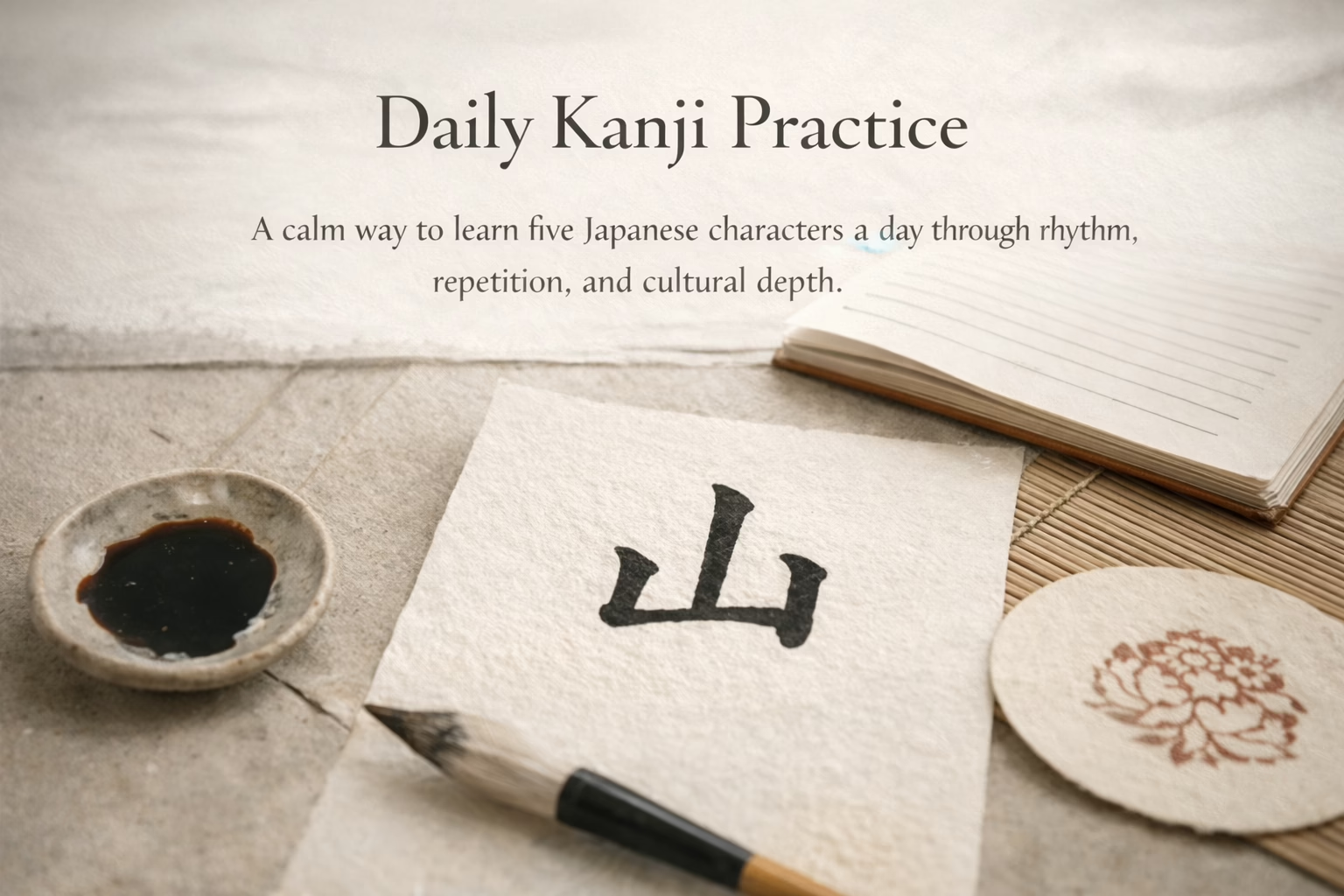
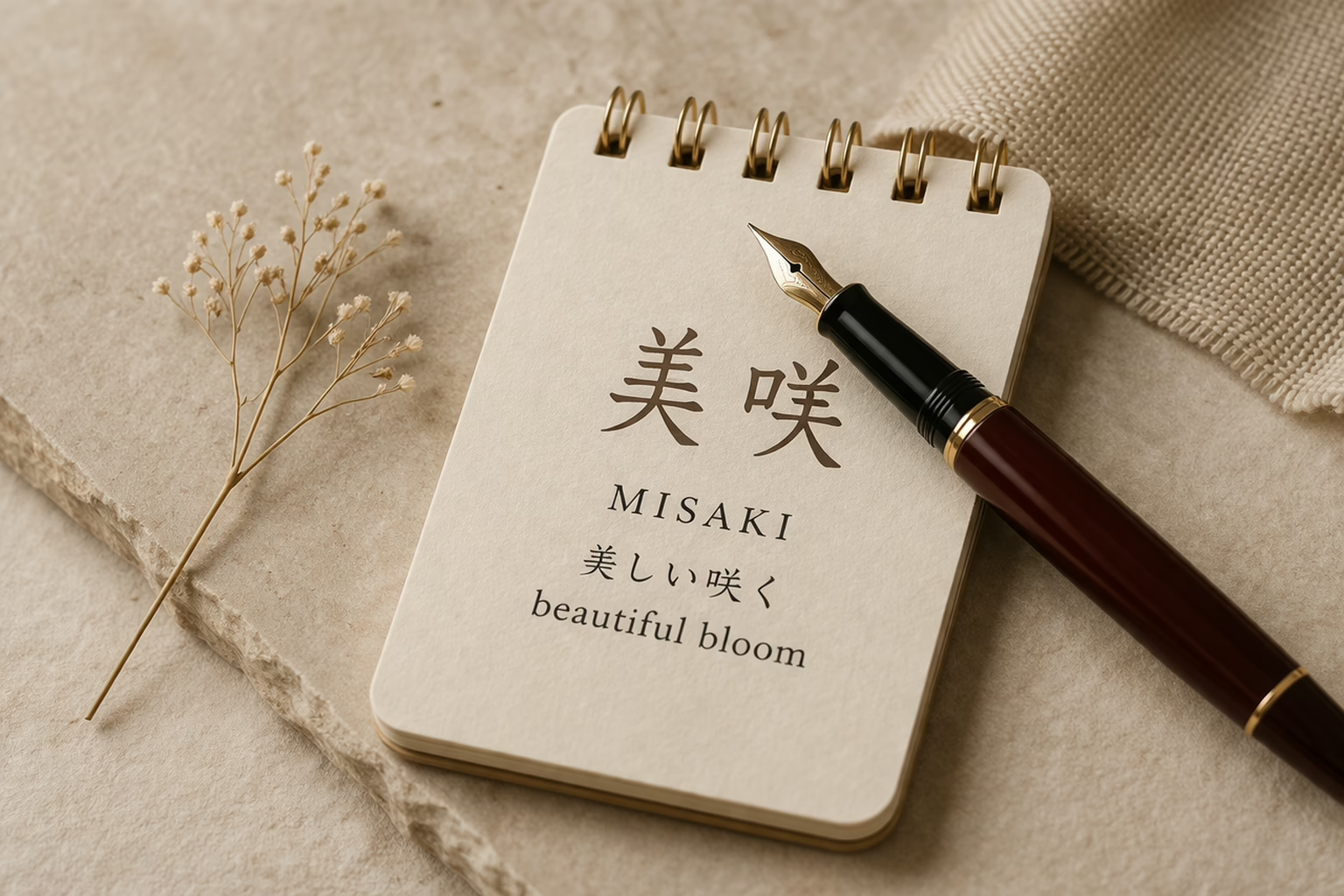
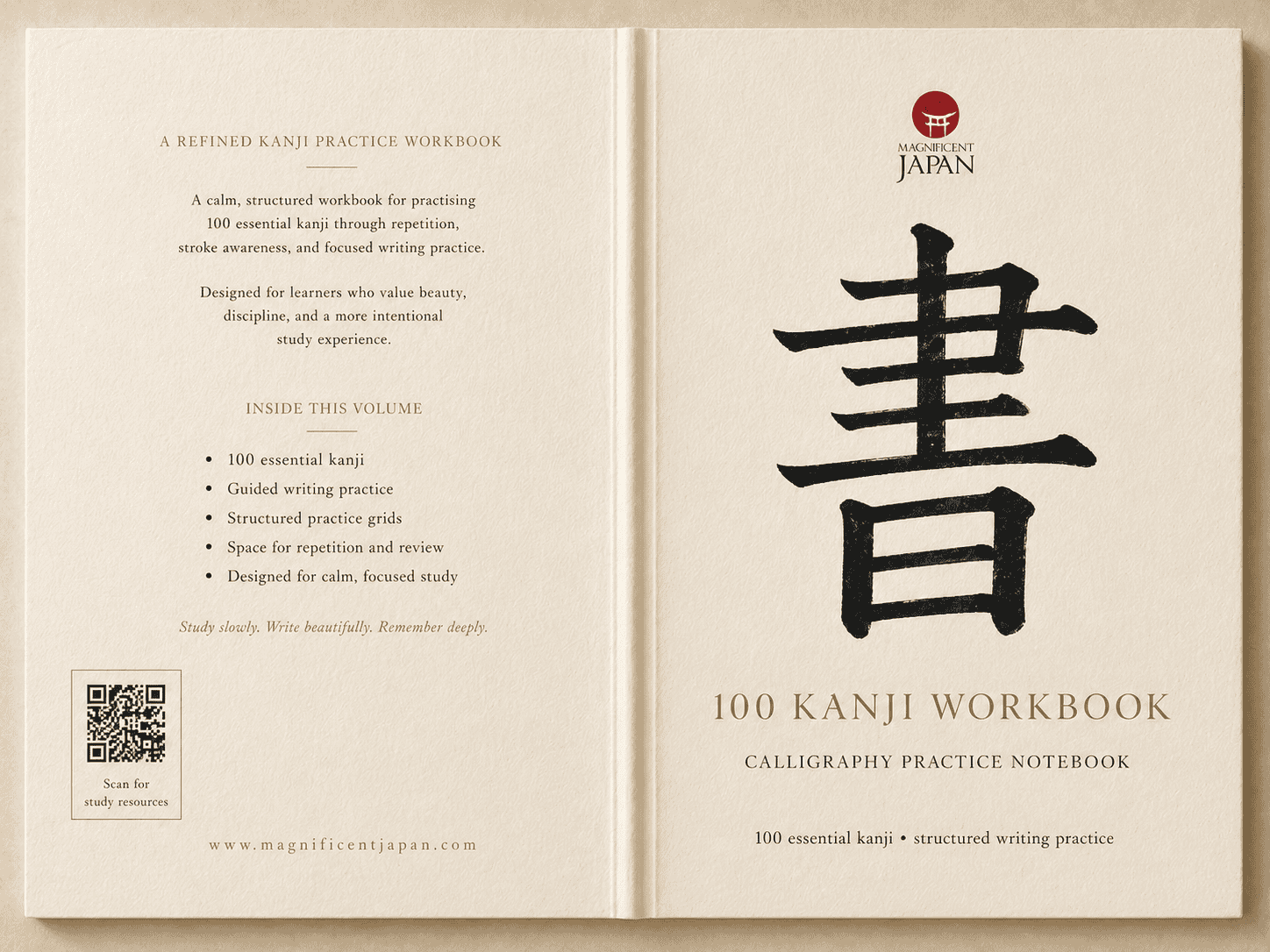
Each of those is a different way of carrying Japan home between trips — a character practiced by hand, a name considered, a page of reflection at the end of a travel day. The films send people here in growing numbers every year, and the industry now has a word for it. What travelers keep, though, tends to be quieter than what brought them: a habit of attention the country teaches almost incidentally, and that the tools above were each built to hold onto. From there, only the trip itself remains to be planned.
A bespoke itinerary routed around the screens you love — the bar, the castle, the crossing, the counter seat — built from one conversation about the Japan you already carry in your head. Quote within 24 hours, no commitment.
Begin a Custom Itinerary