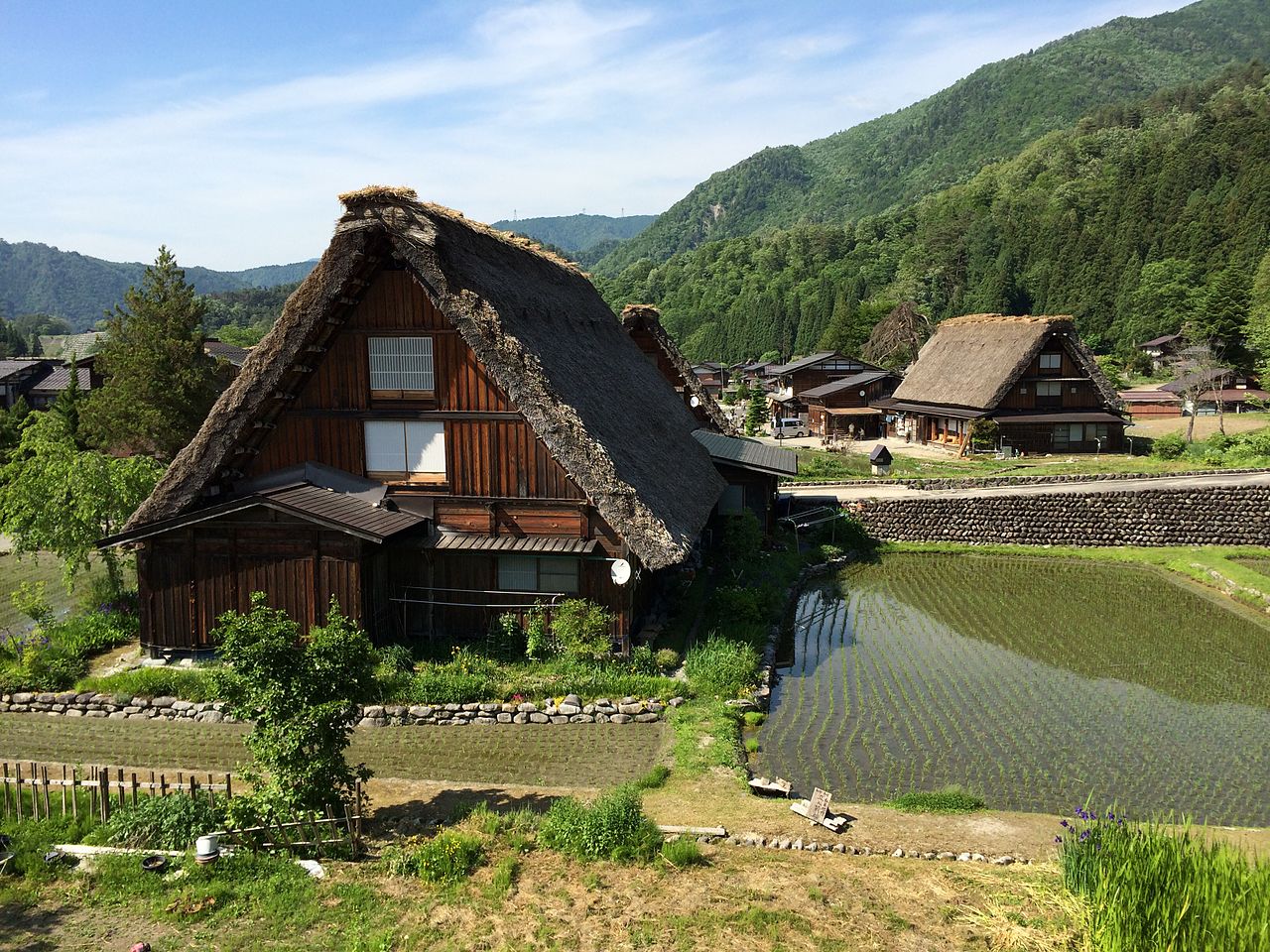
Most Japanese last names are small maps. Tanaka means the middle of the rice field. Yamamoto points to the foot of a mountain, and Ogawa names a small river. Read the two characters of a surname, and you can often picture the place where a family once lived.
That is what makes Japanese last names so rewarding to learn. Each is usually two kanji, and each kanji carries its own meaning. So a list of surnames reads like a description of the countryside, with its fields, wells, bridges and villages.
This guide explains 80 surnames by their characters, grouped by the landscape they describe. It also covers the law that gave every family a name and the order in which names are written. For given names and pop culture, start with our guide to the art of Japanese names.
Where do Japanese last names come from?
Most Japanese last names describe a place. They combine kanji for land and water, such as field (田), mountain (山), river (川), well (井) and village (村). Nobles and samurai held surnames for centuries. Ordinary families were allowed to take one in 1870, and the government made surnames compulsory in 1875.
First, a note on the meanings. Every surname, reading and meaning below comes from the name list behind our own generator. That list holds 2,597 checked names, 250 of them surnames. Each kanji is shown with its dictionary meaning. Still, a surname rarely means much in daily life. Nobody named Tanaka thinks of a rice field when signing a form. The picture is there, though, for anyone who reads the characters.
Why Most Japanese Surnames Describe the Land
Look at any list of common Japanese last names, and the same characters keep returning. Field (田) appears in 52 of the 250 surnames in our list. Mountain (山), river (川), village (村) and well (井) follow close behind. In fact, by our count, about nine in ten of them contain a character for land, water or a plant. The pattern is no accident. A family name in Japan usually began as a way to say where someone lived.
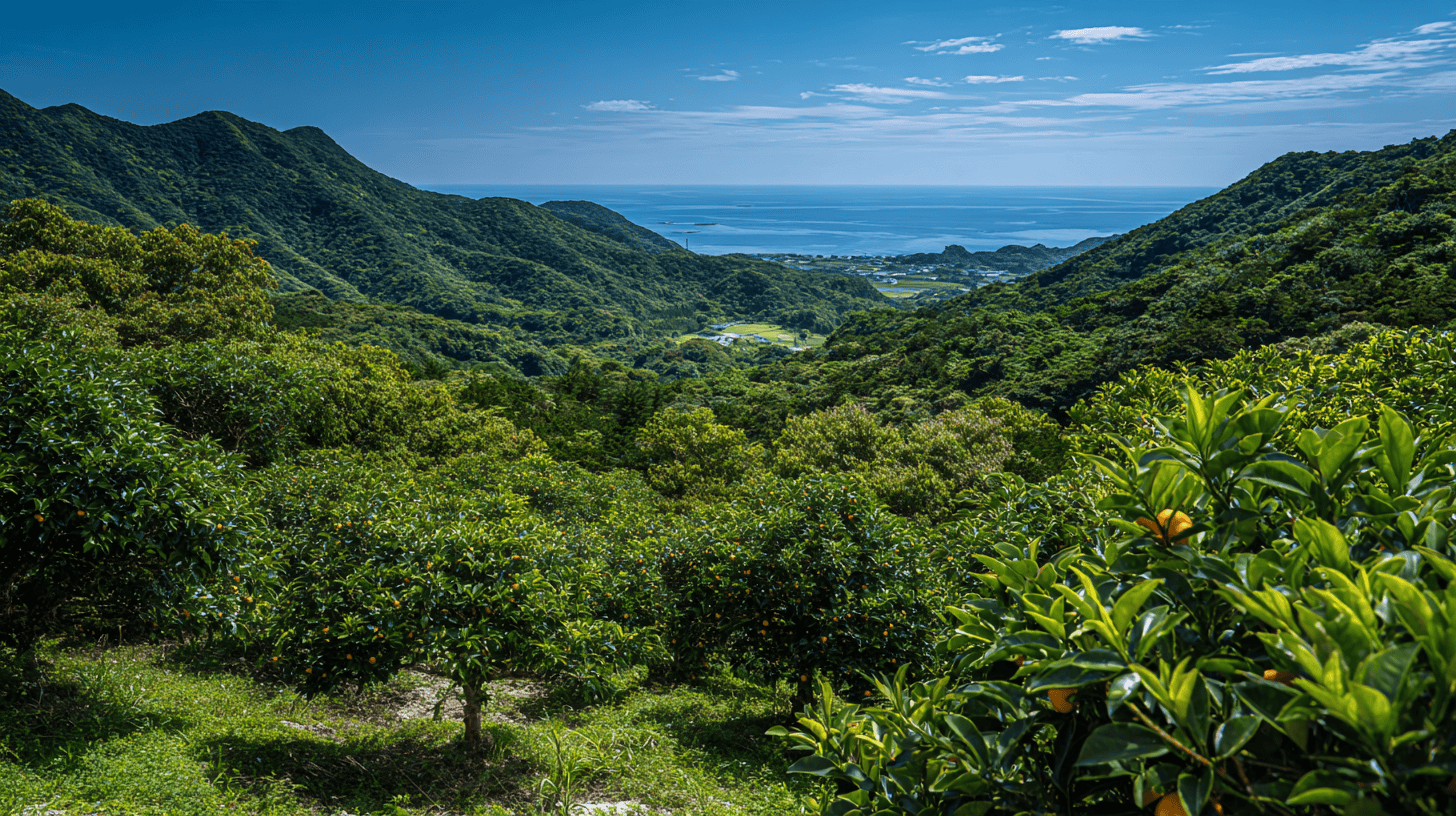
Think of a farming village before modern addresses. One house sits by the well, and another sits under the big pine. So the first family becomes Inoue, above the well, and the second becomes Matsushita, below the pine. The kanji also carry position words: ue (上) for above, shita (下) for below and naka (中) for middle. Then come directions, such as nishi (西) for west. So Nakamura is the middle village, and Nishikawa is the west river. As a result, a name worked like a short address that anyone in the valley could follow.
Because the vocabulary is small, learning it pays off quickly. Once you know about twenty landscape kanji, you can read most common surnames at a glance. Travelers soon start spotting them on shop signs, station boards and house plates. The same characters that name families also name the stations, so the map and the phone book share one vocabulary. For that reason, a few minutes with the tables below pay off. They will change how a Japanese street looks on your next visit.
You may also like

Why the Sounds Change
Japanese often softens the first consonant of the second character in a name. Ta (田) becomes da, so yama and ta make Yamada. Likewise, kawa (川) becomes gawa in Ogawa, and hayashi (林) becomes bayashi in Kobayashi. This sound change is called rendaku, and it explains why one kanji can look different in romaji. Our tables give the kana for every name, so you can hear each one as it is really said.
The Meiji Surname Law of 1875
For most of Japanese history, ordinary people had no official surname. Court nobles and samurai families held them, along with some wealthy merchants and village heads. Farmers and townspeople were known by a given name, often with the name of their village or their trade. Many families used informal names among themselves, but those names had no standing on paper.
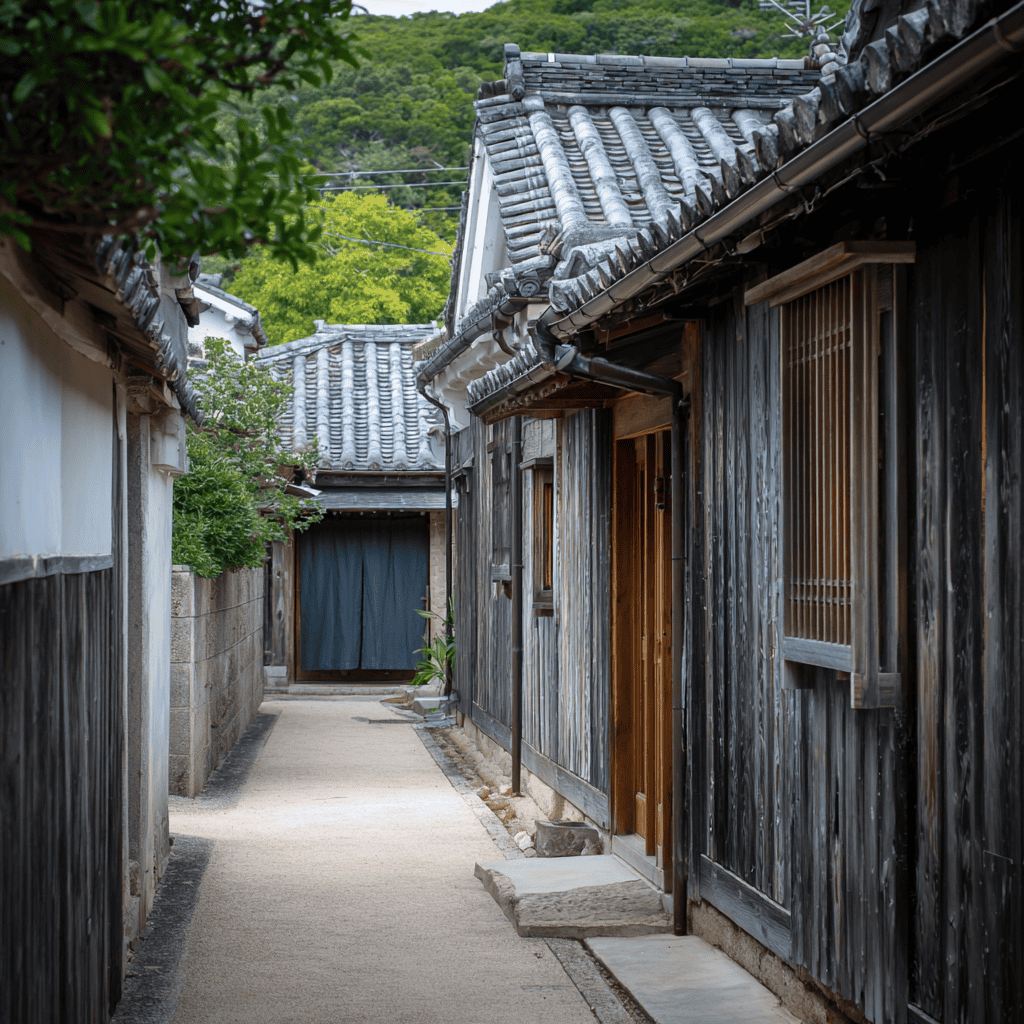
That changed after the Meiji Restoration of 1868, when the new government set out to build a modern state. It needed to count, tax and register every household. So in 1870 it allowed ordinary people to use surnames. Few bothered at first. Then in 1875, the use of surnames became mandatory, for tax collection and military registration. That is the date given in Nippon.com’s timeline of Japanese surname rules.
The order is dated February 13, 1875, and that date is still known as Surname Establishment Day. Some households already had a name to register. Others chose one quickly, and the landscape was the obvious source. Some took the name of their village, while others described the spot where the house stood.
This history explains why the same landscape names appear all over the country, since every farming village had fields, wells and slopes. It also means a famous name does not prove a famous ancestor. So the kanji tell you about a place, not about a pedigree.
Common Japanese Last Names and Their Meanings
Ten surnames account for more than twelve million people in Japan. Nippon.com’s estimate of the most common surnames, published in March 2023, puts Sato first at about two million. The counts are estimates, since Japan publishes no official surname census. The table shows the top ten in order.
| Surname | Kanji | Kana | The kanji mean | People (est.) |
|---|---|---|---|---|
| Sato | 佐藤 | さとう | help · wisteria | 2.00 million |
| Suzuki | 鈴木 | すずき | small bell · tree | 1.75 million |
| Takahashi | 高橋 | たかはし | high · bridge | 1.45 million |
| Tanaka | 田中 | たなか | rice field · middle | 1.35 million |
| Watanabe | 渡辺 | わたなべ | ford · border | 1.15 million |
| Ito | 伊藤 | いとう | that one · wisteria | 1.10 million |
| Yamamoto | 山本 | やまもと | base of the mountain | 1.09 million |
| Nakamura | 中村 | なかむら | middle · village | 1.07 million |
| Kobayashi | 小林 | こばやし | small · forest | 1.04 million |
| Kato | 加藤 | かとう | add · wisteria | 0.87 million |
To pair one of these surnames with a given name, use the Japanese surname generator, which writes the family name first. Notice how the list splits. Tanaka, Yamamoto, Nakamura and Kobayashi describe a place, while Takahashi and Watanabe describe a crossing. Then Sato, Ito and Kato end in 藤, the wisteria, which has its own story below.
Pentel Pocket Brush Pen — write your surname the old way
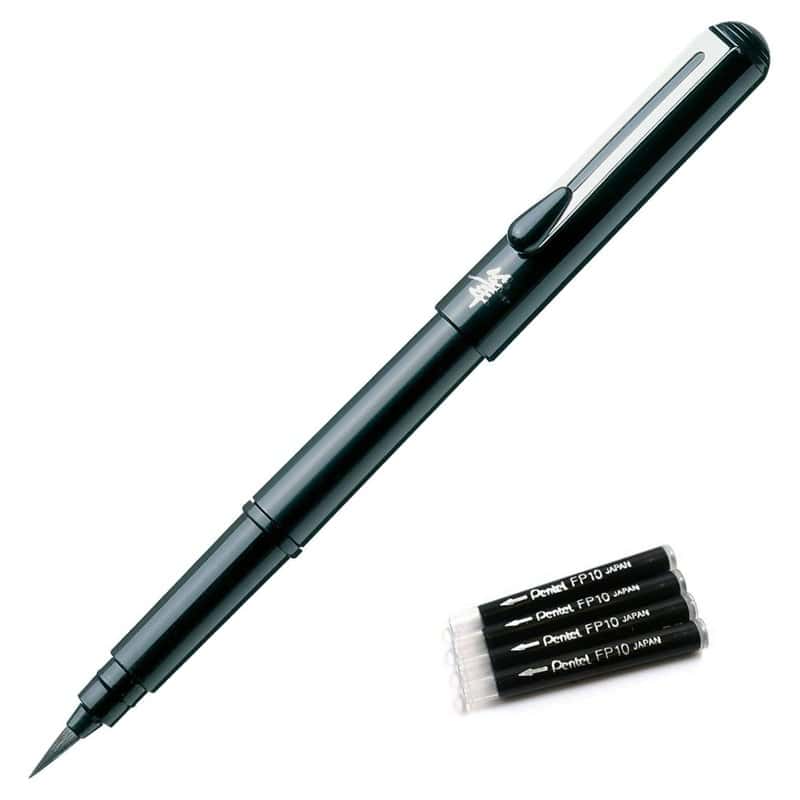
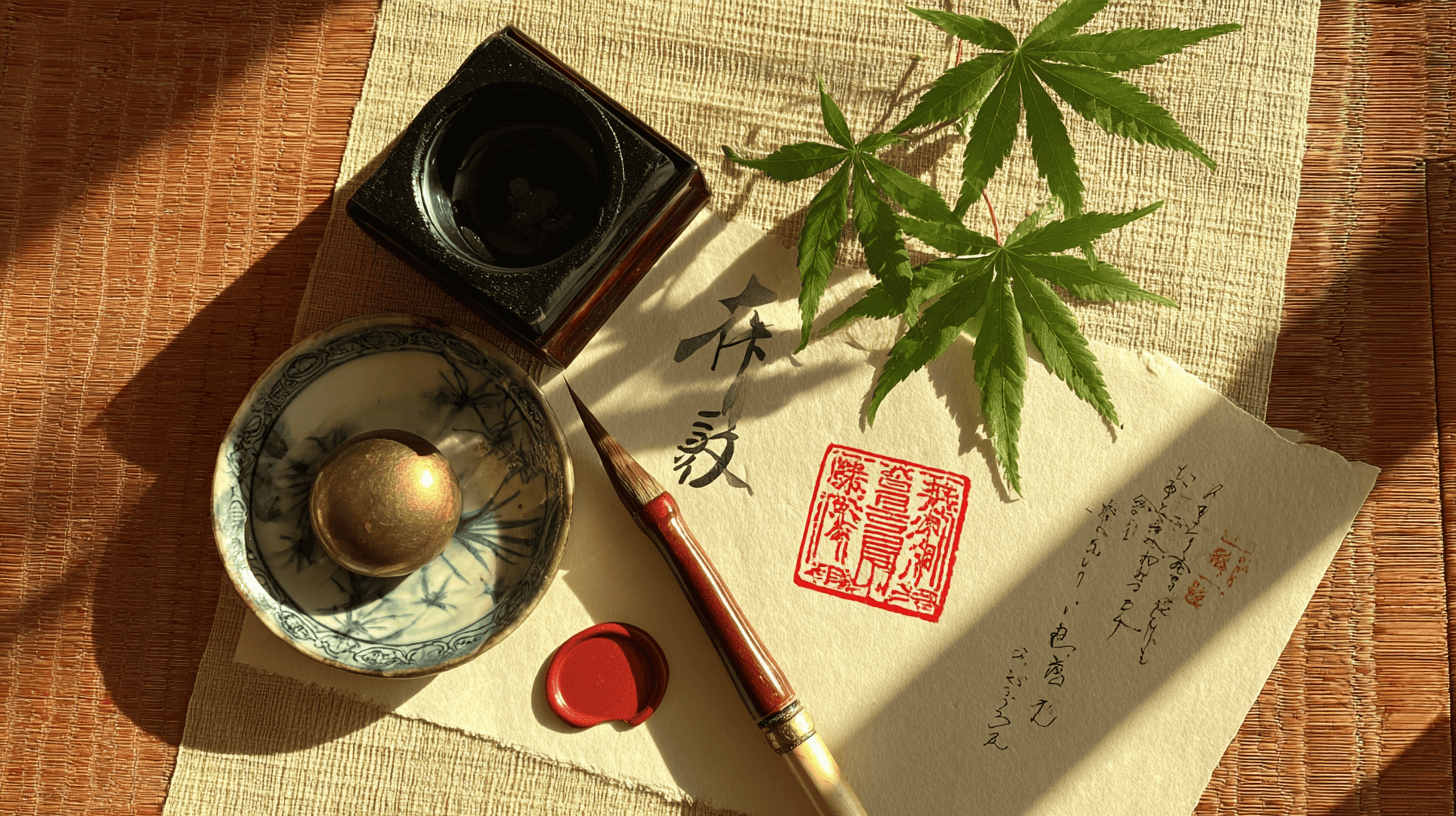
The quickest way to remember a surname is to write it. A two-character name like Tanaka takes nine strokes in all. A brush pen makes even that short practice feel like calligraphy. The Pentel Pocket Brush Pen has a real brush tip and a refillable ink cartridge, and this set comes with extra refills. Its fine tip suits the small size of a name, so you can write it on a card or in a notebook. Start with 田 and 中, then try 山 and 本. Each character uses only a few strokes, which makes them ideal first kanji. Before long, the shapes will start to jump out at you from signs and labels.
Surnames From Mountains and Forests
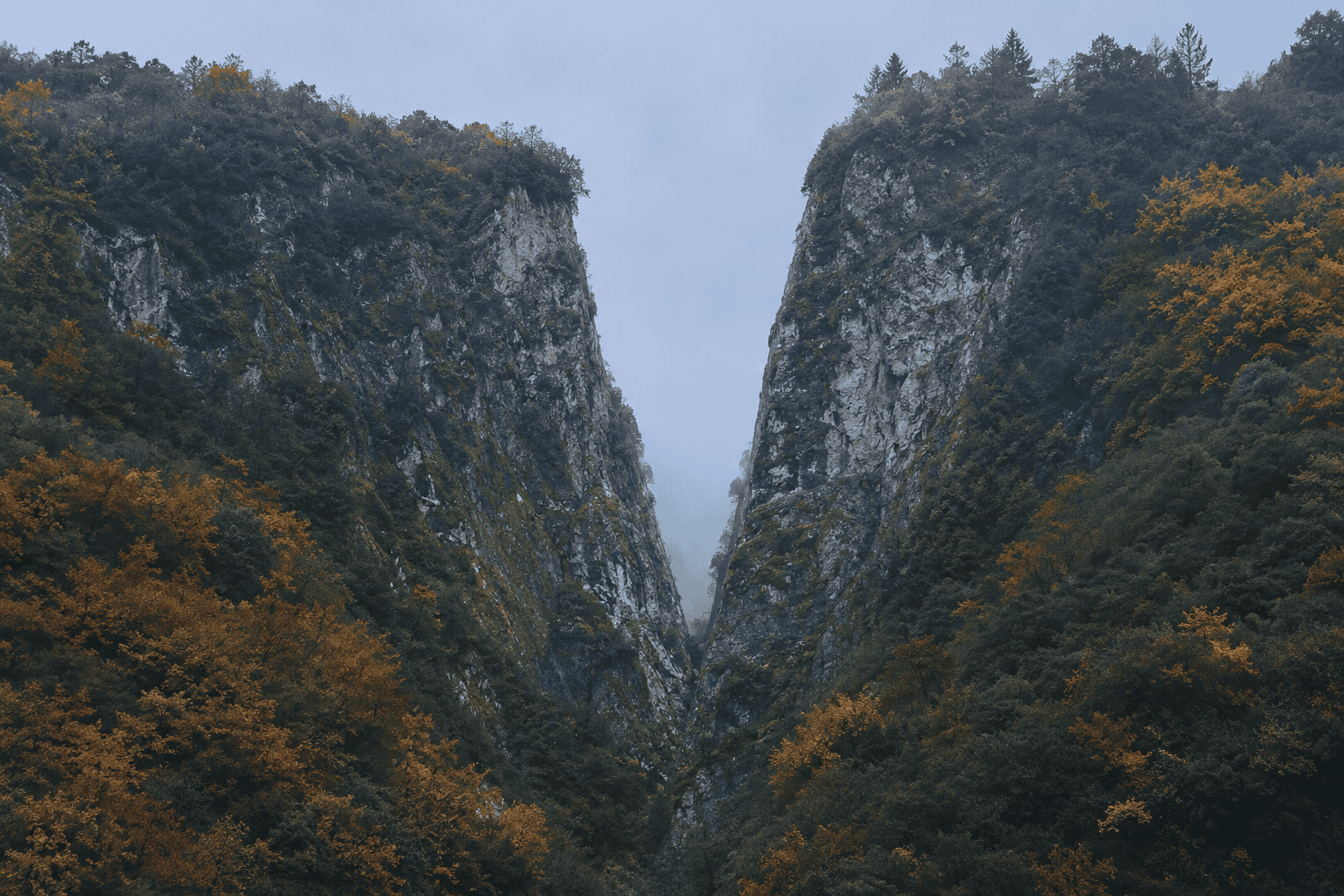
Japan is a mountainous country, so it is no surprise that yama (山) appears in 21 of the surnames in our list. Mountain names often add a position or a shape. Yamashita lives just below the mountain, Nakayama in the middle of it and Takayama on a high one, far up the slope. In fact, forest names do the same work with trees. Mori is a forest, Hayashi is a grove, and Kobayashi is a small grove. Each is a view from a front door.
| Surname | Kanji | Kana | The kanji mean |
|---|---|---|---|
| Yamaguchi | 山口 | やまぐち | mountain · mouth |
| Yamazaki | 山崎 | やまざき | mountain · cape |
| Yamashita | 山下 | やました | mountain · below |
| Nakayama | 中山 | なかやま | middle · mountain |
| Koyama | 小山 | こやま | small · mountain |
| Takayama | 高山 | たかやま | tall · mountain |
| Akiyama | 秋山 | あきやま | autumn · mountain |
| Aoyama | 青山 | あおやま | green · mountain |
| Sugiyama | 杉山 | すぎやま | cedar · mountain |
| Maruyama | 丸山 | まるやま | round · mountain |
| Taniguchi | 谷口 | たにぐち | valley · mouth |
| Sakamoto | 坂本 | さかもと | base of the slope |
| Matsumoto | 松本 | まつもと | base of the pine |
| Mori | 森 | もり | forest |
| Hayashi | 林 | はやし | grove |
| Takeuchi | 竹内 | たけうち | inside the bamboo |
| Aoki | 青木 | あおき | green · tree |
| Kinoshita | 木下 | きのした | under the tree |
Two characters here deserve a closer look. Moto (本) on its own means a root or origin, so in a surname it marks the foot of something. That is why Yamamoto, Matsumoto and Sakamoto all describe the base of a mountain, a pine or a slope. Meanwhile, guchi (口) means mouth, and in a name it is the opening of a valley or a pass. So Yamaguchi and Taniguchi both stand at the entrance to the hills.
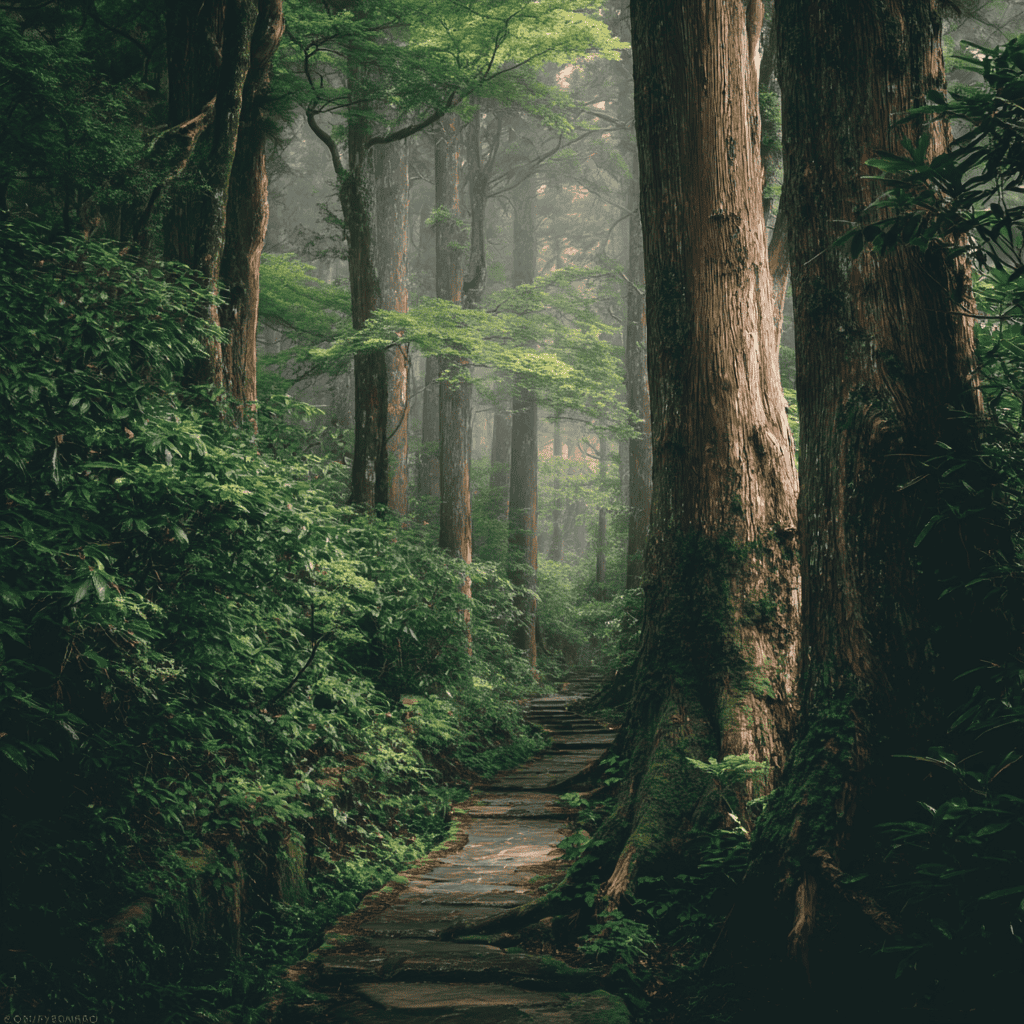
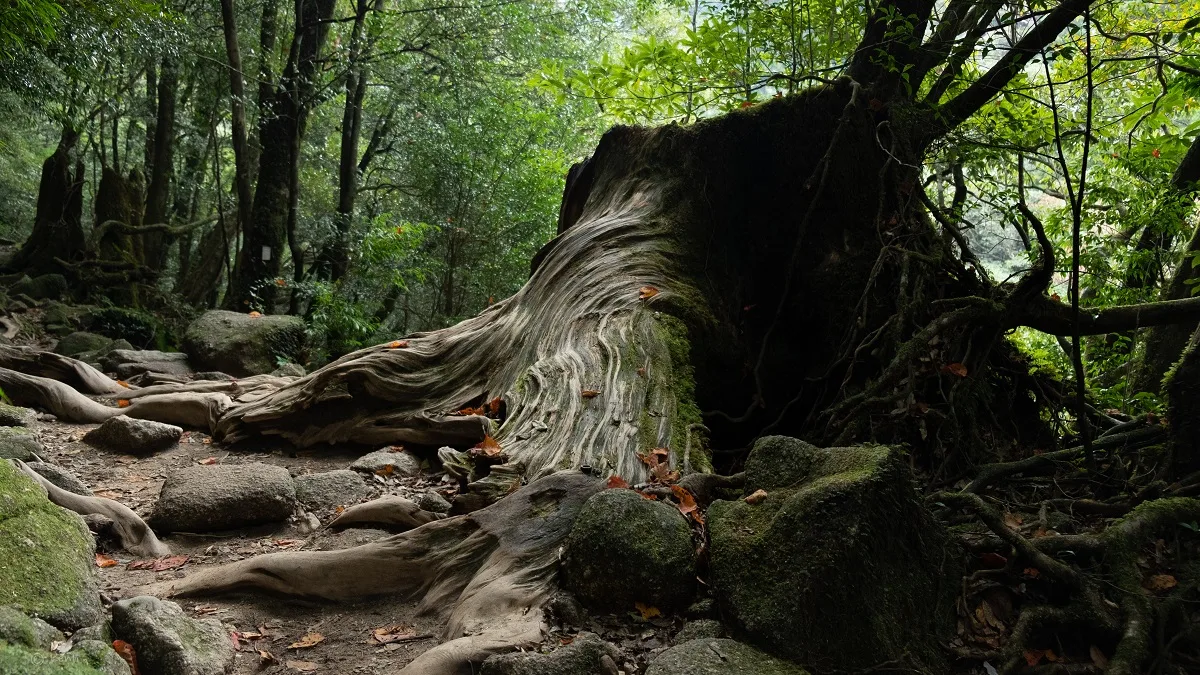
The trees in surnames are the trees of the Japanese countryside. Matsu (松) is the pine, which grew along coasts and hillsides and was planted as a windbreak. Sugi (杉) is the Japanese cedar, the tall, straight tree of mountain forests. Take (竹) is bamboo, which grew close to villages because people used it every day. So Sugiyama is the cedar mountain, and Takeuchi lives inside the bamboo grove. Pine, cedar and bamboo were also the everyday timber of village life, used for houses, tools and fences.
Colors and Seasons
Colors and seasons slip in too. Aoyama is the green mountain, since ao (青) covers both blue and green in Japanese. Akiyama, the autumn mountain, suggests a slope that turns red in October. In spring, the same slope would be green again. Both names are also easy to write by hand. To see these characters up close, read our guide to kanji stroke counts. It explains how the number of strokes shapes the way a name is written and balanced on paper.
You may also like
Mountain names also travel well. Almost every region has its own Yamada and Yamashita, because every village had a hill nearby. So a surname from this table rarely tells you where a family began. Instead, it tells you what the family saw from its door.
Surnames From Rivers, Wells and the Sea
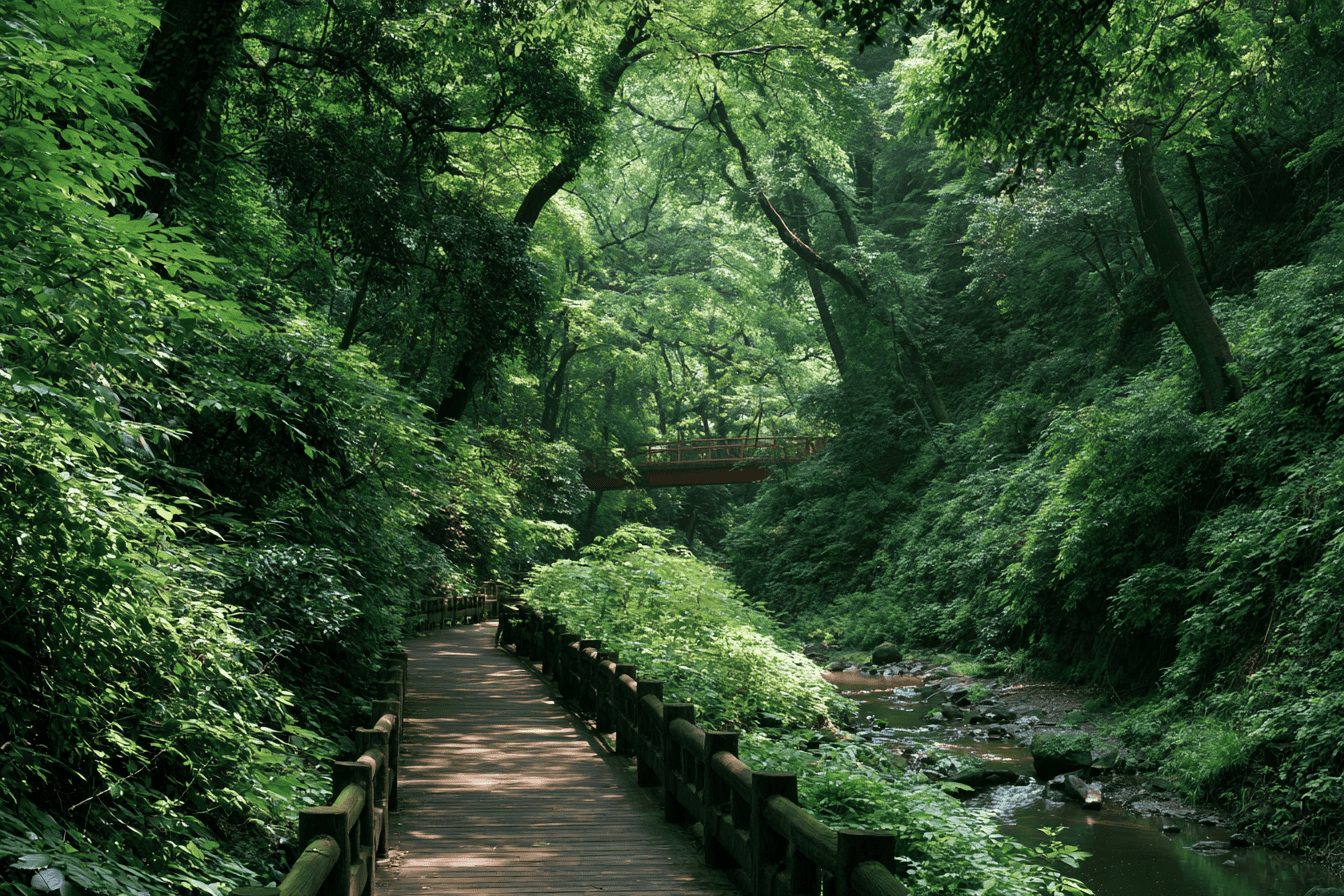
Water shaped village life as much as land did. So it fills the next group of Japanese last names. Kawa (川) is a river, i (井) is a well, and izumi (泉) is a spring. Then the coast adds shima (島) for an island, hama (浜) for a beach and ura (浦) for a bay. Together they trace the route of water from the hills to the sea.
| Surname | Kanji | Kana | The kanji mean |
|---|---|---|---|
| Ogawa | 小川 | おがわ | small · river |
| Ishikawa | 石川 | いしかわ | stone · river |
| Nakagawa | 中川 | なかがわ | middle · river |
| Hasegawa | 長谷川 | はせがわ | long valley river |
| Nishikawa | 西川 | にしかわ | west · river |
| Kawaguchi | 川口 | かわぐち | river · mouth |
| Kawakami | 川上 | かわかみ | river · above |
| Inoue | 井上 | いのうえ | above the well |
| Ishii | 石井 | いしい | stone · well |
| Imai | 今井 | いまい | now · well |
| Shimizu | 清水 | しみず | clear water |
| Koizumi | 小泉 | こいずみ | small · spring |
| Mizuno | 水野 | みずの | water · field |
| Hirose | 広瀬 | ひろせ | wide · rapids |
| Kojima | 小島 | こじま | small · island |
| Nakajima | 中島 | なかじま | middle · island |
| Hamada | 浜田 | はまだ | seashore · rice field |
| Miura | 三浦 | みうら | three · bay |
The well names are the unsung stars of this group. Before piped water, the village well was the center of daily life, and a house beside it was easy to describe. Inoue lives above the well, and Ishii has a well lined with stone. Fujii, which appears with the wisteria names below, has a well shaded by wisteria. Imai pairs the well with ima (今), now.
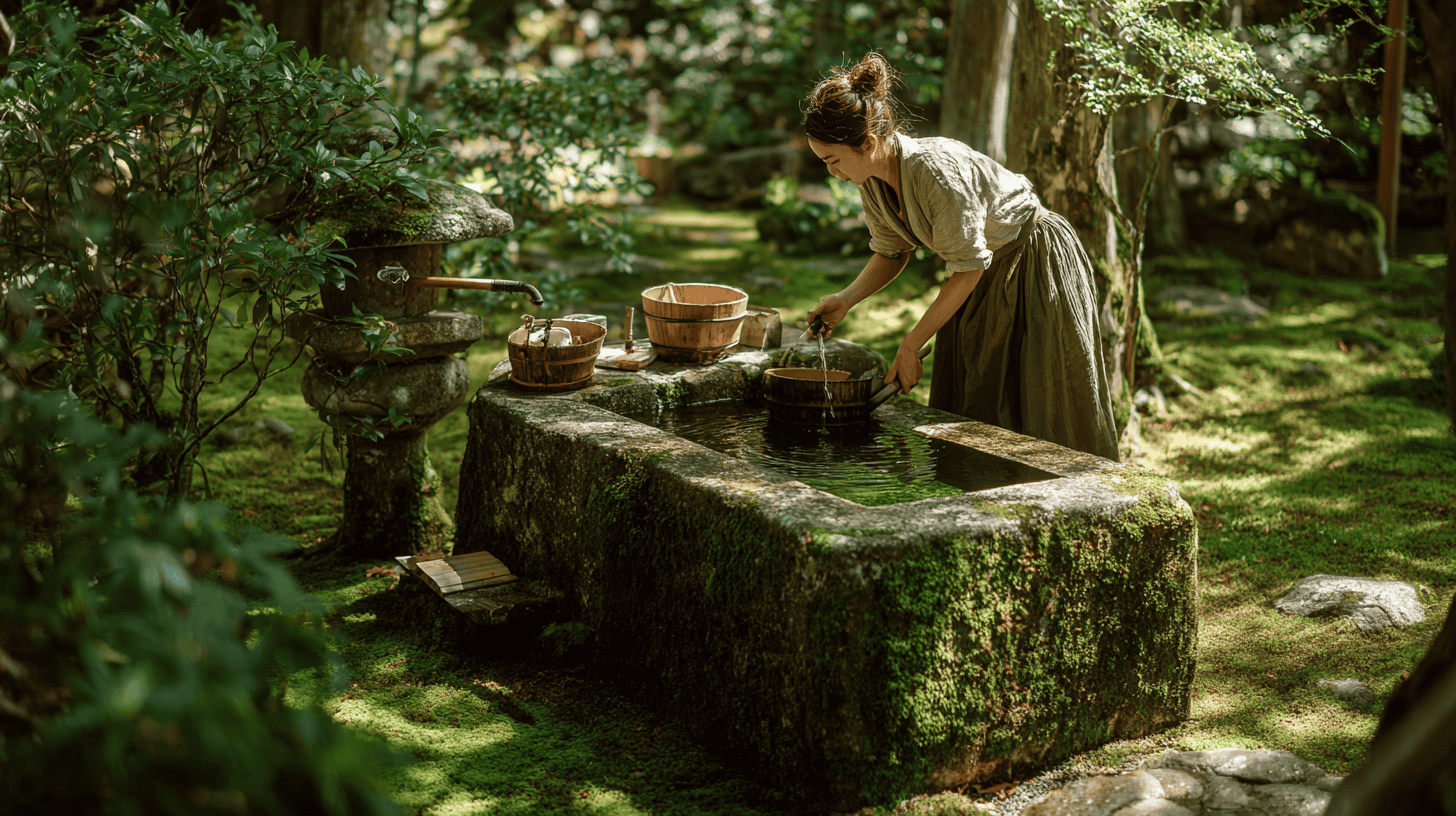
Shimizu, the clear water, is one of the most beautiful names in the language. It describes a spring of fresh water, the kind that villages prized for drinking and cooking. Many towns across Japan carry the same name for the same reason. Koizumi, the small spring, belongs to the same family of ideas. Meanwhile, Hirose describes the wide rapids of a river, where the water runs fast and shallow over stones. Even today, good spring water draws visitors to towns across Japan.
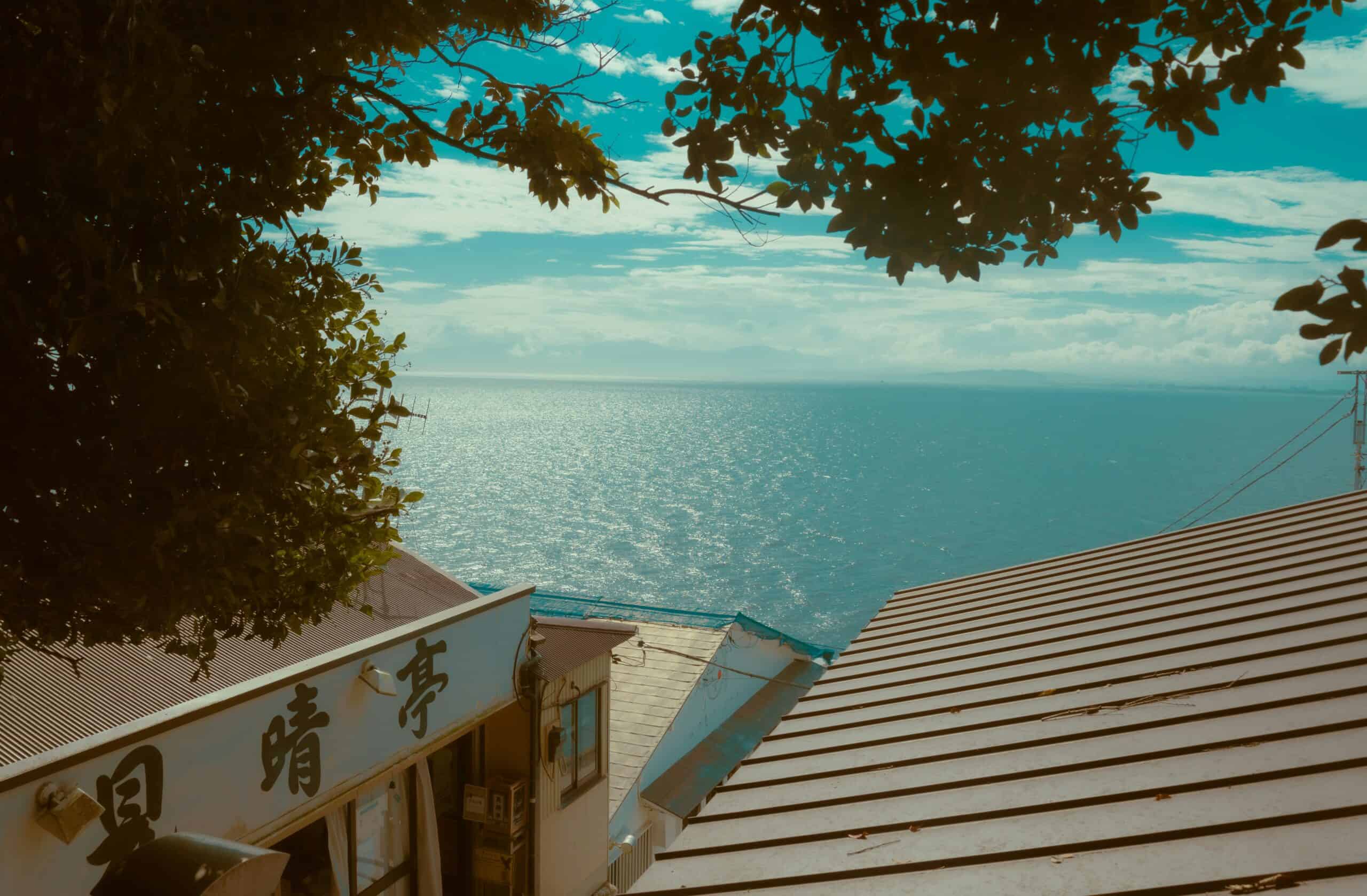
On the coast, the names follow the shoreline. Shima (島) is an island, so Nakajima and Kojima describe a middle island and a small one. Ura (浦) is a sheltered bay, and Miura means three bays. Hamada, meanwhile, is a rice field by the beach. Each of these names puts a family right at the water’s edge. Want to see that shore for yourself? Our custom Japan itineraries can route a trip through the fishing towns, river valleys and rice terraces behind these names.
Ten Proverbs to Carry With You
A printable folio of ten Japanese proverbs, each with a short note on where it shows up in daily life. Several speak of rivers, mountains and wells, the same landscape that fills the surnames. Leave your email and the printable arrives in your inbox, followed by an occasional letter on Japan.
One email with your printable. Occasional letters after that. Unsubscribe anytime.
Upriver and Downriver
River names often record which part of the river a family knew. Kawakami lives upriver, toward the source, and Kawaguchi lives at the river mouth. Nakagawa sits in the middle reach. Hasegawa, one of the longer common surnames, combines long, valley and river into three characters. Its reading is unusual too, because 長谷 is read hase rather than the expected naga-tani. Names like this are good reminders that a surname’s reading is fixed by custom, not worked out from the kanji alone. When in doubt, check the kana, or ask the person how they say it.
Recommended
Surnames From Rice Fields and Villages
If one character defines Japanese last names, it is ta (田), the rice field. It is a simple square divided into four plots, and it appears in more surnames than any other landscape kanji. Rice was the measure of wealth in old Japan, and a family’s field was its livelihood. So names built on 田 describe both a place and a way of life. Fittingly, it is also one of the first kanji that Japanese children learn. Look for its four small squares in the tables below.

| Surname | Kanji | Kana | The kanji mean |
|---|---|---|---|
| Yamada | 山田 | やまだ | mountain · rice field |
| Yoshida | 吉田 | よしだ | good luck · rice field |
| Ikeda | 池田 | いけだ | pond · rice field |
| Ishida | 石田 | いしだ | stone · rice field |
| Maeda | 前田 | まえだ | in front · rice field |
| Harada | 原田 | はらだ | meadow · rice field |
| Ota | 太田 | おおた | great rice paddy |
| Uchida | 内田 | うちだ | inside · rice field |
| Wada | 和田 | わだ | harmony · rice field |
| Matsuda | 松田 | まつだ | pine · rice field |
| Ueda | 上田 | うえだ | above · rice field |
| Hirata | 平田 | ひらた | flat · rice field |
| Murata | 村田 | むらた | village · rice field |
| Tamura | 田村 | たむら | rice field · village |
| Tanabe | 田辺 | たなべ | rice field · border |
| Nishimura | 西村 | にしむら | west · village |
| Kitamura | 北村 | きたむら | north · village |
| Nomura | 野村 | のむら | field · village |
| Yoshimura | 吉村 | よしむら | good luck · village |
| Murakami | 村上 | むらかみ | village · above |
| Nakano | 中野 | なかの | middle · field |
| Hirano | 平野 | ひらの | flat · field |
| Ono | 小野 | おの | small · field |
| Ueno | 上野 | うえの | above · field |
| Hoshino | 星野 | ほしの | star · field |
Notice the difference between two kinds of field. Ta (田) is a wet rice paddy, flooded and worked by hand. No (野) is an open field or plain, often wild grass or dry farmland. So Yamada is a paddy in the hills, while Ono is a small stretch of open country. Hara (原), as in Harada, is a meadow or a broad, flat expanse. Each word tells you something about how the land was used.
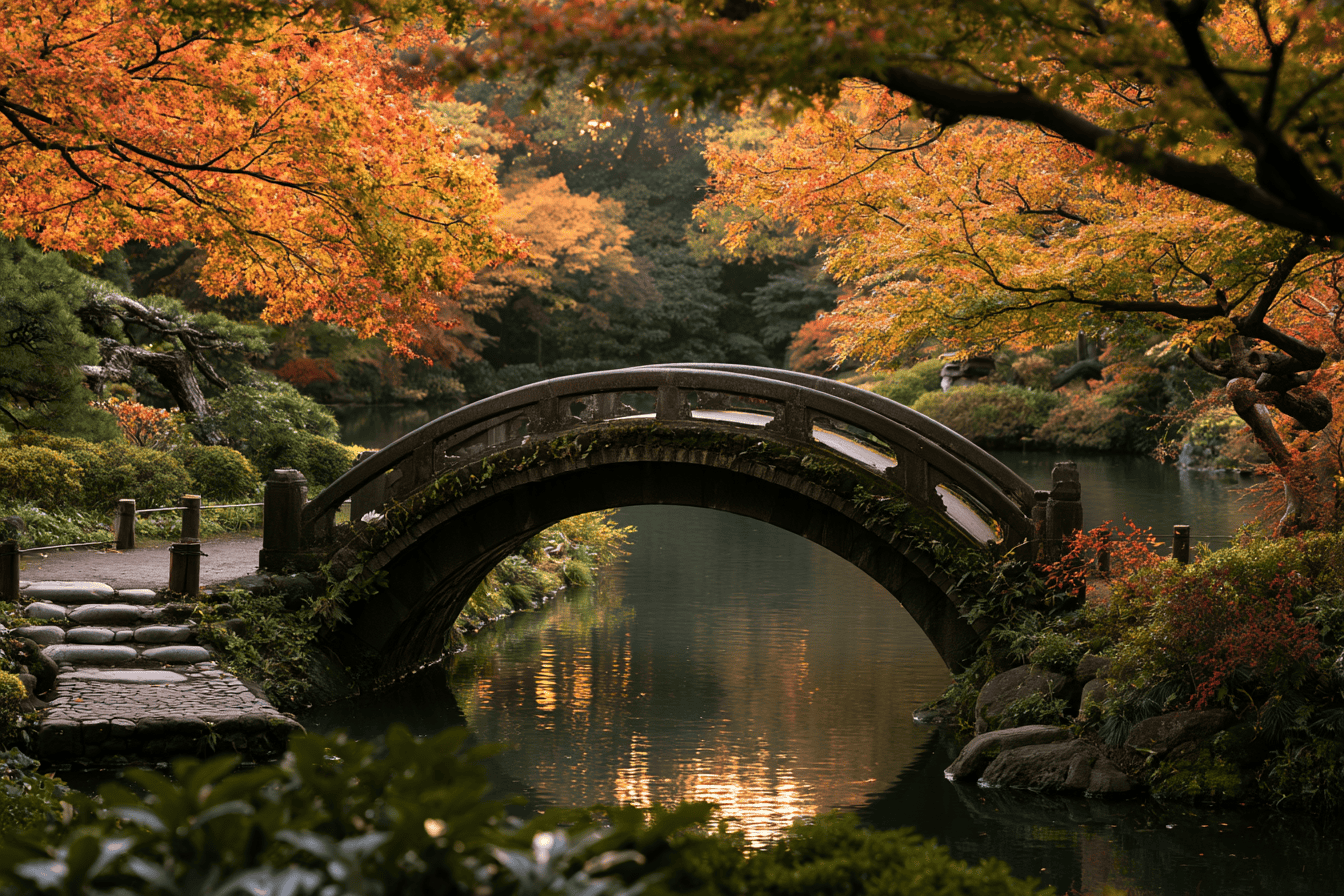
Some field names carry a wish. Yoshida pairs the field with yoshi (吉), good luck, and Wada adds wa (和), harmony. Hoshino, the star field, is among the most poetic names in this list. Village names, built on mura (村), work the same way. Nakamura is the middle village and Kitamura the north village, while Murakami lives at the upper end. Altogether, these names describe a farming world of paddies, paths and small settlements, much of it still there today, beside the station signs.
Famous Field Names
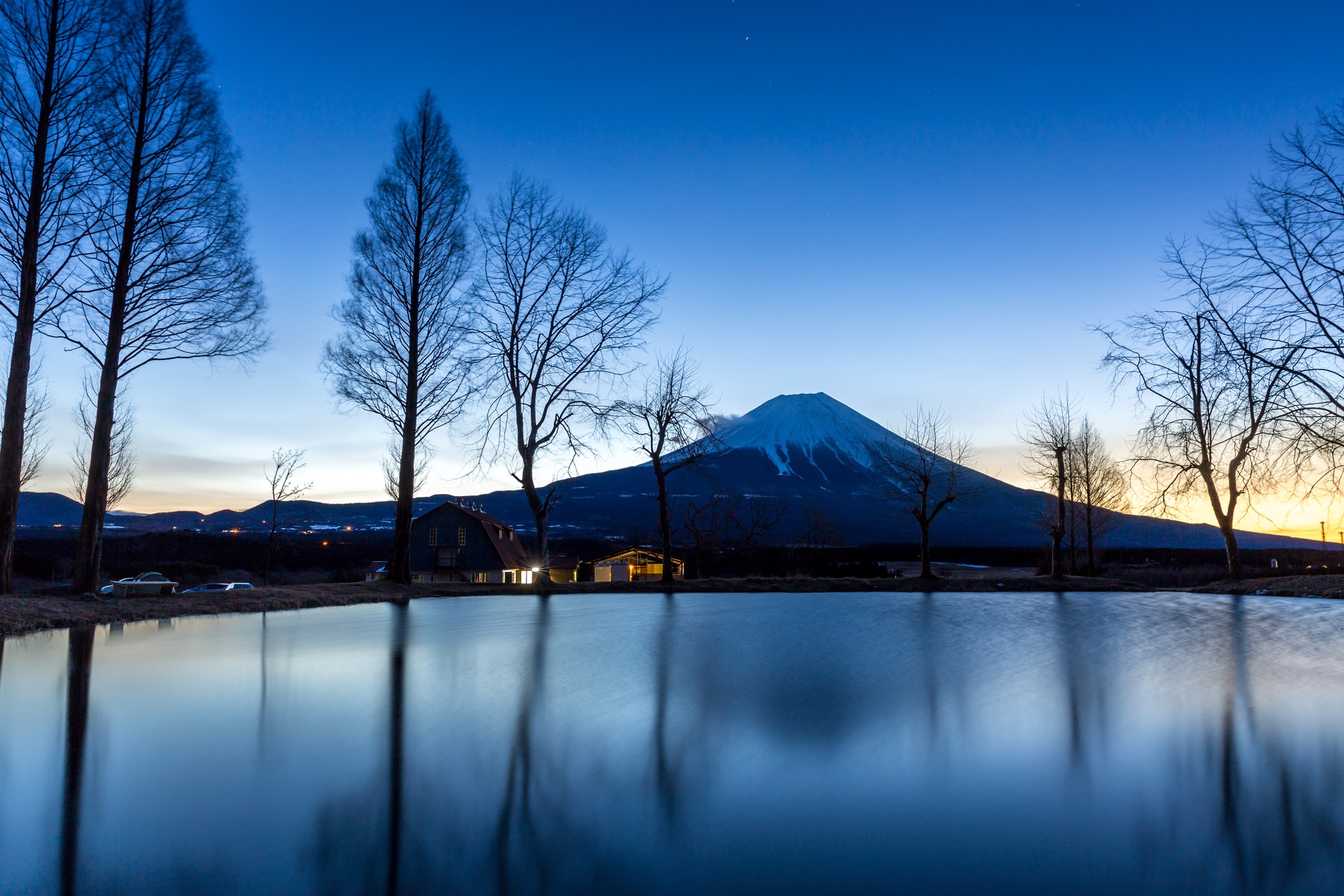
Field names also explain a few famous ones you may already know. Honda, the carmaker’s name, is written 本田, the main field. Toyoda, the family behind Toyota, is written 豊田, the bountiful field. Both appear in our generator’s list of 250 surnames, alongside dozens of other paddy names. Once you can read 田, you will see it on company names, station boards and baseball rosters. Each time, it brings a small rice field to mind. In that sense, the humble paddy may be the most widely carried picture in Japan.
The Wisteria Names: 藤 and the Fujiwara
Not every surname describes a field or a river. One large group shares a single character, 藤, the wisteria. It appears at the start of names like Fujiwara and Fujita, where it is read fuji. However, it appears far more often at the end, where it is read to or do. Think of Sato, Ito, Kato, Saito and Goto. Three of the ten most common Japanese last names belong to this group. Its long purple flowers made it a favorite in gardens and in art.
| Surname | Kanji | Kana | The kanji mean |
|---|---|---|---|
| Fujiwara | 藤原 | ふじわら | wisteria · meadow |
| Fujita | 藤田 | ふじた | wisteria · rice field |
| Fujii | 藤井 | ふじい | wisteria · well |
| Goto | 後藤 | ごとう | behind · wisteria |
| Kondo | 近藤 | こんどう | near · wisteria |
| Endo | 遠藤 | えんどう | distant · wisteria |
| Ando | 安藤 | あんどう | peaceful wisteria |
| Kudo | 工藤 | くどう | craft · wisteria |
| Saito | 斎藤 | さいとう | purification · wisteria |
The usual explanation points to the Fujiwara, the great court family of the Heian era, whose name means wisteria meadow. As Nippon.com notes in its surname ranking, Sato is linked to the Fujiwara because its second character is the same fuji. Branch families of a famous house often kept one character of its name. Most families today, though, cannot trace such a line.
Japanese Design Motifs — 4,260 family crests in one volume
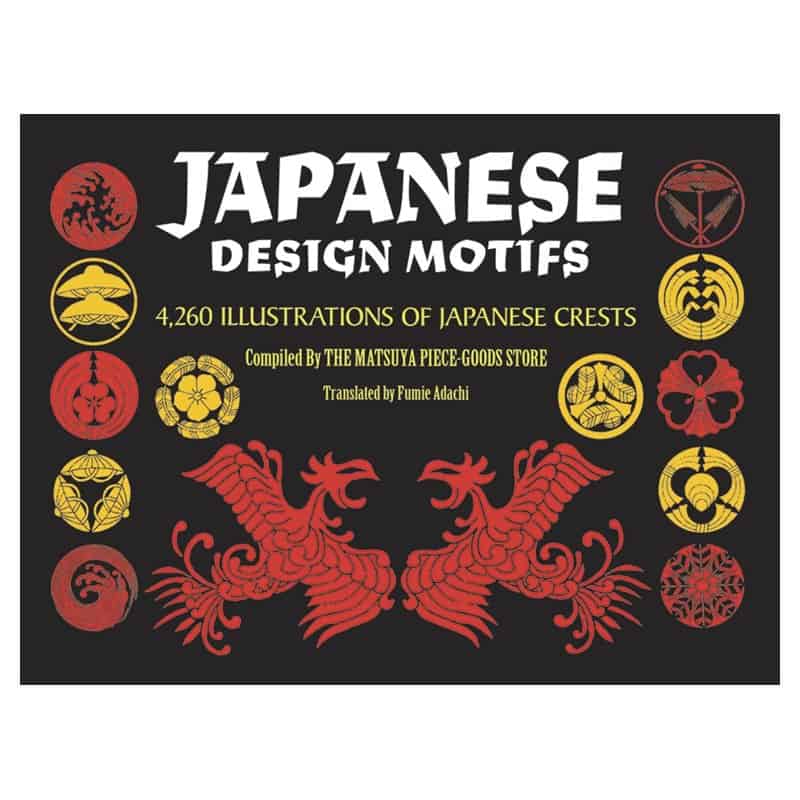
Alongside the surname, many Japanese families keep a kamon, a family crest. Crests appear on formal kimono, lacquerware and old storehouse doors, and several of them show the wisteria. Japanese Design Motifs reprints a Tokyo kimono shop’s crest catalog from about 1913. It holds 4,260 crests across 216 large pages in a single volume, with an English index. Look up wisteria, pine or rice plant, and you will find dozens of variations on each. It is a superb reference for anyone curious about their own family’s symbol. It also rewards designers and tattoo artists, and anyone who simply loves Japanese graphic art.
Position changes the sound of 藤. At the start it is fuji, as in Fujita and Fujii. At the end it is to or do, as in Kondo and Endo. The first part often adds a place or a quality. Kondo is the near wisteria and Endo the distant one, perhaps branches of a family told apart by where they lived. Whatever their origin, these names are now as ordinary as Tanaka.
You may also like

Family Name First: How Japanese Order Names
In Japanese, the family name always comes first. A woman named Yuki in the Tanaka family is Tanaka Yuki. At school, at work and on every form, people use the surname, often with the polite suffix san. So a colleague is Tanaka-san, and only close friends and family use Yuki. For visitors, the safest habit is simple: use the surname with san until someone invites you to do otherwise. Our guide to Japanese etiquette covers greetings, bows and the other small courtesies around names.

The surname also travels in a small object: the hanko, a personal seal. Many people in Japan own several, and most carry only the family name. People stamp them on contracts, bank forms and parcel receipts, in place of a signature. Because the seal shows the surname alone, a family can share one style of name stamp across generations. For a visitor, a seal with your own name in kanji or katakana makes a meaningful keepsake.
Custom Stone Name Seal — your name, carved as a hanko
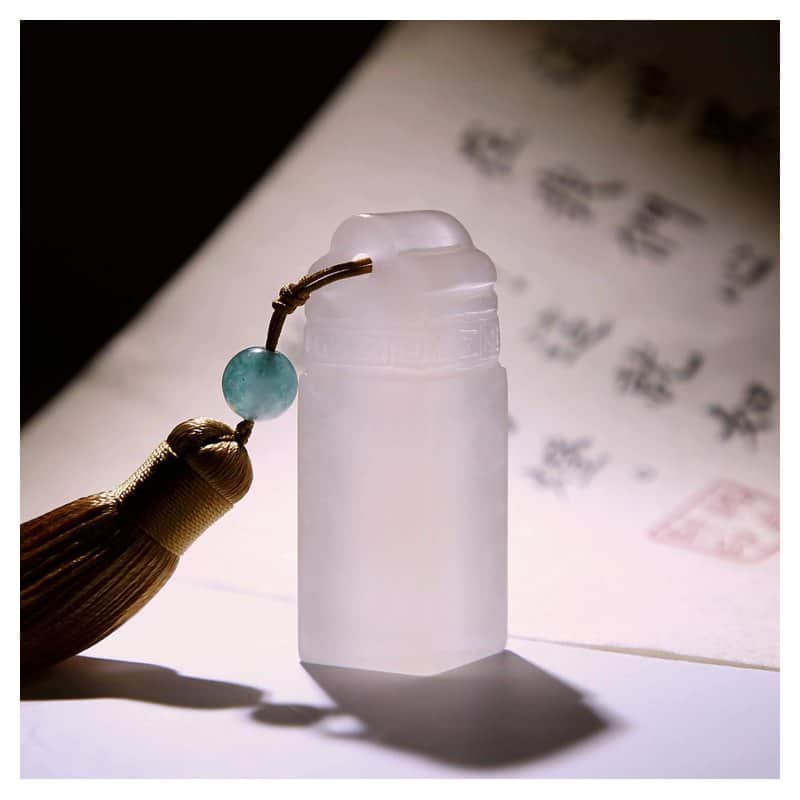
Once you know what your chosen surname means, a seal turns it into something you can use. This custom stone name seal is carved from natural stone to your own text. It takes Japanese or Chinese characters, in the font style you choose. It measures about one inch square and just over two inches tall, finished with a tassel. Each stone has its own grain, so no two look alike. Use it to sign letters, mark your books or finish a piece of brush calligraphy. Allow a few days for the carving. Then press it firmly and evenly, and lift it straight up.
Shachihata Vermilion Ink Pad — the red of a proper seal
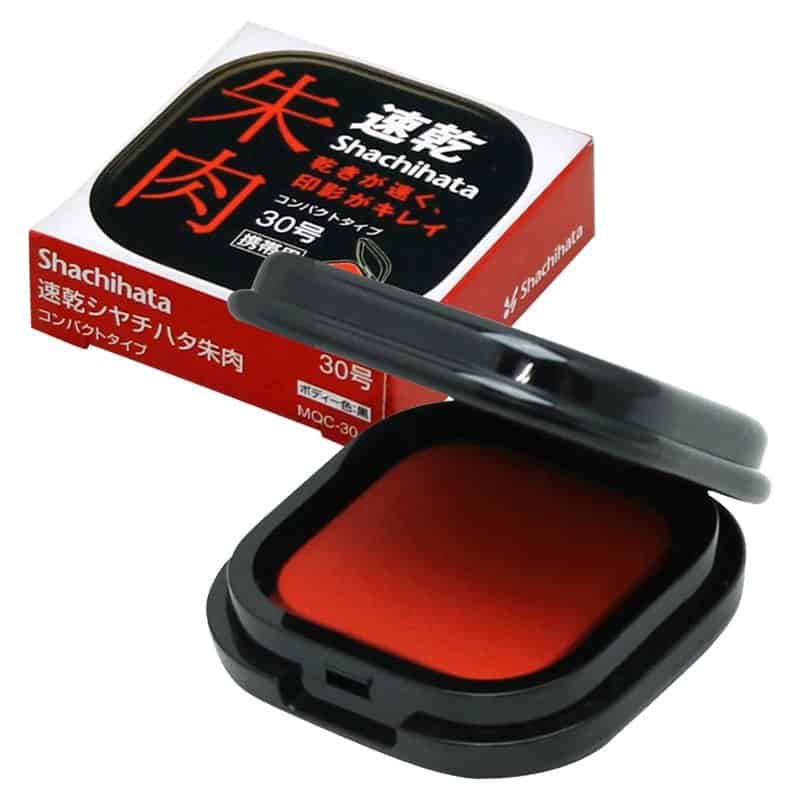
A hanko needs shuniku, the vermilion seal ink that gives Japanese stamps their warm red. Shachihata is a long-established Japanese maker of seals and seal ink. This Shachihata quick-drying vermilion ink pad is the compact size found on Japanese desks. It measures under two inches across, with rounded corners and a snap lid. Because the ink dries fast, the impression will not smear when you close a card. When it runs low, a matching refill keeps it going. Pair it with a name seal, and you hold the whole Japanese signature in your hand. It also suits a small study corner.
Iyo Washi Letter Paper — handmade texture for a written name
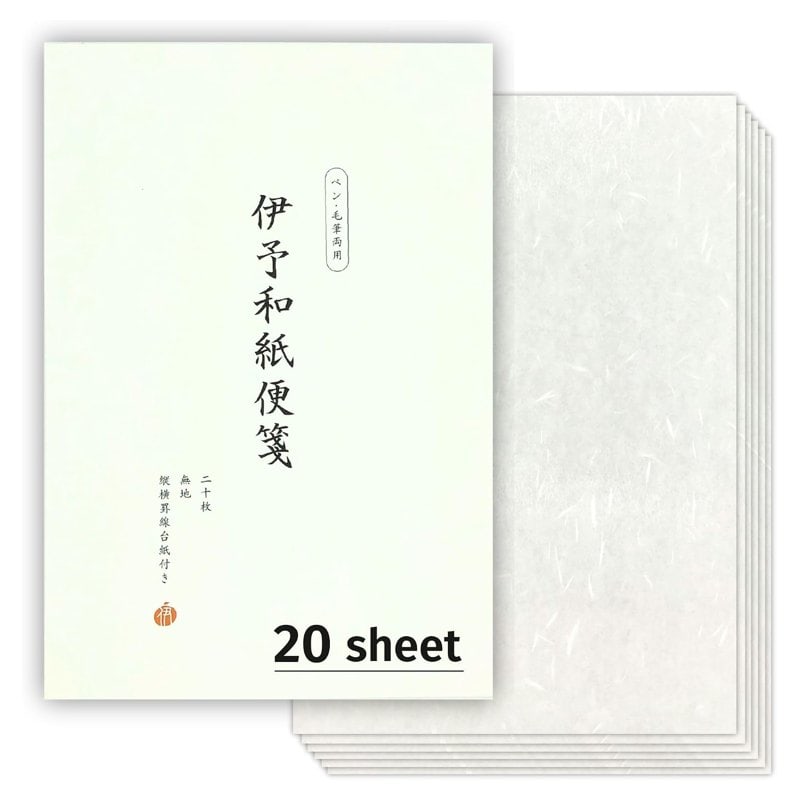
Iyo washi comes from Ehime on the island of Shikoku, one of Japan’s traditional papermaking regions. This pack of Iyo washi letter paper holds twenty white sheets, made in Japan, each about ten by seven inches. The surface has the soft, fibrous texture of real Japanese paper, yet it takes sumi ink and brush pen smoothly. It even runs through an inkjet printer. Use it for a thank-you note signed with your Japanese name, or for practicing a surname in brush. A single sheet also makes a lovely gift card when folded once. Because the paper is white and unruled, it frames a few brushed characters beautifully.
A simple dish for the clear-water names
Shimizu and Koizumi both honor good water, and one Japanese dish shows off clean flavors better than most. Hiyayakko is chilled silken tofu, cut into cubes and topped with scallion, ginger and bonito flakes. Since nothing is cooked, the quality of the tofu decides everything. It is a fitting way to taste a clear-water name.
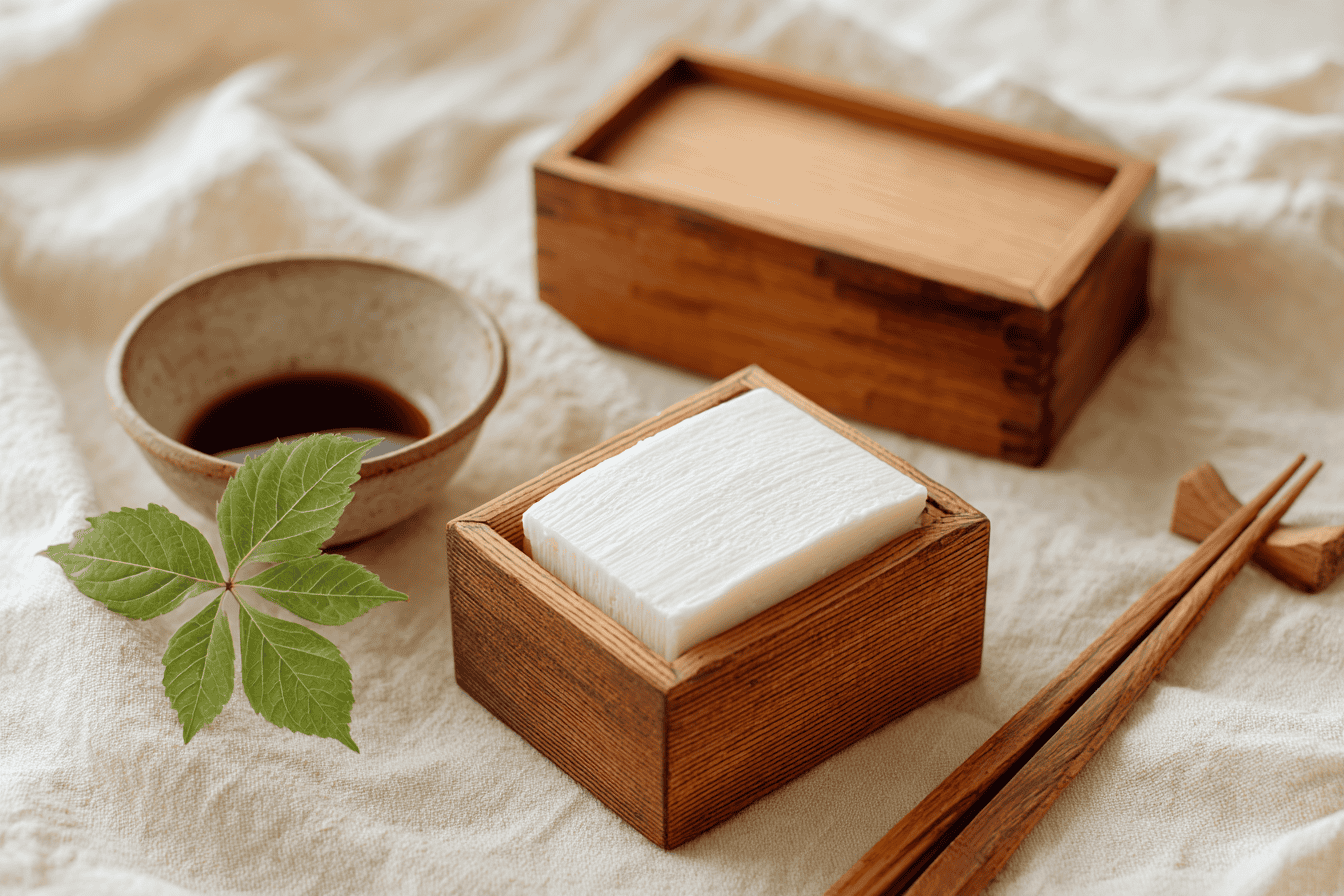
Hiyayakko — chilled silken tofu with ginger and scallion
Adapted from Just One Cookbook’s hiyayakko recipe, this serves four. First, wrap a chilled fourteen-ounce block of silken tofu in a paper towel and let it drain on a plate for ten minutes. Do not press it, or it will lose its moisture. Meanwhile, slice one green onion thinly and grate about an inch of peeled ginger. Next, cut the tofu into four cubes and set each on a shiso leaf in its own small dish. Then top each cube with green onion and half a teaspoon of ginger. Finally, add a pinch of bonito flakes and drizzle with soy sauce at the table.
Serve hiyayakko as a cool first course on a warm evening, with rice, miso soup and pickles. Soft tofu gives the silkiest result, while firm tofu feels too dense here. If you plan ahead, keep the cubes in the refrigerator and pour off any water before topping them. And if you know a Shimizu or a Koizumi, this is a thoughtful dish to share with them.
Names also carry relationships. When two people marry in Japan, the Civil Code requires them to share one surname. In 2017, only about 4% of couples chose the wife’s name, according to Nippon.com. The same article notes that the rule is young compared with the names themselves. For many families, then, the surname is a thread that ties generations together. It is one reason names, crests and seals still feel personal in Japan. The journal below takes that idea of connection as its theme.
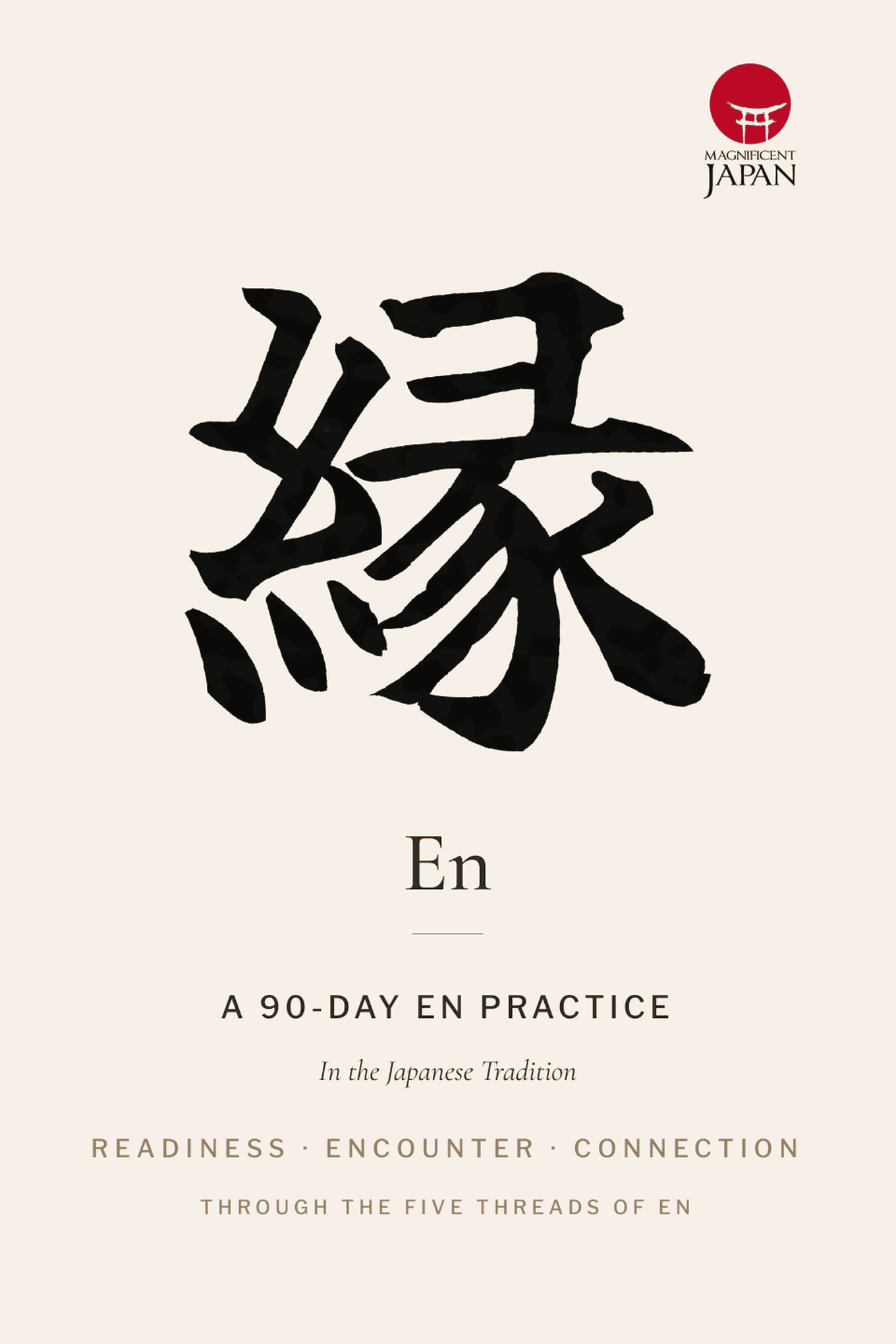
A 90-day practice in en, Connection, the ties that link people, families and generations. One short prompt a day helps you notice the bonds that shape your life, including the ones a family name carries. Choose the digital edition for a tablet or the paperback for ink and paper. It is one of eight journals in the Cultural Reflection Collection, each built on a Japanese idea.
View The CollectionReading Japan Through Its Family Names
Japan’s family names reward a little curiosity. Learn a handful of kanji, and the country starts to describe itself to you. The bank clerk is the middle of the rice field. The taxi driver is the foot of the mountain, and the name on the gate is clear water.
So watch for these characters on your next trip, and try writing a few with a brush. When you are ready to put a full name together, our calligraphy practice tool shows you how to write it, stroke by stroke.
One last thought before the questions. The best way to feel these names is to travel through the places they describe. That means a night in a farmhouse village below the mountains. Add a morning by a clear spring and an afternoon on a calm coast. Would you like that journey planned for you? Our travel designers can build a route through rural Japan around rice terraces, river valleys and old villages. They reserve the inns and the guides, so you can spend your days reading the landscape rather than the timetable.
A custom itinerary for the traveler who wants to see the country that Japanese surnames describe. It moves through rice terraces, mountain villages, clear springs and fishing towns, with stays in inns chosen for their setting. Each day is paced for walking, eating well and noticing the land.
Plan Your Custom Japan ItineraryQuestions Worth Asking
What is the most common Japanese last name?
Sato is the most common Japanese last name, with about two million people in Nippon.com’s March 2023 estimate. Suzuki follows at about 1.75 million and Takahashi at about 1.45 million.
Why do so many Japanese last names refer to nature?
Most surnames began as a way to say where a family lived. So they combine kanji for the land around a house, such as field, mountain, river, well and village.
When did ordinary Japanese people get surnames?
Before the Meiji era, surnames belonged mainly to nobles and samurai. The government allowed everyone to use one in 1870, then made surnames mandatory in 1875, for tax collection and military registration.
Do Japanese people say the family name first?
Yes. In Japanese the family name comes first, so Yuki of the Tanaka family is Tanaka Yuki. People address each other by surname with san, such as Tanaka-san.
What does 藤 mean in Japanese last names?
藤 means wisteria. At the start of a surname it is read fuji, as in Fujiwara. At the end it is read to or do, as in Sato, Ito and Kondo.
What is a hanko, and does it show the family name?
A hanko is a personal seal stamped in red ink in place of a signature. Most carry only the family name, and people use them on bank forms, contracts and delivery receipts.
The Editors, Magnificent Japan