Japanese themed journals for reflection, travel, and practice.
Thirty-five Japanese themed journals across three collections, with the kanji workbook line beside them. Eight guided 90-day practices explore ikigai, wabi-sabi, kintsugi, and the pause, in digital and paperback. Meanwhile, twenty-seven illustrated Japan travel journals carry 120 blank, unlined pages behind original cover art. And kanji workbooks teach the characters themselves, stroke by stroke.


A Japanese themed journal usually means a cover. A wave, a crane, a spray of blossom, and ordinary lined pages behind it. Ours work the other way. The theme runs through the interior, and it changes shape across three collections. Reflection takes a Japanese concept as the subject you write about. Travel takes a place and a season as the art on every page. Practice takes the writing system itself, stroke by stroke. Thirty-five titles, three different answers to the same question: what should a Japanese themed journal actually be about?
Reflection — The Japan Cultural Collection
Japanese guided journals — eight concepts, eight 90-day practices
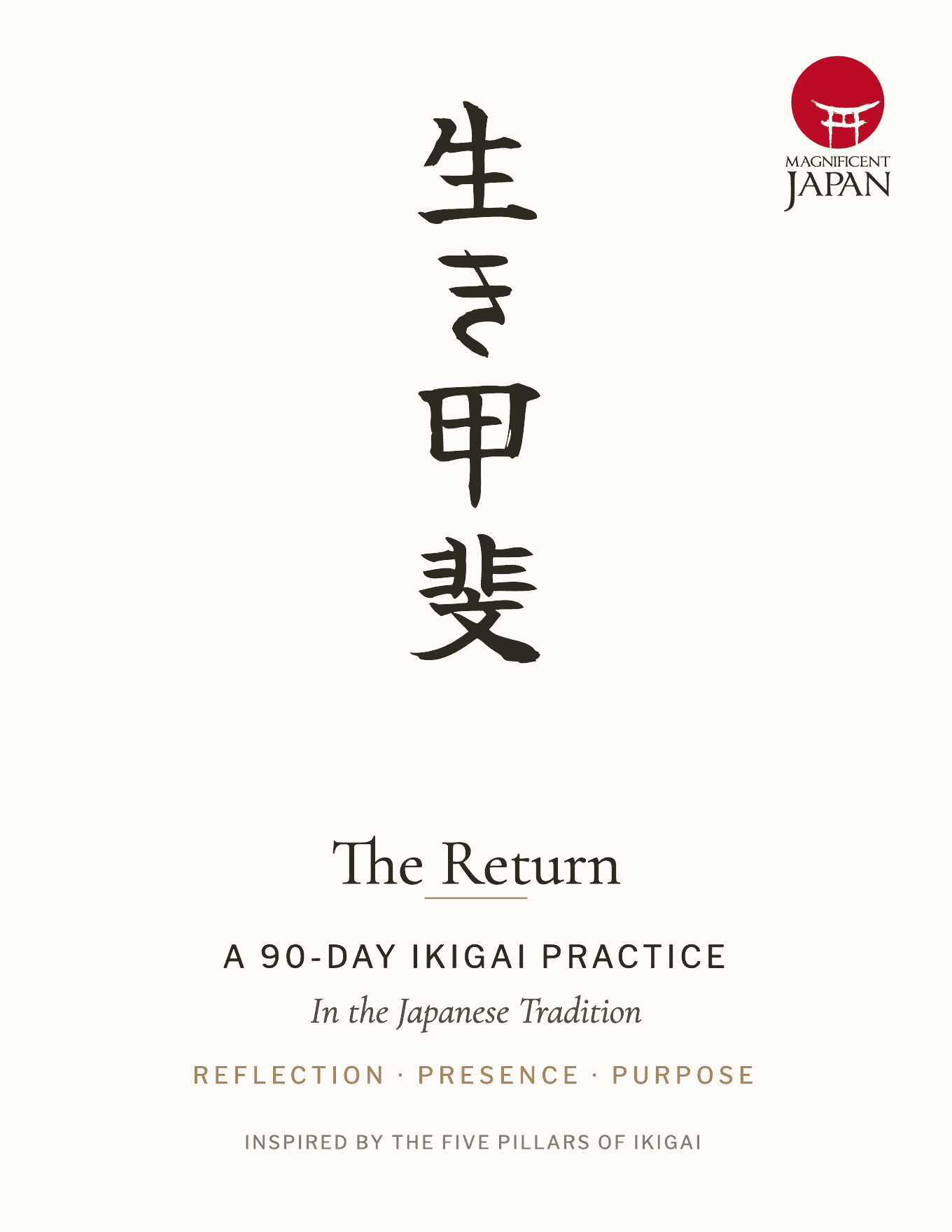
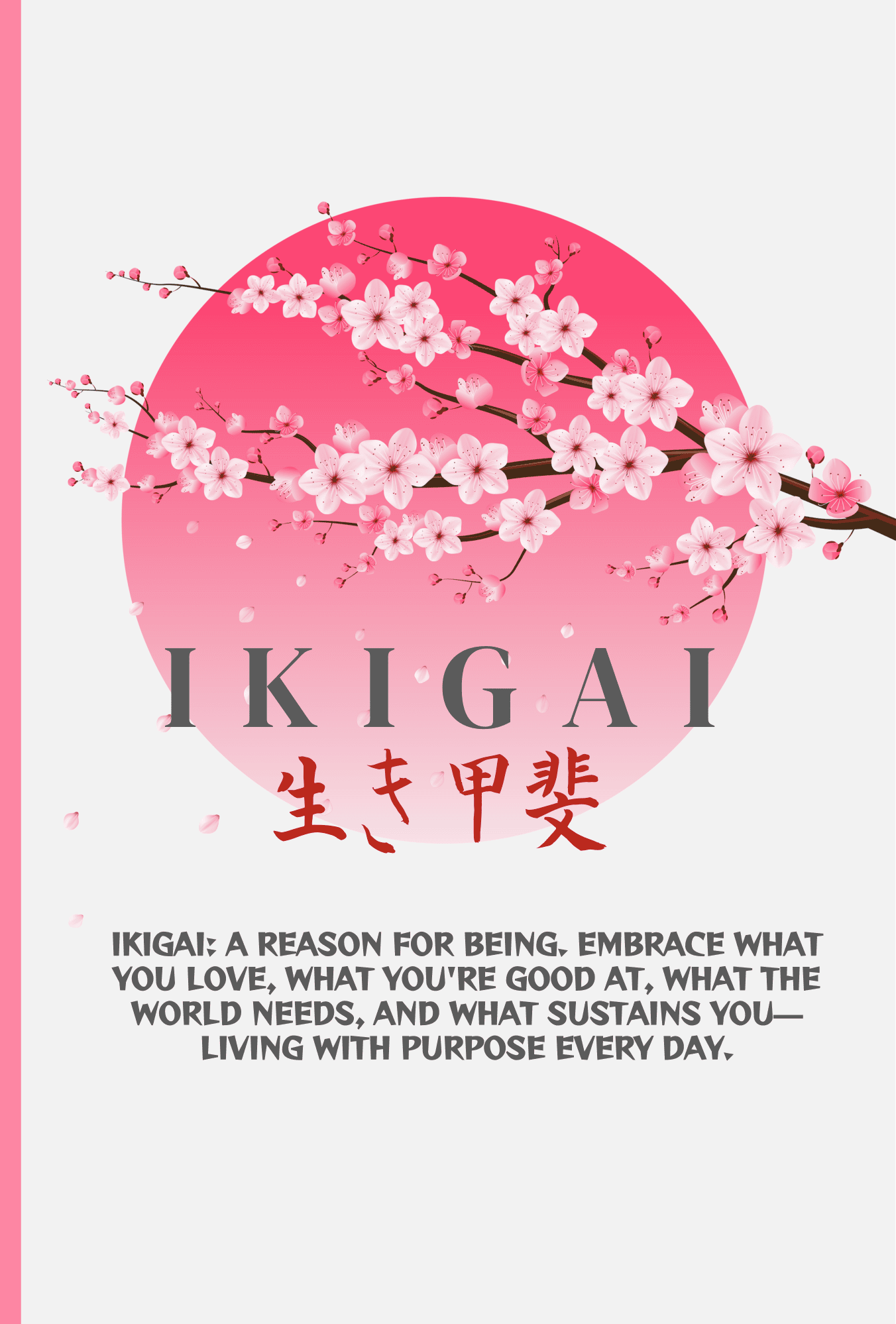
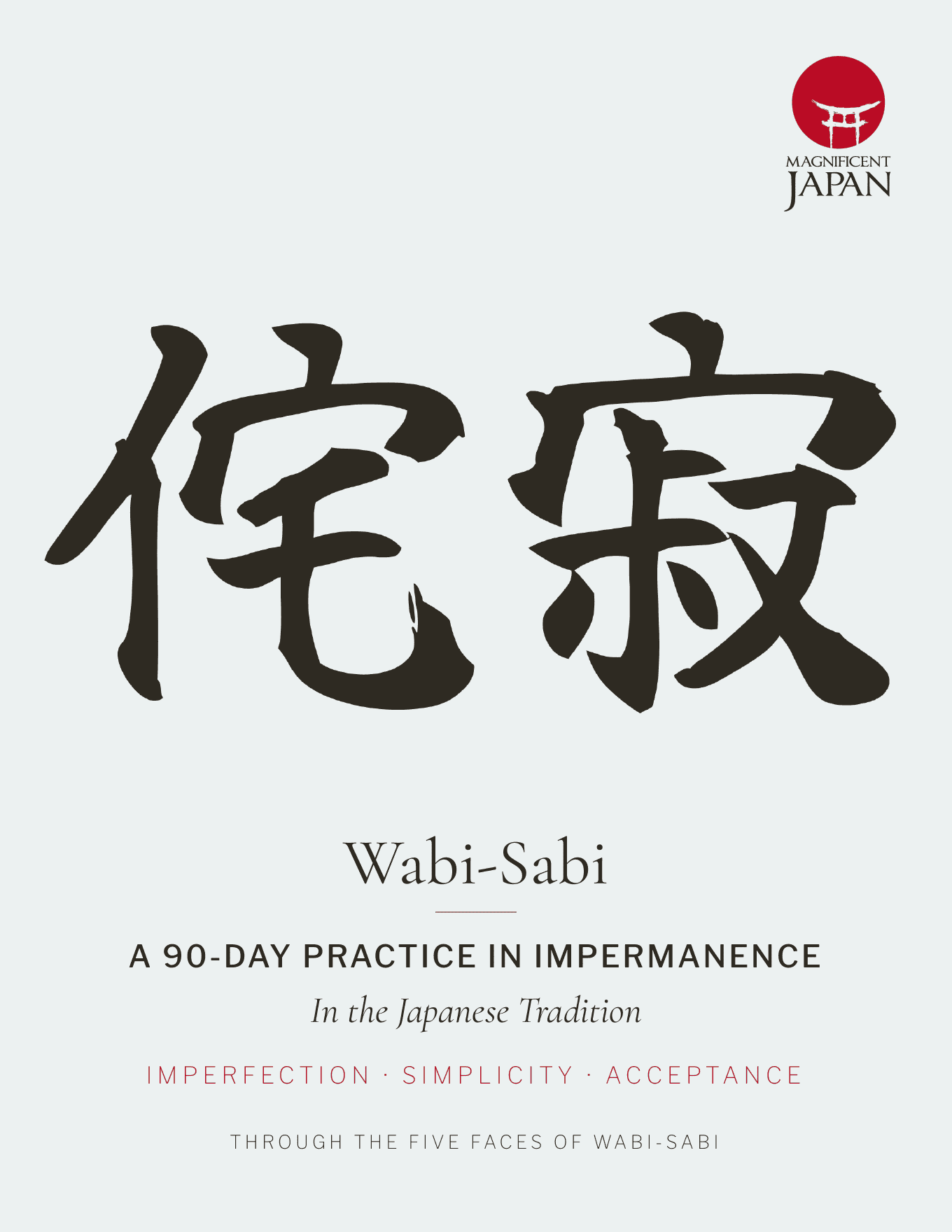
Here the theme is the concept itself. These are guided 90-day Japanese philosophy journals, and the philosophy is the subject you write about rather than a motif on the cover. Ikigai asks what makes a day worth returning to. Ma asks what the pause is for. Kintsugi asks which repairs are worth keeping. Wabi-sabi, shoshin, nagomi, mono no aware and en each set a different question, then hold it for ninety days. Of the three collections this is where Japanese themed journals go deepest. The concept does the work, and you supply the answers.
Each of these journals begins with what its concept actually means in its own tradition. Moreover, every title carries one prompt a day for ninety days, a weekly synthesis, and a monthly review. In addition, each is available as a write-on digital edition for iPad and tablet, and every one is live in paperback print. Three of the practices are below; the complete set of eight Japanese philosophy journals has a page of its own. Choose the concept your season of life needs — purpose, balance, imperfection, repair, tenderness, beginner’s mind, connection, or the pause.
Twenty seconds inside the practice — a morning prompt, answered by hand. Tap to play, with sound.
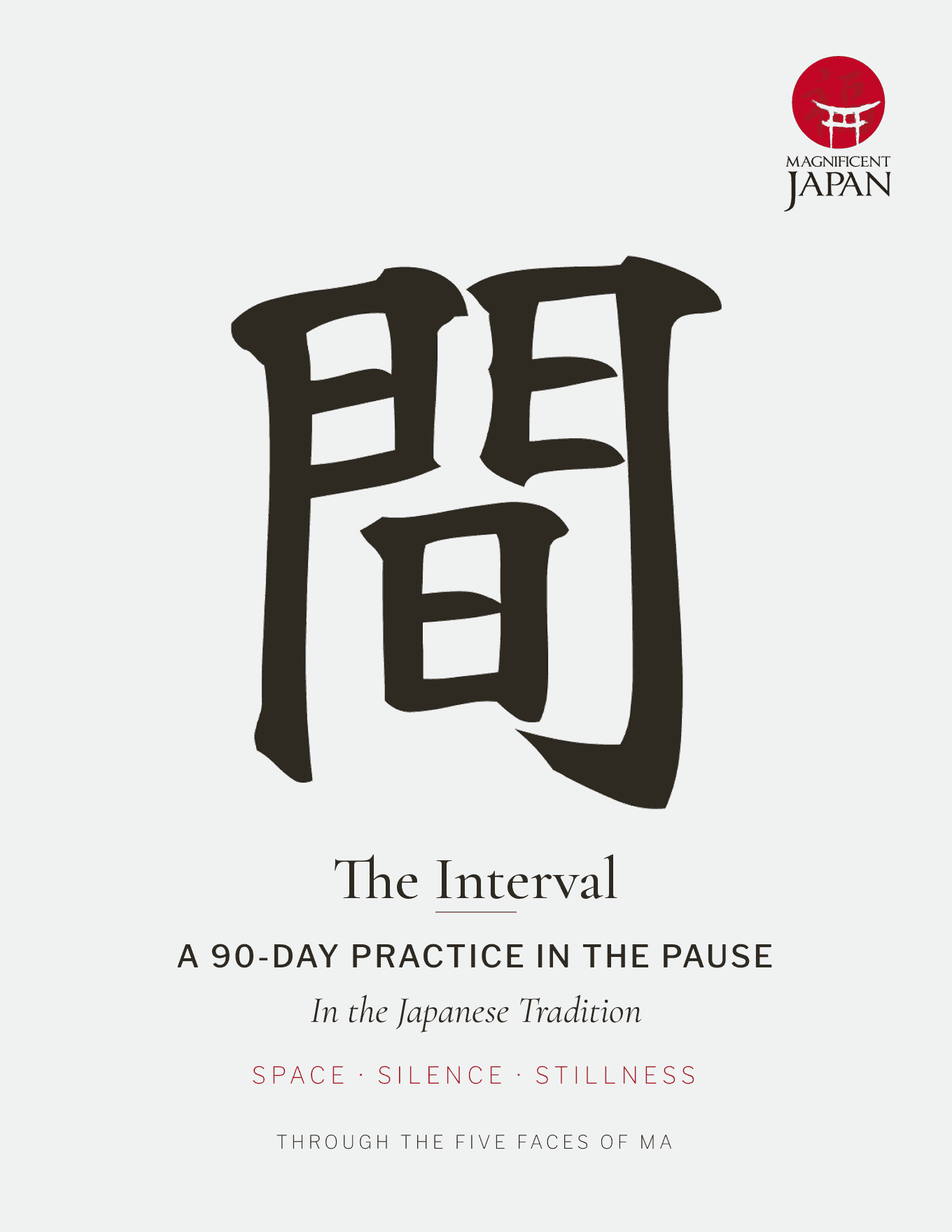
One question comes up more than any other: which concept to begin with. There is no correct order, and the eight do not build on one another. Choose by what the season asks of you. A year of upheaval suits Kintsugi. Too much on your plate points to Ma. Drift, more than anything, points to The Return. Readers who finish one practice usually start a second within a month, and the second choice tends to be easier than the first.
Five more guided practices complete the set. Nagomi covers balance, Kintsugi covers repair, Mono no Aware covers tenderness, Shoshin covers beginner’s mind, and En covers connection — the ties between people that a life is actually made of. Every Japanese philosophy journal in the collection follows the same architecture of ninety prompts, weekly synthesis, and monthly review.
See Our Entire Collection of EightChoosing between eight concepts is easier once you know where each one comes from. Accordingly, the essays below cover what ikigai means in Japan, and where the diagram most Western readers have seen was actually assembled.
Below the guided line sits the other half of the collection. By contrast, where a practice supplies the questions, a travel journal supplies only the paper, and leaves the rest of the decision to you.
Travel — Art and Writing Journals Collection
Twenty-seven Japan travel journals for writing, sketching, and everything worth keeping
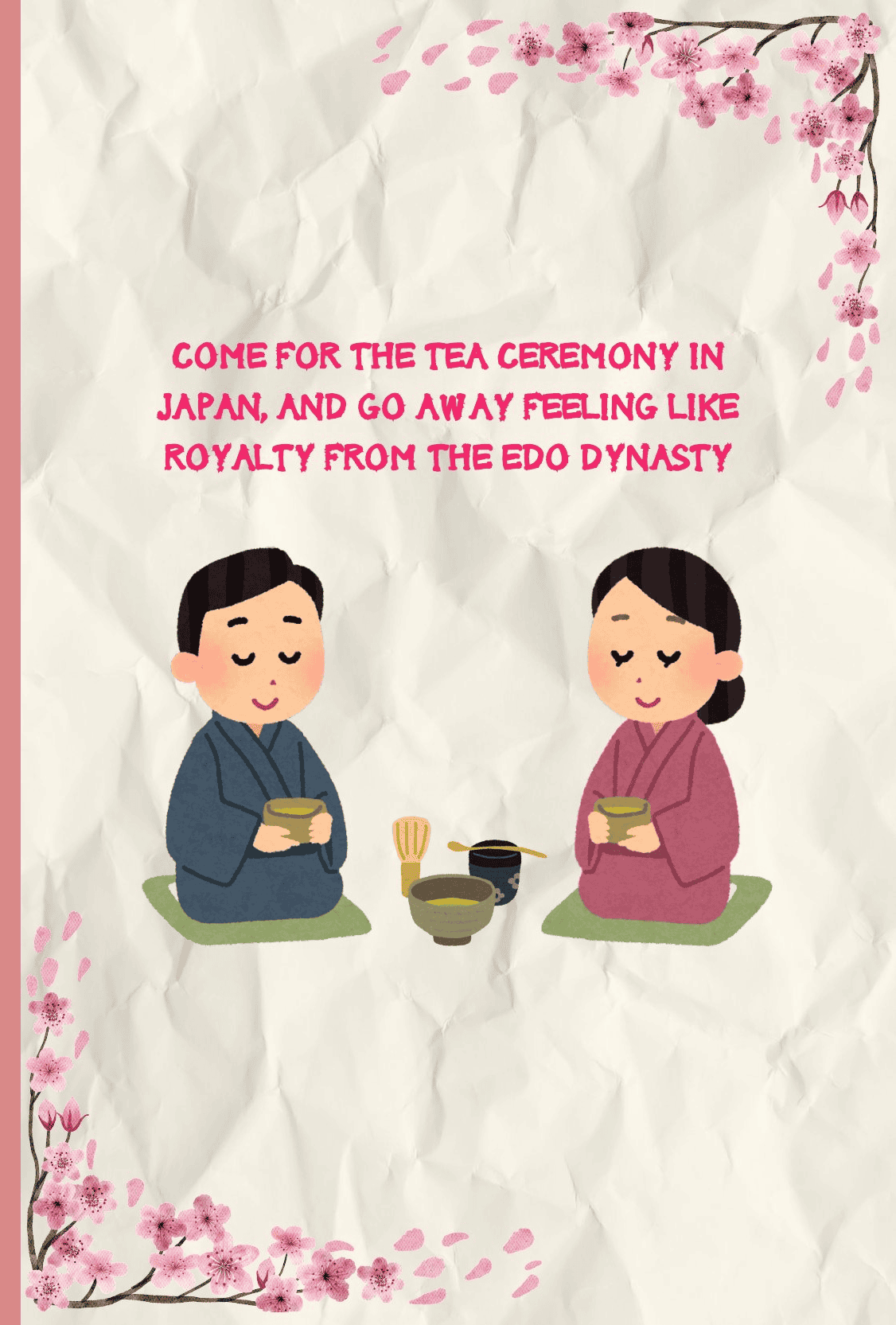
Here the theme is place and season. Sakura in April, Hokkaido under snow, the Shinkansen at speed, Tsukiji before the city wakes. The illustration runs through all 120 pages, and the pages themselves stay blank and unlined, because the subject is where you are rather than what you are asked. Writers fill them with itineraries. Artists use them as sketchbooks. Both are correct. Among Japanese themed journals this is the most open format we publish: the art supplies the setting, and everything written on top of it is yours.
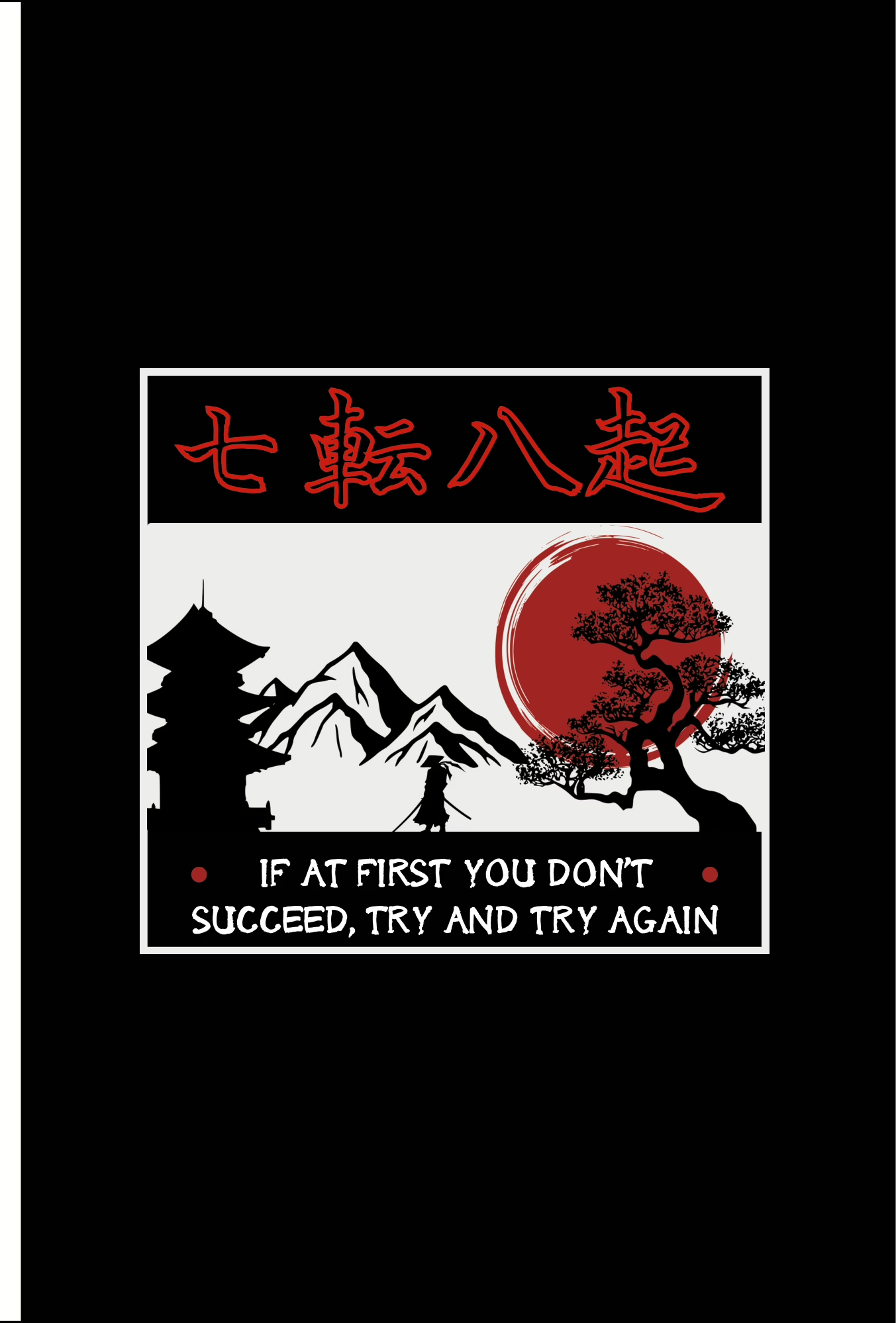
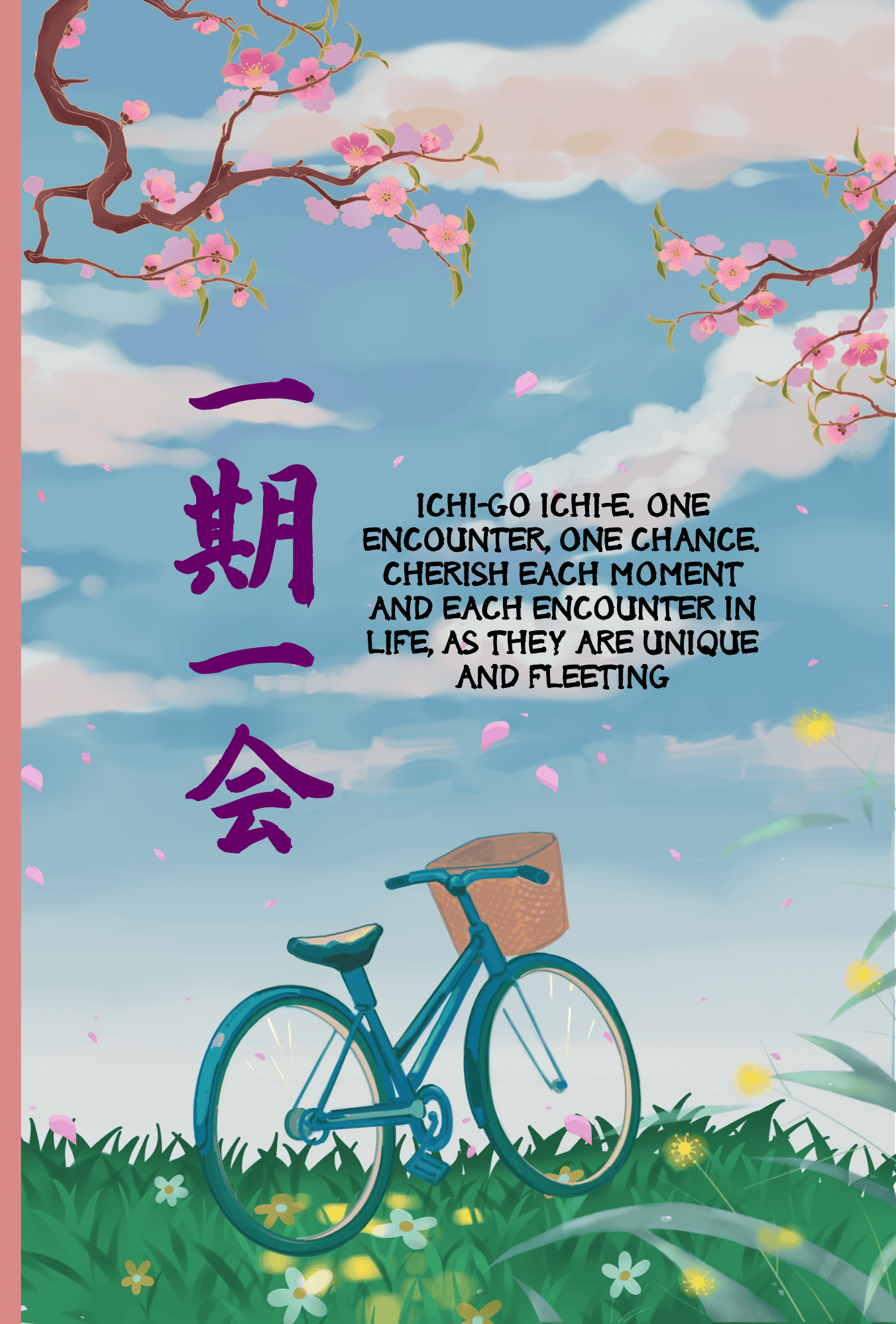
An unlined page never tells you what to do with it. That is the point. These Japanese journals carry 120 blank, unlined pages behind original cover art. Inside, there is room for travel notes, morning pages, sketches, and ink drawings alike. Writers use them for itineraries and memories. Artists use them as sketchbooks, because the smooth white paper takes pencil and fountain pen. Equally, others keep one on the desk for lists, ideas, and daily notes. Meanwhile, the covers range well beyond the seasons — city icons, market mornings, proverbs, and one samurai cat. Start with the three below, or browse our cherry blossom journal guide. Better still, open the full travel journal collection — every region, ritual, and use in one place.


Beyond these three, the collection reaches much further. Altogether, twenty-seven titles span Mount Fuji, the Shinkansen, onsen towns, Tokyo after dark, Tsukiji mornings, and the proverbs worth living by. Every Japan travel journal in the line carries the same 120 unlined pages behind original cover art.
See Our Entire Travel CollectionWhichever collection you choose, the habit is what does the work. A journal that stays on the shelf teaches nothing, and the surest way to open one every day is to have something specific to write in it.
Practice — The Kanji Workbook Collection
Pair your journal with a practice — kanji and calligraphy, stroke by stroke
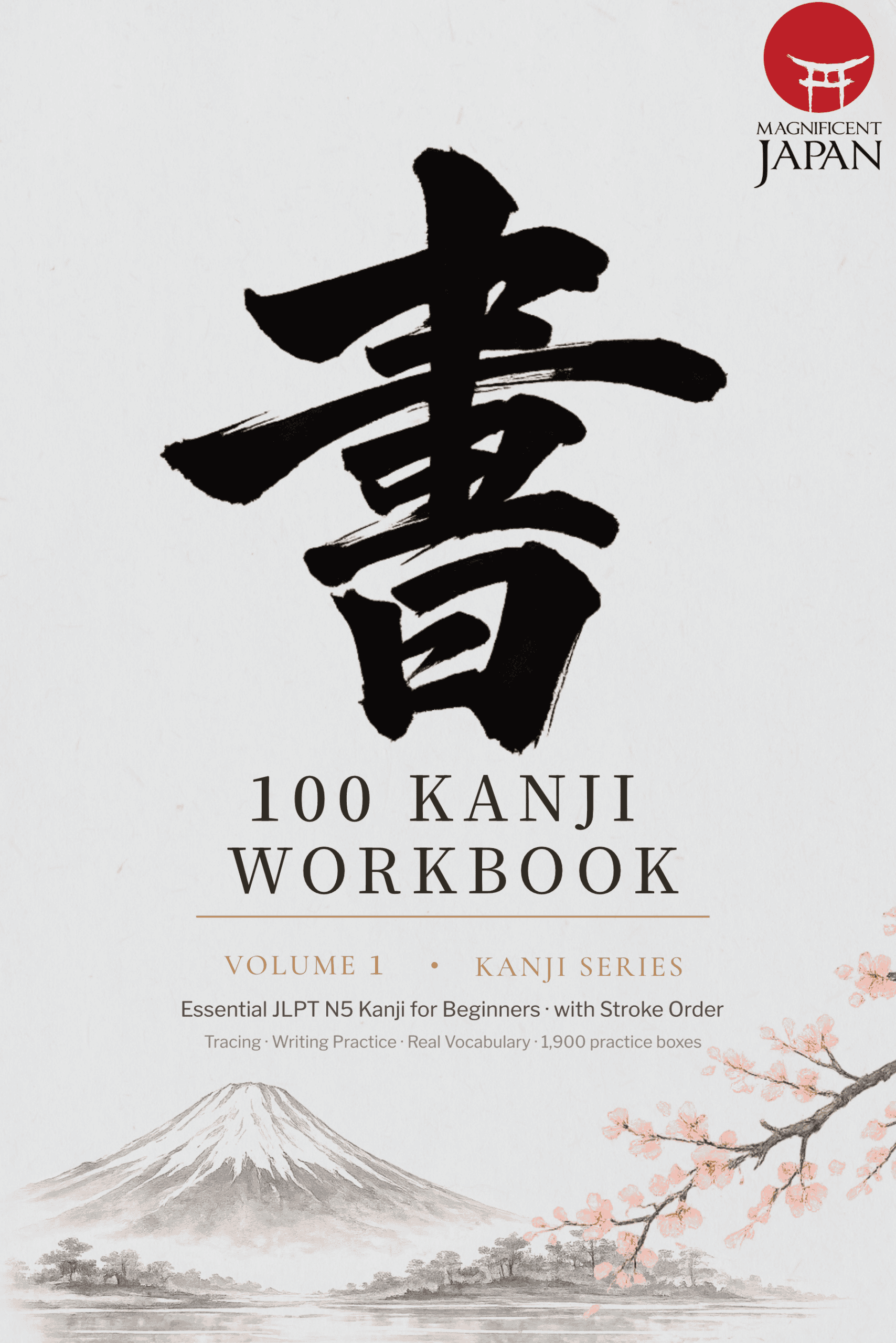
Here the theme is the writing system. In the other two collections Japanese is what you write about; in this one it is what you are learning to write. The workbooks take the most important kanji across JLPT N5 and N4 and teach them stroke by stroke, in the right order, with readings, vocabulary and practice grids. Calligraphy follows the same discipline with a brush. It is the least decorative corner of our Japanese themed journals and the most useful, because every mark on the page has a correct order.
Japanese journals hold what you write; a workbook changes how you write it. Accordingly, our kanji and calligraphy lines teach the characters themselves — stroke by stroke, in the right order. Start with the 100 Kanji Challenge, then go deeper through the calligraphy workbooks and the full kanji workbook series. The tools below are open to everyone, no purchase required.
Digital Workbook · Instant Download The 100 Kanji Workbook — Volume 1 $9.99 · Printable PDF The most important kanji across JLPT N5 and N4, with stroke order, readings, vocabulary, and guided practice grids. The structured companion to every journal on this page — learn the characters, then write with them. View the Workbook → Three kanji practice tools sit alongside the workbook, and each opens in any browser with no purchase required. Trace Japanese calligraphy stroke by stroke, build a five-characters-a-day flashcard habit, or find your name rendered in kanji. Every tool trains the same stroke-order discipline the workbook teaches on paper, so the practice carries from screen to page.
 Calligraphy Practice Trace kanji stroke by stroke in your browser — the digital shodō primer. Try the Tool →
  Kanji Flashcards Study the essential characters with spaced-repetition flashcards. Start Studying →
 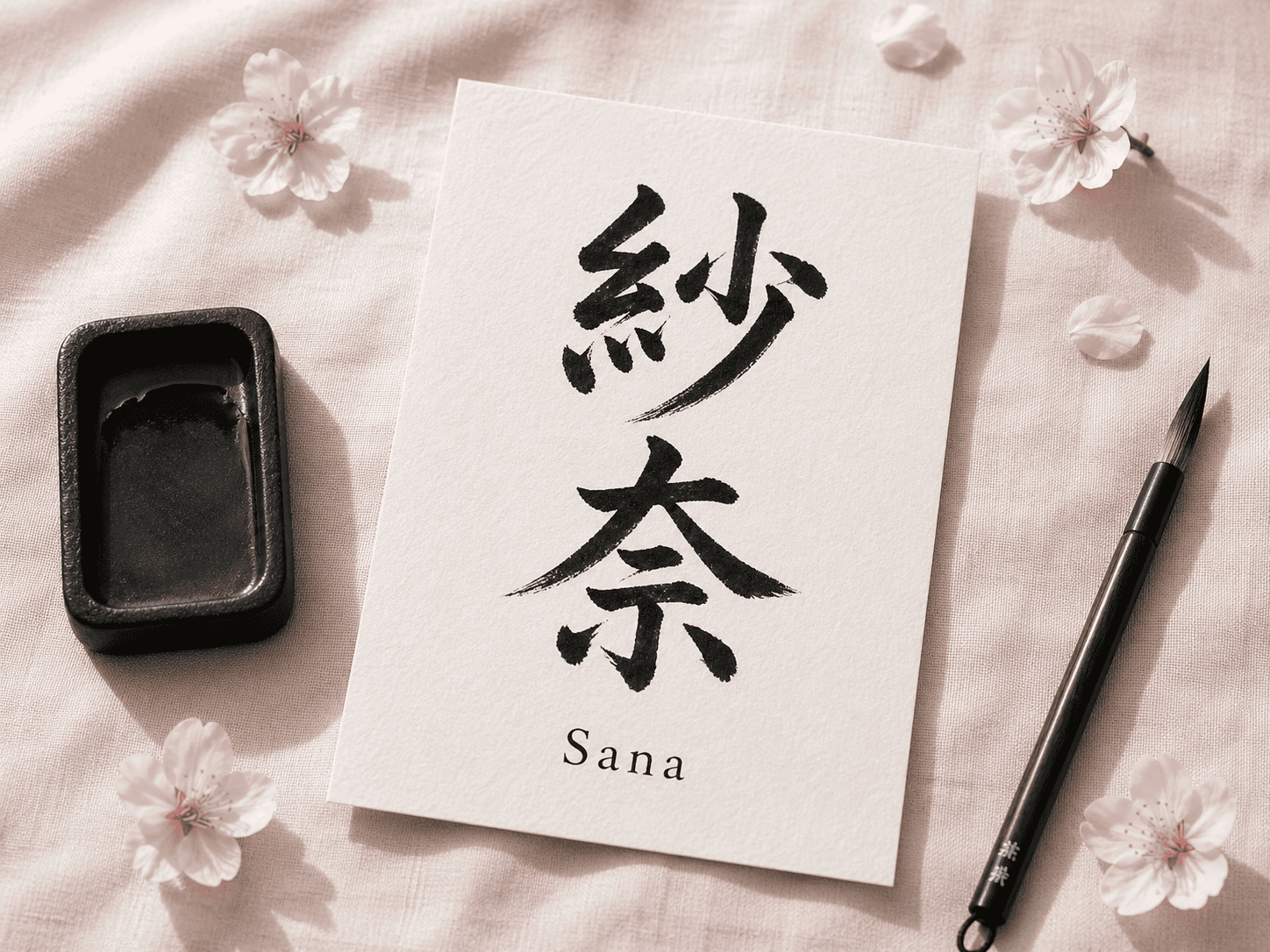 Japanese Name Generator Discover your name in kanji — with meaning, readings, and stroke order. Find Your Name →
 Most readers arrive here still deciding, and that is a reasonable place to be. Fortunately, a single page of Japanese proverbs, written out by hand, is a small enough commitment to settle the question either way.
Start with ten proverbs worth writing down.
A typeset printable — ten Japanese proverbs with kanji, romaji, and meaning. It also brings word when a new journal reaches print.
Done. Watch your inbox — the proverbs printable is on its way.
One email with your printable. Occasional letters after that. Unsubscribe anytime.
Japanese journals make unreasonably good gifts.
A journal says something a gift card never will. It says you see how someone thinks, and you want to give that thinking a home. The guided practices suit the person navigating a transition. Likewise, the travel journals suit anyone with a Japan trip on the calendar. Moreover, these Japanese journals cover every tier, from a stocking gift to a centerpiece. Browse the full print collection in one place, pair a journal with something from our Japanese souvenir guide, or start with the made-in-Japan gift guide, where every pick ships worldwide.
Good paper deserves a good pen, and Japan understands this better than anywhere. Therefore, the desk objects below pair naturally with every journal on this page, and one of them turns a daily entry into something closer to a ritual.
Complete the ritual.
Fountain pens, washi accessories, and desk objects that make daily writing a pleasure. Curated from across the web.
Coming soon.
The publishing desk stays busy. Currently, one guided workbook on Japanese business culture is in production. Further down the page, the letters list carries word of each new title as it arrives.
Every one of our Japanese journals begins the same way. We choose one Japanese concept, then study the field around it properly. Months of design follow before anything prints. That slow method is why each guided journal reads as a practice rather than a product. It is also why new titles arrive on their own schedule, not on a content calendar. The letters list simply follows the work. Expect a note when a concept enters design, and word when a journal reaches print. Between letters, the practice itself stays the point. Ninety days with one Japanese concept changes how a person pays attention. That holds whether the concept is ikigai, wabi-sabi, kintsugi, or ma. Consequently, most readers begin their way into Japanese journals with the proverbs printable below. Writing one page of Japanese proverbs by hand tends to start the habit that a 90-day journal finishes.
Ten Japanese proverbs worth writing down.
A beautifully typeset printable — ten proverbs with kanji, romaji, and meaning. Signing up also brings early access when new Japanese journals launch.
Done. Watch your inbox — the proverbs printable is on its way.
One email with your printable. Occasional letters after that. Unsubscribe anytime.
The honest case for writing things down.
Japan has a long relationship with the written page. From Heian pillow books to the travel diaries of Bashō, the habit of recording a life runs deep. It reaches back a thousand years. The tradition asks for honesty, brevity, and daily attention. Our Japanese journals borrow from that lineage in two ways. The guided practices supply structure for people who want a path. The blank editions supply beauty for people who already have one. In both cases, the point is the same: attention, given a place to land, compounds.
Research agrees with the tradition. Since James Pennebaker’s expressive-writing studies in the 1980s, researchers have reported lower stress and better working memory among people who write about their lives. Furthermore, a paper journal asks nothing of a screen. Even so, five minutes a day is enough, and Japanese journals earn those minutes by being beautiful enough to open. The journal you carry decides whether those five minutes happen. That is a serious argument for carrying one you love.
The journal records the journey. We design it.
Alongside the publishing desk, Magnificent Japan builds bespoke routes through Japan. If a trip is on your horizon, our customized itineraries follow your pace, your interests, and your season. It is the same care we put into these pages, applied to two weeks on the ground.
Begin a Custom ItineraryA note on paper, pens, and keeping.
Every one of our Japanese journals in print uses smooth, uncoated white book paper. We chose it because it takes fountain pen and pencil without complaint. Moreover, finished journals deserve keeping. Date the spine and shelf them in order. In time, a few years of travel and practice become a small library of who you were. That archive is the real product; the journals are simply how it gets made.