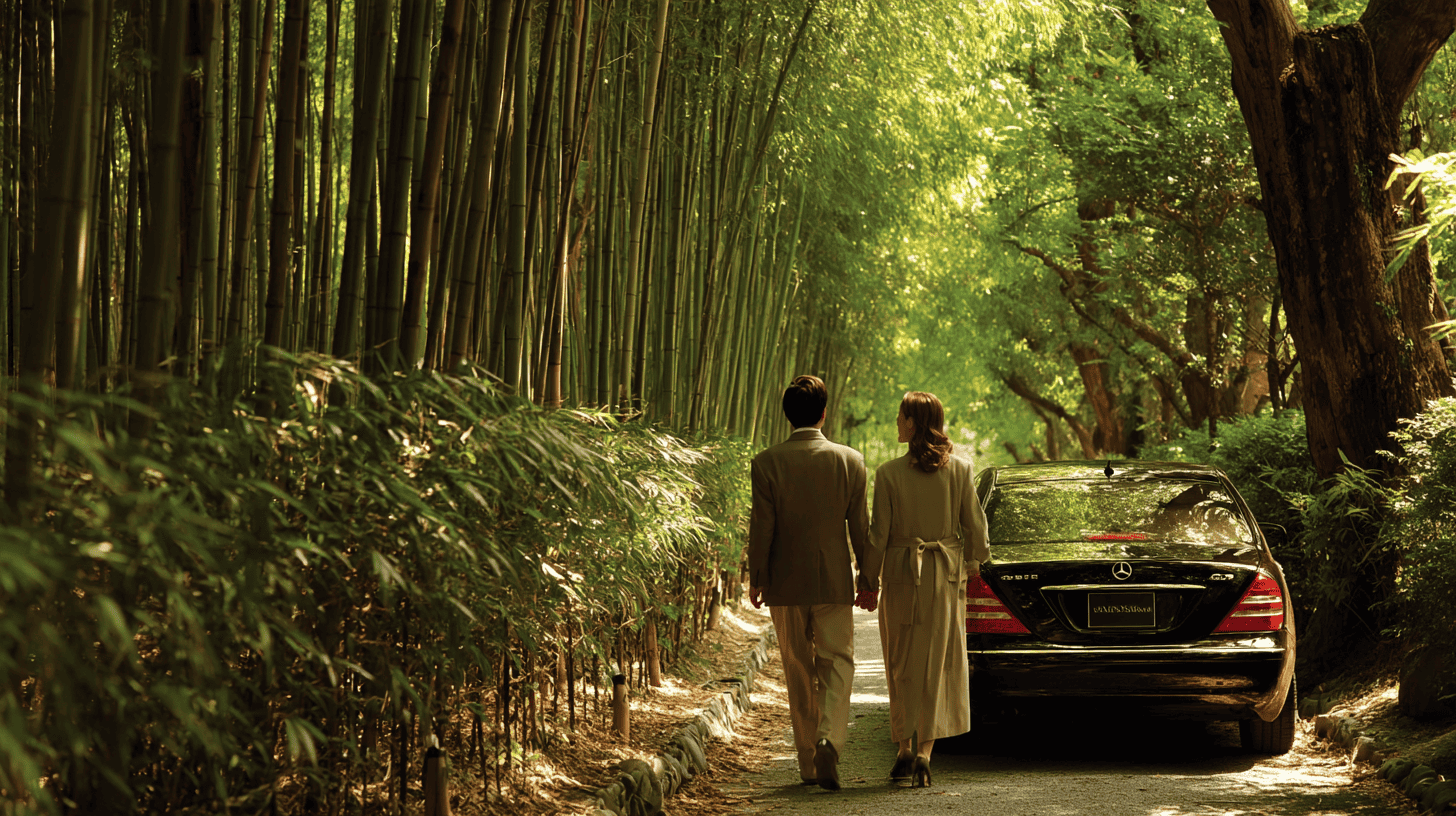
Luxury travel in Japan runs on attention rather than gilt. It lives in a ryokan that draws your bath before you ask. It lives at a counter of eight seats, and on a train that leaves to the second. Yet most guides still sell it as a list of suites. This one maps the whole trip instead. It covers where to stay, how to move, when to go and what to eat. It also shows where the spend matters most, without a single rate card.
The page anchors our luxury Japan collection, and each section points to a deeper guide. Read it in order if you are planning a first trip. Otherwise, jump to the part you need, since every section stands on its own. Either way, one principle runs through all of it. Book the scarce things first, then let the rest fall into place.
What does luxury travel in Japan actually mean?
It means small properties, private access and time that someone else has organized. Think of a ryokan with a bath of your own and dinner served in the room. Add a counter seat booked a month ahead and first-class rail between cities. Then add a guide who reads the menu and the map. Scale matters less than care, and care is the whole product.
What Luxury Travel in Japan Means Now
Start with what it is not. It is rarely marble, and it is seldom large. The properties that define the high end here are small by design. The service model depends on staff who know every guest. A Kyoto inn may hold two dozen rooms. Meanwhile, a mountain resort may hold fifteen villas. Scale would break the thing being sold, so nobody builds it.
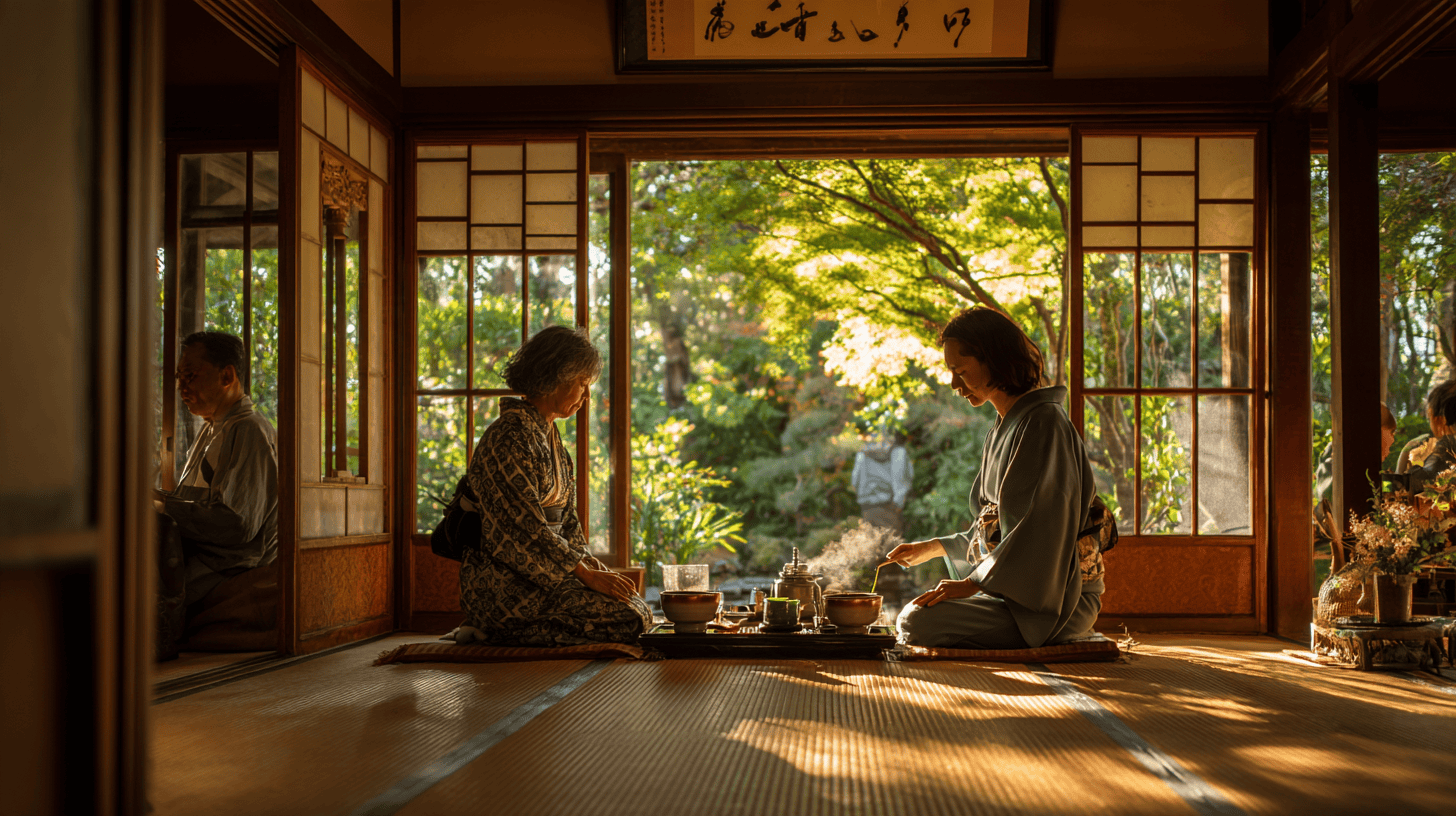
What replaces scale is anticipation. Staff turn the room down while you eat. The futon appears while you bathe. Dinner arrives at your pace rather than the kitchen’s. None of this is new in Japan, where hospitality has a name, omotenashi, and a long tradition. What has changed is the traveler, who now arrives having read about it and asks for exactly that.
Three things that separate it
First, privacy, and specifically a bath of your own. Shared bathing is a fine tradition, but many luxury travelers now ask for a private open-air tub. Second, access: a counter seat, a closed garden, a workshop visit, a gallery before the doors open. Third, competence. That sounds dull until a train connection fails at nine at night, in a city you cannot read. Then it becomes the whole product.
Together those three explain why the same itinerary can feel ordinary or extraordinary. The cities are identical either way. However, the experience of them is not, because the difference lives in arrangements made before you land. That is the work this page walks through, one decision at a time, starting with where you sleep.
Where to Stay on a Luxury Trip: Hotels and Ryokan
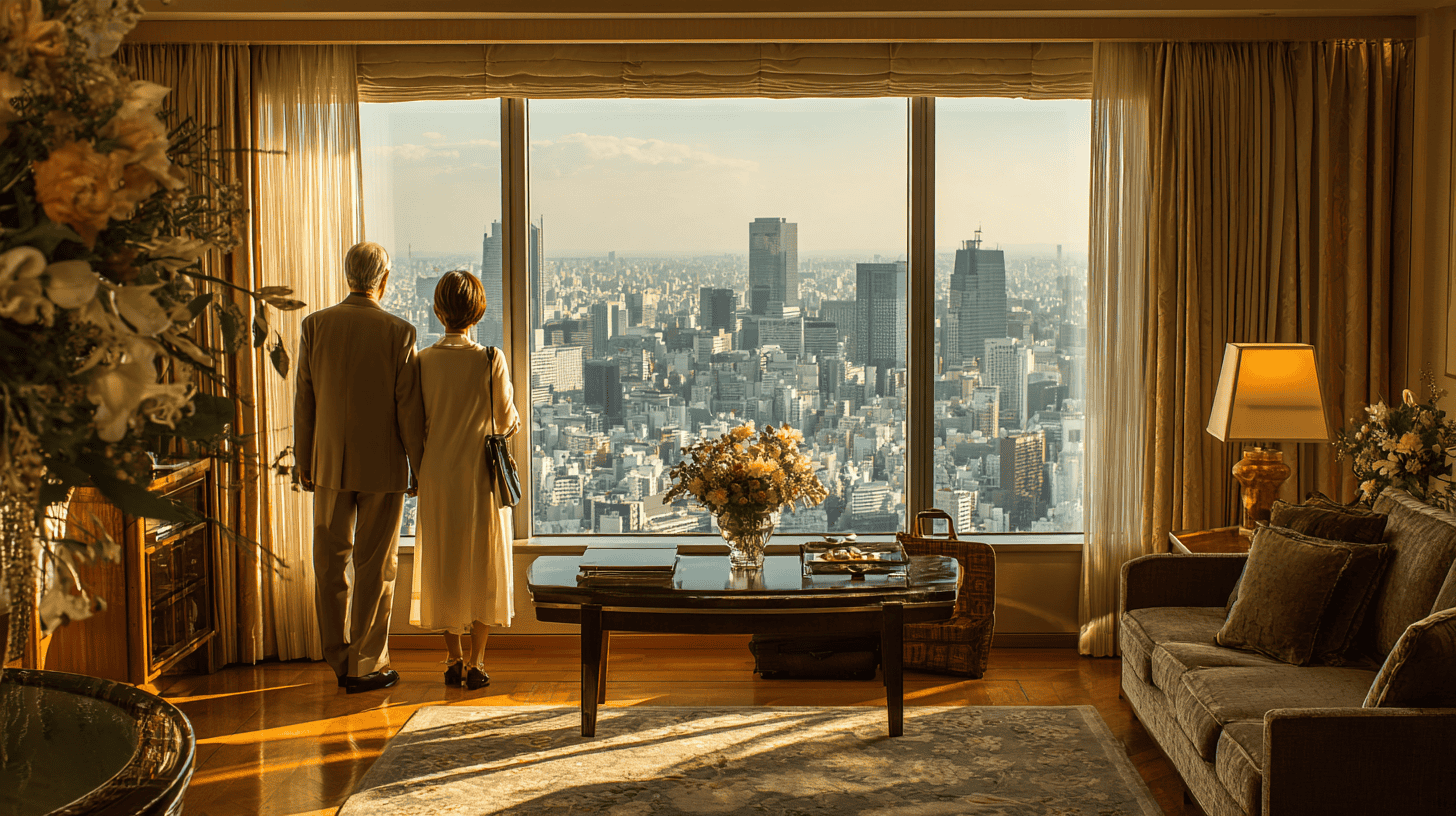
Japan offers two grammars of luxury, and a strong trip uses both. The first is the international hotel: a tower suite, a skyline, a bar high above the city. The second is the ryokan, the traditional inn, where tatami, a garden and kaiseki make up the stay. They answer different needs. Hotels suit the city nights at the start and end of a trip. Ryokan suit the middle, when you want the country to slow down.
For the city half, our edit of the luxury hotels in Japan worth the rate compares the towers. For the countryside half, start with the best luxury ryokan in Japan, ranked mostly by the bath. New to ryokan? Read what a ryokan and onsen stay is actually like before you book. Etiquette is simple once someone has explained it.
The Kyoto opening that shows where the market is going
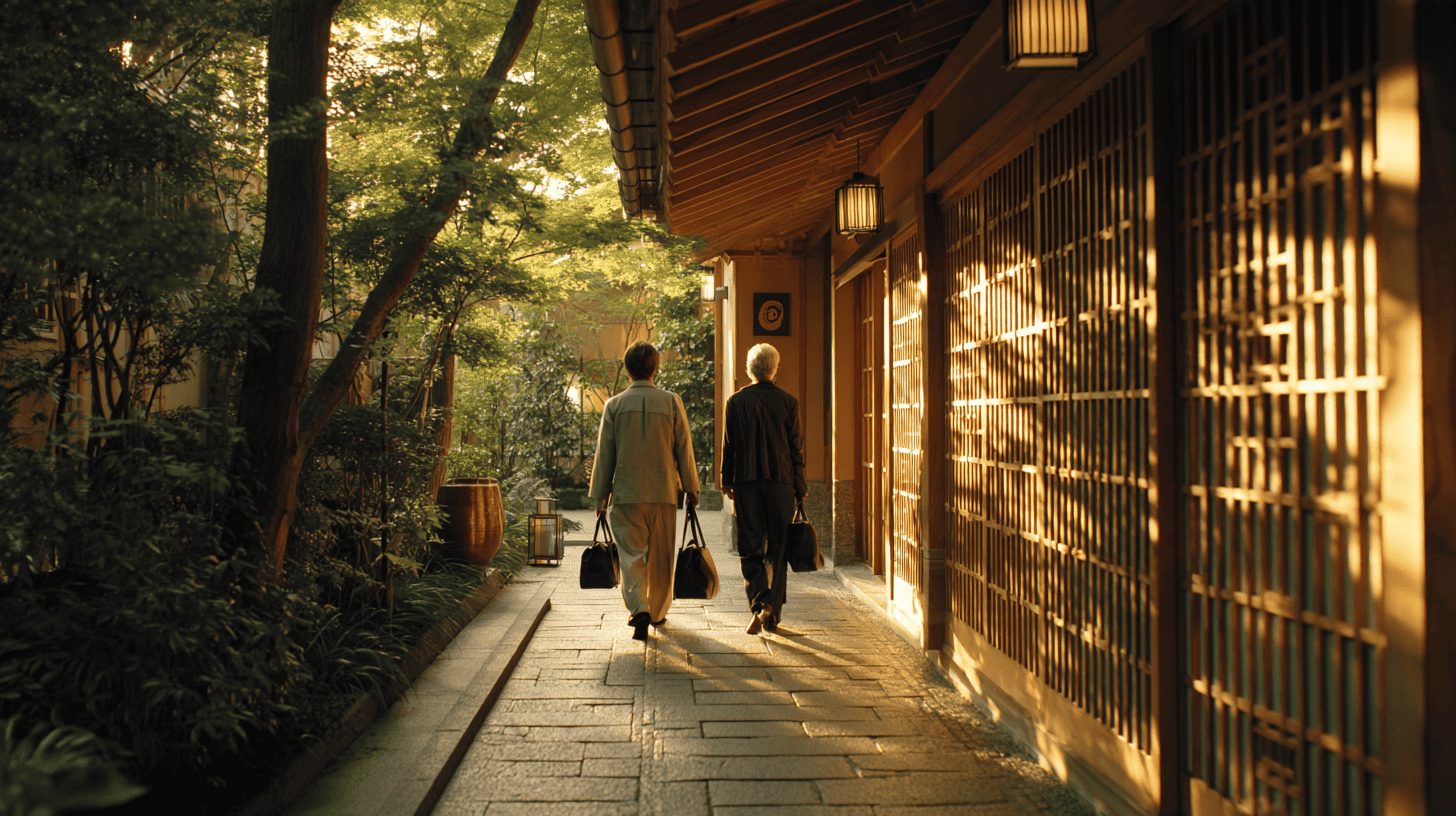
One 2026 opening illustrates the hybrid well. Capella Kyoto opened on 22 March 2026 in Miyagawa-cho, one of the city’s old entertainment districts. It holds 89 rooms and suites over four stories, designed with Kengo Kuma and Associates. Six of the suites carry their own onsen. The flagship restaurant, SoNoMa by SingleThread, seats twelve at a counter. The opening release listed rates from about $2,510 a night for two, with taxes and service included. That figure is a useful benchmark for the top of the Kyoto market this year.
That opening shows the new pattern. A global brand now builds low, uses local craft and puts a counter at the center. In other words, the international hotel is learning to behave like a ryokan. For planning, the lesson is plain: the most sought-after rooms are small and few. Before you choose between them, a good shortlist helps, and three books do that work well.
A nationwide guide to ryokan and onsen. Read it with a map open to build the shortlist before you book.
View This Book →A photographic survey of classic inns. It shows the rooms, gardens and baths before you choose one.
View This Book →An ethnography of a ryokan in Kurokawa Onsen. It explains the work behind the service a luxury stay depends on.
View This Book →Whatever you read, one practical lesson holds. Small properties sell out first, and the best rooms inside them go earliest. So decide the two or three nights that matter most, then book those before anything else. You can arrange the flights, the trains and the city hotels around them later. Planners call this anchoring, and it is the single habit that separates a smooth trip from a compromised one. It also shapes the rest of the plan. Once the anchor nights are fixed, every other choice becomes easier. The route, the rail legs and the dinners now have a frame.
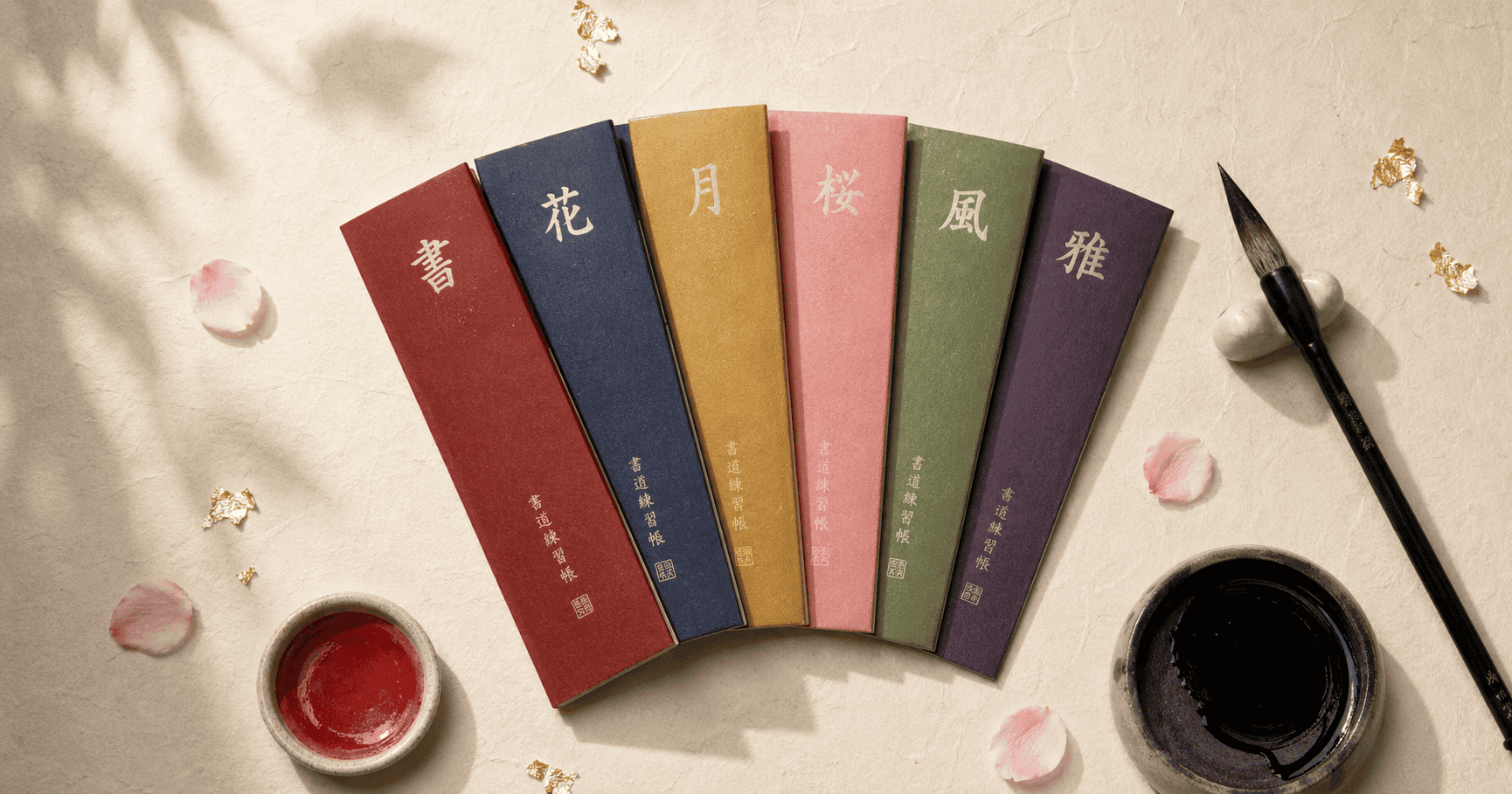
Unlined pages for the train window, the last bath of the night and the third course you want to remember.
6 × 9 in · 120 unlined pages · matte softcover
Shop This Journal →How to Move Through the Country
The shinkansen is the backbone of luxury travel in Japan. It is fast, punctual and calm. On the main lines, the Green Car is the first-class carriage, with wider seats and fewer passengers. On some northern and Hokuriku routes, a single GranClass carriage sits above it, with attendant service on some trains. Either way, reserve seats as soon as the dates are firm, especially around holidays.
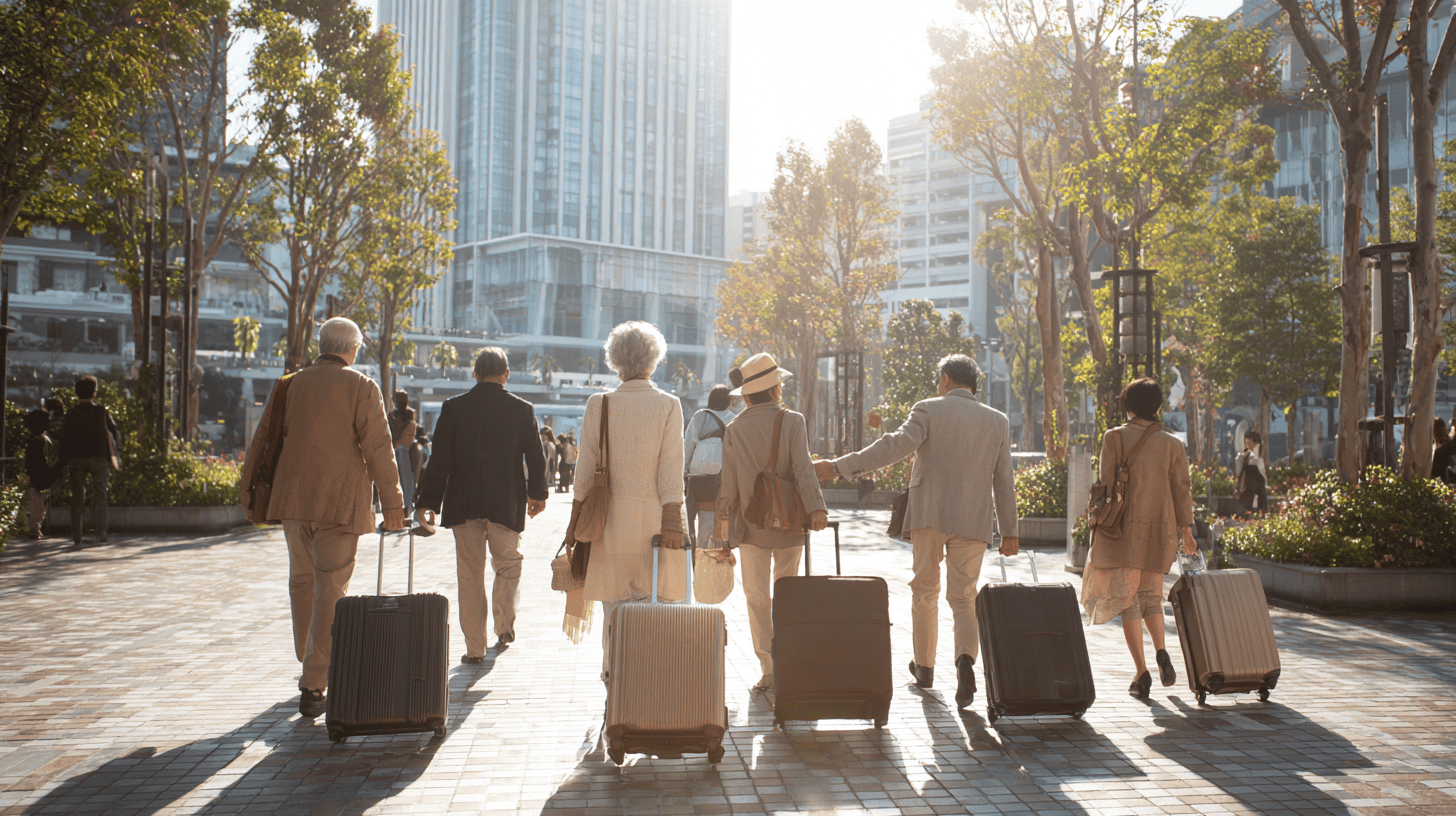
Luggage is the second half of the answer. Japan has a nationwide door-to-door delivery network, takkyubin, that moves suitcases between hotels. According to this overview of takuhaibin delivery, delivery is usually next day, with counters in airport arrival halls. Consequently, you can ride the train with a day bag while the cases travel separately. Ask each hotel to confirm it can receive them, since some small inns lack storage.
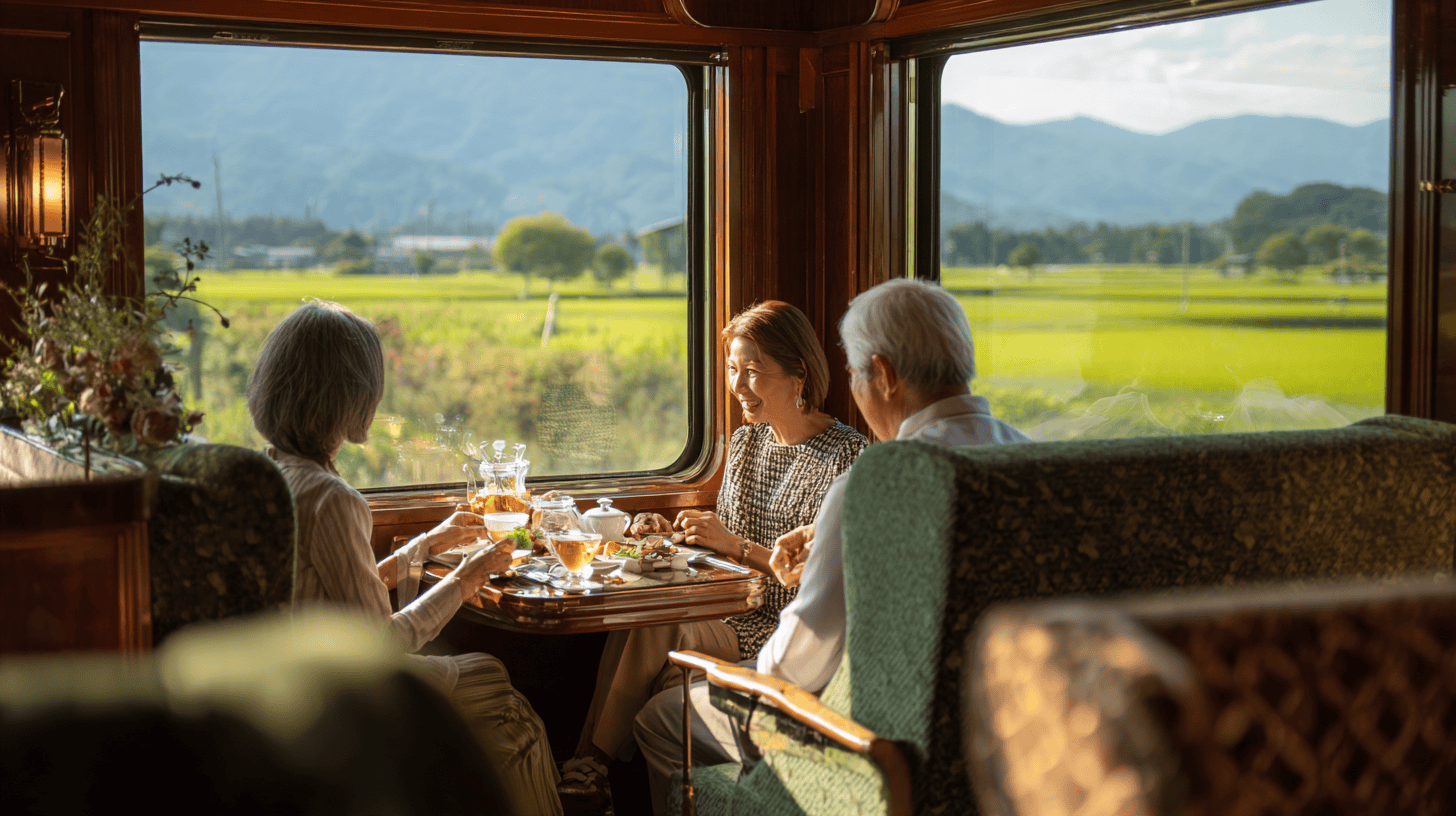
For the bag that does travel with you, a hard case built in Japan is worth a look. The Proteca MAXPASS H2s carry-on by Ace comes from a Japanese luggage house. Its size suits cabin travel. It fits the overhead racks on the shinkansen, which matters on a busy platform. Moreover, it keeps the essentials with you while the larger cases ride ahead by courier.
Language, guides and the gaps between
Language is the third friction. Most luxury hotels operate in English, but the counter restaurant and the rural inn often do not. A pocket translator helps in the gaps between. The Pocketalk S2 two-way voice translator comes from a company founded in Japan and handles quick exchanges well. Still, it does not replace a person. For days that carry real stakes, a guide does.
That is where private tours in Japan earn their place. A good guide reads the menu, times the connections and opens doors that are closed to walk-ins. Many travelers book one for the first two days, then go alone once they have the rhythm. Others keep a guide throughout. Both approaches work, as long as the decision is made before arrival rather than during it.
When to Go: The Best Seasons for a Luxury Trip
Spring and autumn are the peak seasons for luxury travel in Japan, and both reward early booking. Cherry blossom arrives first in the south and moves north. In 2026, the Japan Meteorological Corporation forecast Tokyo’s first bloom for 20 March. Sapporo followed around 25 April, according to Nippon.com’s 2026 forecast summary. Autumn color follows the reverse path, starting in the north and reaching Kyoto late in the season.
Spring and autumn are the peaks, yet winter and early summer often give the better ryokan night.
| Season | What it brings | Where it shines |
|---|---|---|
| Spring | Cherry blossom, moving from south to north | Tokyo and Kyoto first, then Hokkaido |
| Early summer | Long light and fewer crowds before the rainy season | Cities and countryside alike |
| High summer | Heat and humidity in the cities | The mountains and the north |
| Autumn | Autumn color, moving from north to south | The north first, Kyoto late in the season |
| Winter | Powder snow and cold-air bathing | Hokkaido and the hot-spring towns of central Japan |
Winter is underrated. Hokkaido offers powder snow, while the hot-spring towns of central Japan are at their best in the cold. Early summer, before the rainy season, brings long light and fewer crowds. By contrast, high summer is hot and humid in the cities, although the mountains and the north stay comfortable. For a first trip, late spring or late autumn gives the widest choice.
Seasons also shape romance, which is why so many couples choose this country. If you are planning a luxury honeymoon in Japan, time it for the ryokan rather than the blossoms. Blossom weeks are crowded and heavily booked. On the other hand, the weeks just after them are calmer and still green. A room with a private bath matters more than any view of a famous tree.
Prefer to have the route built for you? Our custom Japan itinerary plans the season, the ryokan nights and the rail legs in the right order.
What to settle before your first trip, in the order it matters: documents, money, transport, then the first days.
Onsen, Wellness and the Slower Trip
Hot springs sit at the center of Japanese leisure, and they draw many travelers out of the cities. An onsen town is a place where the day organizes itself around bathing. You arrive in the afternoon, bathe before dinner, bathe again before bed and once more at dawn. The schedule sounds idle. In practice, it is the most restorative part of most itineraries. For many readers, it is also the part of luxury travel in Japan they remember longest.
Wellness in Japan now spans several kinds of trip. Some want a structured program, and our guide to choosing a Japan wellness retreat sorts the options by intensity. Others want to understand the health benefits of onsen bathing before committing to several nights. Meanwhile, the planners build an onsen wellness itinerary that links two or three hot-spring towns by season.

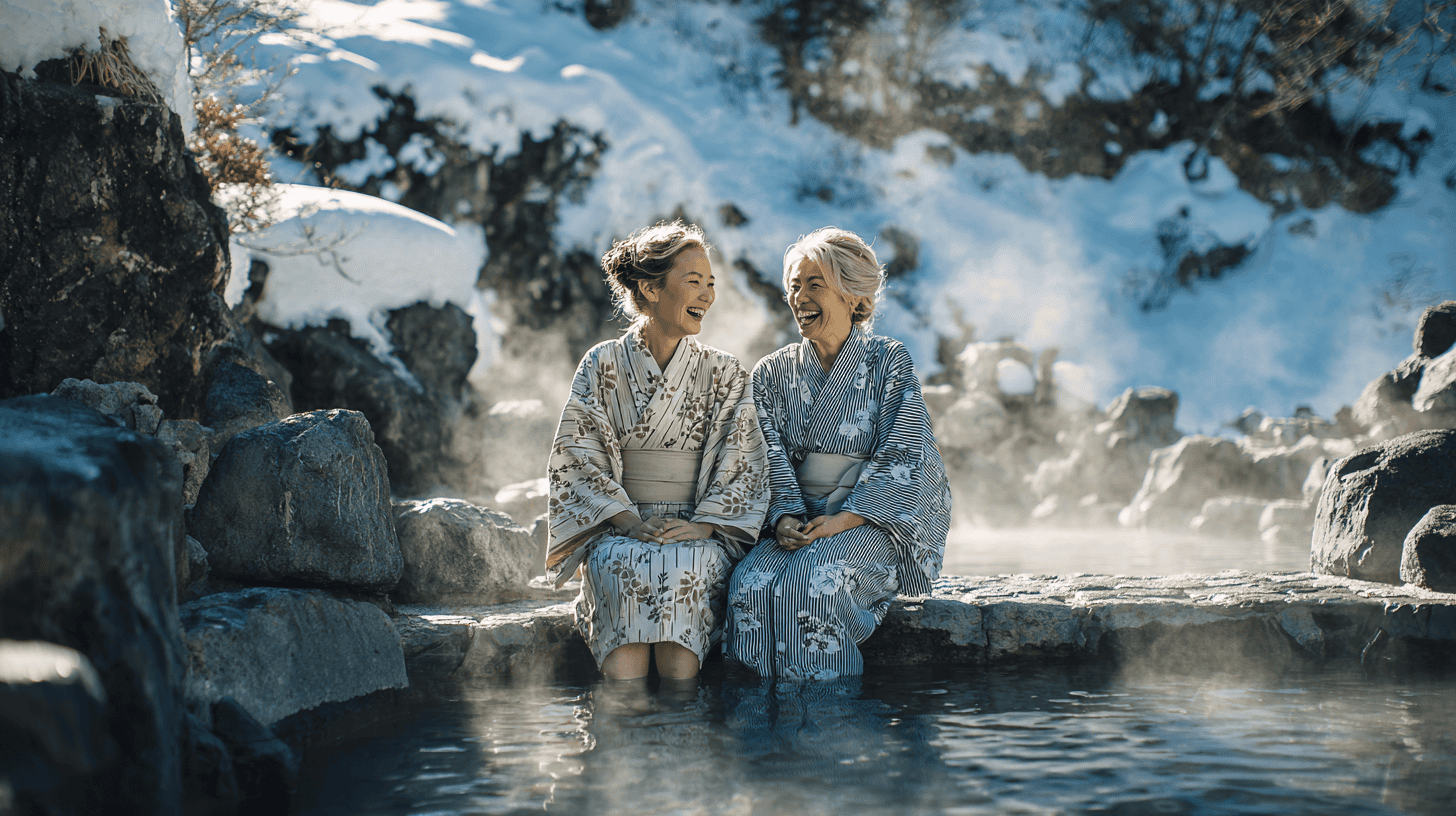
Whichever route you choose, private bathing changes the experience most. A room with its own open-air tub turns bathing into something you do on your own schedule. It also removes the one etiquette question that worries first-time visitors. When you book, ask for it specifically. In many inns, those rooms are few, and they go first.
Timing is where most plans slip. The order of bookings matters more than any single choice. Secure the ryokan nights first, then the counter dinners that depend on them. After that come rail seats, then city hotels. Planned that way, the room with the private bath is still there when you reach for it.
Bathing etiquette in brief
Onsen etiquette is simple once you know the sequence. First, wash and rinse at the seated showers before you enter the water. Keep the small towel out of the bath, and many bathers fold it on their head. Swimsuits stay in the suitcase, since everyone bathes without them. Some public baths still turn away guests with tattoos, so check the house policy in advance. Finally, the yukata in your room is for wearing around the inn, to dinner and to the bath. Wrap it left over right. A private bath settles most of these questions, which is one more reason to ask for one.
Recommended
Kaiseki, Counters and How to Eat Well
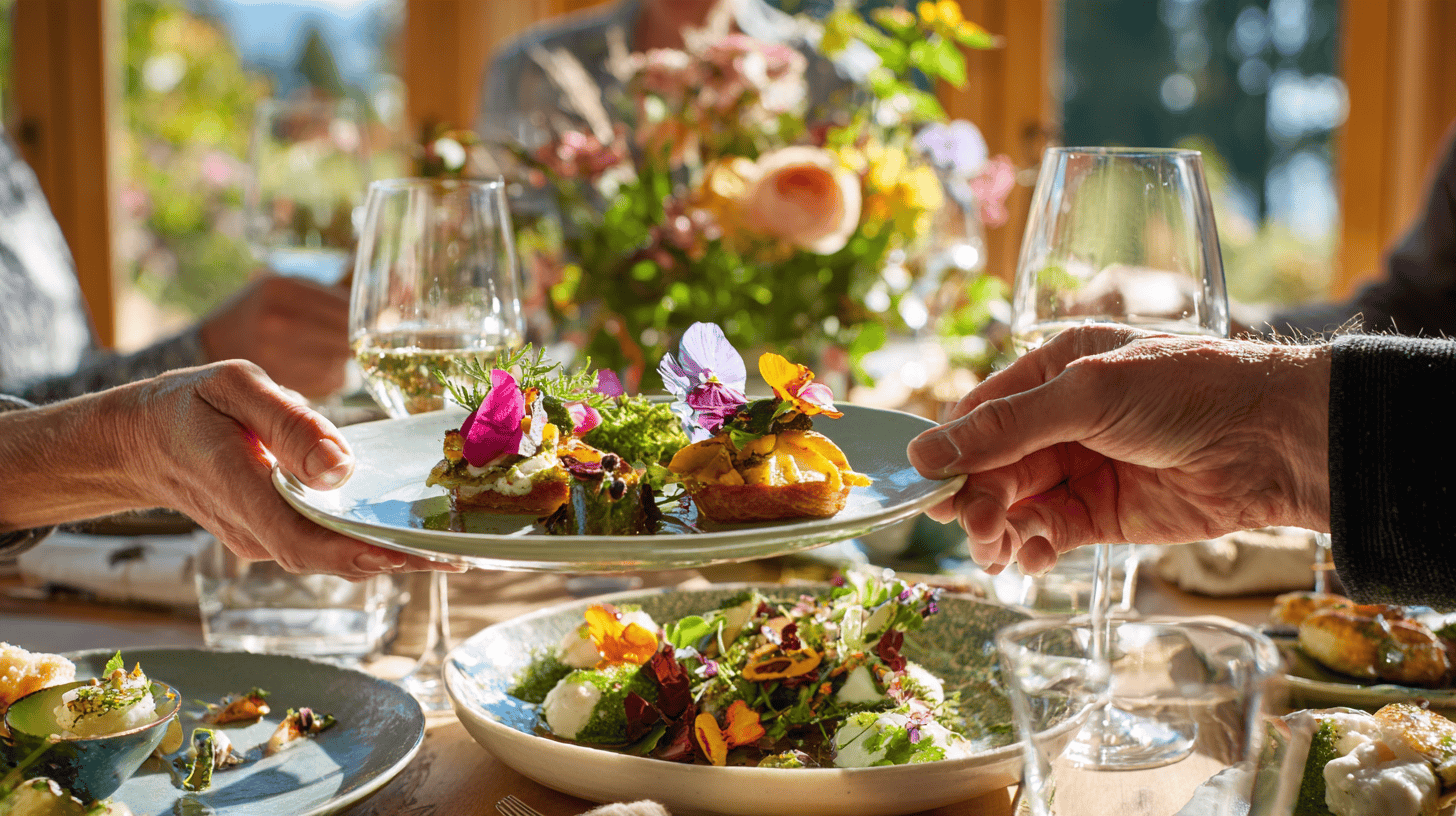
Kaiseki is the formal end of Japanese dining. It is a sequence of small seasonal courses, each on tableware chosen to match. At a ryokan it arrives in your room or a private dining space. In Kyoto, the great kaiseki houses serve it in rooms that look onto gardens. Either way, the meal is slow by design, and it often runs past two hours.
Before you sit down, read Kaiseki: The Exquisite Cuisine of Kyoto’s Kikunoi Restaurant by the chef Yoshihiro Murata. It presents the cooking of his Kyoto restaurant in seasonal format, course by course. As a result, a long dinner stops feeling like a test and becomes a conversation with the kitchen.
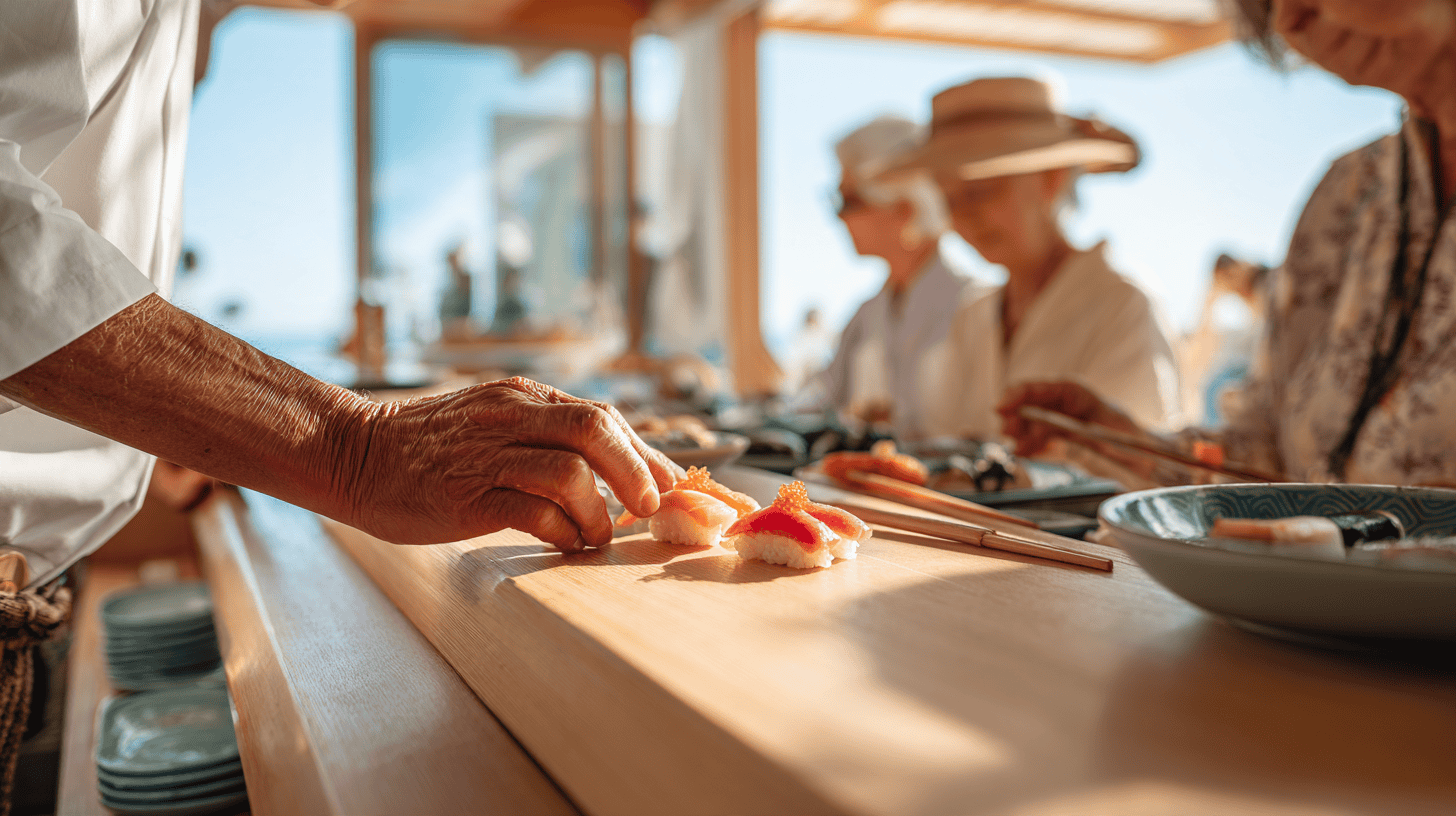
Beyond kaiseki, the counter is the defining format. Sushi, tempura and kappo cooking all happen in front of you. The chef adjusts each course as you eat. Our guide to unique dining experiences in Japan covers the formats and how to secure a seat. In short, book early, state allergies in advance, and let the hotel concierge make the call in Japanese.
Counter etiquette in brief
One more point on etiquette. Counter restaurants usually serve a set menu at a fixed start time, and the whole room begins together. Arriving late holds up every other guest. Photography rules vary, so ask before you lift a phone. Tipping is not part of the culture. Instead, a sincere thank-you to the chef means more than any gesture with money.
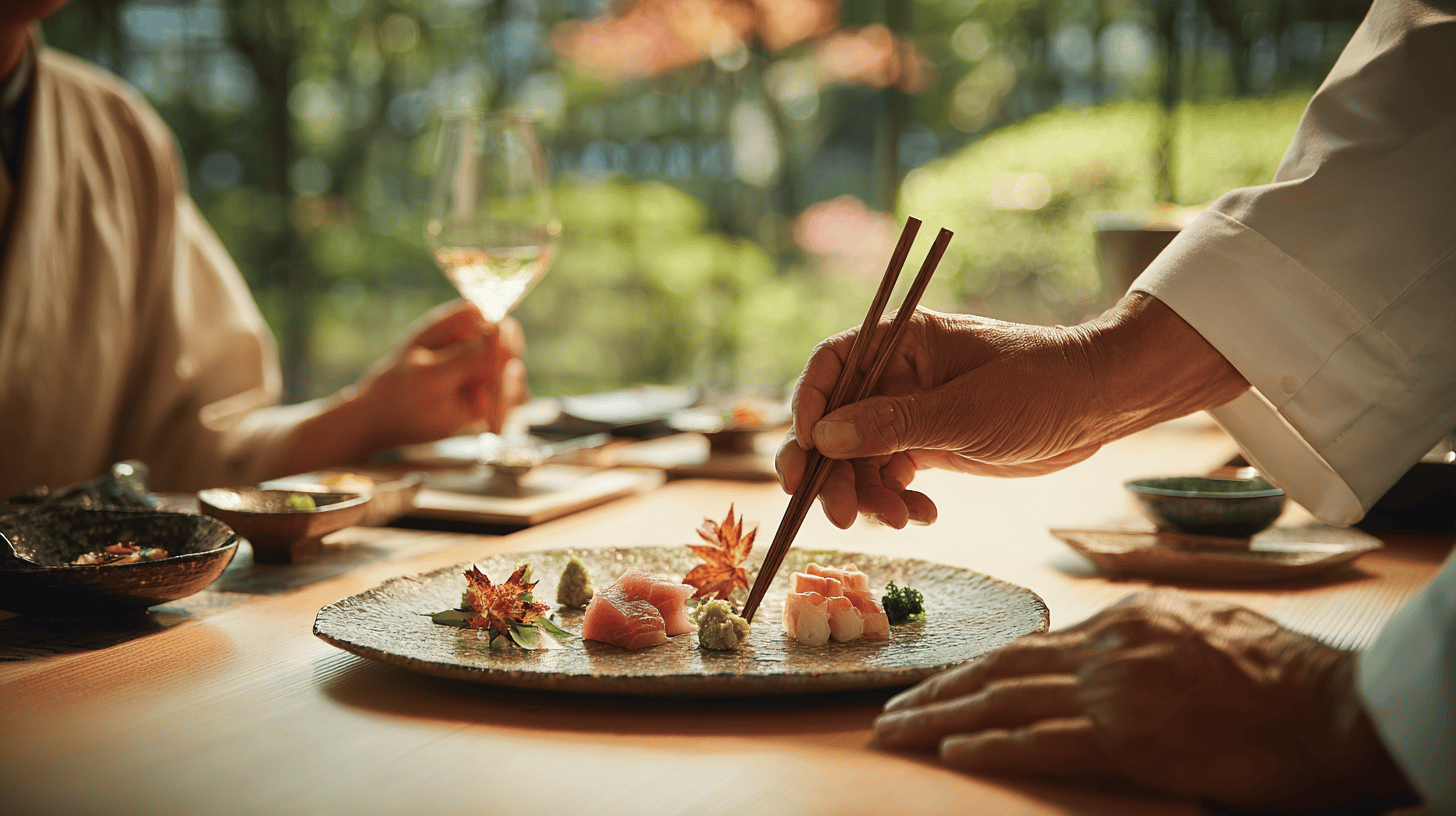
Dress codes are rarely formal, although smart casual is the safe choice. Finally, strong perfume is unwelcome at a counter, because it competes with the food. Small courtesies like these are what turn a reservation into a welcome.
Bringing the autumn table home
A kaiseki dinner ends with a rice course just before dessert, and that course follows the season. In autumn, it is often kuri gohan, rice cooked with fresh chestnuts. The dish looks simple. Yet it carries the whole logic of the meal. One ingredient arrives at its peak, handled with care and served without fuss. It is also the easiest kaiseki idea to cook at home. All it needs is a heavy lidded pot and a sharp knife for the chestnuts. Make it once in October, and the memory of a ryokan dinner comes straight back.
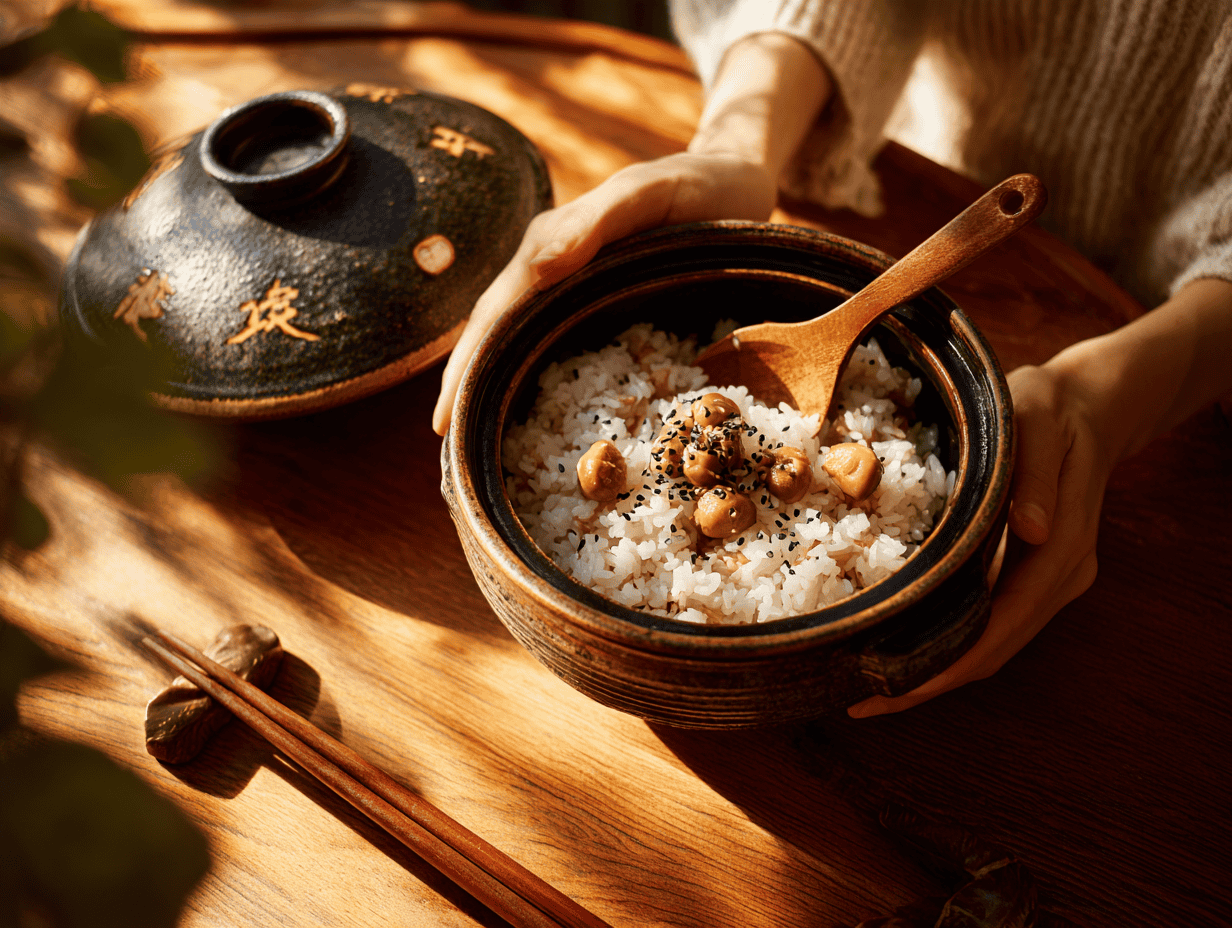
Kuri gohan is a classic of the Japanese autumn, made when fresh chestnuts reach the markets. It often closes a seasonal kaiseki dinner as the rice course.
- 20 fresh chestnuts in their shells
- just under 2 cups short-grain rice
- 1/3 cup sweet (glutinous) rice
- 2 1/4 cups water
- 1 tablespoon sake
- 1/2 teaspoon salt
- Black sesame seeds, to finish
- Soak the chestnuts in warm water for 30 minutes, then peel off the shell and the bitter inner skin with a sharp knife.
- Soak the peeled chestnuts in fresh water for another 30 minutes. Meanwhile, rinse both rices until the water runs clear.
- Put the rice in a heavy lidded pot with the water, sake and salt. Lay the chestnuts on top and soak for 20 to 30 minutes.
- Bring to a boil over medium heat, then cover and cook on low for about 12 minutes.
- Rest off the heat with the lid on for 15 to 20 minutes. Fold the chestnuts through and finish with black sesame.
Craft worth carrying home
Every region has its craft. Seki and Sakai are known for knives, Arita and Mino for porcelain, Wajima for lacquer and Imabari for towels. Department stores in Tokyo carry the best of each. Still, the workshops themselves repay a detour when the route allows. Buying at the source also lets you ask questions, and makers are usually glad to answer them.
Knives are a natural serious purchase. The Shun Classic 8-inch chef’s knife comes from Kai in Seki. The maker says that city’s blade tradition goes back over 800 years. It suits a Western kitchen and holds a fine edge. If you would rather not pack a blade, you can order it at home after the trip. Either way, the knife becomes a daily reminder of where you learned to value it.
The cooking of Kikunoi, course by course and season by season. It turns a long dinner into a conversation.
View This Book →A Seki-made blade that suits a Western kitchen and holds a fine edge. It keeps the craft towns in daily use.
View the Product →Imabari cotton from the Seto Inland Sea coast. It brings the ryokan bath home in the simplest way.
View the Product →Towels are the gentler luxury, and Imabari is their capital. The town sits on the Ehime coast of the Seto Inland Sea, where mills have long worked in soft cotton. Above all, an Imabari towel brings the ryokan bath home in the simplest possible way.
Slow buying fits a wider shift in how people travel here. Fewer, better objects. Longer stays in fewer places. Rail rather than short flights where the route allows. Our essay on sustainable luxury travel in Japan explores that idea further. It covers low-impact inns and the workshops that rely on unhurried visitors. In turn, those visitors keep the craft towns working.
How to Plan Luxury Travel in Japan
Begin with the length of the trip, because it decides the number of regions. Ten to fourteen days is the comfortable range for a first visit. Next, choose the two or three nights that matter most and book them. Then build the rail legs between them. Finally, add the city hotels at either end. That order protects the scarce rooms and leaves the flexible pieces for last.
It helps to understand the wider picture, too. Japan is drawing more high-spending visitors every year, and that pressure shows up in availability. Our analysis of the Japan luxury travel market explains who is booking and why rooms go early. It draws on the national tourism organization’s luxury-market report, which shows that segment growing faster than travel overall.
Eight days: Tokyo, Hakone and Kyoto
Two nights in Tokyo to land and adjust. Then a short train to Hakone for one night at a hot-spring ryokan, with dinner in the room. After that, three nights in Kyoto, split between a ryokan and a hotel, with one long kaiseki dinner. Finally, two nights back in Tokyo or a short hop to Osaka for the flight home. It is compact, yet it still feels unhurried.
Eleven days: art, craft and cuisine
Add the Seto Inland Sea to the eight-day shape. From Kyoto, take the train west, then a ferry to Naoshima for two nights among the island museums. Return through Okayama, then continue to Kanazawa for its gardens, its lacquer and its fish market. This version suits travelers who care about design and food as much as about rooms.
Thirteen days: ryokan and the countryside
Spend fewer nights in cities and more in inns. Combine Kyoto with two different onsen towns, perhaps one in the mountains and one on the coast. Add a night on a slow scenic train where the route allows. This is the most restful version, and many returning travelers prefer it. For a fully private version, a dedicated guide can travel with you throughout.
Whatever the length, the nights drive the spend more than anything else. Ryokan usually quote per person, with dinner and breakfast included, so compare like with like. Guides, counter dinners and first-class rail come next. Above all, avoid trimming the one or two nights that anchor the trip. Those are the memories that last.
What a Luxury Trip to Japan Costs
Accommodation drives the cost, and it varies more than anything else. At the top of the Kyoto market, Capella Kyoto opened at about $2,510 a night for two. That rate includes taxes and service. At a ryokan that matters, because kaiseki is often the most expensive meal of the trip.
Guides, counter dinners and first-class rail are each modest beside the accommodation, yet together they add up. Set a figure for the nights first, then add a margin for dining and guiding. The anchor nights rarely cost much more than the alternatives.
Currency also plays a part. Japanese properties set rates in yen, so the dollar cost moves with the exchange rate. Book refundable rates early, then review them as the trip approaches. That habit costs nothing, and it protects both the room and the spend.
Questions Worth Asking
Where should the spend go on a luxury trip to Japan?
Put it into the nights first. A ryokan room with a private open-air bath, or a small hotel with a counter restaurant, shapes the trip more than anything else. After that, prioritize a guide for the first days, one long kaiseki dinner and first-class rail. Leading ryokan usually include dinner and breakfast.
How much does a luxury trip to Japan cost?
It depends mainly on the nights you choose. Capella Kyoto opened in March 2026 at about $2,510 a night for two, including taxes and service. Leading ryokan usually include dinner and breakfast in the rate. Guides, counter dinners and first-class rail add to that, but accommodation remains the largest cost.
When is the best time for luxury travel in Japan?
Late spring and late autumn give the widest choice of weather and scenery. Cherry blossom and autumn color are the peaks, so they book out earliest. Winter suits hot-spring towns and Hokkaido. Early summer, before the rainy season, is calmer and still green. Choose the season first, then the region.
How far ahead should I book a luxury trip to Japan?
Book the scarce pieces first and as early as you can. Small ryokan and the best rooms in them sell out first, especially in blossom and autumn weeks. Counter restaurants often open reservations a month or two ahead and may need a concierge. Rail seats and city hotels can follow once the anchor nights are secured.
Is a ryokan or a hotel better for a luxury trip to Japan?
Use both. International hotels suit the city nights at either end of a trip, with skyline views and familiar service. Ryokan suit the middle, when you want tatami, a private bath and a long kaiseki dinner. Most strong itineraries spend two or three nights in ryokan and the rest in hotels.
How many days do you need for luxury travel in Japan?
Ten to fourteen days is the comfortable range for a first visit. Eight days covers Tokyo, Hakone and Kyoto at an easy pace. Eleven days adds the Seto Inland Sea or Kanazawa. Thirteen days or more allows several ryokan nights in the countryside. Fewer regions, explored slowly, beats a longer list of stops.
Do you need a private guide in Japan?
Not everywhere, but a guide helps where language and access matter. Many travelers book one for the first days in Tokyo and Kyoto, then continue alone. A guide reads menus, times rail connections and arranges visits that are closed to walk-ins. Decide before arrival, since good guides book up.
What is omotenashi in Japanese hospitality?
Omotenashi is the Japanese name for hospitality that anticipates a guest's needs. In a ryokan it shows in small, timed gestures: the room turned down while you eat, the futon laid while you bathe, dinner paced to you. It sits at the core of luxury travel in Japan, more than size or marble.
The Trip Worth Taking
Luxury travel in Japan rewards restraint. Choose fewer places and stay longer in each. Then spend where it changes the experience: the bath, the table, the guide. Book the scarce nights first. Then let the trains, the cities and the shopping fall into place around them. In the end, the trip people remember is rarely the busiest one. It is the one with room to breathe.
Every guide in this collection goes deeper into one of those choices. Together they cover hotels, ryokan, dining, wellness and the market. Read the ones that match your trip, and leave the rest. If you would like the first nights arranged for you, the Luxury Adventure Starter handles them for independent travelers. Most travelers find that one visit leads to another. By then you know which bath you prefer and which city suits your pace.
The pause between courses, trains and baths is where a trip like this happens. Ninety days of practice in ma keeps that interval alive at home.
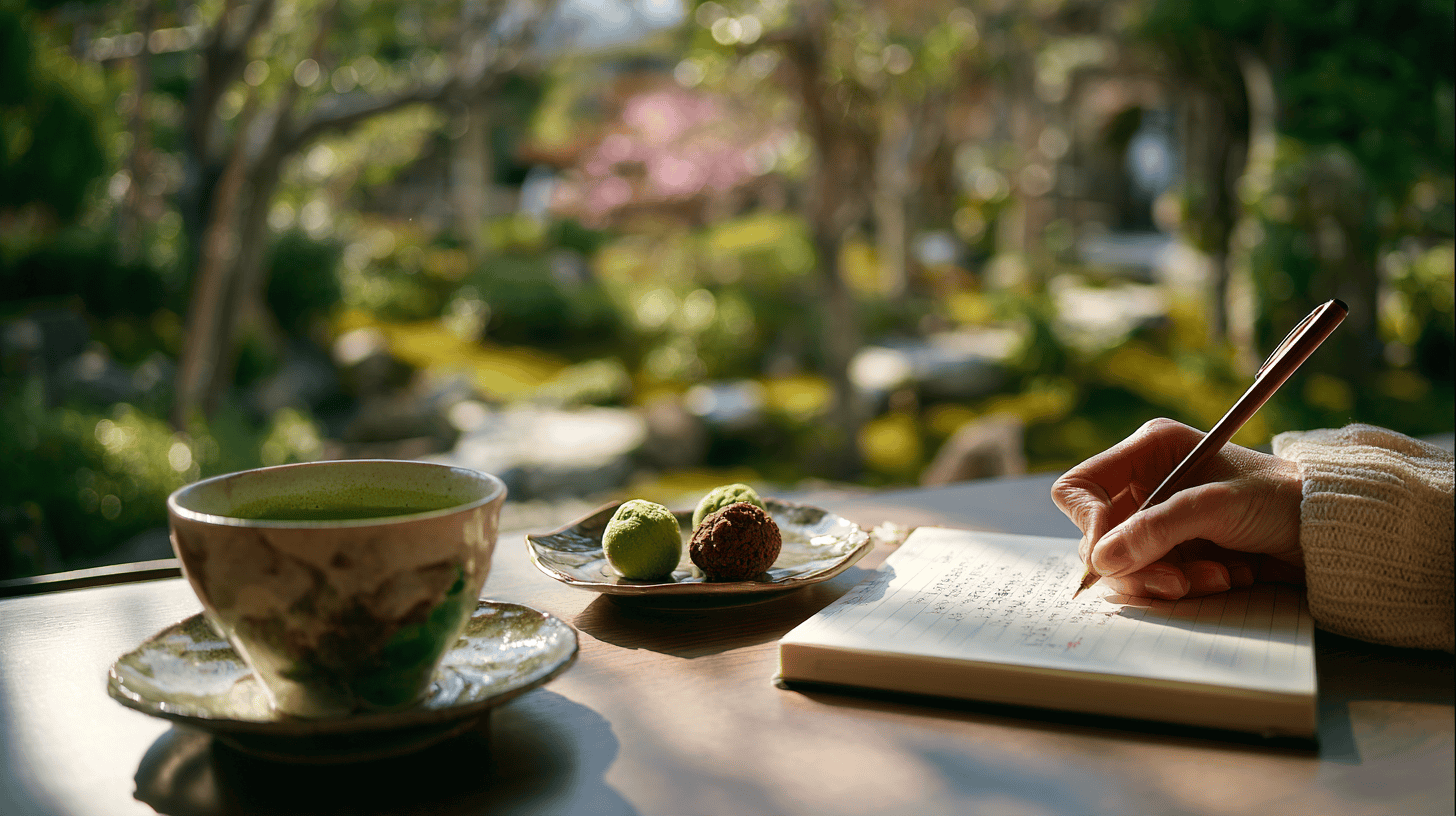
View the Journal →A journal is the simplest way to keep what a trip like this gives you. Photographs record the view, but not the temperature of the water or the order of the courses. Write those down while they are fresh. Then, when you plan the next trip, start with the nights you wrote most about.
Two or three regions, the ryokan nights secured first, first-class rail between them and counter dinners booked in the right order. We plan the sequence, the guides and the access, then hand you an itinerary that runs on time.
Plan Your Custom Japan ItineraryThe Editors, Magnificent Japan