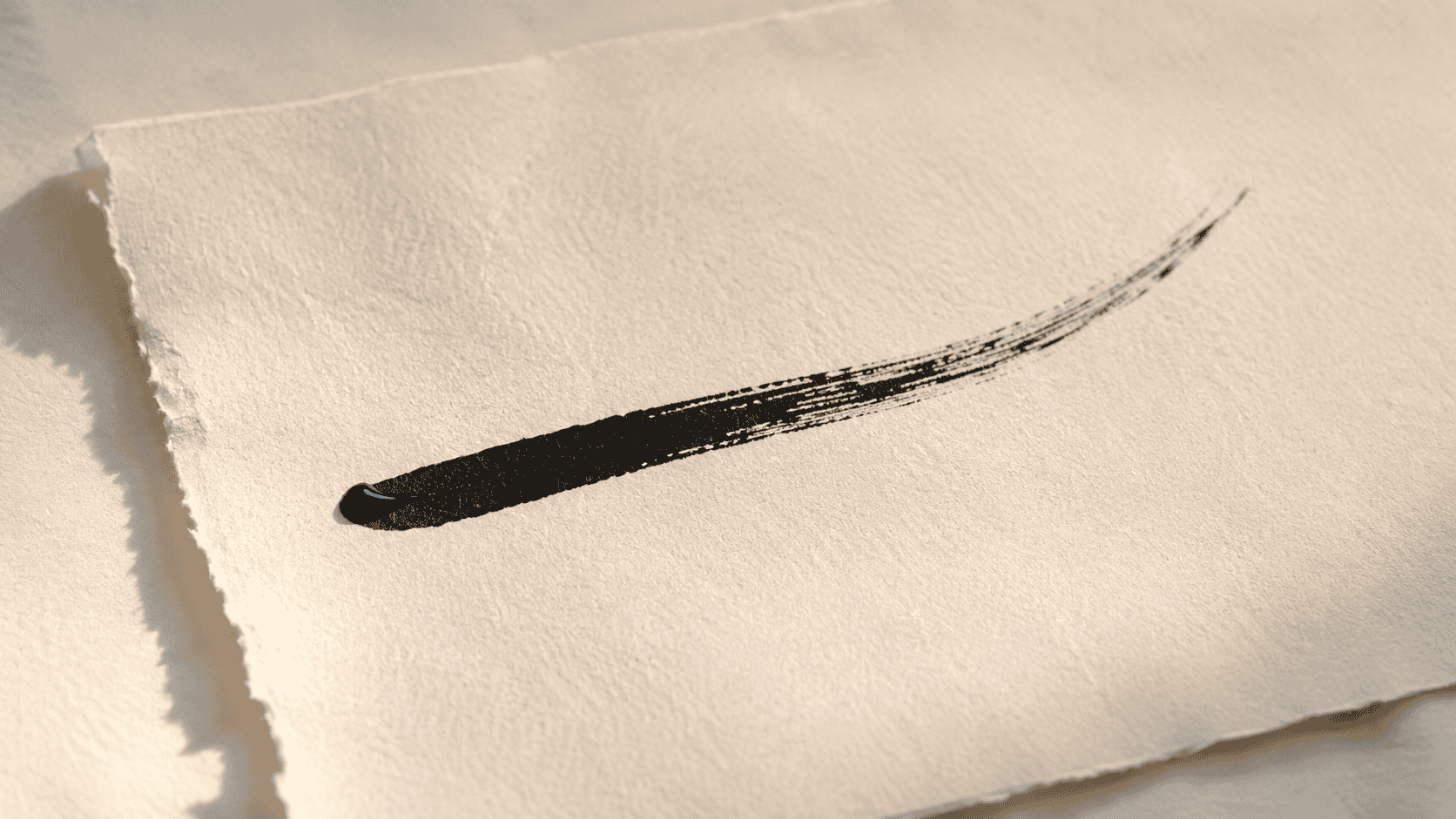
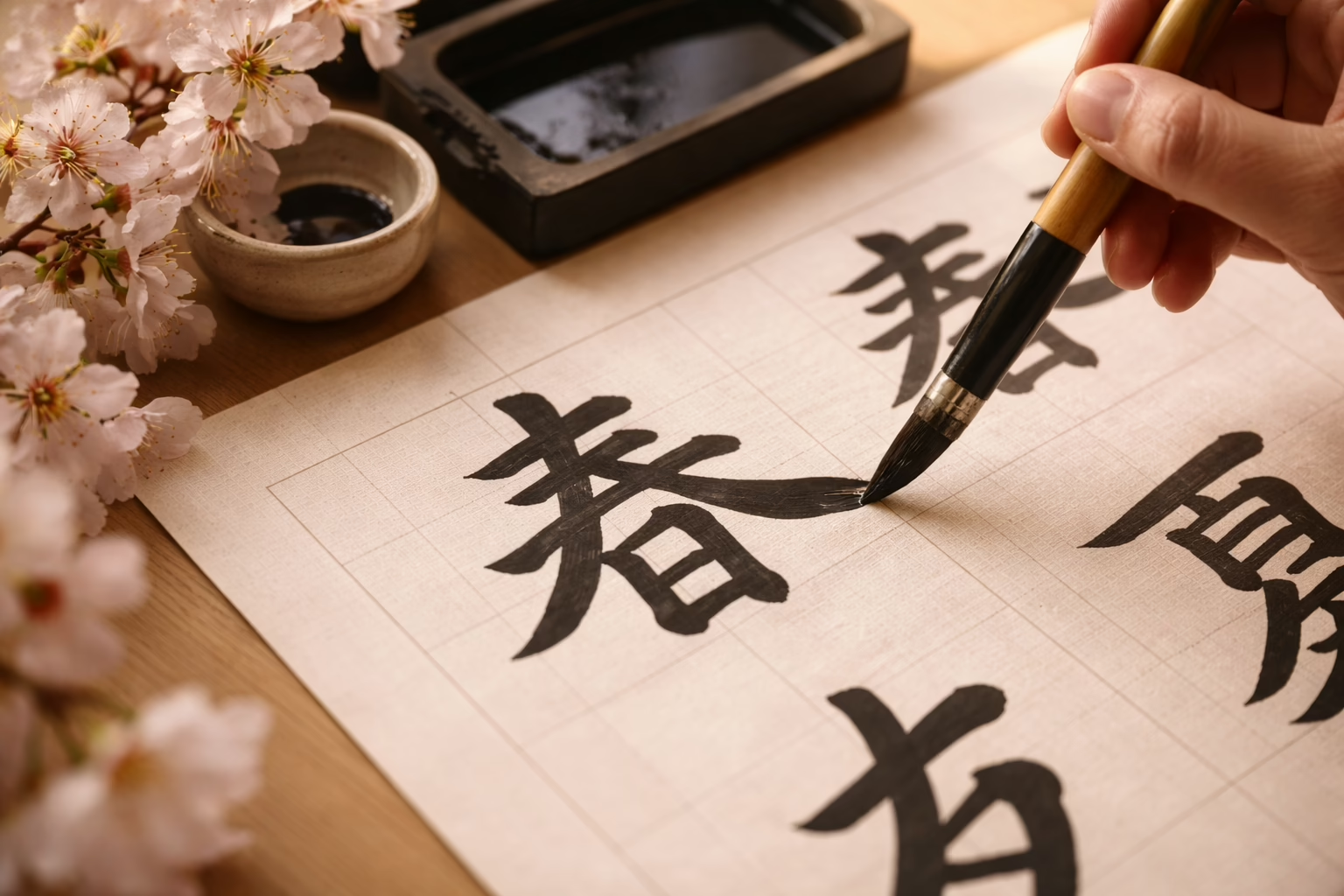
A single brushstroke cannot be revised. The calligrapher loads the brush, draws one breath, and commits the line in one motion. What lands on the paper is exact and final — the speed of the hand, the pressure of the wrist, the moment’s composure, all visible at once. This is the heart of Japanese calligraphy as an art form. The Japanese call it 書道, shodō, the way of writing, and they treat it as painting, poetry, and self-portrait in a single gesture.
Most guides to Japanese calligraphy art begin with stroke order. This one begins with the artists. The tradition runs from imperial courts of the ninth century to abstract canvases that hang beside Pollock and Kline. Below, you will meet the masters who shaped it, see how it became fine art, and learn what each character carries in meaning. For hands-on practice, our interactive calligraphy tool lets you trace the strokes in your browser before you reach for a brush.
Japanese Calligraphy as Fine Art
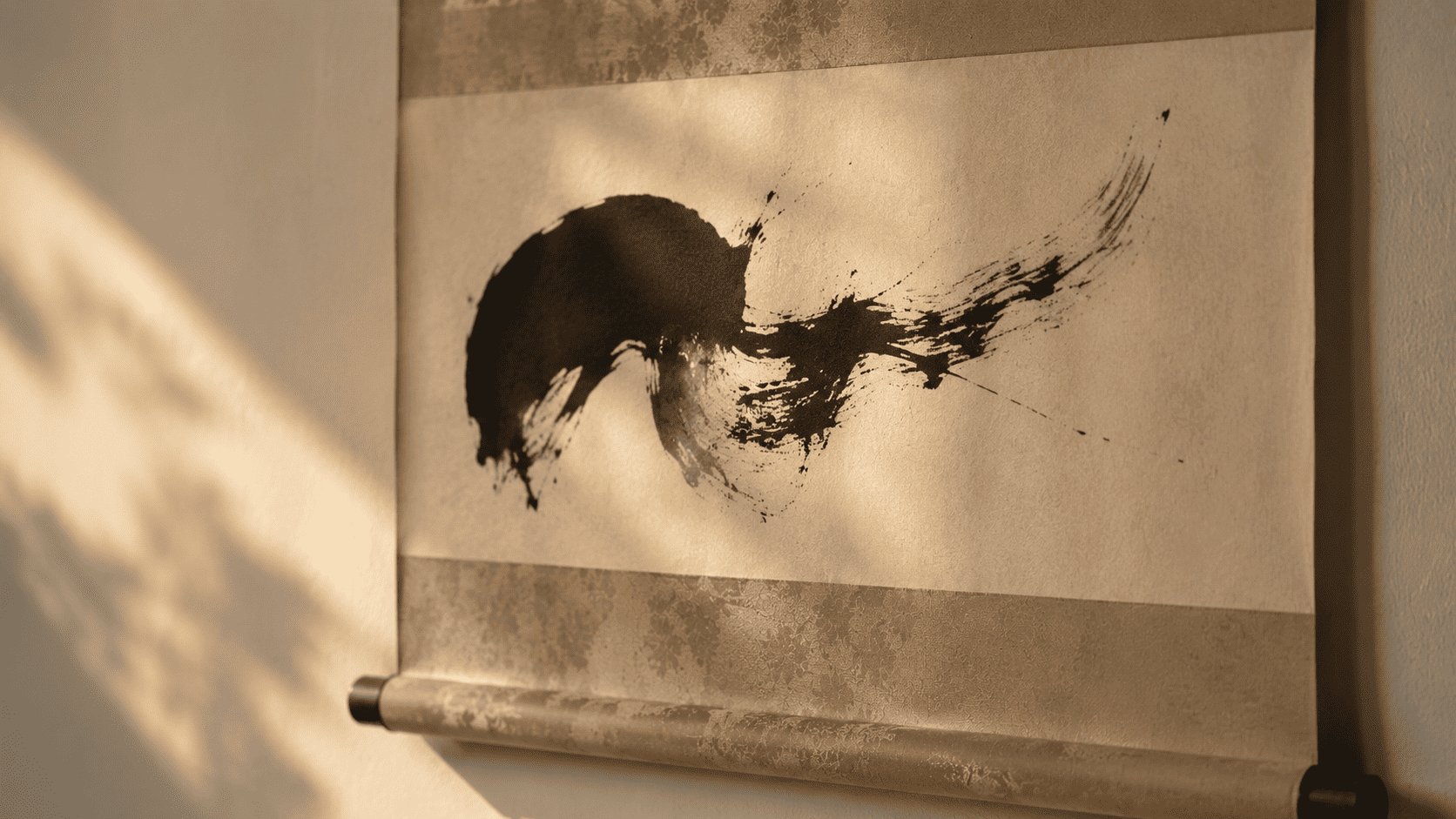
The art lives in a line that cannot be taken back.
Japanese calligraphy is one of the few arts where the act and the artwork are the same event. A painter can layer and correct for weeks. A calligrapher has one chance. The ink soaks into absorbent paper on contact, so a faltering line stays faltering. The result is an art of nerve as much as skill.
This is why the Japanese say sho wa hito nari — the writing is the person. A trained eye reads character in the brushwork: confidence in a clean diagonal, hesitation in a wavering vertical, energy in the dry split of a fast stroke. The work records a state of mind in real time. No other visual art is quite so unguarded.
Western calligraphy prizes uniform letters and even spacing. Shodō prizes the opposite. Irregular ink, asymmetry, and the rough texture left by a near-empty brush are read as life, not error. The tradition shares this taste with the tea ceremony and the wider Japanese love of wabi-sabi, the beauty of the imperfect and the impermanent. A line that breathes is worth more than a line that is merely neat.
Because the brushwork carries so much, calligraphy sits at the centre of Japanese visual culture rather than its margins. It hangs in the alcove of a traditional room, frames the entrance of a temple, and signs the work of painters. Understanding it opens a door onto how Japan sees art itself. The handwriting reveals the hand, and the hand reveals the person.
Famous Japanese Calligraphers
The history of Japanese calligraphy is a history of named masters. Each refined the art and handed it forward. The classical canon honours two groups above all, and the modern era added a second wave of innovators who carried the brush into the gallery. Together they map the whole tradition.
The Three Brushes of the early Heian period
The first great names form the Sanpitsu, the Three Brushes, active in the early ninth century. They moved calligraphy in Japan beyond direct imitation of Chinese models toward grace and individual feeling.
Kūkai
The monk who founded Shingon Buddhism and the most revered calligrapher of his age. Kūkai studied in China and returned with both esoteric Buddhist teaching and a mastery of cursive script. His brushwork joined religious devotion to artistic command, and his writings on technique guided practitioners for centuries.
Emperor Saga
A reigning emperor who practised calligraphy at the highest level and made it central to court life. His support of Kūkai and the arts helped shift Japanese taste from Chinese boldness toward refinement and restraint. The third of the three, Tachibana no Hayanari, completes the group.
The Three Brush Traces
A century later, the Sanseki — the Three Brush Traces — perfected a fully native Japanese hand. Their elegant, flowing style became the model that later calligraphers copied for generations.
Ono no Michikaze
Regarded as the founder of the wayō, the native Japanese style. He broke decisively from Chinese precedent and gave Japanese calligraphy its own graceful identity. His two peers, Fujiwara no Sukemasa (944–998) and Fujiwara no Yukinari (972–1027), extended his achievement and shaped court aesthetics for the next several hundred years.
The Edo aesthete
Hon’ami Kōetsu
One of the most influential aesthetes in Japanese history and a leader of the Kan’ei Three Brushes. Kōetsu collaborated with the painter Tawaraya Sōtatsu on poem scrolls where scattered columns of calligraphy danced across paper decorated with gold and silver. That partnership helped inspire the Rinpa school. In Japan his work is treated as a national treasure many times over.
The Zen masters
A separate lineage runs through the Zen temples, where calligraphy became a visual sermon. These works, called zenga, value directness and spirit over polish. A single rough character can hold an entire teaching.
Hakuin Ekaku
The reviver of Rinzai Zen and the most compelling Zen artist of the Edo period. Self-taught with the brush, Hakuin made thousands of paintings and calligraphies as teaching tools, from fierce Daruma portraits to a towering character for death paired with a poem. His exhibition at the Los Angeles County Museum of Art carried the title The Sound of One Hand.
Sengai Gibon
Known for loose, warm, often playful brushwork and for the ensō, the single ink circle that has become an emblem of Zen. Sengai once wrote that there are rules for the paintings of the world but no rules for his. His accessibility made Zen calligraphy beloved far beyond the temple.
The modern pioneers
The twentieth century broke the art open. A generation of pioneers kept the brush and the ink but abandoned legibility, treating the character as pure form. Their work now sells at international auction and hangs in major museums.
Hidai Tenrai
Often called the father of modern Japanese calligraphy. Tenrai revived the deep study of classical models while arguing that calligraphy should express the individual artist, not merely copy the past. He taught the generation that went on to create the avant-garde, and his ideas seeded everything that followed.
Inoue Yūichi
One of the most distinguished calligraphers of the late twentieth century. Inoue worked huge, often writing a single character with his whole body, and his explosive style drew comparison to action painting. His character works for flower, dream, and love are widely held in collections. The American painter Robert Motherwell called him one of the few great artists of the century’s second half.
Morita Shiryū
A founder of the avant-garde calligraphy group and editor of its journals. Morita placed Franz Kline’s work on the cover of his magazine’s first issue and built a lasting friendship with the American painter. More than anyone, he connected postwar Japanese ink art to abstract painting in Europe and the United States.
Shinoda Tōko
The first woman to reach the front rank of the field and one of its most internationally collected figures. Trained in classical kana, Shinoda moved toward abstraction after the war and lived in New York in the late 1950s. The Met, the Guggenheim, and the British Museum hold her work. She painted past her hundredth year and lived to 107. The Asian Art Museum in San Francisco devoted a recent exhibition to her.
Teshima Yūkei
A student of Hidai Tenrai who founded his own influential association. Teshima specialised in powerful one- and two-character works, using thick ink and commanding empty space so the white of the paper reads as part of the composition. His pieces sit in museum collections in Japan and abroad.
The names above span more than a thousand years, yet they share one belief. The brush records the person. Whether a Heian courtier or a postwar radical held it, the line is honest. To see how that belief turned into abstract art, look at the movement that made calligraphy modern.
The Shodō Starter Kit
A printable set of practice sheets with stroke-order guides, a brush-buying checklist, and a short reference to the characters worth learning first. Sent to your inbox the moment you sign up.
Contemporary and Modern Japanese Calligraphy
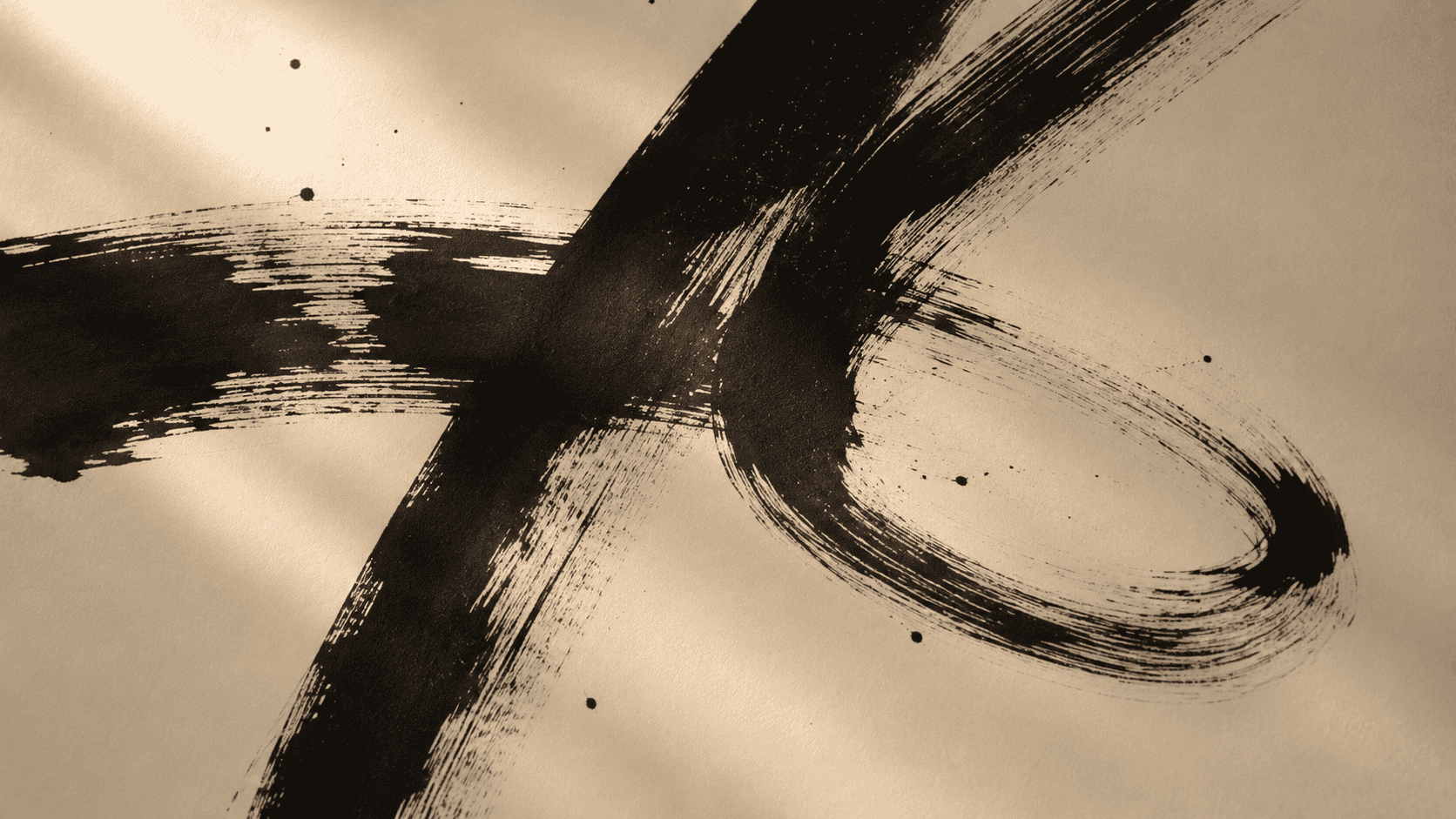
Modern Japanese calligraphy began with a question. If the brushstroke already carries feeling, why must it spell a word at all. In the years after the Second World War, a circle of artists answered by cutting the character loose from its meaning and treating ink on paper as pure expression. The mode is now called zen’ei sho, avant-garde calligraphy.
The movement crystallised in 1952, when five calligraphers founded a group at Ryōanji temple in Kyoto. They wanted to lift their art to the standing that abstract painting then enjoyed worldwide. So they wrote with enormous brushes, brooms, lacquer, and coloured ink, and they prized the gesture and the body over anything a reader could decode.
Their timing was extraordinary. In Europe and the United States, painters were arriving at gesture and spontaneity from the other direction. The exchange ran both ways. The group’s journal featured Franz Kline on its first cover, and American and Japanese artists shared exhibition walls in New York, Paris, and Tokyo. For a brief period, the calligrapher and the abstract painter were asking the same question with the same tools.
That conversation still shapes how the art is shown. Calligraphy now appears as fine art on gallery and museum walls, collected as painting rather than filed as craft. Major institutions hold and exhibit it, from the work of Shinoda Tōko to the postwar radicals. A useful starting point for seeing the tradition treated as art is the Metropolitan Museum’s survey of the three perfections of poetry, painting, and calligraphy, and the Japanese galleries at the British Museum.
The lesson of the modern era is that the oldest principle and the newest practice agree. The classical masters held that the brush records the person. The avant-garde simply removed the word and let the recording stand alone. To write either way, it helps to know the scripts the tradition is built from.
The Five Script Styles
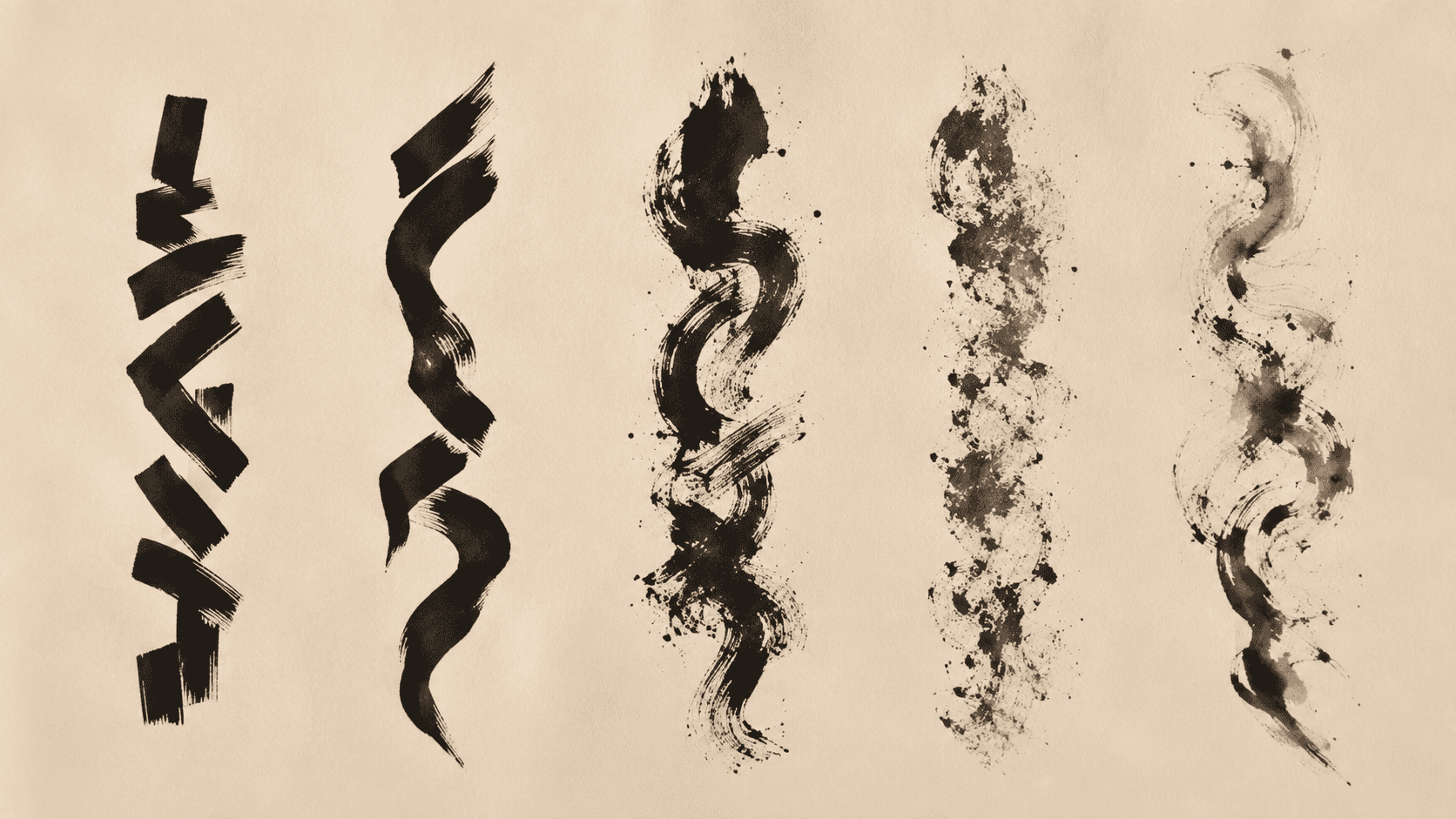
Japanese calligraphy draws on five script styles, inherited from China and developed over centuries. They range from the rigid and ancient to the fluid and unrestrained. A calligrapher chooses a script the way a writer chooses a register.
Tensho, seal script, is the oldest. Its even, rounded lines now appear mostly on personal seals and formal titles. Reisho, clerical script, is bold and broad, with dramatic stroke endings, and has been treated as an art form in its own right since the Edo period.
Kaisho, regular script, is the clear block style learned first. Each stroke stands separate and exact, which makes it the foundation for everything else. Gyōsho, semi-cursive, flows faster and links some strokes while staying readable. Sōsho, cursive or grass script, is the most abstract and expressive, so abbreviated that only a trained eye can follow it.
Beginners start with kaisho and stay there for a long while. The discipline of the block form teaches proportion and balance, and those fundamentals carry into the flowing styles later. Our browser practice tool animates kaisho stroke order for the hundred most useful characters, which is the cleanest place to begin.
The Four Treasures of the Study
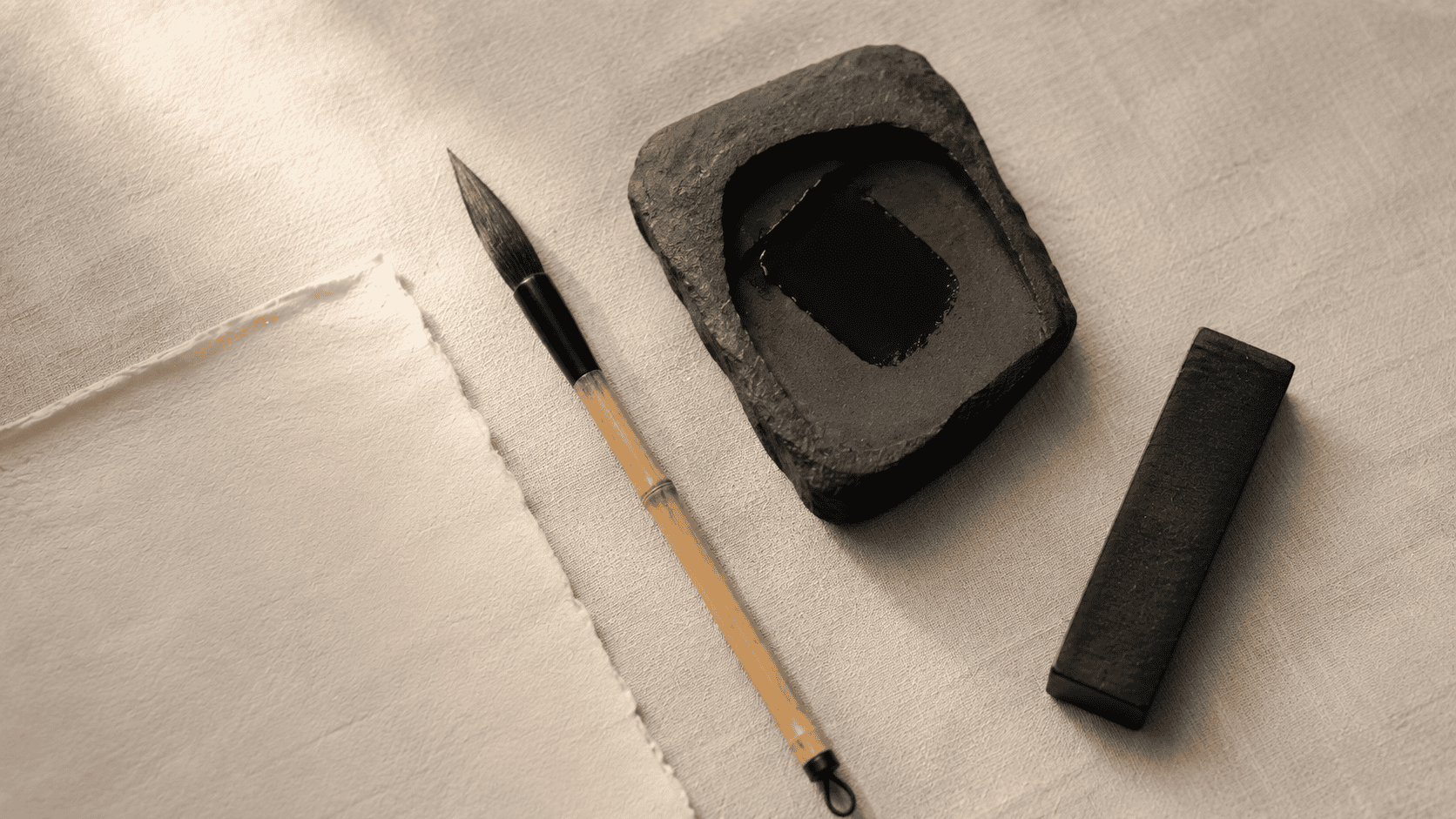
Tradition gives calligraphy four essential tools, known together as the Four Treasures of the Study, 文房四宝. Each shapes the line in its own way, and learning their character is part of learning the art.
The brush, fude, carries animal hair on a bamboo handle and is held upright so the whole arm guides the movement. A quality traditional fude brush holds its point while releasing ink smoothly, and it is the one tool worth choosing with care from the start.
The ink, sumi, comes as a stick of soot and glue, ground by hand on the stone with a little water. That slow grinding is itself a way to settle the mind before the first stroke. Beginners often prefer a bottle of ready-mixed liquid sumi ink, which gives a deep black without the preparation.
The inkstone, suzuri, is carved from slate or ceramic with a flat grinding surface that slopes into a well. A natural stone for grinding ink improves with use and is often handed down through a family. The paper, traditionally washi or the practice sheet called hanshi, is absorbent by design. A pack of hanshi practice paper shows the ink honestly, the rough with the smooth.
For a complete beginning in one box, a traditional calligraphy starter set gathers brush, ink, stone, and paper together from a long-established Japanese maker. To practise the gesture anywhere without ink, a flexible-tip brush pen answers well, and a grid-ruled character practice notebook keeps proportions honest while you learn.
The Meaning in a Single Character
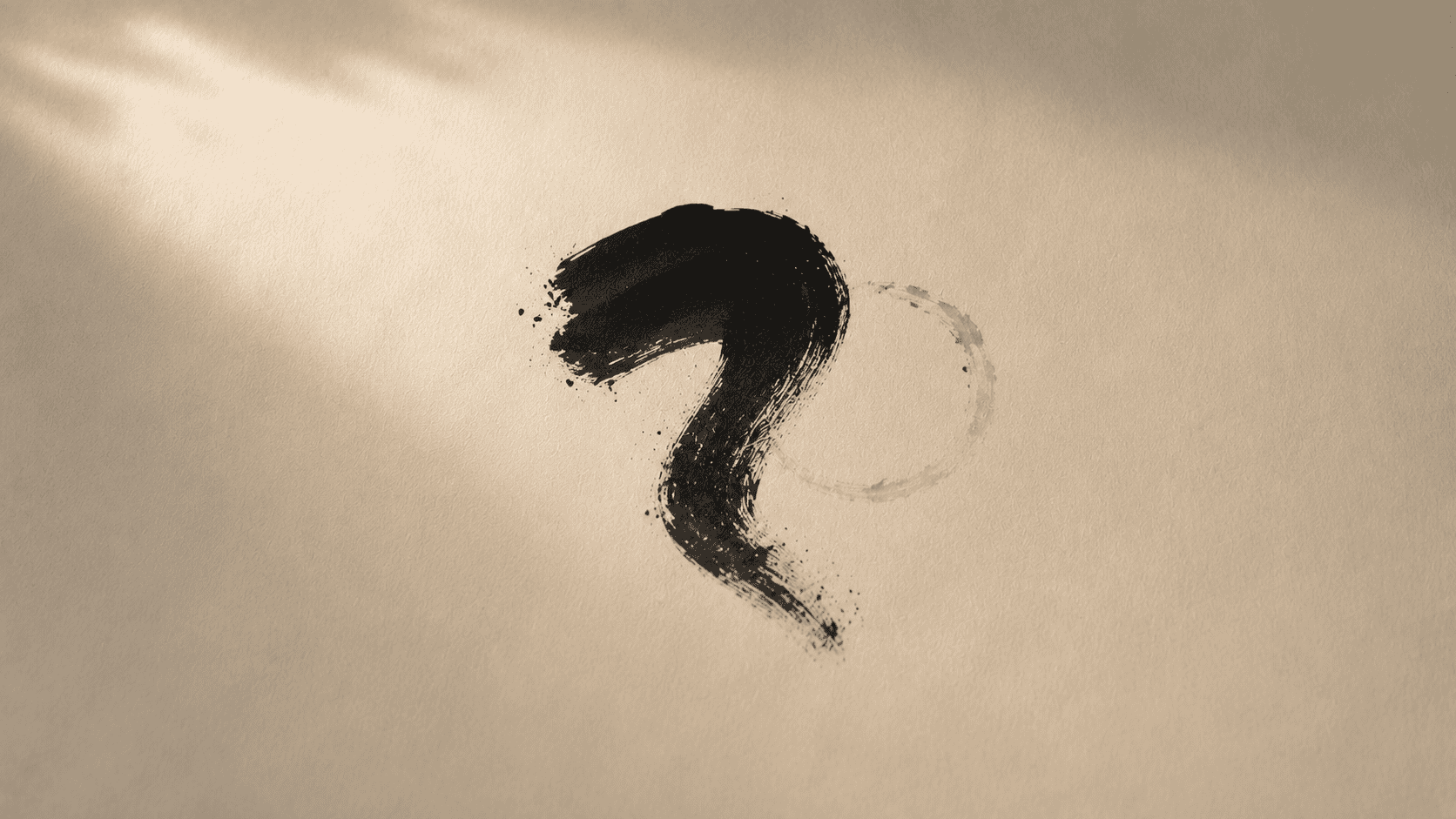
Much of calligraphy’s power comes from how much one character can hold. A single kanji compresses meaning, sound, and history into a few strokes, which is why one word on a scroll can carry the weight of a whole poem. Artists often write just one character, a form called hitomoji, and let it stand alone.
A few characters appear again and again because of what they mean. 和 (wa) is harmony. 道 (michi) is the way, the same character that ends the words for tea, martial arts, and calligraphy itself. 愛 (ai) is love, built around the heart radical at its centre. 心 (kokoro) is the heart and mind together, 夢 (yume) is dream, and 美 (bi) is beauty.
Zen practice adds short phrases called zengo, written to focus the mind on a single idea. The meaning and the brushwork reinforce each other. A character for stillness written calmly teaches more than the word alone, because the hand demonstrates what the word describes.
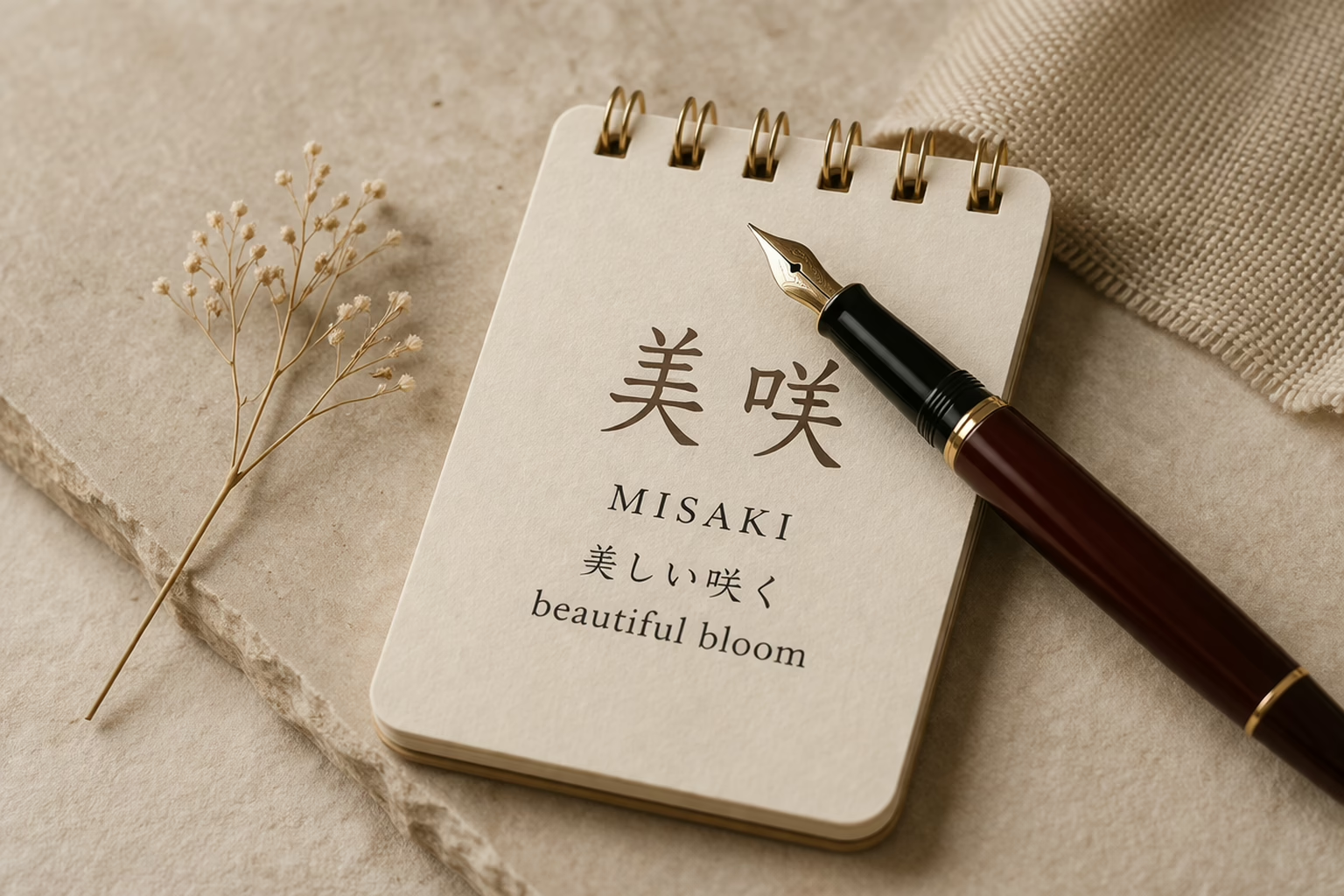
Names work the same way. The kanji chosen for a Japanese name shade its meaning as much as its sound, weighing symbolism and even stroke count. If you are curious which characters carry which meanings, our Japanese name generator pairs meanings with real kanji and their readings, and our companion guide to the kanji flashcard method shows how to learn the most common characters in a year.
A Brief History of Shodō
Calligraphy reached Japan from China, arriving with the Chinese writing system and Buddhism in the early centuries of recorded contact. At first, Japanese scribes copied Chinese masters closely. The art was an import, practised in a borrowed hand.
The turn came in the Heian period, roughly the ninth to twelfth centuries. As Japan developed its own kana scripts, calligraphers developed a distinctly Japanese style to match, softer and more flowing than the Chinese source. The Three Brushes and the Three Brush Traces belong to this golden age, and the wayō hand they created set the standard for centuries.
Later eras each left a mark. Zen Buddhism brought a spontaneous, spiritual approach through the Kamakura period and after. The long peace of the Edo period spread literacy and made calligraphy a part of ordinary education, while masters like Hakuin and Sengai gave it new warmth. By the twentieth century, the tradition was ready to question itself, and the avant-garde answered. Today calligraphy is taught in nearly every Japanese school and practised by people of all ages, a living art rather than a museum piece.
Beginning Your Own Practice
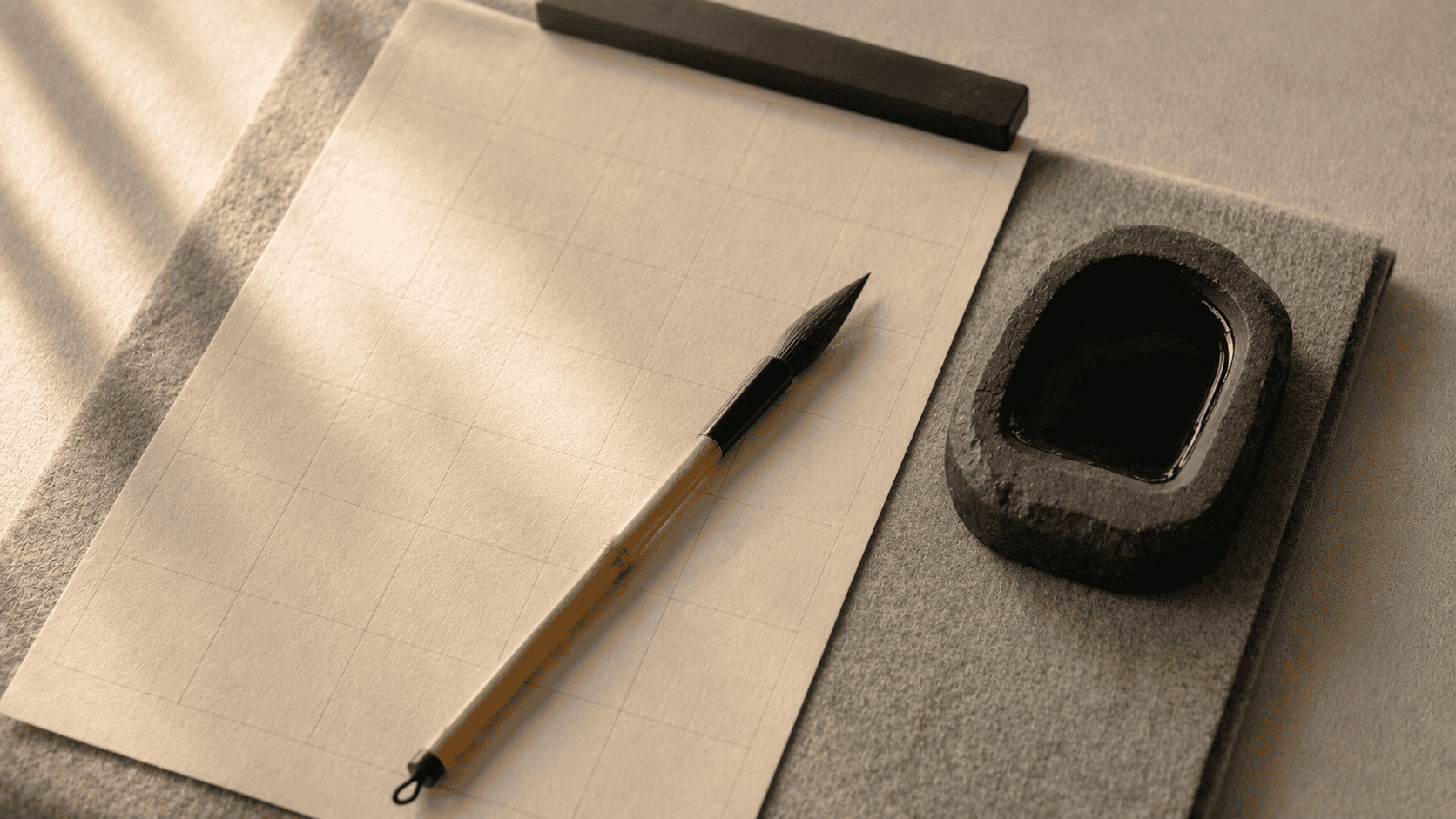
You do not need a teacher to begin, though a good one helps. Calligraphy rewards short, regular practice far more than occasional long sessions. Fifteen focused minutes a day builds the muscle memory that the art depends on, and the routine itself becomes a calm point in the day.
Start with posture and the block script. Sit upright, both feet on the floor, and hold the brush vertical so the arm leads, not the fingers. Practise simple characters first, the same ones that begin every Japanese child’s training, and resist the pull toward elaborate work before the basics settle. The general stroke rules are steady: top to bottom, left to right, horizontal before vertical.
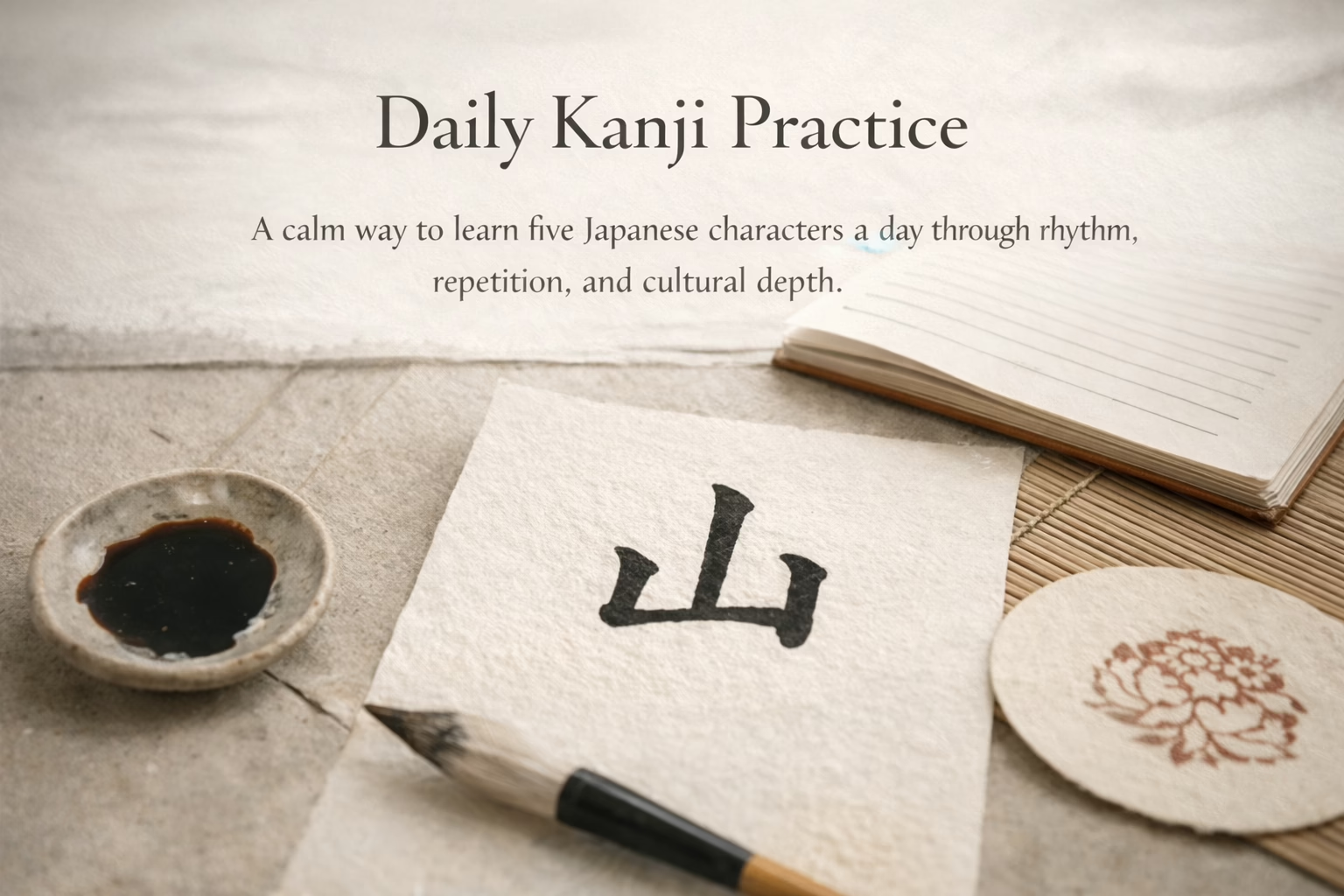
Screen practice and paper practice reinforce each other. Trace stroke order in our interactive calligraphy tool until a character feels natural, then commit it to paper with a brush. For structured handwriting practice off-screen, our calligraphy practice workbooks guide the hundred foundational characters with progressive stroke teaching. And if you want the case for writing by hand, our piece on the neuroscience of calligraphy shows why the brush outperforms the keyboard for memory.
Seeing Calligraphy in Japan
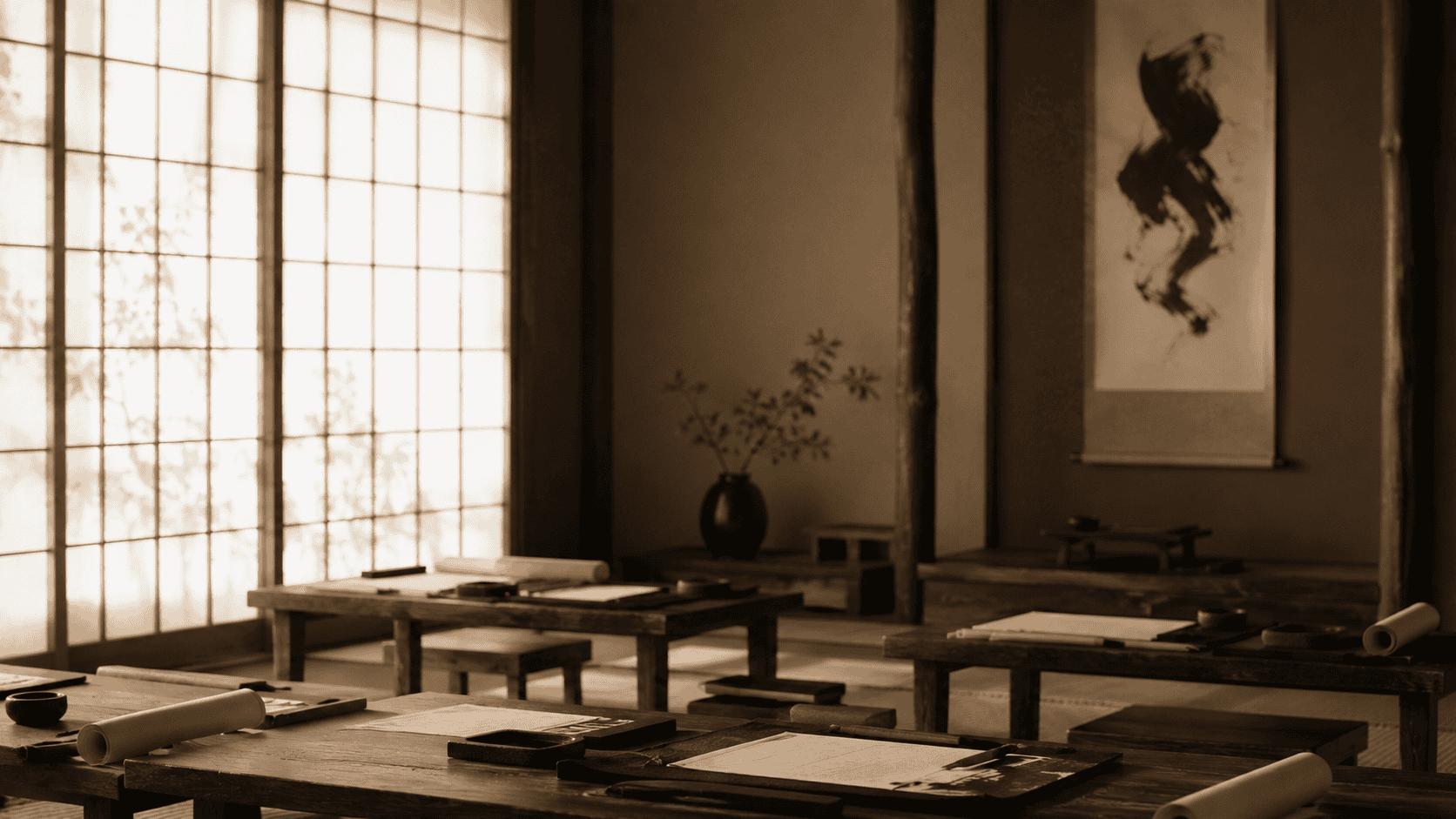
The art is most alive where it is made. In Kyoto and Tokyo, working calligraphers open their studios for private sessions, where you learn brush technique, write a character that means something to you, and leave with a piece you made yourself. It is among the most personal things a visitor can bring home.
Temples and museums add the other half of the picture. Many temples display calligraphy by their founders, and major museums show both classical scrolls and the bold abstractions of the modern masters. Seeing a Hakuin in person, or a Shinoda, changes how the brushwork reads on a page. Our wider guide to experiences in Kyoto sets the city in context for a culture-led trip.
Learn the Brush Where It Began
Our custom itinerary service builds your Japan journey around what you care about. A private session with a master calligrapher in Kyoto, a morning among temple scrolls, an unhurried afternoon choosing brushes and ink. We arrange the access and the introductions.
Plan Your Custom Japan ItineraryQuestions Worth Asking
What is Japanese calligraphy called?
Japanese calligraphy is called shodō, written 書道 and meaning the way of writing. The word treats brush writing as a discipline and an art, in the same family as the tea ceremony and the martial arts, each of which ends in the same character for the way.
Who are the most famous Japanese calligraphers?
The classical canon honours Kūkai and Ono no Michikaze among the early masters, and the aesthete Hon’ami Kōetsu in the Edo period. In the modern era the best-known names are Hidai Tenrai, called the father of modern calligraphy, the avant-garde artist Inoue Yūichi, the theorist Morita Shiryū, and Shinoda Tōko, whose abstract ink work is held by museums worldwide.
What is contemporary Japanese calligraphy?
Contemporary calligraphy, known as zen’ei sho, releases the character from its meaning and treats ink on paper as pure expression. The movement began with a group founded in Kyoto in 1952 and grew alongside abstract painting in Europe and the United States. The work now hangs in galleries and museums as fine art rather than craft.
What are the five styles of Japanese calligraphy?
The five scripts are tensho, the ancient seal style; reisho, the bold clerical style; kaisho, the clear regular style learned first; gyōsho, the flowing semi-cursive; and sōsho, the highly abstract cursive or grass style. Beginners start with kaisho and move toward the cursive styles as their control develops.
What tools do you need for Japanese calligraphy?
Tradition names four: the brush (fude), the ink (sumi), the inkstone (suzuri), and the paper (washi or the practice sheet hanshi). A starter set gathers all four, and a brush pen lets you practise the gesture anywhere without ink. A felt mat and a paperweight make the setup steadier.
Can you learn Japanese calligraphy without speaking Japanese?
Yes. Calligraphy is a visual and physical practice, so you can learn the strokes and the forms without reading Japanese, much as people learn brush painting abroad. Tracing stroke order online builds the muscle memory first, and learning the meaning of a handful of characters deepens the practice as you go.
What is the meaning behind single-character calligraphy?
A single kanji can compress a whole idea, which is why artists often write just one. Common choices include 和 for harmony, 道 for the way, 愛 for love, and 夢 for dream. In Zen practice, short phrases called zengo pair the meaning of the word with the spirit of the brushwork.
How long does it take to learn Japanese calligraphy?
The basics of posture, the brush, and the block script take a few weeks of short daily practice. Fluency in the flowing cursive styles takes years, and the masters describe it as a lifelong path. The reward arrives gradually, which is part of why the art is valued as much for the practice as for the result.
The way of writing
Japanese calligraphy holds a rare honesty. The brush records the hand, and the hand records the person, with no chance to revise. A courtier in the Heian court and a radical in postwar Tokyo each found the same truth in that single committed line. The art has stayed alive for over a thousand years because the lesson never ages.
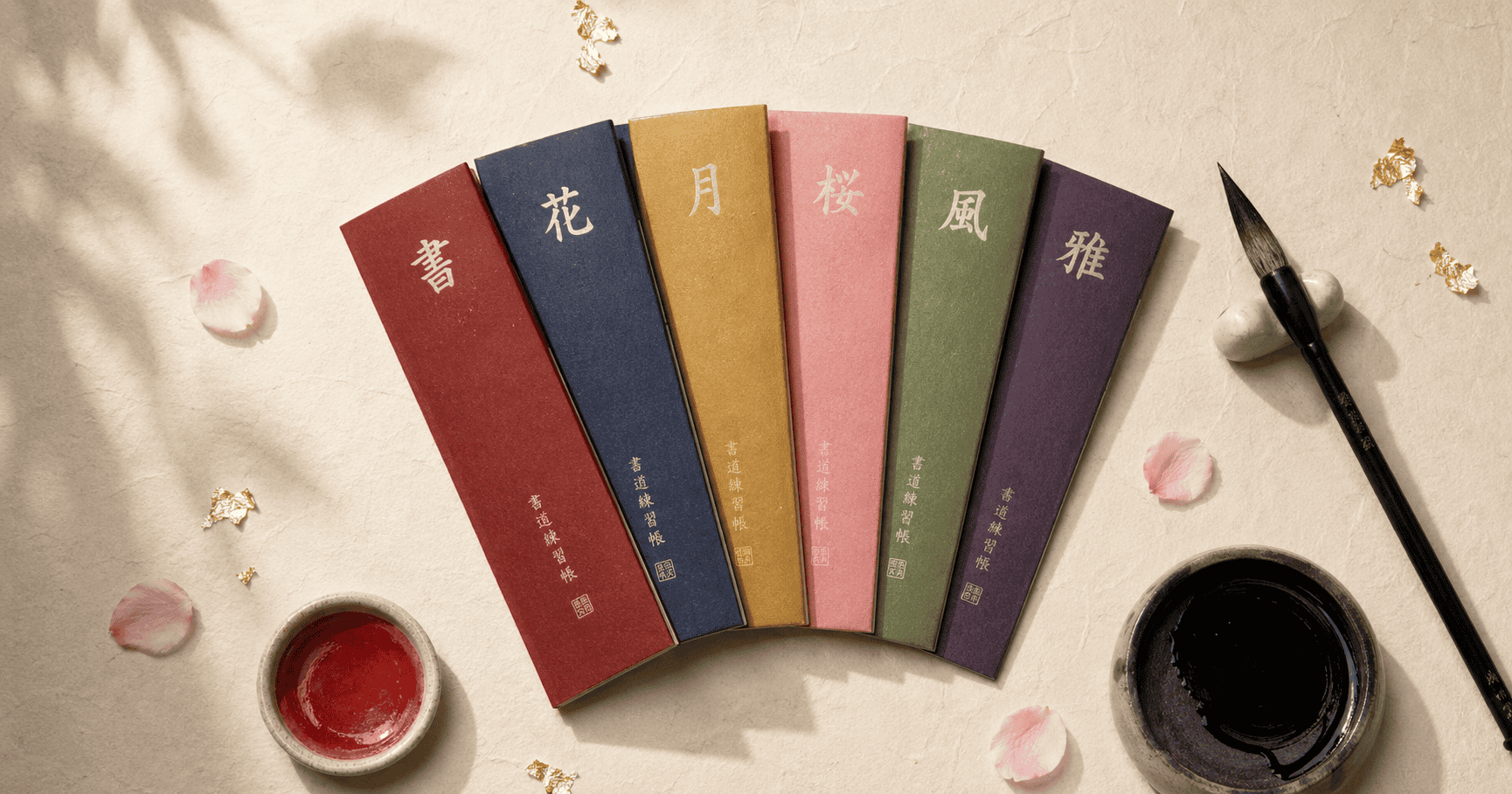
Cream-paper journals for the slower practices — a place to copy a phrase, hold a thought, and return to it.
View the Journals →Begin where every calligrapher begins, with one character and one breath. Trace the strokes in our practice tool, then take up a brush. The way of writing becomes, in time, a way of paying attention.