Some Japanese inventions announce themselves, like a bullet train sliding into a station at full calm. Others hide in plain sight. You scan one every time you open a restaurant menu on your phone. Every night, you charge another. Some days, you may even eat one for lunch. This guide follows twelve Japanese inventions that slipped so smoothly into daily life that most people forget where they began.
Each one has a real founder and a real date. Often there is a museum where you can stand in front of the original. So this is a story about objects, but it is also a map. By the end, you will know where to taste, play and ride these ideas in Japan. You will also see why a country of crowded cities kept producing things that fit in a hand.
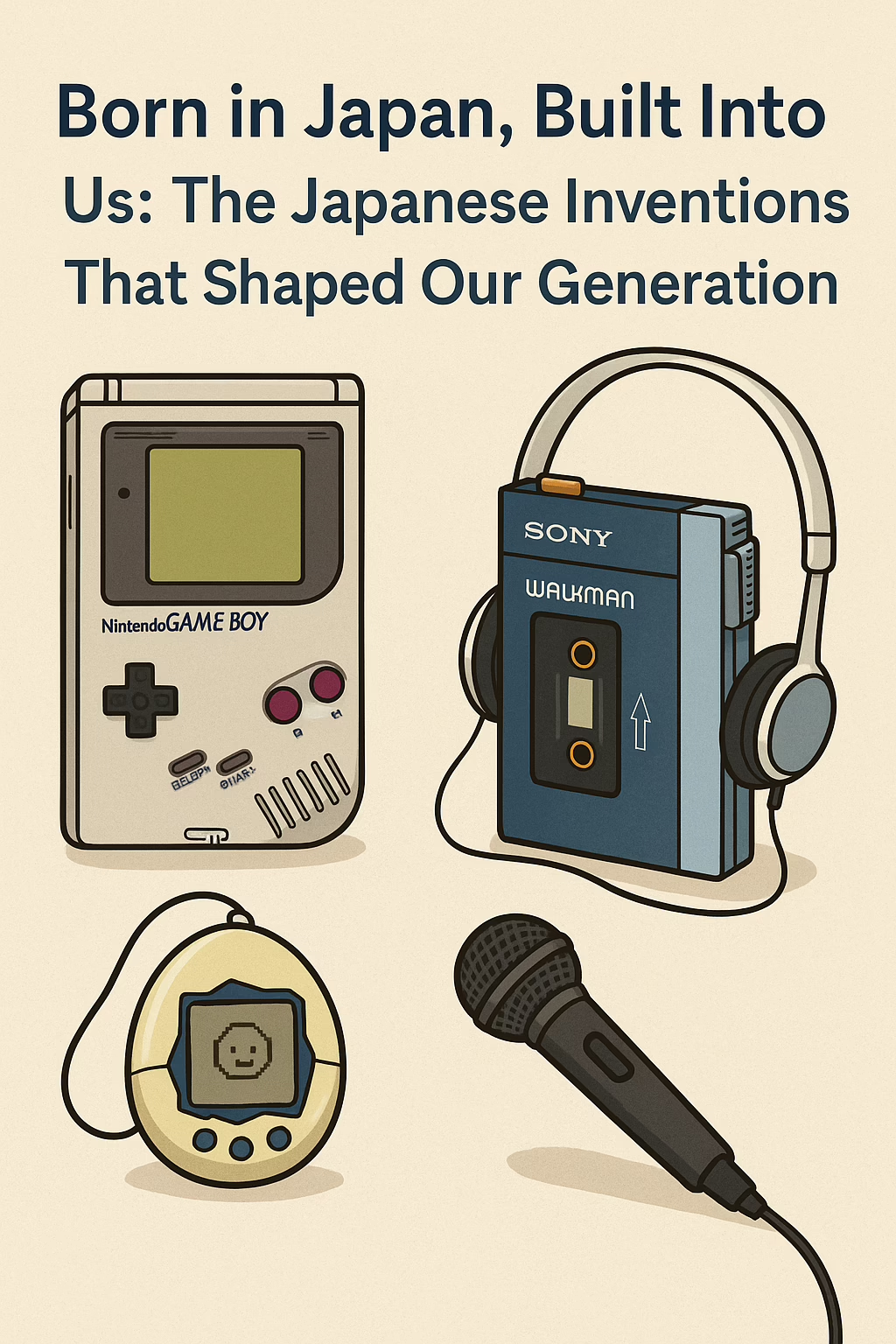
Instant ramen (1958), the Walkman (1979), the Game Boy (1989) and the QR code (1994) lead the list. The Tamagotchi (1996), emoji (1999), karaoke, the Shinkansen, the blue LED and the lithium-ion battery join them.
Why So Many Japanese Inventions Fit in a Hand
Post-war Japan rebuilt fast, and it rebuilt small. Apartments were compact, commutes were long and trains were crowded. As a result, the products that won were the ones that saved space, time or effort. A rice cooker freed an hour of the evening. Then a cassette player turned a packed train into a private concert. Later, a pocket game turned the same train into a playground.
Japanese companies also backed long experiments. Engineers at Sony, Nintendo, Seiko and Denso were given years to refine a single idea. That patience shows in the results. Many of these objects were not the first attempt at their category, but they were the first to feel finished. They worked so well that people stopped thinking of them as technology at all.
There is a cultural thread, too. Japanese craft prizes refinement over novelty. A potter may spend a lifetime perfecting one shape, and a sushi chef may train for years before touching fish. The same patience shaped the factory and the lab. So when you look at Japanese inventions together, you see a habit more than a list. Solve a daily problem, then polish the answer until it disappears into ordinary life.
The twelve below run roughly in the order they reached the world. Some came from giant companies, others from one stubborn person working at home. All of them are still in use today. Better still, most can be seen, tasted or tried somewhere in Japan. That turns a history lesson into a very good reason to plan a trip.
You may also like
Instant Ramen: Momofuku Ando’s 1958 Breakthrough
The most eaten of all Japanese inventions began in a backyard shed in Ikeda, near Osaka. Momofuku Ando, the founder of Nissin Foods, wanted a noodle anyone could make with hot water alone. He spent a year experimenting. The answer came from flash-frying seasoned noodles. Frying dried them and left tiny holes that softened again in boiling water.

Ando launched Chicken Ramen in 1958. At first it cost more than fresh noodles, yet it sold because it was fast and reliable. Then, in 1971, he went further with Cup Noodles, sold in its own cup with a fork. That second step took instant ramen out of the kitchen entirely. Today it sits in office drawers, camping bags and space missions, and Nissin even sends a version to orbit.
Both CupNoodles Museums tell the story with real charm. In Yokohama and in Ikeda, you can see a replica of Ando’s shed and a wall of package designs. Best of all, the My CUPNOODLES Factory lets you design your own cup. You choose the soup and toppings, then watch it sealed in front of you. Tickets for that workshop are numbered, so arrive early.
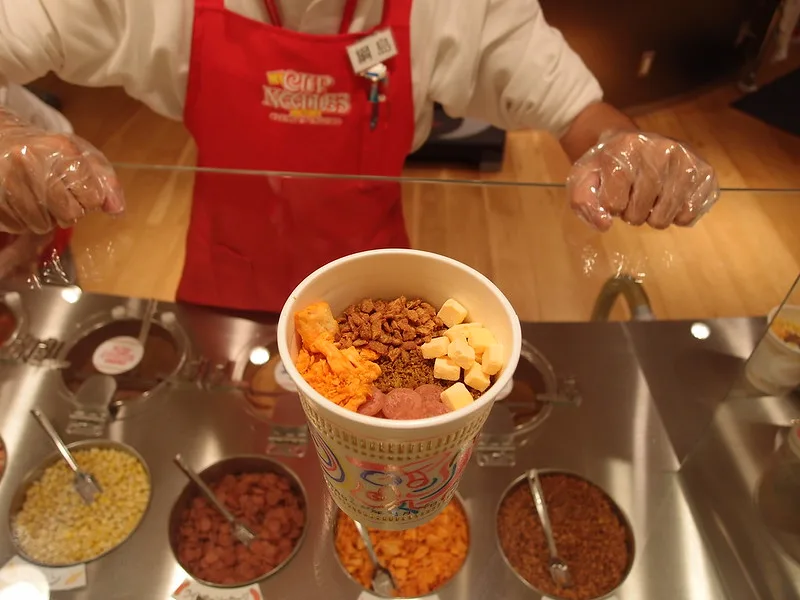
Another Japanese noodle invention: hiyashi chuka
Instant ramen was not Japan’s first clever noodle idea. In 1937, a Chinese restaurant called Ryutei in Sendai faced a problem. Hot ramen did not sell in a summer without air conditioning. So the founder created a chilled version, dressed with a sweet and sour sauce and colorful toppings. Today hiyashi chuka signals that summer has arrived. Restaurants across the country post signs reading “hiyashi chuka hajimemashita”, cold ramen has started.

Hiyashi chuka — cold ramen with summer toppings
Warm three tablespoons each of soy sauce, rice vinegar and water with two tablespoons of sugar until it dissolves. Stir in a tablespoon of sesame oil and chill the dressing. Beat two eggs with a pinch of salt and cook two paper-thin omelets. Roll and slice them into fine ribbons. Boil two portions of fresh ramen noodles, rinse them under cold running water until chilled and drain well. Pile the noodles on plates and fan strips of cucumber, ham, egg and tomato over the top. Then pour over the dressing. Serve with pickled red ginger and a dab of mustard, and eat it while it is cold.
The dish rewards neatness, so take a moment over the toppings. Arrange each one in its own wedge, the way a Sendai cook would. The plate looks like summer before anyone lifts their chopsticks. It also keeps well in a lunch box, a fitting partner for the convenience food Ando made famous. For more of the country’s classic dishes, our guide to traditional Japanese food is a good next step.
Pocket Culture: Walkman, Game Boy and Tamagotchi
The Walkman, 1979
Sony released the Walkman in 1979. It was a small cassette player with light headphones and no speaker. At the time, that sounded strange. Who would want a music player that only one person could hear? The answer turned out to be almost everyone. The Walkman made music private and portable, and it changed how people moved through cities.

Sony’s co-founder Akio Morita championed the device inside the company, even when sales staff doubted it. Early buyers were young people in Tokyo, who wore it on trains and in parks. Within a few years, the name had become a general word for any personal stereo, a rare honor for a brand. That success taught Sony a lasting lesson. A product that fits daily life can create a market nobody knew existed.
Its influence runs straight through to today. The idea of a personal soundtrack, carried on a commute, began with this device. In fact, Sony still uses the Walkman name for its music players. Its headphones carry the same promise of a private world in a crowded place. That promise makes sense on a rush-hour train in Tokyo, where good headphones feel almost essential.
Sony WH-1000XM5 Headphones — the Walkman’s promise, updated
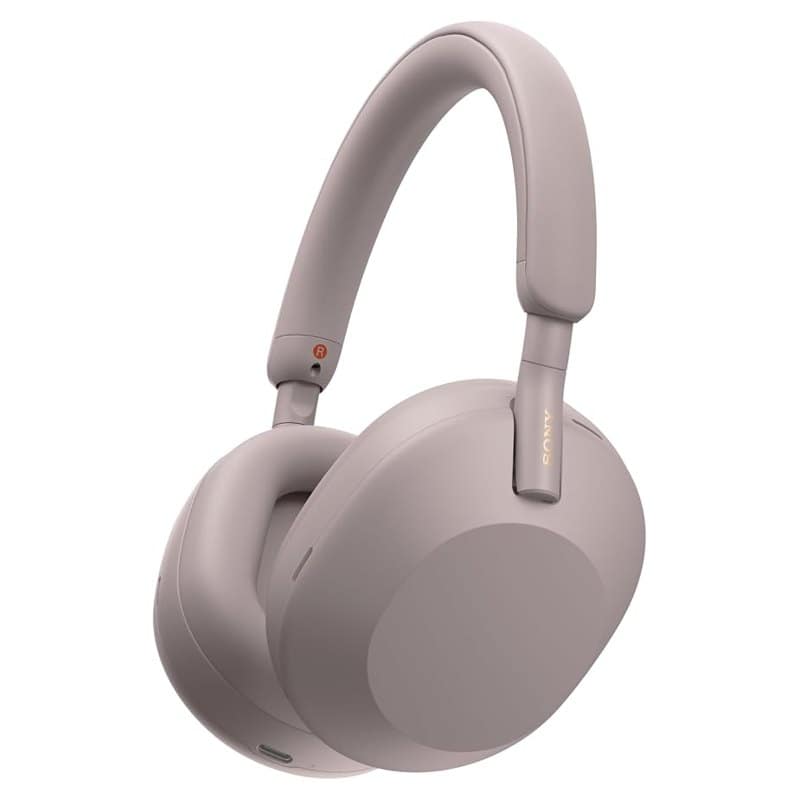
The Sony WH-1000XM5 carries the Walkman idea into the present: your music, and only your music, wherever you are. Its noise cancelling hushes the rumble of a train or a plane cabin, so you can listen at a lower volume. The headband is light and the ear cushions are soft, which matters on a long flight to Tokyo. Battery life runs to about thirty hours, enough for a full day of travel and then some. For anyone who grew up with a cassette player, it is a fitting reminder of how far the original idea has traveled. It also folds flat into its case, ready for the next commute.
The Game Boy, 1989
Nintendo launched the Game Boy in 1989. Its screen was small, green and hardly sharp. Still, the machine was tough, light and long on battery life, and those choices mattered more than color. Players carried it to school, on buses and on family holidays. As a result, games moved out of the living room and into pockets for good.
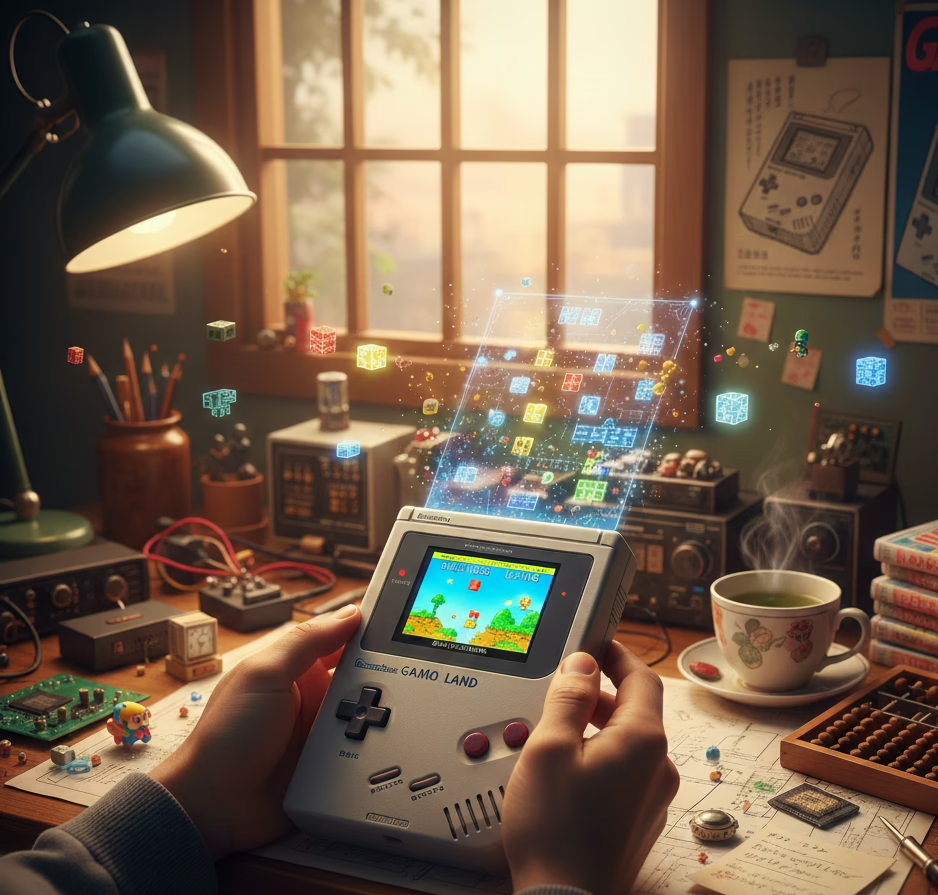
The Game Boy also showed a very Japanese approach to design. Rather than chase the newest screen, Nintendo used proven, affordable parts and focused on play. That thinking still guides the company. Today you can trace it at the Nintendo Museum in Uji, Kyoto. It opened in 2024 on a former Nintendo factory site. Tickets are sold in advance by lottery, so plan ahead if it is on your list.
The Tamagotchi, 1996
Bandai released the Tamagotchi in Japan in November 1996. It was a tiny digital pet inside an egg-shaped keychain, and it needed feeding, cleaning and attention. If you ignored it, it suffered. That small emotional pull made it a craze. It also trained a generation to check a little screen for alerts, years before smartphones made that habit universal.
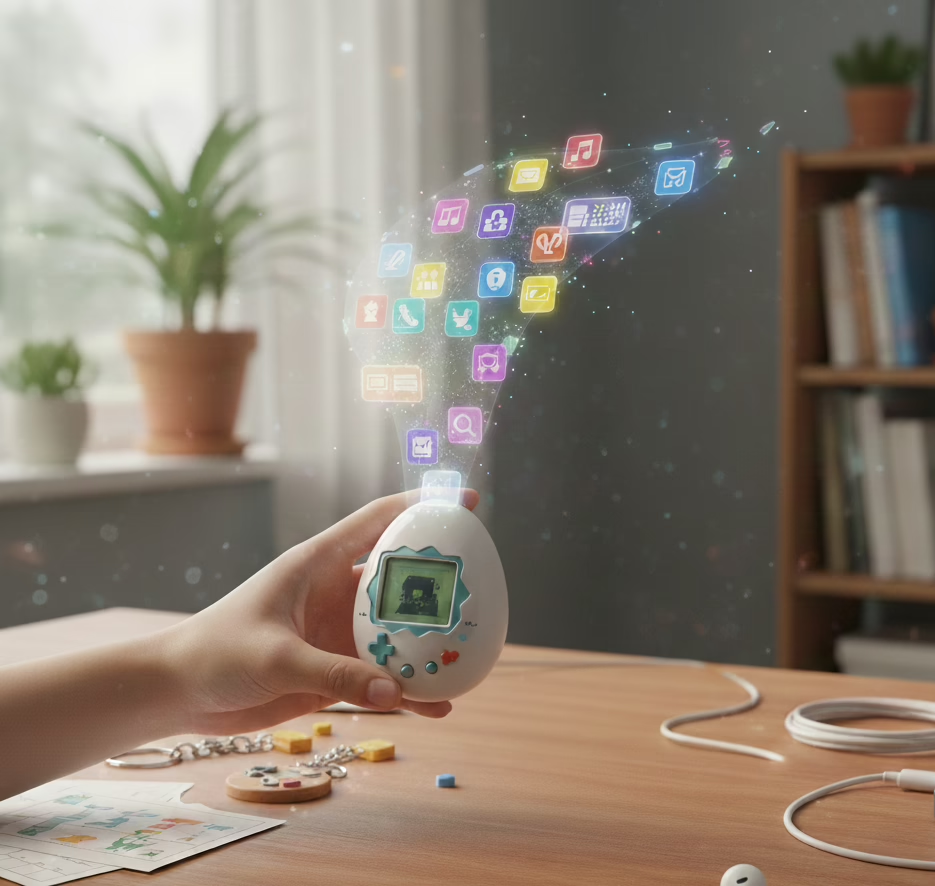
Together, these three devices define what people mean by Japanese pop technology. They were small, personal and a little playful. They also held up beautifully over time, which is why original models now trade among collectors. Bandai still makes new Tamagotchi, and the reissues keep the shape that made the first one famous. Here are three ways to bring that era home.
Three Pieces From the Pocket Era
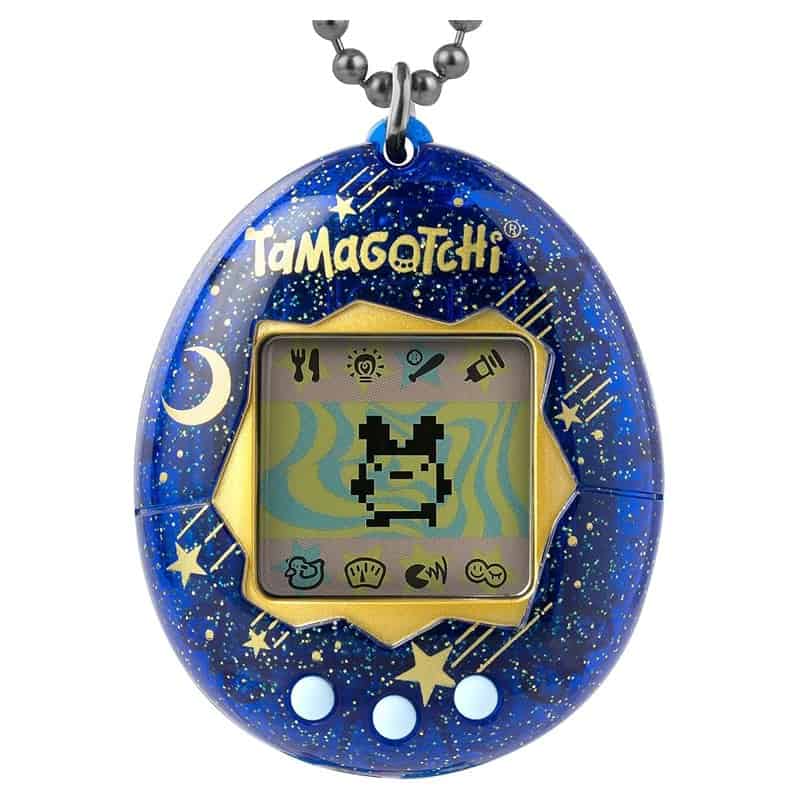
The egg-shaped digital pet, reissued with its classic look.

The story of Momofuku Ando and his shed, told for young readers.
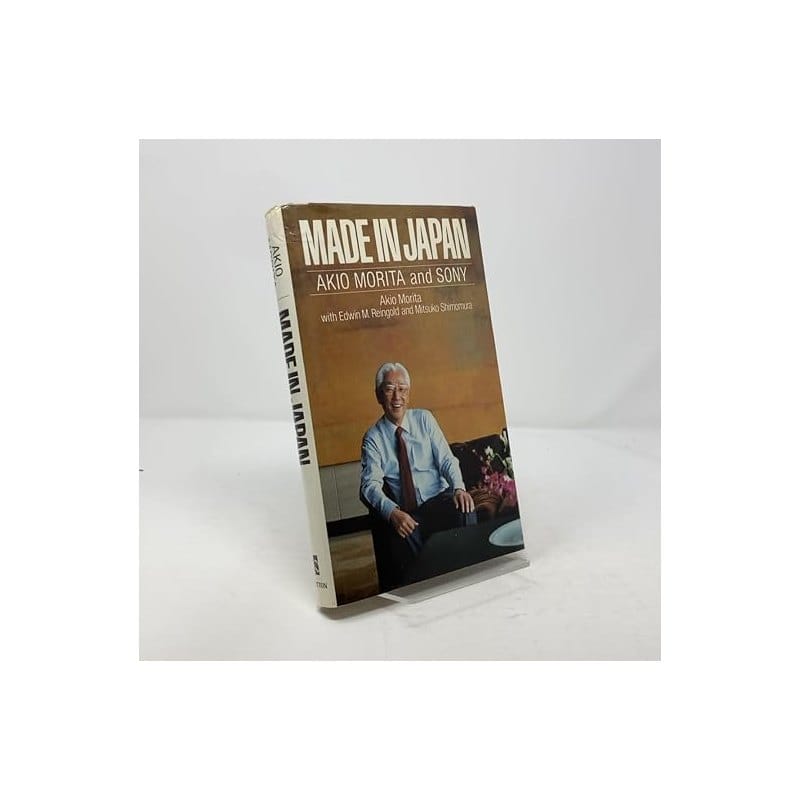
The memoir is worth reading on its own. Akio Morita co-founded Sony and helped steer the Walkman to market. His account of building a global company from post-war Tokyo is full of practical detail. The picture book, meanwhile, is a gentle way to share Ando’s story with children before a visit to a CupNoodles Museum. Both explain the same idea from different heights.
Karaoke: The Invention Nobody Patented
Karaoke means “empty orchestra”, and the idea is simple: music without the singer, so you can take the microphone yourself. Machines for it appeared in Japan in the early 1970s. One of the best-known pioneers is Daisuke Inoue, a Kobe musician who built a coin-operated player for bar customers. He never patented it.

Recognition came later, and with a wink. In 2004, Inoue received the Ig Nobel Peace Prize for inventing karaoke. The organizers said it gave people a new way to learn to tolerate each other. The award is a joke with a serious point. Few Japanese inventions have done more to bring strangers, colleagues and families into the same room. So the karaoke box, a private room rented by the hour, became a fixture of every Japanese city.
For travelers, it is still one of the best ways to end a long day. Private rooms mean nobody else hears you, and the song lists include thousands of English titles. Many venues also serve food and soft drinks to the room. Go after dinner, book an hour, and you will understand why this small invention traveled the world.
Karaoke also shows how many of these ideas grew from a narrow need. Inoue wanted to help bar customers sing along when no band was available. He did not set out to change nightlife across continents. Yet that is what happened, because the idea solved a real moment of awkwardness so neatly that people everywhere wanted it.
Ten Proverbs to Carry With You
A printable folio of ten Japanese proverbs, each set in kanji with its reading and a line on where you will hear it.
Inventions for Daily Life: Trains, Rice and Time
The Shinkansen, 1964
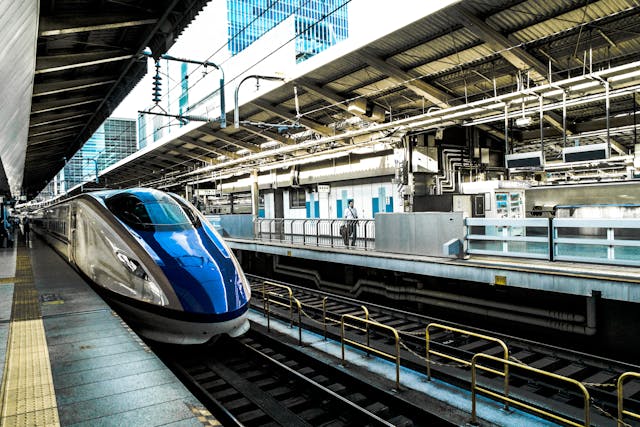
The Tokaido Shinkansen opened in October 1964, in time for the Tokyo Olympics. It linked Tokyo and Osaka at speeds no regular train had reached. It also introduced the world to high-speed rail. Since then, the network has grown across most of the country. It remains famous for punctuality and for its remarkable safety record.
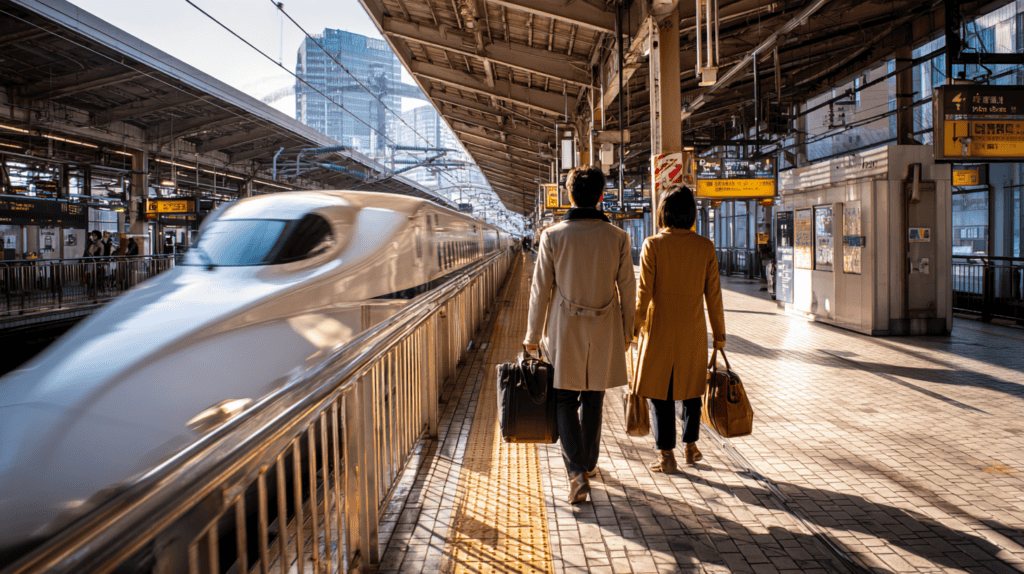
Riding it is one of the pleasures of any trip to Japan. Trains leave on the minute, and seats turn to face the direction of travel. The ride is smooth enough to write by hand. For the history up close, visit the SCMaglev and Railway Park in Nagoya. It displays record-breaking trains and explains how the line was built. Our Japan Rail Pass guide covers whether a pass suits your route.
The automatic rice cooker, 1955
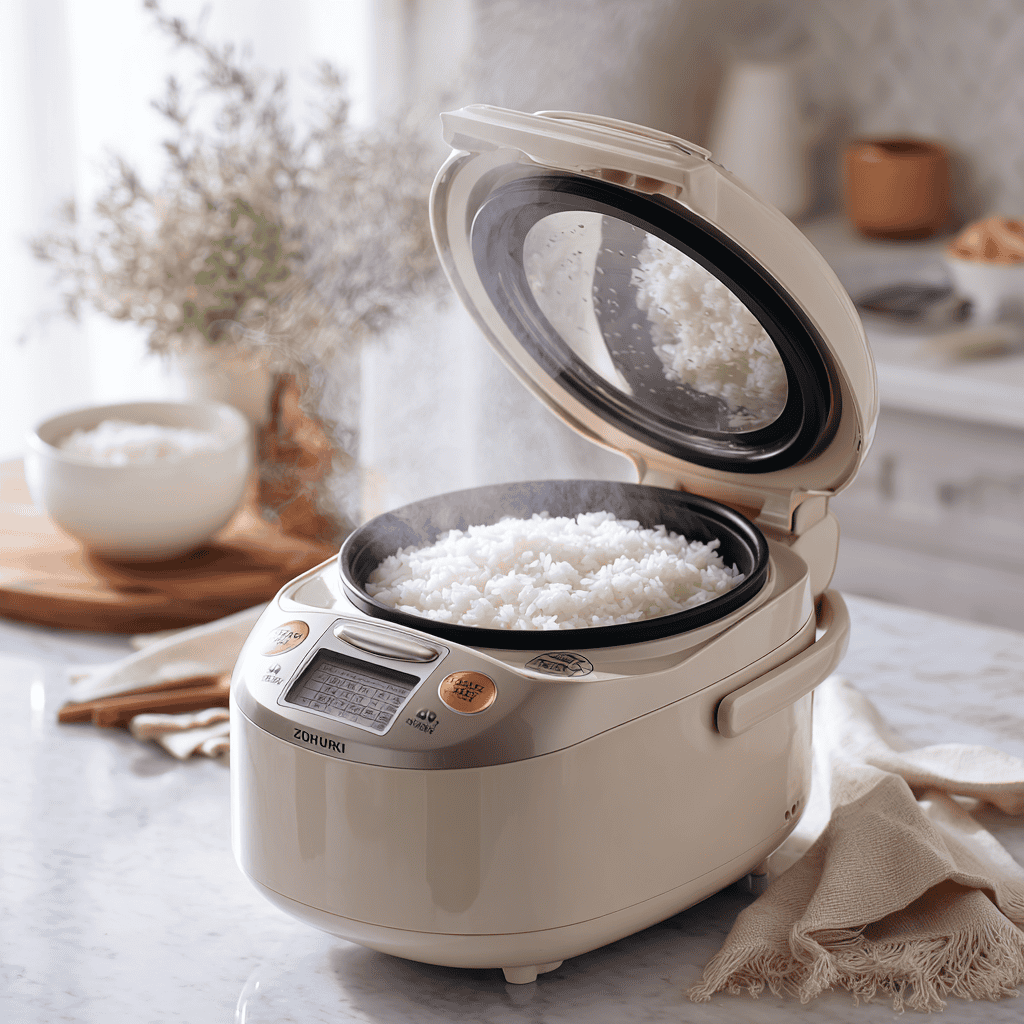
Toshiba released Japan’s first automatic electric rice cooker in 1955. Before it, cooking rice meant watching a pot over a flame, often early in the morning. The new machine switched itself off when the rice was done. That small change freed hours of household time, and it spread quickly through Japanese homes and then around the world.
The quartz wristwatch, 1969
Seiko introduced the Quartz Astron in 1969, the world’s first quartz wristwatch. It was far more accurate than mechanical watches of its day, and it set off a shift that changed the watch industry. Today Seiko is just as admired for its mechanical watches, which carry the same attention to finish that made the Astron possible.
Seiko Presage Cocktail Time — Japanese watchmaking at its most elegant
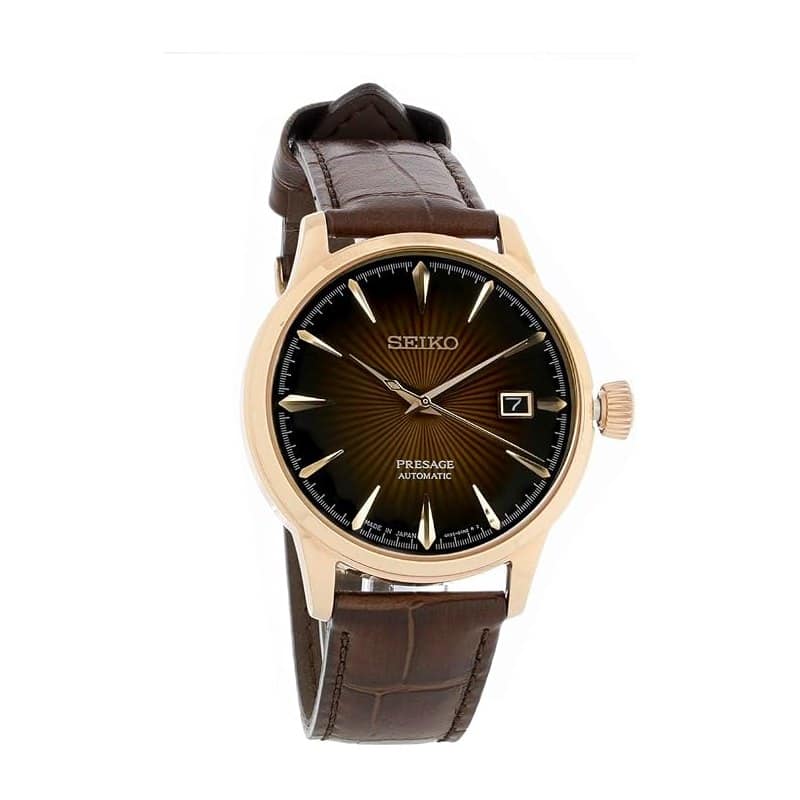
The Seiko Presage Cocktail Time shows the other side of the company that gave the world quartz. It is an automatic watch, powered by the movement of your wrist. The textured dial was inspired by cocktails at a Tokyo bar. Light catches the dial differently through the day, so it never looks quite the same twice. The case is a classic size that suits a shirt cuff or a weekend sleeve. For anyone drawn to this story, it is a reminder that innovation and craft can live in one company. It also makes a handsome keepsake from a trip that began with curiosity about how things are made.
The Japanese Inventions Inside Your Phone
Some of the most important Japanese inventions are hidden inside the device in your pocket. You rarely see them, yet you use them dozens of times a day. Four stand out, and three of them have links to the Nobel Prize or a world-class museum.
The QR code, 1994
Denso Wave, then part of the car parts maker Denso, released the QR code in 1994. Its job was to track parts on busy factory lines, where older barcodes held too little data and scanned too slowly. The square pattern could be read from any angle and at high speed. Crucially, the company chose not to charge for using the patent, so the code spread to tickets, payments and restaurant menus worldwide.

The blue LED
Red and green LEDs existed for decades, but white light needed blue too. Isamu Akasaki, Hiroshi Amano and Shuji Nakamura solved it. In 2014 they shared the Nobel Prize in Physics for efficient blue LEDs. Their work made bright, energy-saving white light possible. It now lights homes, phone screens and city streets.
The lithium-ion battery
Akira Yoshino, a chemist at Asahi Kasei, built the first commercially viable lithium-ion battery in 1985. Together with two other scientists, he shared the 2019 Nobel Prize in Chemistry. His design made rechargeable power light and safe enough for everyday devices, from phones to electric cars.
Emoji, 1999
Finally, emoji. In 1999, Shigetaka Kurita designed a set of 176 small pictures for NTT Docomo’s i-mode mobile internet service. They let people add tone to short messages on tiny screens. The idea spread across phone makers and then the world. In 2016, the Museum of Modern Art in New York added the original set to its collection. That says a great deal about how far a small idea can travel.
Taken together, these four show a different kind of Japanese invention. They are not objects you collect or display. Instead, they are hidden foundations, the kind that only become visible when you stop to ask where something came from. Next time you scan a menu, charge a phone or send a smile, you are using an idea that began in Japan.
You may also like

Where to See Japanese Inventions in Japan
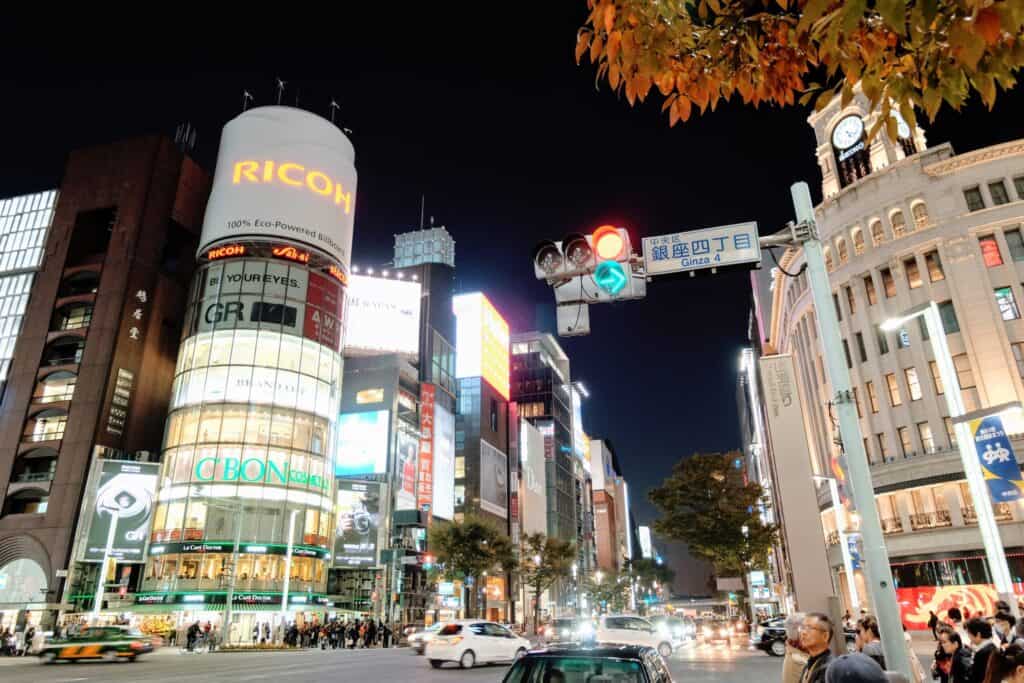
A trip built around Japanese inventions makes a lively alternative to a temple circuit. Start in Yokohama at the CupNoodles Museum, then take the Shinkansen to Nagoya for the SCMaglev and Railway Park. Continue to Kyoto for the Nintendo Museum in Uji, booked well ahead by lottery. Finish in Osaka, where the Ikeda CupNoodles Museum sits near the site of Ando’s shed. Karaoke boxes line the streets of Dotonbori nearby.
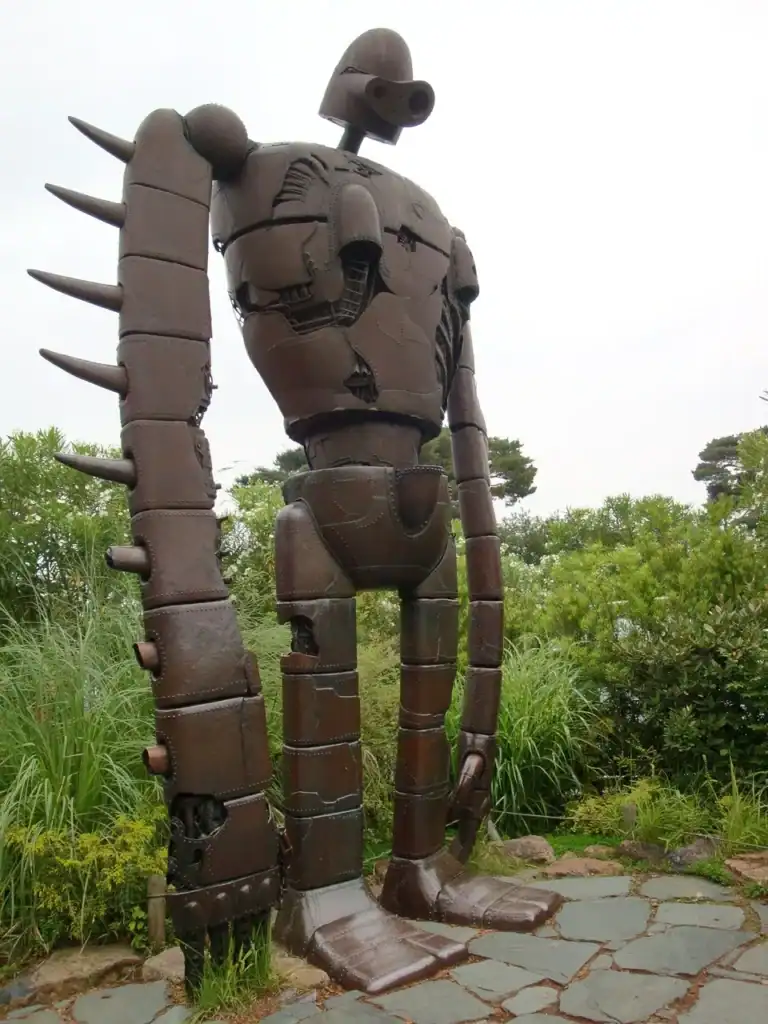
Tokyo fills in the rest. Electronics districts sell the newest gadgets, and second-hand shops stock original Walkmans and Game Boys for collectors. Our guide to unusual museums in Tokyo adds smaller collections worth an afternoon. Meanwhile, the city’s vintage shopping streets are good hunting ground for retro electronics.
Food belongs on the route too. Ramen counters, convenience stores and depachika food halls show how inventions like instant noodles became part of everyday eating. In Osaka, the city’s famous street food culture rounds off a day of museums perfectly. Because these sites spread across several cities, a little planning goes a long way, especially for the Nintendo Museum lottery.
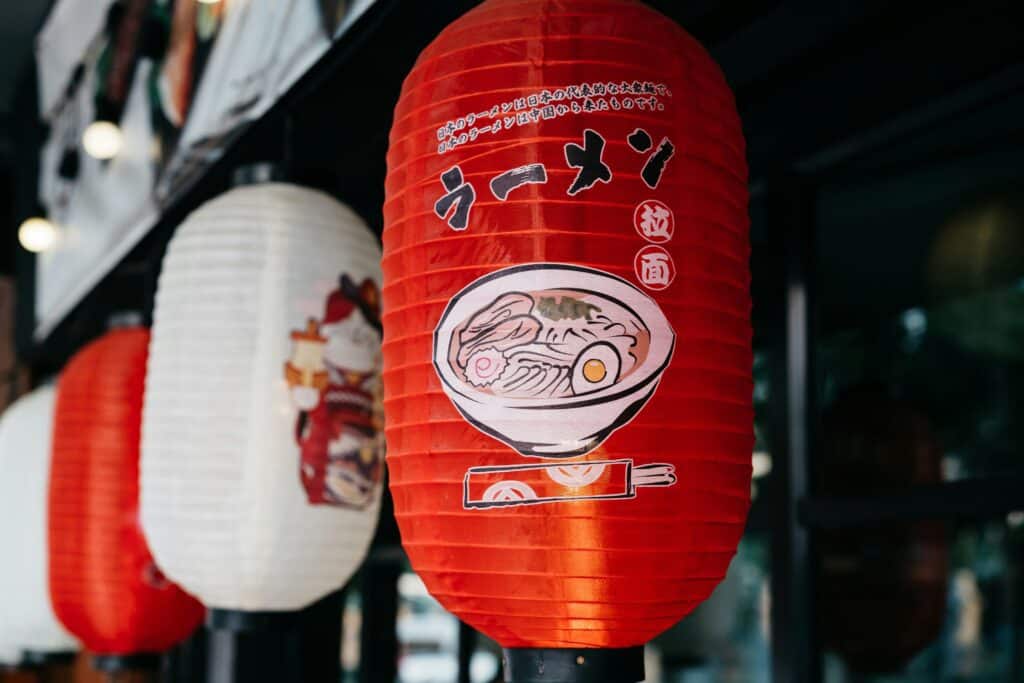
Pace matters as much as the list. Two museums in a day is plenty, and the Shinkansen makes a city change feel like a rest rather than a chore. Leave space for the unplanned: a karaoke hour, a game arcade or a late bowl of noodles. Those moments are where these inventions stop being exhibits and become simply part of the trip.
The Legacy of Japanese Inventions
Look back over the twelve, and a pattern appears. Each solved an everyday problem. Think of dinner in three minutes, music on the train, or rice without watching the pot. None needed a grand theory. Instead, they needed patience, careful engineering and a clear sense of how people actually live.
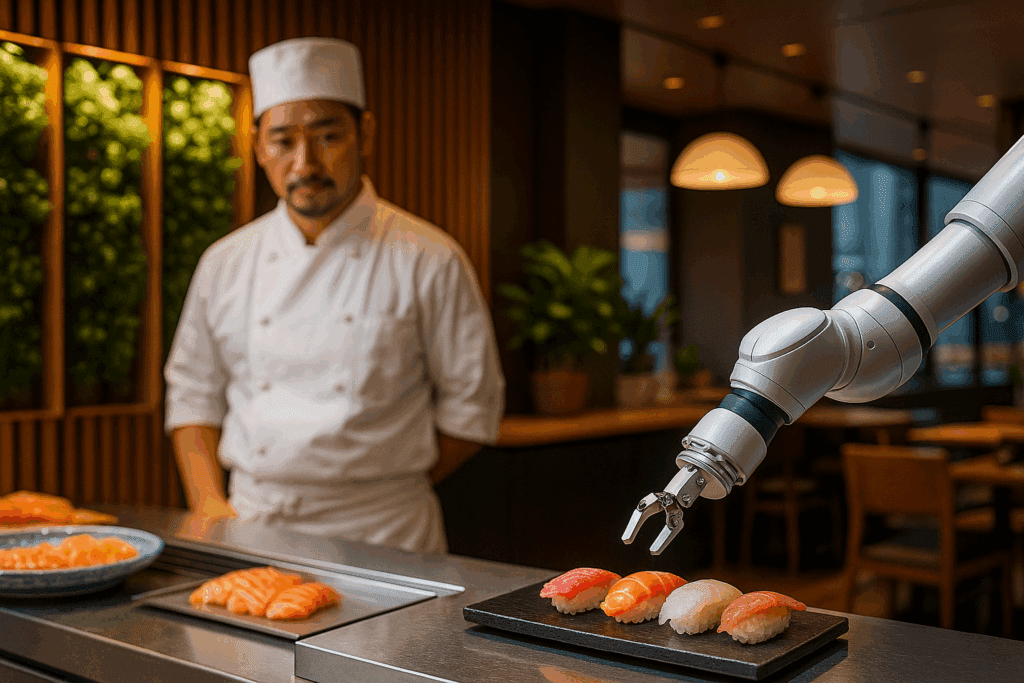
It is worth noticing who made them, too. Some came from founders working alone, like Ando in his shed or Inoue with his bar machine. Others came from large teams given unusual freedom, like the engineers behind the Game Boy or the QR code. In both cases, the people involved kept testing until the result felt effortless. That shared patience, more than any single breakthrough, is what links the twelve. It also explains why so many of them still look and work much as they did on the first day they went on sale.
That approach is still at work. Japan continues to experiment with robotics, new materials and transport, and many of today’s prototypes will become tomorrow’s ordinary objects. So a trip to see these ideas is also a look ahead. The museums tell where the ideas came from, while the streets show where they are going next.
Recommended
Everyday Refinement
Visitors often notice this on their first day in Japan. Heated toilet seats, vending machines on every corner and trains that stop at the floor markings all reflect the same habit. None of these appear in a museum, yet each one shows how ordinary life absorbs a good idea until it feels inevitable. Once you start looking for that pattern, you see it in shops, stations and hotel rooms everywhere you go.
Whether you arrive for the noodles, the trains or the games, you will leave noticing these ideas everywhere at home. A QR code on a menu, a rice cooker on a counter, a smile in a message: each carries a little of Japan with it. That is the lasting power of good design, and it is the best souvenir of all.



The best way to understand these inventions is to follow them across the country. Taste instant noodles where they were born, ride the Shinkansen between museums, and spend an evening in a karaoke room in Osaka. A route like this rewards good timing. The Nintendo Museum runs on a lottery, and the noodle workshop uses numbered tickets. The best trains need reserved seats, too. With those details settled in advance, the days themselves can feel easy and unhurried. A good plan also leaves room for the moments you cannot book, like a long lunch in a ramen shop or an extra hour in a museum you did not expect to love.
A Journey Through Japan’s Great Inventions
We can plan a route through the museums, workshops and city streets where these ideas began, from Yokohama’s noodle museum to Kyoto’s game history and an Osaka night out. Every itinerary is built around your pace and interests.
Plan Your Custom Japan ItineraryQuestions Worth Asking
What are the most famous Japanese inventions?
Instant ramen, the Walkman, the Game Boy, Tamagotchi, karaoke, the Shinkansen, the QR code, emoji, the blue LED and the lithium-ion battery are among the best known. Each began in Japan and spread worldwide, often so completely that people forget where it started.
Who invented instant ramen?
Momofuku Ando, founder of Nissin Foods, launched Chicken Ramen in 1958 after a year of experiments in a shed behind his home in Ikeda, Osaka. He followed it with Cup Noodles in 1971. Both CupNoodles Museums tell the story and let visitors design their own cup.
Was the QR code invented in Japan?
Yes. Denso Wave, then a division of the car parts maker Denso, released the QR code in 1994 to track parts on factory lines. The company chose not to charge for using the patent, which helped the code spread to tickets, menus and payments around the world.
Did a Japanese person invent emoji?
Emoji as we know them began with a set of 176 small pictures designed by Shigetaka Kurita for NTT Docomo’s i-mode mobile internet service in 1999. The Museum of Modern Art in New York added the original set to its collection in 2016.
Where can I see Japanese inventions in Japan?
The CupNoodles Museums in Yokohama and Ikeda cover instant ramen, the Nintendo Museum in Uji, Kyoto covers the company’s games, and the SCMaglev and Railway Park in Nagoya covers the Shinkansen. Karaoke boxes in any city show that invention in daily use.
Why did Japan produce so many consumer inventions?
Post-war Japan combined strong manufacturing, a crowded urban life that rewarded small and portable products, and companies willing to back engineers with long experiments. Many of the best-known Japanese inventions solved a daily problem first and found a global market later.