
The Marunouchi lunch hour tells the story faster than any statistic. A generation ago, the women moving through Tokyo’s financial district were largely assumed to be support staff. Today the same streets carry founders heading to pitch meetings. Alongside them move fund managers between board sessions, and consultants running their own firms. The shift did not arrive overnight, and it remains unfinished. Yet women in business in Japan now shape the economy at a scale their mothers were rarely permitted to attempt.
This piece maps that landscape as it actually stands. It profiles founders whose careers are documented rather than imagined. It follows the money now flowing toward women-led ventures. Then it lays out the practical ground for international women who intend to build here themselves. Everything named on this page can be checked, and each claim links to its source.
Women in business in Japan hold a stronger position than at any point in the postwar era. Roughly three quarters of working-age women are employed. A female-founded fund manages $150 million in venture capital, and dedicated networks now support both Japanese and international women founders. Progress at the executive level remains slower, which is precisely where the opportunity sits.
The material below runs from the macro picture to the individual careers, then to the practical layer. Readers weighing a move of their own will find the international section and the network directory the most immediately useful. Readers here for the culture will find the founder profiles carry the story best. The chapters sit in reading order, and each stands alone. Sources are linked throughout, and the network directory near the end is the section most readers keep. Skim the map first, then settle wherever your situation points.
The numbers behind the shift · Founders worth knowing · Where the money is · The international playbook · Networks that open doors · Business culture, decoded · Questions worth asking
One note on method before the numbers. Everything below favors the primary source over the paraphrase. Government and institutional data are linked where they exist, and the founder profiles rely on interviews and company records rather than secondhand lists. Where a figure is dated, the date is named. Japan’s business landscape attracts more mythology than most subjects, and the mythology flatters no one. The corrective is slower but simple — check everything, cite everything, and let the record carry the argument.
The numbers behind the shift
Start with the figure that changed the policy conversation. In 2013, the Japanese government adopted a growth strategy built partly on closing the gender gap in the workforce. The idea carried a name: Womenomics. It rested on research showing that lifting women’s economic participation would offset the drag of a shrinking population. The strategist behind that research, Kathy Matsui, appears again later in this story.
The participation numbers moved. Female employment in Japan has climbed to roughly 73 percent of working-age women. That is a record for the country, and a level competitive with most developed economies. The honest caveat sits one layer down. Much of that employment remains part-time or non-regular, and the pipeline into senior roles stays narrow.

Leadership is where the gap shows most plainly. At an American Chamber of Commerce women’s summit, Netyear Group’s Fujiyo Ishiguro pointed to data on women chief executives. Around ten percent of Japanese companies had a woman at the top, falling to about one percent among listed firms. Those figures are several years old now, and the direction of travel since has been upward. The distance still to cover is the point.
Read together, the numbers describe a market in transition rather than a finished revolution. Participation is high. Capital is starting to follow. Representation at the top lags behind both. For women in business in Japan — local and international alike — that gap between momentum and representation is the working terrain. Markets in transition reward the people who arrive before the transition completes.
Founders worth knowing
The strongest way to understand women entrepreneurs in Japan is through documented careers rather than abstractions. The four below are chosen because their records are public, linkable, and instructive in different ways. None of them needed permission, and none of them fit a single mold.
Tomoko Namba — DeNA
Namba founded DeNA in 1999, building it into one of Japan’s largest mobile gaming and internet companies. Her path ran through Harvard Business School and a partnership at McKinsey. She was only the third Japanese woman to reach that rank. She launched DeNA at a time when a woman founding a technology company in Japan was close to unheard of. The company’s scale settled the argument on her behalf.
Fujiyo Ishiguro — Netyear Group
Ishiguro’s route ran through Nagoya University, a Stanford MBA, and years advising Silicon Valley companies before her Netyear years. She took the helm of the digital strategy firm in 2000. She then led it through a 2008 public listing on the Tokyo Stock Exchange’s Mothers market. Her view on entrepreneurship is bracing. A company of your own, she has argued, is more rational terrain than a large corporation. Office politics consumes the energy a founder would rather spend on the market.

Kaori Sasaki — ewoman and the International Conference for Women in Business
Sasaki founded the communications consultancy UNICUL International in 1987. She opened one of Japan’s first web portals for women in 1996, then established the think tank ewoman in 2000. She also founded and still chairs the International Conference for Women in Business, one of the longest-running gatherings of its kind in Asia. Her career predates every supportive policy on this page, which is worth sitting with. The infrastructure now smoothing the path was built by women who had none of it.
Miku Hirano — Cinnamon
Hirano leads Cinnamon, an artificial-intelligence company, and represents the generation building in Japan’s deep-technology sector. Her reading of the landscape is unsentimental. With so few women in Japanese tech, she has noted in the same published discussion as Ishiguro, being one becomes a visibility advantage rather than only a barrier. It is the kind of judo that recurs across these careers — taking the market’s imbalance and turning it into position.
A pattern connects the four. Each built credibility through depth in a specific field before scaling. Each treated Japan’s slower, trust-based business culture as a system to master rather than an obstacle to resent. The same pattern is what works for foreign founders here. It is a thread Japan’s economic story keeps repeating, from its feudal-era merchant houses to its modern startups.
Where the money is
Capital tells you what a market actually believes. Japanese venture capital has begun voting for women in a way it never previously did. The clearest signal arrived in 2021. Kathy Matsui, the former Goldman Sachs Japan vice chair whose research coined Womenomics, launched MPower Partners, a $150 million venture fund. Her co-founders were Yumiko Murakami, formerly head of the OECD Tokyo Centre, and Miwa Seki, a veteran of Morgan Stanley.
MPower was Japan’s first venture fund built around environmental, social, and governance criteria. It remains one of very few anywhere led entirely by women. Its significance runs past its portfolio. Matsui was born and raised in California and built her career in Tokyo. The most influential women-led fund in Japan is, in part, an international woman’s project. For any foreign woman gauging whether the market has room for her, that is not a small data point.

Beneath the flagship fund, the funding ground is thickening. Government-linked programs run financing incentives for underrepresented founders. Corporate venture arms increasingly screen for diverse founding teams. Pitch events dedicated to women founders now run in Tokyo, Osaka, and Fukuoka. The market remains far from parity, and a female founder in Japan still raises against headwinds. The difference is that a decade ago the doors barely existed. Now they exist and are ajar. Watch the trajectory rather than the snapshot, too — every one of those channels was thinner five years ago, and none of them is finished growing.
The international playbook
Everything above concerns the market. This section concerns you, if you are an international woman considering building in Japan. The legal machinery — visas, company structures, capital thresholds, registration — is identical regardless of gender. MJ maintains a dedicated, regularly updated guide to it. Rather than duplicate that material, start with the full walkthrough of starting a business in Japan as a foreigner. It covers the Business Manager and Startup Visa routes, the KK and GK structures, realistic costs, and the four registration steps.
What belongs here is the layer that guide treats only briefly. How does the path differ when the founder is a woman arriving from outside? Three observations carry most of the weight.

First, the formal system is neutral and the informal system is navigable. Immigration officers reviewing a Business Manager Visa application assess capital, premises, and the business plan. Gender plays no role in the criteria. The informal layer — banking relationships, landlord negotiations, supplier trust — runs on the same currency for everyone. That currency is preparation and consistency. Founders who arrive with documents in order and a bilingual advisor engaged report a consistent finding. Being foreign matters far more than being female, and both matter less than being organized.
Second, the support infrastructure for international women is unusually good for a market this traditional. Tokyo hosts organizations built specifically for women founders from abroad, profiled in the next section. Meanwhile, the startup-friendly municipal programs in Fukuoka and Tokyo make no distinction by nationality or gender. For women whose longer arc includes residency, the Japan Residency Assessment reads a personal situation against the visa pathway that fits it. The deeper question of permanence is mapped in the guide to Japanese citizenship and investment.
Third, scouting beats speculating. The founders who settle well almost always spent unhurried time on the ground first. They tested neighborhoods, sat in the coworking spaces, and learned the commute they would be signing up for. The packing list for that kind of trip is short: a laptop, one adapter that covers every leg of a multi-city swing, and unhurried curiosity. A well-built scouting trip does more diligence than a spreadsheet ever will, and a custom itinerary built around your shortlist of cities turns a vacation into a site visit.

The economics of the move deserve one plain sentence. Japan is not the cheapest market to enter, and it is among the most durable once entered. Trust compounds here. A woman who spends her first year building relationships that feel slow by American standards tends to be repaid in her third. Those relationships become a moat her competitors cannot buy. The market punishes the generic and protects the specific — and it does so without much reference to a founder’s passport.
None of those pieces is required equipment, and the reader building a first Tokyo wardrobe should treat the whole category as optional until the fundamentals are settled. What the working women of this piece share is not a look but a posture — prepared, consistent, unhurried. The objects that support that posture earn their place slowly, the same way everything else in this market does. With the practical layer covered, the question becomes who you will actually know when you arrive.
Networks that open doors
Japan’s business culture runs on introductions. The right network is worth more here than in markets where cold outreach works. For women in business in Japan, four organizations do the heaviest lifting, and each serves a slightly different founder. All of them welcome international members, and several were founded by women who arrived from abroad themselves.
Startup Lady Japan supports women building companies. Its members come from more than fifty countries, and its programming runs from mentorship to pitch practice. It was co-founded by a foreign founder who could not find bilingual support when she needed it, and built the missing institution instead. FEW Japan — Foreign Executive Women — has served international professional women for decades, with monthly programming across career stages. WEConnect International Japan certifies women-owned businesses and connects them to multinational procurement, which matters enormously for founders selling to enterprises. The American Chamber of Commerce in Japan runs an active Women in Business committee. Its summits set much of the public agenda on this topic.

The practical advice from members of all four converges on the same point. Join before you need anything. The Japanese preference for long relationships applies to institutions as much as to individuals. A woman who has attended quietly for a year holds standing that a new arrival with an urgent ask does not. Treat the network as infrastructure to build early, in the same category as the bank account and the registered address. Institutions here repay patience the same way individuals do, and the compounding starts on the day you first arrive quietly.
There is, admittedly, no single book that covers this ground end to end — the psychology of the market, the mechanics of entry, and the daily texture of working inside Japanese institutions. That gap is one MJ has been closing directly. The field guide below has been in research for most of the year, built on the same sourcing standards as this page. It is written for exactly the reader this piece keeps addressing: capable, curious, and unwilling to build on folklore.
The psychological, cultural, and operational field guide to building a business and a life in the world’s most sophisticated economy. Join the list to be first to read at launch. Sent in one email when it publishes. No newsletter churn.
One email. No spam. Unsubscribe anytime.
Business culture, decoded
The etiquette layer of Japanese business is well documented, and most of it applies to everyone. Meishi are exchanged with both hands and read with attention. A card offered from a clean leather case lands differently than one produced from a coat pocket, and a slim calf-leather card case is the least expensive credibility upgrade in Japanese business. Punctuality reads as a moral quality, and decisions arrive slowly and hold completely. What deserves emphasis for women in business in Japan, based on recurring testimony, is a shorter list.
Relationships precede transactions, and the informal settings where relationships form have shifted. The after-hours nomikai still exists, and its importance has genuinely declined. Coffee meetings, lunches, and structured networking now do much of the same work, which most international women report as a welcome change. Attend what you choose to attend. The consistent finding is that reliability across months matters more than presence at any single evening.

Communication runs on context. A “that would be difficult” frequently means no, and pressing past it costs standing. International women who thrive here tend to describe the same adjustment: directness gets recalibrated into precision. Say exactly what you mean, in fewer words, with more patience about when the answer arrives. Language effort compounds too — even basic business Japanese signals a seriousness that fluent English alone does not.
Presentation is conservative, and authentically so. Quality and coherence read as competence; flash does not. The unofficial uniform of Tokyo’s working women bears this out — the folding nylon tote that moves between office, train, and evening obligations is close to civic infrastructure. Regional variation is real. A Fukuoka startup, an Osaka trading house, and a Marunouchi bank differ more than outsiders expect. Calibrate to the room rather than to a national stereotype. The deeper history of these commercial codes rewards a longer read for anyone planning to work inside them.
The shelf: reading before building
Four titles earn their place before a first meeting in Tokyo. Each approaches the same terrain from a different altitude, and together they cover the ground this page can only survey. All four are in print and currently available.

Goes past etiquette into the values inside Japanese capitalism — how to negotiate, and how to hear a “no” that sounds like a “yes.”
View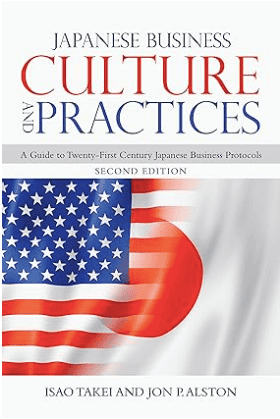
A practical reference on protocol, negotiation, and the everyday minutiae of conducting business the Japanese way, with a useful glossary.
View
A roadmap-style primer covering structures, visas, and market entry — a quick orientation to read alongside MJ’s own founder guide.
View
The standard first textbook for working professionals — structured for people learning around a career rather than inside a classroom.
ViewReading prepares the ground; the peers ahead of you mark the trail. The two pieces below carry the adjacent stories: how Japan’s commercial culture formed, and how newcomers are reshaping its regions. Both pair naturally with this one for anyone building a fuller picture of women in business in Japan. The first is the historical spine, tracing how merchant hierarchy became modern management. The second is the on-the-ground present, told through the newcomers rebuilding Japan’s smaller towns and regional markets.
Before the questions, one caution worth stating directly. Any page on this subject dates quickly, and the honest ones admit it. Funding figures shift, programs open and close, and the leadership statistics move a little each year. Treat the numbers here as the state of play at the time of writing, verify anything that will bear real weight in a decision, and lean on the linked primary sources rather than summaries — this one included. The questions below cover what readers ask most often.
Questions worth asking
Roughly 73 percent of working-age Japanese women are employed, a record level for the country. The caveat is composition. A substantial share of that employment is part-time or non-regular, and women remain underrepresented in management and boards.
Yes. The legal pathway — a Business Manager Visa or Startup Visa, plus company registration at the Legal Affairs Bureau — is identical regardless of gender. Dedicated networks such as Startup Lady Japan and FEW Japan support international women through the informal layers the paperwork does not cover.
Womenomics is the policy idea that raising women’s economic participation drives national growth. Kathy Matsui coined it in research at Goldman Sachs. In 2013 it became a pillar of Japan’s official growth strategy, shaping a decade of workforce policy.
Documented careers include Tomoko Namba, founder of DeNA, and Fujiyo Ishiguro, who led Netyear Group to a Tokyo Stock Exchange listing. Kaori Sasaki founded ewoman and the International Conference for Women in Business, and Kathy Matsui co-founded the $150 million MPower Partners fund.
The four with the deepest track records are Startup Lady Japan, FEW Japan, WEConnect International Japan, and the ACCJ Women in Business committee. All welcome international members, and each serves a different stage of the founder journey.
Tokyo offers the deepest talent pool, the most clients, and the strongest women-focused support infrastructure in Japan, at the highest cost. Fukuoka runs a fast-track startup program with lower overheads, and Osaka trades some reach for strong regional demand.
The honest closing note is that this landscape is moving while the page stands still. Funds launch, programs expand, and the representation statistics inch upward each year. What does not change quickly is the underlying grammar — trust built slowly, specificity rewarded, institutions joined early. A woman who masters that grammar, whether she was born in Osaka or Ohio, is working with the market rather than against it.
 Ikigai · The 90-Day Practice The Return — A 90-Day Ikigai Journal The question every founder in this piece answered first was not commercial. It was what work is worth a life. Ninety days of guided pages for working it out on paper. View This Journal ›
 Whatever brings you to this market — a company to build, a posting to negotiate, or simple curiosity about a society renegotiating its oldest assumptions — the women in these pages repay attention. Their careers argue that Japan changes the way Japan does everything: gradually, thoroughly, and then all at once. The journals, tools, and reading gathered on the MJ collection page serve the reflective end of that same journey. The practical end starts with a plane ticket booked with intent.
From Magnificent Japan


Reading about a market and standing inside it are different kinds of knowledge, and the second is the kind a decision deserves. No volume of well-sourced reading substitutes for a week of walking the districts you would actually work in, eating lunch where the office workers eat, and timing the commute at rush hour. The founders profiled above did their diligence in person, and the pattern holds at every scale. If Japan is a serious option rather than a daydream, the ground visit is the next step.
A scouting trip tells you what a business plan cannot — the neighborhood, the commute, the daily texture of a city you may build a company in. We design the visit around what you actually need to learn. No commitment.
Begin a Custom Itinerary