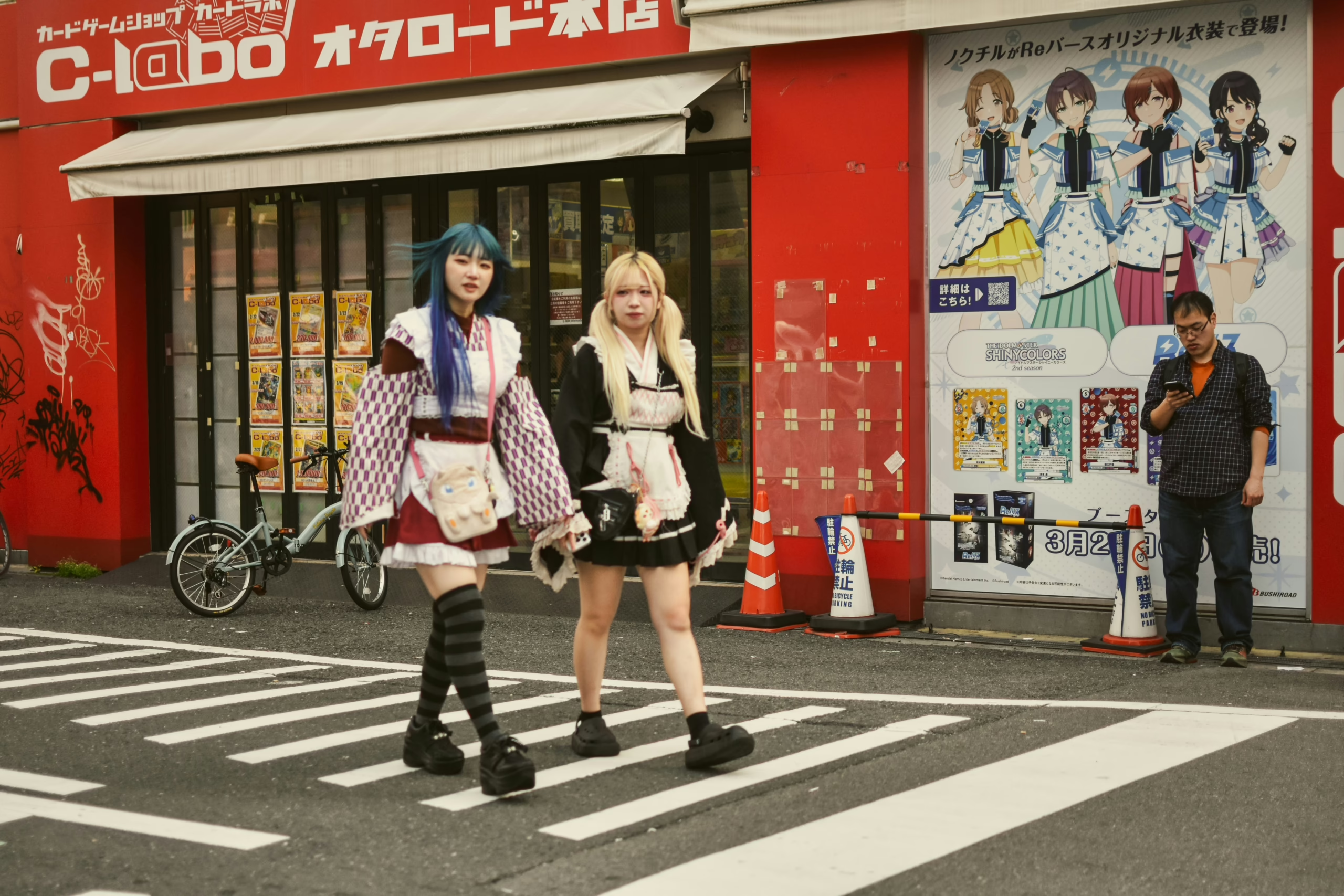
The Quiet Influence of Anime on Designer Fashion
The lineage runs from Akira through Yamamoto and into the wardrobes of an entire generation of designers raised on the same films. The reference lives in the cut, not the print.
There is a long Yohji Yamamoto coat that has done the rounds of fashion week photography for decades, and the people who recognise it are split, almost evenly, into two camps. To the first, it is simply Yohji — that draped, asymmetric, slightly architectural silhouette that the house has been refining since the early eighties. To the second, it is something else first: the shape of a body in motion in a Satoshi Kon film, the unhurried walk of an after-hours office worker through a Tokyo no one has ever quite photographed, the cut of a coat one might see on a character before one knows the character is wearing it. Both readings are correct. Neither needs to displace the other.
That doubling is the entire premise of the way anime has settled into designer fashion. The reference does not need to be made explicit. It does not need to live on the surface of the garment, nor in a printed character, nor in a slogan that nods to the source. It lives in the cut, in the seam, in the weight and fall of fabric. For the wearer who recognises it, the recognition is private. For everyone else, the piece reads as something else entirely — architectural, austere, simply well-made. Both reactions, again, are correct.
The conversation that follows assumes a reader who has watched the films, who has worn one or two pieces in this register already, who is interested less in catalogue and more in lineage. The full Anime Hub covers the broader culture; this is the dressing room of it.
Inside this piece
The lineage, briefly
What is now called luxury anime fashion is, more accurately, a long absorption — a vocabulary that arrived in serious clothing in the early nineteen-nineties and has been quietly accumulating influence ever since. Yohji Yamamoto and Rei Kawakubo at Comme des Garçons brought the first wave: that drape, that asymmetry, that refusal of the ornamental. Issey Miyake offered the pleating that, on a body in motion, reads as cinematic almost despite itself. None of these designers were quoting anime, exactly. The films and the clothing were drawing from the same well — postwar Japanese drawing, midcentury Japanese craft, the architecture of a city that had been rebuilt twice within a single living memory.
What changed, slowly, was that the next generation of designers were the ones who had grown up inside the films. Jun Takahashi at Undercover, Yoon Ahn at Ambush, Chitose Abe at sacai, Jonathan Anderson at Loewe — these are not designers who quote anime as research. They speak the same dialect because the dialect was native to them. The difference between a designer who studies anime and a designer who was raised on it is the difference between a translator and a first-language speaker. Both can produce work; only one produces work that lives.
This is what the wardrobe inherits. Pieces that read as anime to the eye that has watched the films, and as something else — architectural, austere, considered — to everyone else. There is no need to choose between those readings. They coexist within the same garment, and the wearer learns to live inside both.
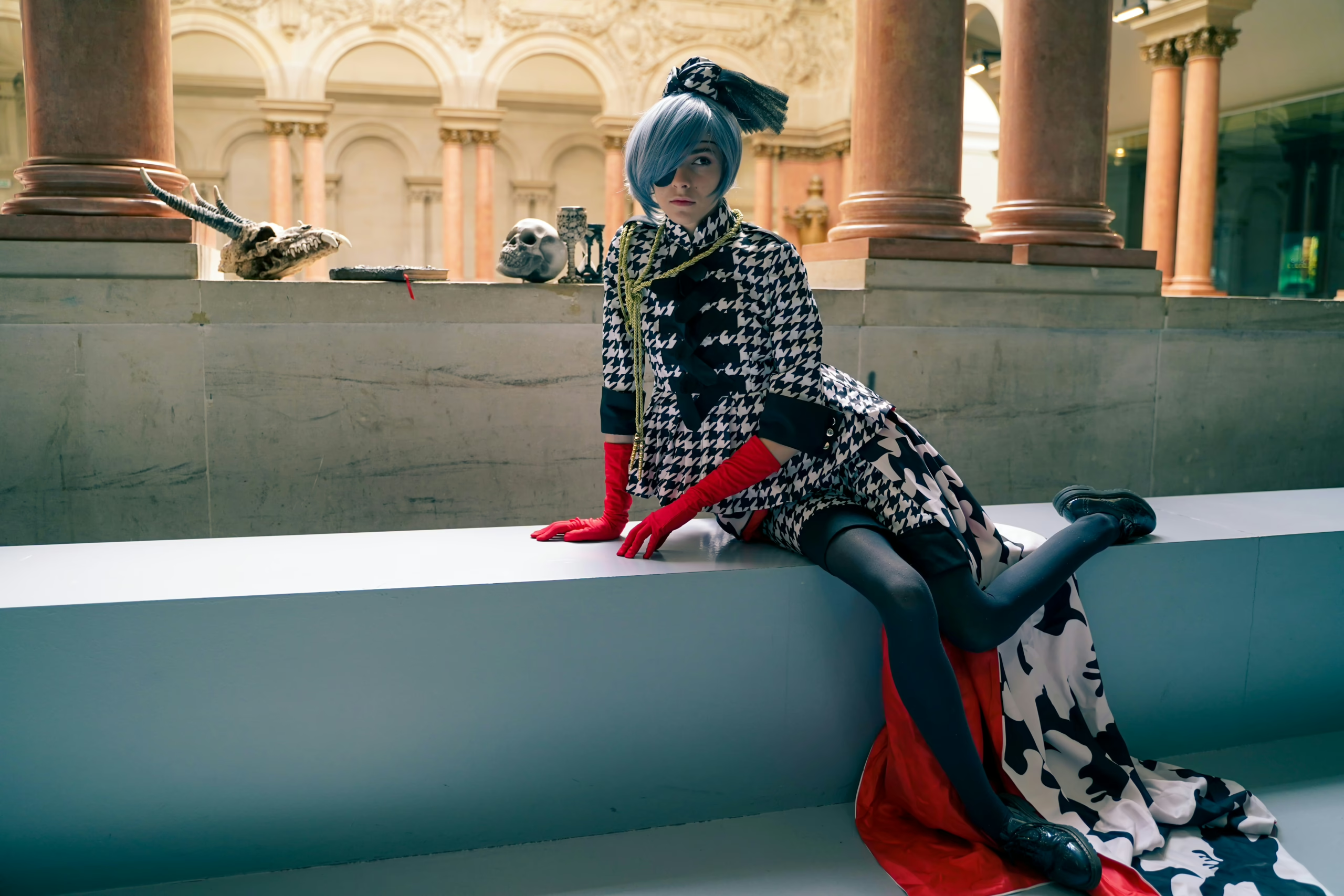
The cyberpunk inheritance
If the Yamamoto coat is one foundational image in this conversation, the other is the red leather jacket worn through the streets of Neo-Tokyo in the opening sequence of Akira. Katsuhiro Otomo’s 1988 film gave designers something they had not had before: the suggestion that streetwear could carry narrative weight, that a single garment could read as both costume and as character. The jacket has been quietly redrawn dozens of times since, by Asics, by smaller Tokyo labels, by collaborations that appear and disappear within a single season. None of the redrawings ever surpass the original, which is part of why the original keeps being redrawn.
What followed was an inheritance of shapes and surfaces that ran through several films. Ghost in the Shell, in 1995, gave designers techwear — the seam logic of utility, the suggestion of transparent panels, the silhouette of a body that had to move through a city it half-belonged to. Evangelion, the same decade, contributed a palette: muted orange against industrial grey, lavender as a quiet provocation, the way a character could wear something close to plastic and have it read as deeply human. Studio Ghibli has been quieter and longer in its influence — the kiln-fired ceramics on a bath-house shelf, the cotton aprons of working women, the leather of an old aviator jacket in Porco Rosso. The architectural source material that Loewe and others now reference is gathered most completely in Studio Ghibli: Architecture in Animation, the VIZ Media hardback that documents the design language behind the bath-house, Howl’s castle, and the Satsuki and Mei country home.
None of this is to argue that any specific film “inspired” any specific piece. The point is the opposite. Films and clothing were drawn from the same cultural well in the same decades, and the people doing the drawing were, in many cases, the same people. Work of this kind shares an internal logic because it shares a generation.
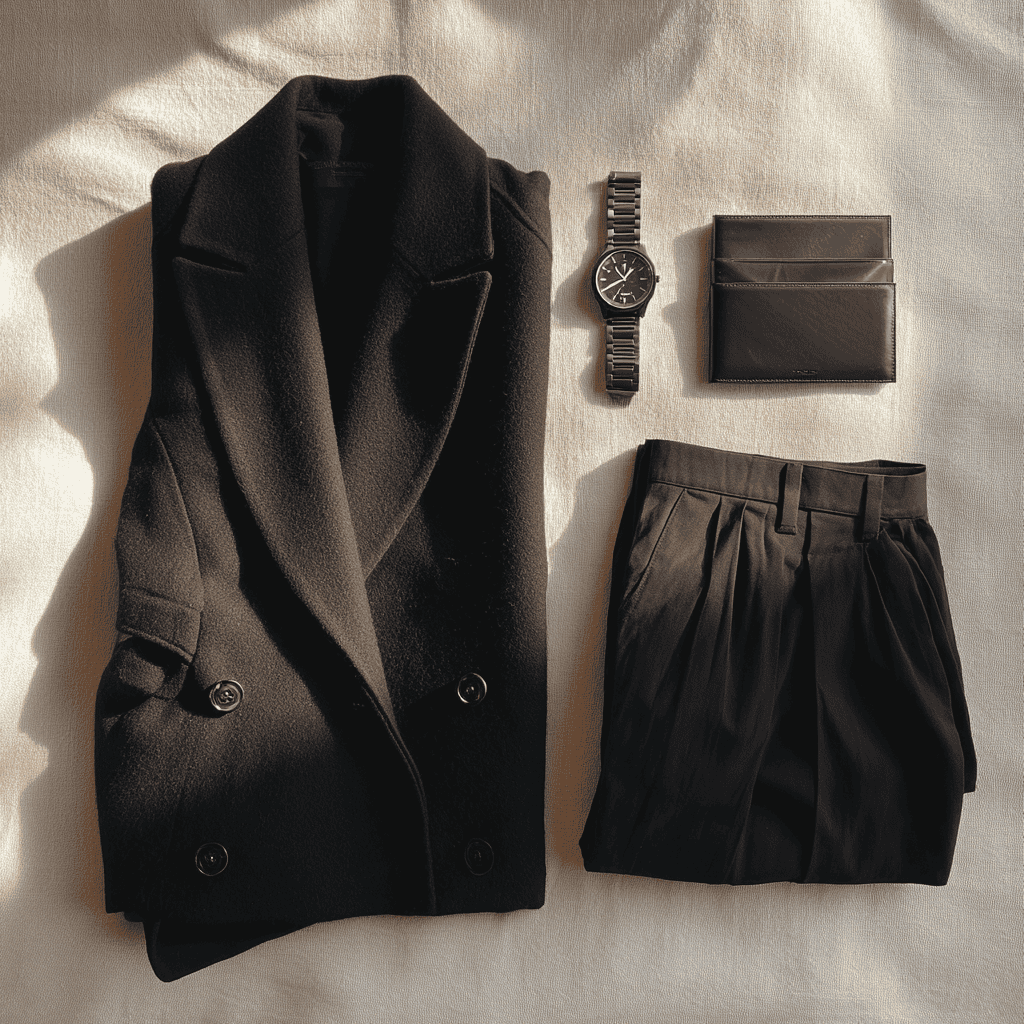
The houses that carry it
The houses worth knowing for an adult wardrobe sit across two generations. Originators set the vocabulary; current voices extend it. The names below are the ones whose collections will reward the closest reading.
Undercover
Jun Takahashi’s house has been weaving anime references into its collections since the late nineteen-nineties, the most explicit of which has been the long-running Evangelion work. The aesthetic is slightly disquieting — patched bombers that look as though they have been worn by someone with a story, hoodies cut a degree too large for the shoulder, prints that border on the surreal without ever quite tipping over. The pieces ask the wearer to commit to a particular kind of restraint. Current-season Undercover bombers remain the entry point for those building from outerwear inward.
Ambush
Yoon Ahn’s Ambush sits at the intersection of Tokyo nightlife and the kind of silver hardware one sees on a character in a Mamoru Hosoda film. The Pow chain, the dollar-zip ring, the cigarette case — the brand’s hardware reads as cyberpunk vocabulary, and the rule for wearing any of it is restraint. One Ambush piece per outfit. The catalogue rewards careful curation rather than acquisition, and the better way in is through a single hardware piece worn against an otherwise spare outfit.
sacai
Of the contemporary Japanese houses, Chitose Abe’s sacai is perhaps the quietest in its anime register. The hybridisation that defines her work — a coat that is also a parka, a knit that opens into a shirt, a pleated skirt that does not quite obey gravity — reads as character design rendered into wearable form. There is something of Mamoru Oshii in the construction, something of Hosoda in the proportion, something of Miyazaki in the quiet pleasure the pieces take in their own internal logic. The current khaki pleated bomber is one of the more legible expressions of that sensibility this season.
Yohji Yamamoto
The originator. Yamamoto’s all-black, asymmetric, deconstructed silhouettes set the template before the conversation existed to call it a template. Modern collections continue the line; the resale market — Grailed, Vestiaire Collective, the Japan-side proxies — is where the deepest pieces accumulate. The Pour Homme line trousers and the long coats hold up across decades, and the wardrobe that includes one becomes, in a quiet way, a wardrobe that includes all of them.
Issey Miyake — Pleats Please and Homme Plissé
The pleating is the conversation. There is a particular way fabric falls around a body in a Studio Ghibli scene — Sophie’s housekeeper dress in Howl’s Moving Castle, the cotton aprons in Spirited Away, the wind-caught skirts of the village women in Princess Mononoke — and the Miyake pleating answers it almost without trying. Practical, packable, ages with the wearer. The Black Basics Trousers are where the conversation usually begins for the menswear side, and where it tends to stay for years.
Comme des Garçons
Rei Kawakubo’s flagship label is the source code that the newer Japanese houses have been iterating on for two generations. Deconstruction, asymmetry, the refusal to flatter — these are the foundations from which Undercover, Ambush, sacai, and the rest have built their own vocabularies. The Play sub-line with its almond-eyed heart logo is the accessible point of entry; the mainline is for the wearer who has already absorbed what the conversation is about, and Dover Street Market remains the natural global home of the brand for those who want the depth — alongside the wider Tokyo shopping districts that house the parallel designer ecosystem.
The women’s editorial register
The women’s side of this conversation has run quieter than the menswear side, but the past three seasons have changed that. NET-A-PORTER and Mytheresa now stock sacai’s women’s line in proper depth. Loewe’s Ghibli capsules have been engineered for both wardrobes from the start. Cecilie Bahnsen’s hyper-feminine silhouettes carry a Studio Ghibli quality without ever claiming the licence. Junya Watanabe’s recent collaborations sit firmly in the same conversation, and Mary Katrantzou’s surrealist prints belong to it as well, even at a distance. The styling logic is identical to the menswear: silhouette over graphic, single reference per outfit, dark base palette with reference-coloured accents, and the discipline to let the piece speak for itself.
The Anime Pilgrimage Map
A twelve-page editorial folio mapping the real Japan locations behind Your Name, Spirited Away, Demon Slayer, Suzume, and Slam Dunk. Regional groupings, station-by-station notes, and the etiquette for visiting filming sites with the respect they deserve. Sent on subscription; sits well alongside this kind of reading.
The collaborations worth tracking
The licensed-collaboration market is where the conversation becomes visible to a wider audience. The pieces are limited, properly designed, and unmistakably reference their source, which is part of why they disappear so quickly. A few are worth the kind of attention that a serious wardrobe pays.
Loewe x Studio Ghibli
Jonathan Anderson’s tenure at Loewe has produced the most considered Ghibli work in contemporary luxury — capsules drawn from Spirited Away, My Neighbour Totoro, and Howl’s Moving Castle. Each piece is made to Loewe’s actual leather standard, which is to say the bags will outlast the trend that produced them. Small leather charms are the entry point for the curious — the Susuwatari stud charm in particular, made in layers of classic calfskin with a knotted leather body and a resin star. Silk scarves work as a quieter middle ground; the full Hammock and Puzzle pieces are for those who have already decided.
Asics x Akira
The recurring Asics drops referencing Akira lean into the red-leather palette of the film with the discipline that the source deserves. The Gel-Lyte and Gel-Kayano silhouettes have both received the treatment over successive seasons. They sell out within hours, and the resale market climbs steeply afterwards; the Asics newsletter remains the only reliable way to catch a release at retail.
Bandai x NBA Gundam
The most surprising recent collaboration in the category, and one that has aged better than expected. Basketball jerseys reworked with mecha-suit panelling, functional sportswear that reads anime-coded without any printed reference. For the wearer who wants the lineage to live in a piece that also belongs at the gym, this is the answer no one quite saw coming.
Uniqlo UT
Over the past decade, the annual UT capsule programme has put genuine designer art onto accessible cotton — Studio Ghibli, Demon Slayer, One Piece, and Evangelion in past seasons. Licensing is legitimate, the printing is sound, and restraint is the trick: one or two strategic pieces, never the full capsule.
G-Shock collaborations
Casio’s G-Shock division regularly partners with anime properties — Dragon Ball, One Piece, Evangelion, Akira — and the pieces are functional first and reference second, which is exactly the brief. The most recent of these, the GA-110EVA30-7A released in October 2025 to mark the thirtieth anniversary of Neon Genesis Evangelion, was designed by Ikuto Yamashita, the original mechanical designer for the series. A daily-wear watch with a story the wearer can tell only when asked is one of the quieter ways the lineage enters a wardrobe.
A wardrobe, slowly built
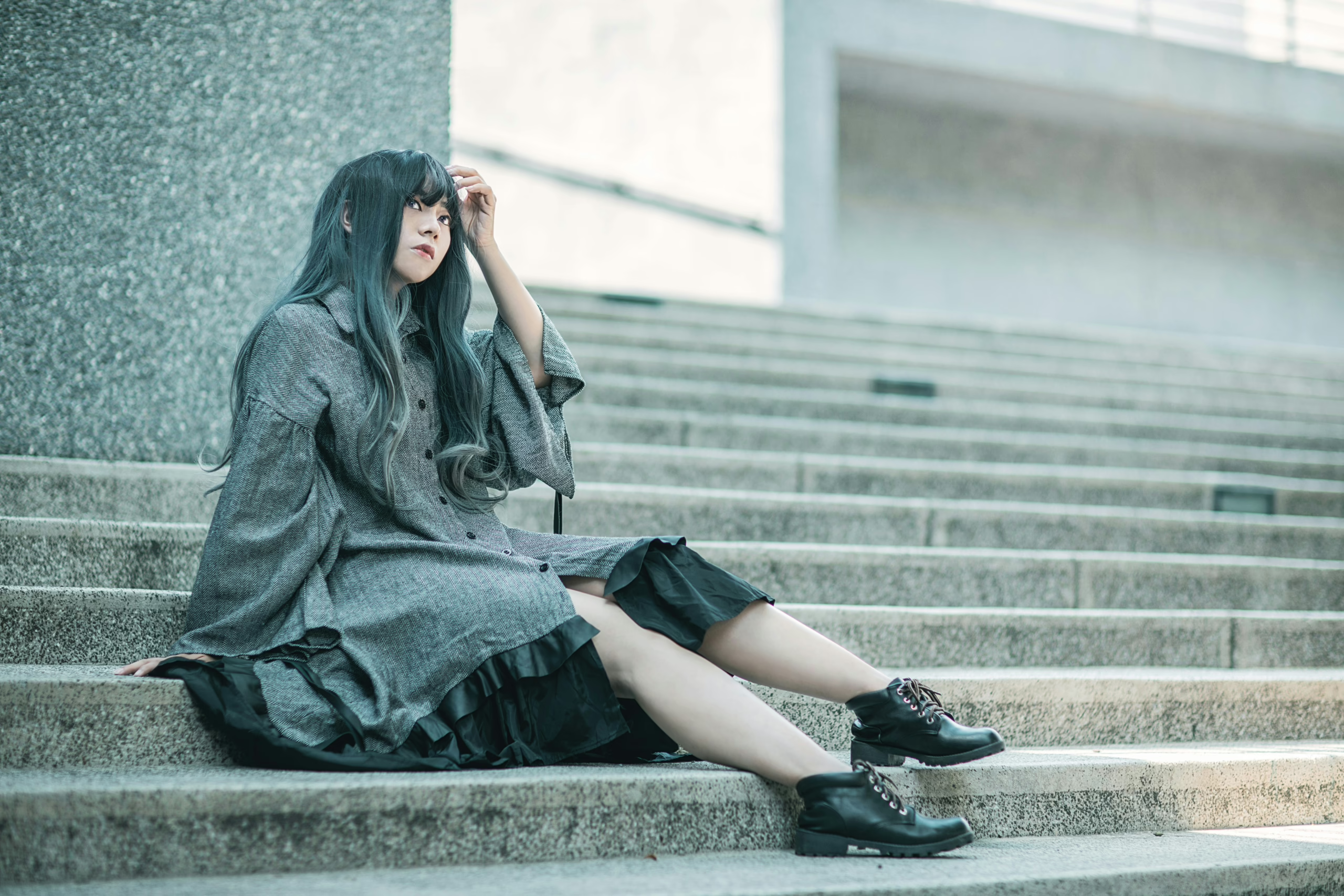
The wearers who get this category right treat it less as collection and more as accumulation — a slow accruing of pieces over years rather than a season’s purchase made all at once. Five quiet rules, applied in order, govern the practice.
One reference per outfit
If the coat carries the lineage, the shoes do not. If the watch is a collaboration piece, the rest of the look is plain. Density of reference reads as costume; restraint reads as taste. The same logic governs the broader register of anime-coded accessories worn well — one reference at a time, always, with the rest of the outfit composed in such a way that the reference can be heard.
Black, charcoal, ink — the base palette
The luxury anime register is built almost entirely in dark neutrals, and colour enters as accent rather than statement. Red of Akira. Orange and lavender of Evangelion. The soft cream of a Ghibli interior. Building the base wardrobe in black and charcoal first creates the conditions under which the references can read at all; the absence of competing colour is what allows the present colour to mean something.
Silhouette before graphic, always
An asymmetric oversized coat reads anime through its shape. A black tee with a printed character reads as merchandise, even when the print is good. The rule for the adult wearer is straightforward: silhouette earns its keep across years; graphic earns its keep across one season. The pieces that hold up over a decade are almost always the ones that did the work without saying anything explicit.
Outerwear before tee, always
A designer tee is a pleasure. A properly constructed jacket is a foundation. Outerwear earns its cost-per-wear faster, holds resale value better, and signals taste at a longer distance. A wardrobe in this category that begins with the coat will, in the long run, accumulate more usefully than one that begins with the tees.
Resale is part of the practice
Grailed, Vestiaire Collective, and Yahoo Auctions Japan via the proxy services — these are where archive Yohji, Comme des Garçons, and Undercover pieces accumulate, and where the careful wearer learns the seasonal cycle of how pieces drop in price six to nine months after release. The discipline of buying resale rather than fast fashion is one of the quietest ways to demonstrate that one has understood what the category is about.
On wearing it
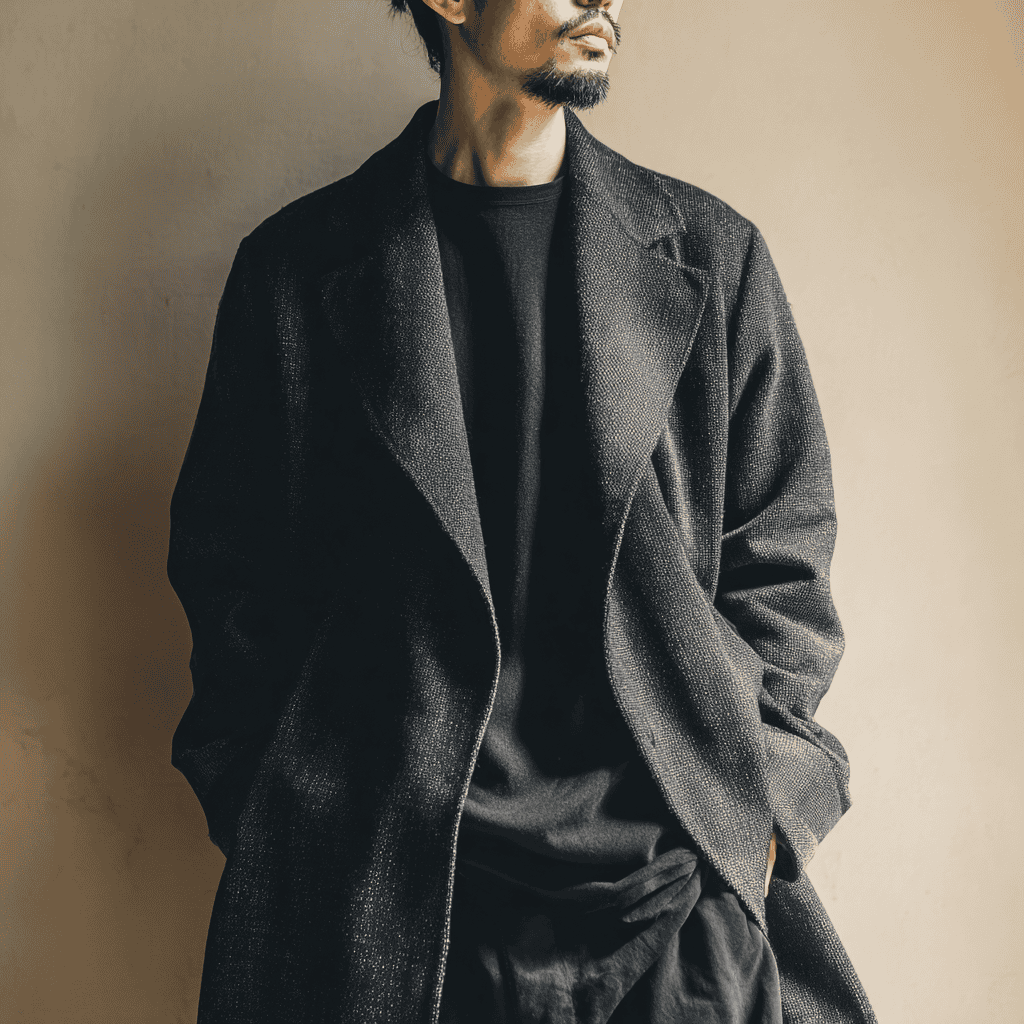
The most common failure of adult anime fashion is overcommitment — the graphic-tee plus character-jacket plus reference-shoe combination that reads as costume even when every piece is technically luxury. Three frames, well-worn by people who have spent years inside this register, work without exception.
The professional frame
One Yamamoto or sacai outerwear piece worn over plain charcoal trousers, plain black knit, plain black leather Derby shoes. Outerwear does the talking; the rest of the look stays out of its way. This is the frame for client meetings, gallery openings, weddings whose dress code asks for elevated casual rather than formal. To anyone who recognises the silhouette, the piece announces itself. To anyone who does not, it reads as serious tailoring.
The weekend frame
An Undercover or Ambush mid-layer over a plain black or off-white tee, raw denim, Asics or New Balance trainers in a quiet colourway. The mid-layer carries the reference; the rest of the outfit stays neutral. Photogenic without ever quite trying to be. Saturday coffee, Sunday bookshop, the kind of unhurried walk through one’s own neighbourhood that characterises the better weekends.
The travel frame
For the broader trip context, the wider luxury travel in Japan conversation covers the cultural and practical layers that the wardrobe sits inside. Issey Miyake Homme Plissé trousers, plain knit, longline coat, a small leather card holder. The Plissé reads architectural rather than reference-heavy at first glance — only the informed eye registers the lineage at all. The pieces travel well, pack flat, photograph cleanly. Worth assembling alongside the broader considered editorial register for trip preparation, the Tokyo collector retail circuit for the days when one wants to walk the source, and a quiet pre-trip read of Japanese etiquette so the wardrobe carries itself with the right register on the ground.
Questions, briefly
What is luxury anime fashion?
It is designer apparel that takes its visual language from anime — silhouettes, palette, attitude — without printing characters on the front. Houses such as Undercover, Ambush, sacai, Yohji Yamamoto, and Loewe draw from Akira, Ghost in the Shell, Evangelion, and Studio Ghibli. The pieces read as fashion first and reference second, which is why they survive a meeting and a Tuesday alike.
How do you wear anime fashion as an adult without looking like you are in costume?
By leading with silhouette and fabric rather than graphic. A black asymmetric coat with techwear seams reads anime to those who know and architectural to everyone else. The character tee belongs to a different conversation. One reference per outfit is enough; the wearer who has internalised the lineage no longer needs to declare it.
Which designers actually do anime collaborations?
Jun Takahashi at Undercover has worked with Evangelion. Bandai partnered with the NBA on Gundam capsules. Asics has produced multiple Akira drops. Loewe under Jonathan Anderson has issued capsules with Studio Ghibli. Uniqlo runs an annual UT programme that has carried Ghibli, Demon Slayer, One Piece, and Evangelion. The legitimate work is licensed, designer-led, and treats the source with respect.
Where does one source it well?
The serious work concentrates in a small number of places. SSENSE for the designer streetwear conversation that includes Undercover, Ambush, and sacai. The brand’s own site for Loewe capsules. Casio direct for G-Shock collaborations. In Tokyo, Dover Street Market Ginza is the destination for Comme des Garçons and the wider Japanese designer landscape, and the RagTag stores in Shibuya carry the resale depth that no Western platform matches — alongside the wider Japanese vintage shopping circuit that runs from Shimokitazawa to the Yokohama warehouse stores.
Is the influence a passing trend?
No. Lineage entered serious fashion through Comme des Garçons and Yohji Yamamoto in the early 1990s and has only deepened. A current generation of designers grew up watching Cowboy Bebop and now run their own houses. The vocabulary is permanent now, not a seasonal capsule.
How does one avoid bootlegs and fast-fashion drops?
By buying from authorised retailers and accepting that real designer collaborations do not appear at half price. SSENSE, Farfetch, the brand’s own site, and the major department stores are the safe routes. Returns processes and the authentication services that the platforms employ are part of what one is paying for.
What about the wider Pinterest aesthetic moment?
That aesthetic search has climbed sharply year on year, but most of what circulates is fast-fashion or AI-generated. Luxury runs in the opposite direction — smaller, slower, more durable, deliberately understated. Discipline matters: save designer collaboration imagery and editorial work, not lookalikes.
What this lineage finally tells us
Why does this register work for adults? Why does a Yamamoto coat or an Undercover bomber or a Loewe Ghibli leather charm earn the place it earns in a wardrobe? Because the pieces stop asking the wearer to declare anything. A teenager wearing the Akira jacket is participating in fan tribute, which is a different and entirely valid relationship to the source. That same jacket on a thirty-five-year-old in a quiet city restaurant becomes something else: the mark of someone who has carried this reference for two decades and no longer requires the piece to do the talking. That confidence is the actual luxury, and it cannot be purchased — only accumulated.
The category will continue to evolve at its own pace. Each new generation of filmmakers brings a slightly different visual vocabulary to the conversation, and a new generation of designers begins, in turn, to absorb it. What Akira was for the early nineties, what Cowboy Bebop was for the early two-thousands, Suzume and Belle and Look Back are now beginning to be for the present decade. A house that builds its next collection around a Mamoru Hosoda film, a leather goods atelier that picks up the woodblock-print register of Demon Slayer, a Tokyo silversmith who quietly references the architectural detail of Patlabor — these are the forward edges. Patterns repeat. Vocabulary expands. The adult wardrobe inherits more of it each season, without ever needing to call attention to the source.
What the careful wearer accumulates, in the end, is a wardrobe that ages with them. A Comme des Garçons coat bought in 2008 still works in 2026. Yohji trousers from 2015 still photograph cleanly. A Loewe Ghibli charm bought at one capsule launch transfers across three different bags over the course of a decade. The same logic governs the shelf alongside the wardrobe — a copy of the Hisaishi Spirited Away score on vinyl bought once and played for years, the architecture book that comes off the shelf every few months. Pieces accrete; they do not date. That is the practical case for the entire category, beyond aesthetic, beyond reference, beyond the seasonal noise of which film is having its moment. The clothes earn their keep across years, which remains the only test that genuinely matters in a wardrobe an adult actually wears.
The trip that earns the wardrobe
From Dover Street Market Ginza to the resale circuits of Shibuya and Shinjuku, the considered Tokyo retail itinerary belongs to its own kind of journey. Bespoke planning for travellers who want depth.