Anime and Manga Shopping in Japan: A Collector’s Field Guide
A serious shopping itinerary in Japan runs through Mandarake basement floors, Book Off vintage manga shelves, AmiAmi’s Akihabara floors, and the small Kyoto specialist shops that the tour buses never reach.
A serious collector builds a shopping circuit in Japan that looks nothing like the one the standard guidebooks suggest. Conventional itineraries concentrate on the headline-grabbing Akihabara storefronts, the convenient department-store gift sections, the new-release merchandise that any reader could acquire from any major Western retailer with shipping. The serious version goes elsewhere — the Mandarake basement floors in Nakano Broadway, the Book Off vintage manga shelves in residential neighbourhoods, the small Kyoto and Osaka specialist shops, the AmiAmi Akihabara floors that handle Japan-direct international shipping. None of these appear in the headline coverage. All of them reward the collector who has done the research.
This piece is the conversation about the deep version of that circuit. Where to actually go in Tokyo, what to look for in Osaka and Kyoto, how to handle the shipping logistics for the larger purchases, and how to fit the shopping into a wider Japan trip without the entire itinerary collapsing into a parade of retail stops. The full Anime Hub covers the broader culture; this is the practical field guide that grows from it.
Inside this piece
Mandarake and the archive register
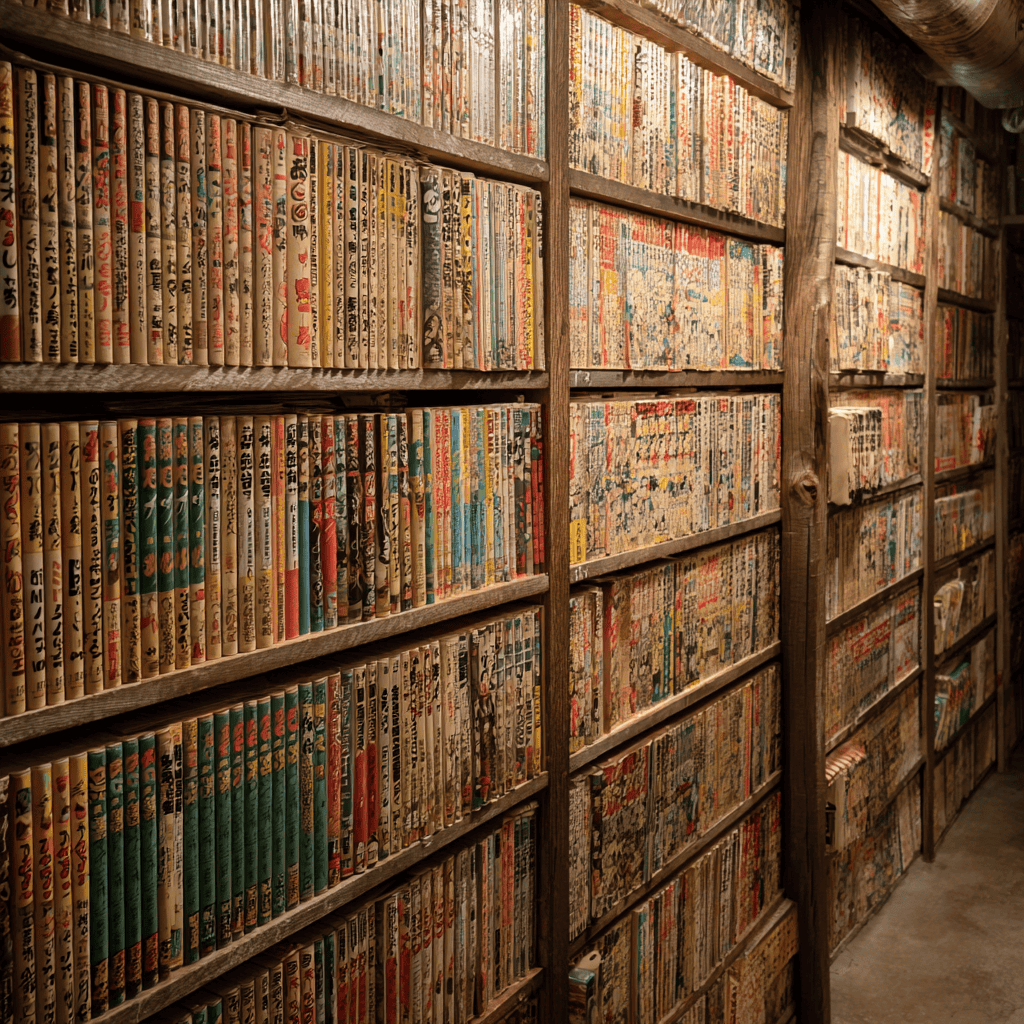
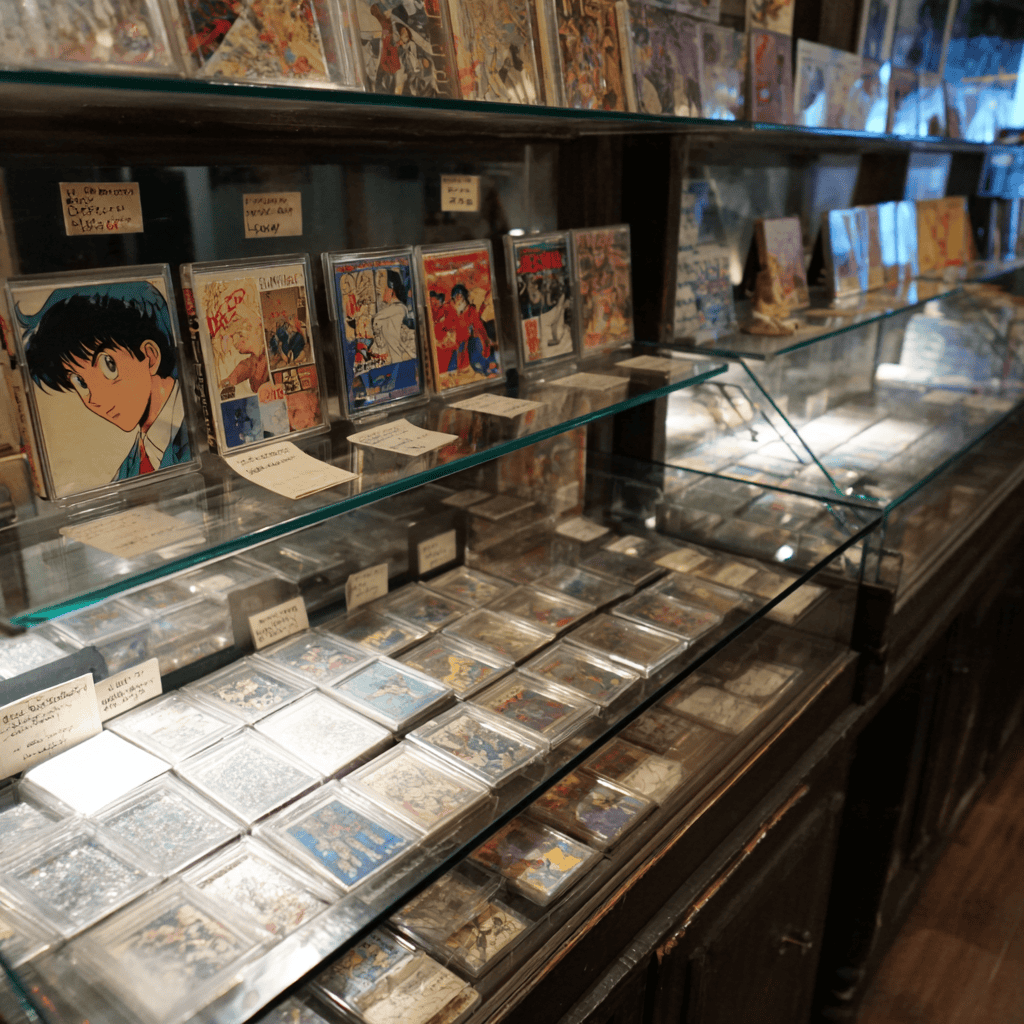
Mandarake is the foundation of any serious anime and manga shopping circuit in Japan. The chain operates more than thirty individual specialist shops across Nakano Broadway alone, with additional flagship locations in Akihabara, Shibuya, Umeda (Osaka), Kokura, Sapporo, and Nagoya. Each shop within the chain specialises in a particular category — vintage manga first editions, original animation cels, retro toys, gunpla, doujinshi, vintage anime cassettes and laserdiscs, the rarer end of the cosplay-craft material. The cataloguing standard is properly archival; the pricing is based on actual rarity rather than general appeal; the staff are knowledgeable to a degree that the chain Western retailers cannot match.
What makes Mandarake essential for adult collectors is the depth of inventory across the historical record. Original cels from properties going back to the 1960s. First-edition manga volumes that have been out of print for decades. Vintage merchandise from properties that no longer exist as active franchises. The shop catalogue is the working archive of postwar Japanese popular culture, with the difference that everything in it is also for sale. Mandarake’s online store handles international orders for collectors who cannot visit in person, but the depth of the in-store visit is what justifies the trip.
For a first visit, the Nakano Broadway flagship is the right starting point. A full circuit through the basement and upper floors takes three to four hours at a serious collector’s pace. The smaller Mandarake shops in Akihabara, Shibuya, and the regional cities each carry slightly different inventory, and the dedicated collector tends to visit at least two or three Mandarake locations in a single trip to compare what is available across the network.
Book Off and the vintage manga route
Book Off is the single most undervalued resource on the serious Japan anime shopping circuit. The chain operates more than 800 stores across Japan, primarily in residential neighbourhoods rather than tourist districts, and stocks an enormous inventory of secondhand manga at accessibly low prices. The stores are clean, organised, and run on a turnover model that keeps recent-release manga moving alongside the older stock. For a collector building a complete run of a manga series, Book Off is the answer that the tourist-oriented shops cannot match.
What separates Book Off from the conventional secondhand-bookstore model is the cataloguing discipline. Manga are organised by series, by author, by publication date, and by condition grade. The pricing is consistent across stores within the chain; condition grading is honest; the inventory turns over weekly. A focused two-hour visit to a large Book Off branch in a residential Tokyo neighbourhood — the Ikebukuro or Shinjuku-area branches in particular — produces a stack of vintage manga that would cost ten times more from any Western specialist retailer.
For collectors who want to pair the shopping with an actual neighbourhood walk, the Book Off branches in Kichijoji, Shimokitazawa, and Yokohama are particularly rewarding. Each is set in a residential district with strong coffee culture, the kind of small bookstores and stationery shops that complement the manga visit, and the Tokyo daily-life atmosphere that the central tourist districts cannot quite reproduce. The wider vintage shopping conversation in Japan covers the parallel infrastructure for clothing and homeware in the same neighbourhoods.
Akihabara, deeper
Akihabara has, over the past decade, drifted heavily toward maid cafés and themed attractions, but the serious shopping infrastructure beneath that drift remains largely intact. Adult collectors visiting Akihabara concentrate on a handful of specific locations. The Mandarake Complex sits a few minutes east of the main station and handles the action figure, gunpla, and modern collectible market with the same archival discipline as the Nakano shops. AmiAmi’s Akihabara flagship handles the same categories with a strong online presence for international collectors who want Japan-direct shipping.
The other essential Akihabara stops include K-Books for vintage doujinshi and back-catalogue manga, Animate’s flagship store for new-release merchandise across a comprehensive range, and the smaller specialist hobby shops in the western side streets that hold the rarer model kits and specialist supplies. For the serious gunpla collector, the Bandai Namco Cross Store and the dedicated Gundam Base location in Odaiba round out the Tokyo gunpla circuit beyond the Akihabara shops themselves.
What Akihabara offers that Nakano cannot is breadth — recent releases, current production runs, the full range of contemporary commercial inventory across the categories. The wider Tokyo shopping districts piece covers the rest of the retail map for collectors extending beyond the anime circuit. What Nakano offers that Akihabara cannot is depth — the archival material, the vintage cels, the out-of-print manga from decades past. A serious collector’s Tokyo visit includes both. The order matters less than the time committed to each.
The Anime Pilgrimage Map
A twelve-page editorial folio mapping the real Japan locations behind Your Name, Spirited Away, Demon Slayer, Suzume, and Slam Dunk. Sent on subscription; works as the practical companion to the serious shopping itinerary.
Osaka and Kyoto
Tokyo gets the volume of attention in any anime shopping conversation, but the serious collector tends to add at least one Osaka or Kyoto stop to the wider Japan itinerary. Osaka’s Den Den Town in the Nipponbashi district — set inside the wider context of unique experiences in Osaka — holds the Western-Japan equivalent of Akihabara — large Mandarake flagship, dedicated gunpla and figure shops, the same density of specialist retail in a slightly less tourist-saturated atmosphere. A focused day in Den Den Town tends to produce different finds than a focused day in Akihabara, partly because the stock turns over differently across the regional Mandarake network.
Kyoto’s anime and manga shopping concentrates in the Sanjo and Teramachi covered shopping arcades, with smaller specialist shops scattered through the wider Kawaramachi district. The pricing in Kyoto tends to run slightly more accessible than Tokyo for vintage material, partly because the tourist density in the central Kyoto retail areas is lower than in Tokyo’s collector districts. The Mandarake Kyoto location in the Karasuma district is the foundational stop for serious collectors visiting the city.
For the serious collector building a wider Japan itinerary, the inclusion of an Osaka Den Den Town day or a Kyoto specialist shopping morning produces a different trip than a Tokyo-only visit. Different inventory turns up. Different shops hold the rarer pieces in particular series. The wider geographic spread tends to repay the additional time investment for the collector who is in the country for at least seven to ten days.
Japan-direct online shopping

For collectors who cannot visit Japan in person, or who want to extend the shopping circuit beyond a single trip, several Japan-direct online retailers handle international orders with serious operational discipline. AmiAmi handles the modern figure and gunpla market with a particularly well-engineered international shipping interface — international tracking numbers, EMS shipping options, the kind of consolidated-order handling that makes multiple-purchase consolidation actually practical. Solaris Japan handles a similar category with strong English-language customer support for international buyers.
For the vintage and archival end of the market, Mandarake’s online store accepts international orders and ships globally with EMS tracking. The interface is less polished than AmiAmi’s but the inventory depth is unmatched in the category — original cels, first-edition manga, vintage merchandise that no other online retailer can supply. For collectors who have done their initial in-store research at a Mandarake location and know what they are looking for in the catalogue, the online store extends that research into purchases that can be made from anywhere in the world.
The smaller specialist online retailers — Plaza Japan, NIN-NIN-Game, Kinokuniya’s international shipping for manga and artbooks — handle the longer tail of the market. Each is worth knowing about for specific categories. None replaces the depth of an in-person Mandarake visit, but together they extend the serious collecting infrastructure into the periods between trips to Japan.
Shipping and customs
For purchases that need to be shipped home rather than carried back, the major Japanese specialist retailers offer EMS tracked international shipping that arrives in seven to ten business days for most international destinations. Mandarake handles international shipping in-house with reliable insurance and packaging for fragile items. AmiAmi offers consolidated multi-order shipping that meaningfully reduces the per-item cost for collectors making several purchases on the same trip. The proxy services — Tenso, Buyee, ZenMarket — handle the wider Japanese retailer landscape for items that do not ship internationally direct.
Customs handling depends on the destination country. International visitors should research the import duty thresholds for their home country before making large purchases; the US, UK, EU, Canada, and Australia all have different rules for personal imports of collectible items. Hand-carried purchases through customs require the same documentation as shipped items above the duty-free threshold, and the major Japanese retailers can provide proper invoices for customs declaration purposes.
Duty-free at the in-store level applies to international visitors with a valid passport, on same-day same-store purchases over 5,000 yen. Major chains — Mandarake, Animate, AmiAmi for in-store visits — are well set up for this. Smaller independent shops vary in whether they handle duty-free at all. For larger purchases, asking about duty-free at checkout can save the 10% consumption tax on the purchase total.
Questions, briefly
Where is the best place to shop for manga and anime in Japan?
Nakano Broadway, fifteen minutes west of Shinjuku, holds the deepest Mandarake operation and is the foundational answer for serious collectors. Akihabara remains essential for action figures, gunpla, and recent-release merchandise. Book Off stores across the country hold extensive vintage manga at accessible prices. AmiAmi handles Japan-direct shipping for international buyers who cannot visit in person.
Is it worth shipping purchases home?
For larger or fragile items — premium statues, original cels, complete manga sets — yes. The major Japanese specialist retailers offer EMS shipping that arrives in seven to ten business days for most international destinations. Mandarake handles international shipping in-house. AmiAmi offers a particularly well-engineered international shipping interface. The cost is rarely the deciding factor; the deciding factor is whether the piece is fragile or oversized enough that hand-carrying it home risks damage.
How do I avoid bootleg merchandise?
Buy from established retailers — Mandarake, AmiAmi, Animate, Book Off, the major chains in Akihabara and Nakano. Verify licensing labels on packaging (Bandai Spirits hologram, Kotobukiya barcodes, Good Smile authentication cards). Anything dramatically below standard pricing is almost certainly a counterfeit. The street vendors operating outside the official retail channels are the highest-risk category.
What about manga in English versus Japanese?
Manga in Japan is, almost by definition, in Japanese. The exceptions are the small English-language sections at Kinokuniya’s larger flagship stores, which carry licensed translations of major series. For collectors who want the authentic Japanese reading experience, the original Japanese editions are the actual goal of the trip; the English translations are widely available online from outside Japan.
Are there shops worth visiting outside Tokyo?
Den Den Town in Osaka holds the Western-Japan equivalent of Akihabara, with several large Mandarake locations and a strong gunpla and figure scene. Kyoto’s smaller specialist shops in the Sanjo and Teramachi districts hold rarer vintage material than Tokyo at slightly more accessible prices. The wider point is that anime and manga shopping in Japan is not concentrated in Tokyo alone, and a wider Japan trip can include collector-friendly stops in any major city.
What about the duty-free implications?
International visitors can claim duty-free purchases over 5,000 yen on the same day at the same store, with the passport presented at checkout. The major chains — Mandarake, Animate, AmiAmi (for in-store) — are well set up for this; the smaller independent shops vary. Duty-free reduces the consumption tax (10%) but does not affect any home-country import duties on arrival.
Is shopping the main reason to visit, or part of a wider trip?
For most adult collectors, shopping works as one of several elements within a wider Japan trip rather than as the entire purpose. Pairing two days of focused shopping in Tokyo with a Ghibli Park day in Aichi, a Kyoto cultural segment, and a forested ryokan stay produces the most balanced version of the journey.
What this circuit finally rewards
The serious anime and manga shopping circuit in Japan rewards the collector who treats the trip as research as much as as acquisition. A morning at Mandarake basement floors, taken at a pace that lets the eyes adjust to the density of the inventory, produces a different relationship to the catalogue than a hurried sweep with a shopping list. A Book Off afternoon in a residential Tokyo neighbourhood produces a different relationship to the manga itself than a single specialist visit. The trip that includes both — that treats the shopping as part of a wider engagement with the culture rather than as a separate transactional category — is the trip that the serious collector returns from with both purchases and a deeper sense of where they came from.
What the collector takes home from this version of the trip is not primarily a stack of merchandise. It is a working knowledge of the Japanese specialist retail infrastructure, a relationship to particular shops and dealers that can be sustained across years of subsequent online purchasing, and a sense of which Japan-direct retailers are worth using for which categories. For collectors who shop both for themselves and for others, the curated gifts for the Japan lover piece runs in the parallel register — the design-led objects that travel home well and age into other people’s homes. The acquisitions are the visible part. The infrastructure is the part that pays back across decades of subsequent collecting. For the wider register, the Tokyo anime tours piece covers the practical Tokyo-side itinerary, and the premium anime statues piece covers the cabinet-grade end of the collector market.
The trip that earns the collection
From the Mandarake basement floors to the Den Den Town flagship — bespoke Japan trip planning for serious adult collectors who want depth, not novelty.