The Shelf, Curated: A Field Guide to Premium Anime Statues
The makers worth knowing — Kotobukiya, Bandai Tamashii Nations, Good Smile, Prime 1 — have been building shelf-grade work for two generations. The piece either earns its place in the room, or it does not.
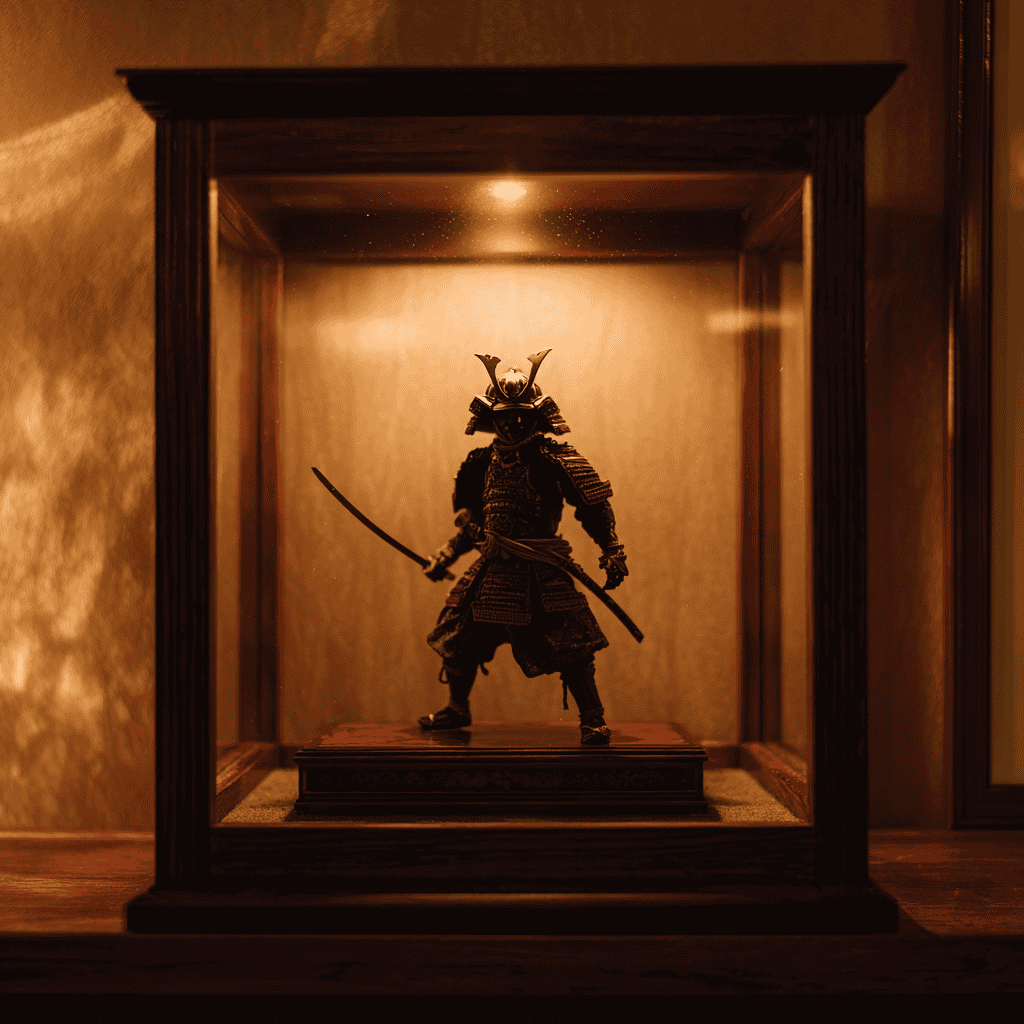
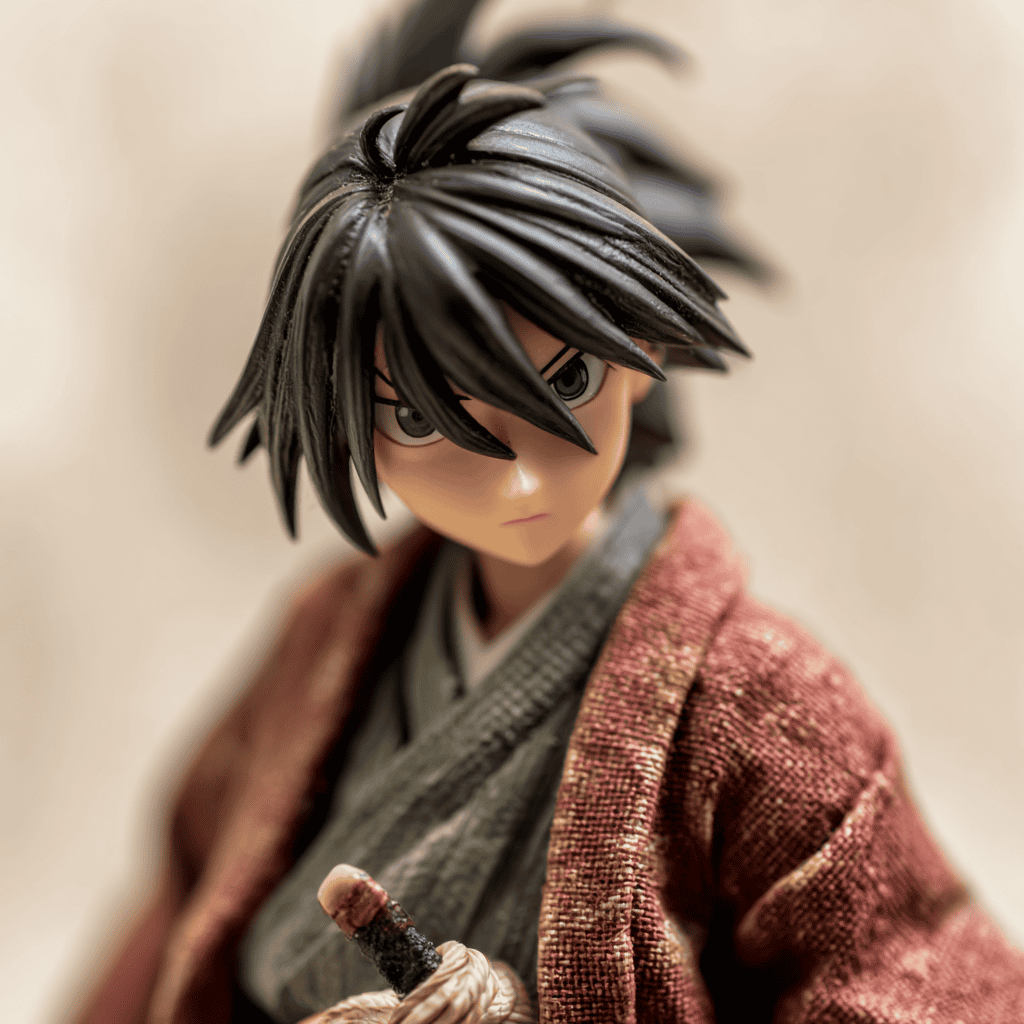
There is a particular quality of attention that a properly sculpted anime statue invites. It is the kind one gives to a piece of pottery or a small bronze. Not to a toy. The clothing folds read as fabric. The face captures a single, specific moment from the source material. Not a generic expression. Light moves across the paintwork with care. Care taken at every stage between the original frame and the cabinet shelf. The piece sits in the room. And the room is slightly different for its presence.
That is the conversation this piece exists inside. Not the conversation about what to collect, or how many to own. Not which series is having its moment. Rather, the conversation about what makes a statue worth the fifteen years of cabinet space it will occupy. Or the eighteen months of regret if one does not buy well. The full Anime Hub covers the wider culture. This is the cabinet inside it.
Inside this piece
What ‘premium’ actually means
The word gets used loosely. However, in the context of anime statues it should be reserved for pieces meeting three specific conditions. First, licensed by the studio that owns the property. Second, sculpted by a named artist working from production reference. Third, cast and finished to a standard that holds up under close room lighting. Not just blister-pack photography. Anything missing one of these is not premium. It is a souvenir at a higher price point.
Licensing matters because unlicensed sculpts exist in a grey zone. The original artist receives no acknowledgement. Furthermore, the figure exists outside the studio’s quality control. However technically accomplished the sculpt may be, those gaps remain.
Sculptor identity matters too. Specifically, the difference between a 1/8 scale figure that captures the character and one that approximates the character comes down to one thing. Almost always, it is the experience of the person holding the silicone tool. Notably, the named artist makes the difference here.
The casting and finishing standard matters for material reasons. PVC and polystone have very different ageing properties. Consequently, a piece that looks excellent on day one can yellow under window light by year three. That is not, by any honest measure, premium.
What this means for the buyer collapses to one question. Who made it, and to what standard. The brand carries that information. Therefore, the next section spends as much time on makers as on individual pieces.
The makers worth knowing
A handful of houses do the bulk of the serious work. Each has its own register. Their ways of approaching scale and finish vary. Furthermore, each holds its own relationship to which series it licenses. Importantly, knowing the difference between them is the foundation of buying well.
Kotobukiya
Kotobukiya has been producing anime sculpture since 1947. That is to say, it predates the entire modern anime industry. Its flagship ARTFX J line is the standard 1/8 scale entry to premium statues. The line is properly licensed, sculpted by named Japanese artists, and engineered for shelf display. Not for play.
Current Demon Slayer work is among the strongest of the past three years. Specifically, the Giyu Tomioka ARTFX J statue, sculpted by Yoshinori Itou, captures the Water Hashira mid-strike. The haori reads in motion. Furthermore, the rippling water of the base reads almost cinematic in scale.
Bandai Tamashii Nations
If Kotobukiya represents the artisan tradition, Bandai Tamashii Nations represents the engineering one. The Tamashii umbrella covers two flagship lines. FiguartsZERO covers fixed-pose statues with translucent effect parts. S.H.Figuarts covers fully articulated action figures. Across both lines, the level of mechanical and material discipline is unmatched.
The One Piece Yamato Raimei Hakke FiguartsZERO uses the translucent thunderclap parts to suspend the entire figure mid-attack. It is engineering as much as sculpture. Notably, this is the kind of piece that rewards dramatic shelf lighting.
Good Smile Company
Good Smile occupies the middle ground. Specifically, between Kotobukiya’s fine-art register and the broader collector market. The scale figure work is consistently strong. Furthermore, the Pop Up Parade range has done quietly excellent things for the entry point of the category. Properly licensed. Well sculpted. Accessibly priced. And without compromising the underlying quality. For a first premium piece in a series Good Smile holds the licence to, the brand tends to be the safe answer.
Prime 1 Studio and Sideshow
For the larger architectural pieces — the 1/4, 1/3, and life-size sculpts — two houses occupy the upper end. Prime 1 Studio in Tokyo. And Sideshow Collectibles in Los Angeles. These pieces need their own dedicated cabinet. Often they weigh several kilos. Importantly, they read as sculpture in the way a small bronze does.
Limited-edition runs from both houses tend to hold or appreciate. The work is built to museum-shelf standard. Not collector-shelf standard.
Banpresto and Ichibansho
Bandai’s accessible-tier brand handles the studio-licensed pieces. These sit below the FiguartsZERO line in finish. However, they sit well above unlicensed alternatives in legitimacy. The Ichibansho range has produced some genuinely strong One Piece work. Notably, the Kozuki Oden FiguartsZERO stands as a quietly definitive interpretation. Oden is one of the series’ most architecturally complex characters. Both lines are properly licensed and well manufactured for the price point.
The Anime Pilgrimage Map
A twelve-page editorial folio mapping the real Japan locations behind Your Name, Spirited Away, Demon Slayer, Suzume, and Slam Dunk. Regional groupings, station-by-station notes, and the etiquette for visiting filming sites with the respect they deserve. Sent on subscription. Sits well alongside the cabinet.
Pieces worth the cabinet
The catalogue across these makers runs to thousands of items at any given time. In some ways, that is the central problem the careful collector faces. Restraint is the discipline. Three or four pieces, deliberately chosen, will outlive a shelf of twenty acquired in flurries. Below, some of the strongest current entries to the category. Organised by what they ask of the cabinet.
For the first premium piece — 1/8 scale ARTFX J
The standard entry. A 1/8 scale Kotobukiya ARTFX J piece sits comfortably on a normal shelf. It costs less than a designer bag. And it ages well. Beyond the Tomioka piece already mentioned, the Kyojuro Rengoku ARTFX J brings the Flame Hashira mid-attack. The flame effect parts read genuinely volumetric. Not printed-on. Notably, the piece works as a single shelf statement. Furthermore, it rewards the close inspection that the line is built for.
For the engineered display — FiguartsZERO
The Tamashii Nations FiguartsZERO range is where the engineering shows most legibly. As example, the Yamato Raimei Hakke piece referenced above. Another is the Kozuki Oden statue. Both demonstrate the same principle. A fixed pose engineered around the character’s signature attack. Translucent effect parts that read genuinely volumetric under directional light. Importantly, these are pieces that ask for a single shelf with proper lighting. Not a cabinet shared with other figures.
For the dedicated cabinet — Prime 1 and Sideshow
The larger-scale pieces from Prime 1 and Sideshow occupy a different part of the catalogue. Furthermore, a different part of the room. A 1/4 scale Demon Slayer or Naruto piece from either house is a sculptural object first. A collectible second.
The ageing properties of the polystone, the depth of the hand-painting, the structural complexity of the base — all put these pieces closer to small bronze than to standard collector figure. Consequently, they warrant their own dedicated cabinet. And they reward the collector willing to make that commitment.
For the Studio Ghibli interior
The Ghibli statue conversation runs through different houses. Cominica and Ensky for the smaller pieces. Donguri Republic stores for direct purchase. These are quieter, smaller works. Spirited Away Susuwatari miniatures. Totoro figures of various scales. Kiki broomstick mantel ornaments. Notably, they sit in the home in a different register than the action-pose statues from the FiguartsZERO line. For a quieter cabinet, or for the Ghibli-leaning collector, these work as a parallel category. Not a competing one.
On displaying them well
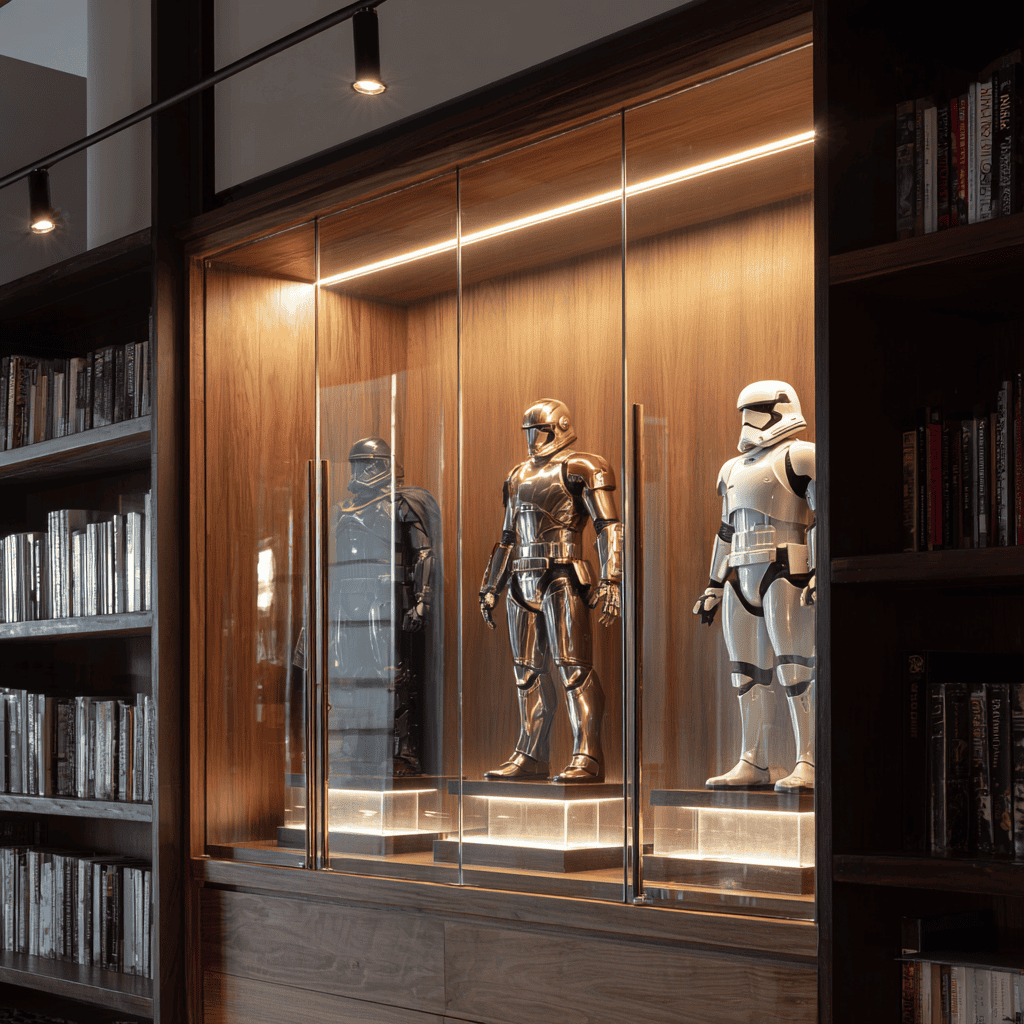
The most common failure of premium statue collecting is not buying badly. It is displaying badly. Twenty good statues on one shelf, jammed shoulder to shoulder, read as merchandise. However, three good statues with space and light around them read as collection. The discipline is restraint. Furthermore, the principles that govern it are the same ones a museum curator uses with limited gallery space.
Light is the difference
Direct sunlight ages PVC and yellows white paintwork within a few years. Standard ceiling light flattens the sculpting. Furthermore, it washes out the painted detail. Directional cabinet lighting is the answer that every serious display employs. Specifically, small LED spots installed at the top of the case, angled down and slightly forward. The piece comes alive under that lighting. In a way it never quite does under flat overhead light.
Space earns its place
Each premium statue should have at least one statue-width of empty space on either side. The eye reads the piece as a single object. Not as part of a row. Notably, this is the principle behind why three pieces in a six-foot cabinet read as considered collection. While six pieces in the same cabinet read as inventory.
Mix scales carefully
A 1/8 figure next to a 1/4 figure tends to make the smaller piece look diminished. Rather than the larger one look impressive. Better to group by scale within a single cabinet. Or to give larger pieces their own dedicated furniture entirely. The Prime 1 and Sideshow architectural pieces in particular need to stand alone.
The cabinet itself matters
A well-built glass cabinet does most of the visual work for free. Detolf from IKEA at the entry point. Anything from Henke or Atlas at the higher tier. For collectors sourcing cabinets in Tokyo directly, the Tokyo shopping districts piece covers the wider retail map.
The glass protects from dust without obscuring detail. The doors keep the figures clean. Furthermore, the lighting can be installed cleanly. Open shelving works for a single statement piece. However, it rewards constant dusting that no one actually does.
Authenticity, briefly
The bootleg market for anime statues is large, sophisticated, and getting better at imitation every year. The major signals to learn are licensing labels. Specifically, the holographic stickers from Bandai Spirits. The Kotobukiya barcode placement. Then the Good Smile authentication card. Furthermore, packaging weight and printing quality matter. So does facial sculpting on close inspection. Counterfeit faces are almost always slightly off. Eye proportions wrong. Mouth detailing flat. Skin tone wrong by a half-shade.
The safest route is to buy from authorised retailers. Specifically, the manufacturer storefronts on Amazon (Bandai Tamashii Nations, Kotobukiya). AmiAmi for Japan-direct sourcing with import-handling. The maker’s own site at launch. Or specialist hobby shops with verified provenance. Anything dramatically below standard retail price is almost certainly a counterfeit. Importantly, the resale market is where bootlegs cluster most densely.
The buyer who learns the labels and trusts only the verified routes saves themselves money. And shelf regret. A wider field guide to anime and manga shopping in Japan covers the Mandarake basement floors. Furthermore, the Book Off vintage circuit where most serious collectors source.
A few things, before you buy
What makes an anime statue ‘premium’?
The difference is licensing, sculpting standard, and material discipline. A premium statue is licensed by the studio that owns the property. It is sculpted by a named artist working from production reference. Furthermore, it is cast in PVC or polystone with hand-painted finishing. The result is a piece that holds up to close inspection. Clothing folds that read as fabric. Expressions that capture a specific scene. Paintwork that does not chip across a decade.
Which makers should adult collectors look at first?
Kotobukiya for the ARTFX J line. Specifically, 1/8 scale, sculpted in Japan, properly licensed across most major series. Bandai Tamashii Nations for the FiguartsZERO and S.H.Figuarts ranges. Notably, the engineering there is unmatched. Good Smile Company for the Pop Up Parade and scale figure work. Prime 1 Studio and Sideshow for the larger and more architectural pieces. Banpresto’s Ichibansho line for the more accessible entries that still carry studio licensing.
How does one avoid bootleg statues?
Buy from authorised retailers. Specifically, Amazon’s manufacturer storefronts. AmiAmi for Japan-direct. The maker’s own site. Or specialist hobby shops with verified provenance. Counterfeits are most often spotted at unrealistic prices. Furthermore, missing licensing labels on the box. Slightly-off facial sculpting on close inspection. Importantly, the packaging carries verification stickers. Learn what they look like.
Are these for display or for play?
Premium anime statues are display pieces. The ARTFX J line and FiguartsZERO range are non-articulated. The S.H.Figuarts line is articulated for scene recreation. However, the joint engineering ages. Consequently, serious collectors tend to display rather than pose them. Either way, a premium statue is built to sit on a shelf for years. Not to be handled.
How do I display them well?
A glass cabinet with directional lighting reads as collection. An open shelf with three pieces evenly spaced reads as taste. The trap is overcrowding. Notably, twenty statues on one shelf reads as merchandise. Treat each piece as a single object that needs space around it. The most considered displays in adult collector homes use single statues as deliberate punctuation in a wider room.
Does scale matter?
Scale matters for two reasons. First, shelf space. A 1/4 or 1/6 scale piece needs its own dedicated cabinet. While a 1/8 ARTFX J fits comfortably on a standard shelf. Second, cost progression. The larger the scale, the more material and detail. Consequently, the steeper the price curve. For a first premium piece, 1/8 is the standard entry. The exception is when a specific pose only reads at a larger scale.
Do these hold value?
Selectively. Limited-edition Prime 1 and Sideshow pieces hold or appreciate. Standard ARTFX J runs are widely available and do not appreciate. However, they also do not depreciate sharply if kept in box. Bootleg-heavy categories lose value as fakes flood the market. Importantly, a collector who buys for love rather than investment tends to fare better. Better than the one who tries to time the resale market.
What the cabinet finally tells us
The premium anime statue is, in the end, an exercise in restraint disguised as one of acquisition. A buyer who treats the category as collection ends up with a room that reads as inventory. Specifically, accumulating volume, chasing every release, displaying everything they own. However, someone who treats it as curation ends up with a room that reads as taste. Three pieces, properly lit, properly spaced, properly chosen. Both buyers may have spent the same amount of money. Only one of them has built something that visiting friends remark on with respect rather than confusion.
What this category rewards, almost above any other, is patience. A piece one wanted three years ago is not the same as the piece one would actually want today. Especially after appreciation and scarcity. Cabinets that grew slowly across a decade read differently from those that filled in eighteen months. Notably, slower acquisition produces a better collection. Furthermore, paradoxically, a better relationship to the source material. Because each piece had time to earn its place rather than simply finding one.
That is what separates a collector from someone who happens to own statues. Anyone serious about the former tends to find the same instinct rewarded by the wider Japanese art destinations conversation. Naoshima archipelago. Tokyo’s museum circuit. Mashiko kilns. The same eye that selects three properly displayed statues will recognise itself in the way a serious museum hangs its rooms. Furthermore, anyone serious about the former should also consider the broader register of anime-coded objects worn well. And the designer fashion conversation that sits adjacent to it.
The pilgrimage that earns the cabinet
From the Akihabara collector circuit to the Mandarake basement archives in Nakano Broadway. Alongside the wider Tokyo cultural experiences that complement a serious cabinet visit. Bespoke Japan trip planning for adults building serious cabinets.