Luxury Anime Gifts
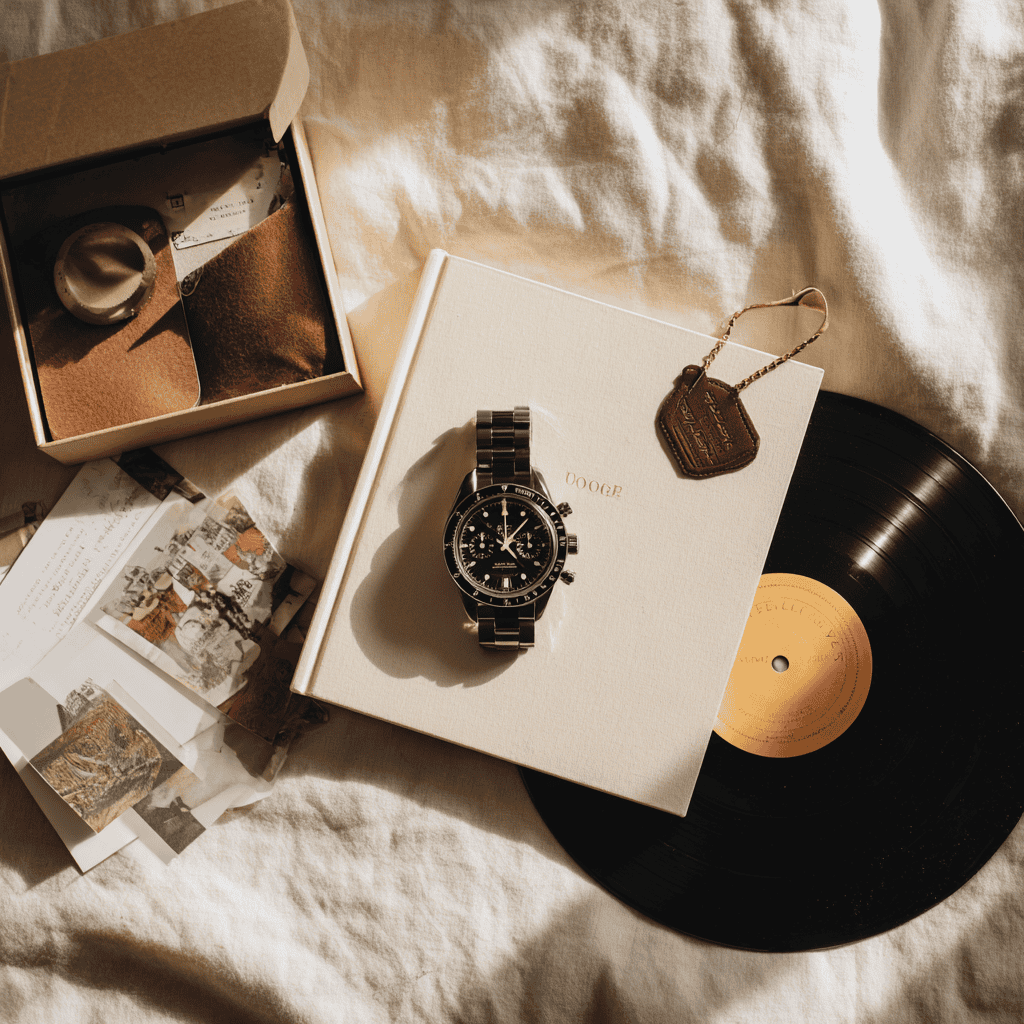
A leather charm, a hardback, a record on vinyl, a watch — properly chosen anime gifts for adult recipients carry the reference without ever quite admitting they are anime.
Most of what is sold as an anime gift fails the moment it leaves the wrapping paper. Character mugs that nobody drinks from. Plush keychains that hang from doorknobs gathering dust. T-shirts that read as costume on anyone over twenty-five. The category is, almost by default, designed for the gift-giver who wants to acknowledge the recipient’s interest without doing the work to understand it. The result is a great deal of merchandise wrapped in a great deal of nicely-printed paper, very little of which the recipient will still own a year later.
This piece is the conversation about the other side of the category. Gifts that get unwrapped and end up on a shelf or in a wardrobe for a decade. Pieces that an informed observer would not initially identify as anime gifts, because the design has done the work that printed merchandise cannot. The full Anime Hub covers the wider culture; this is the wrapped-and-handed-over end of it.
Inside this piece
What ‘luxury anime gift’ actually means
Luxury in this category is not primarily a question of price. A Phaidon hardback costs less than a designer keychain and is, by every meaningful measure, the more luxurious gift. What separates a luxury anime gift from a merchandise one is a combination of three properties: serious material standards, design that references the source through form rather than printed depiction, and packaging that respects both the recipient and the source material. Pieces that meet all three age into adult lives; pieces that miss any of the three tend to age out of them.
The recipient question matters as well. An adult anime fan in their thirties or forties has typically passed through the merchandise phase, the casual-fan phase, and the cosplay-adjacent phase if any of those were ever part of their relationship to the source. What remains is something quieter — a deeper attachment to a small number of works, an interest in the craft and history behind them, a willingness to spend money on pieces that document or extend the source rather than reproduce it. Gifts that meet that adult relationship to the material are the ones that get displayed and used. Gifts that miss it tend to live in drawers.
Leather and considered objects
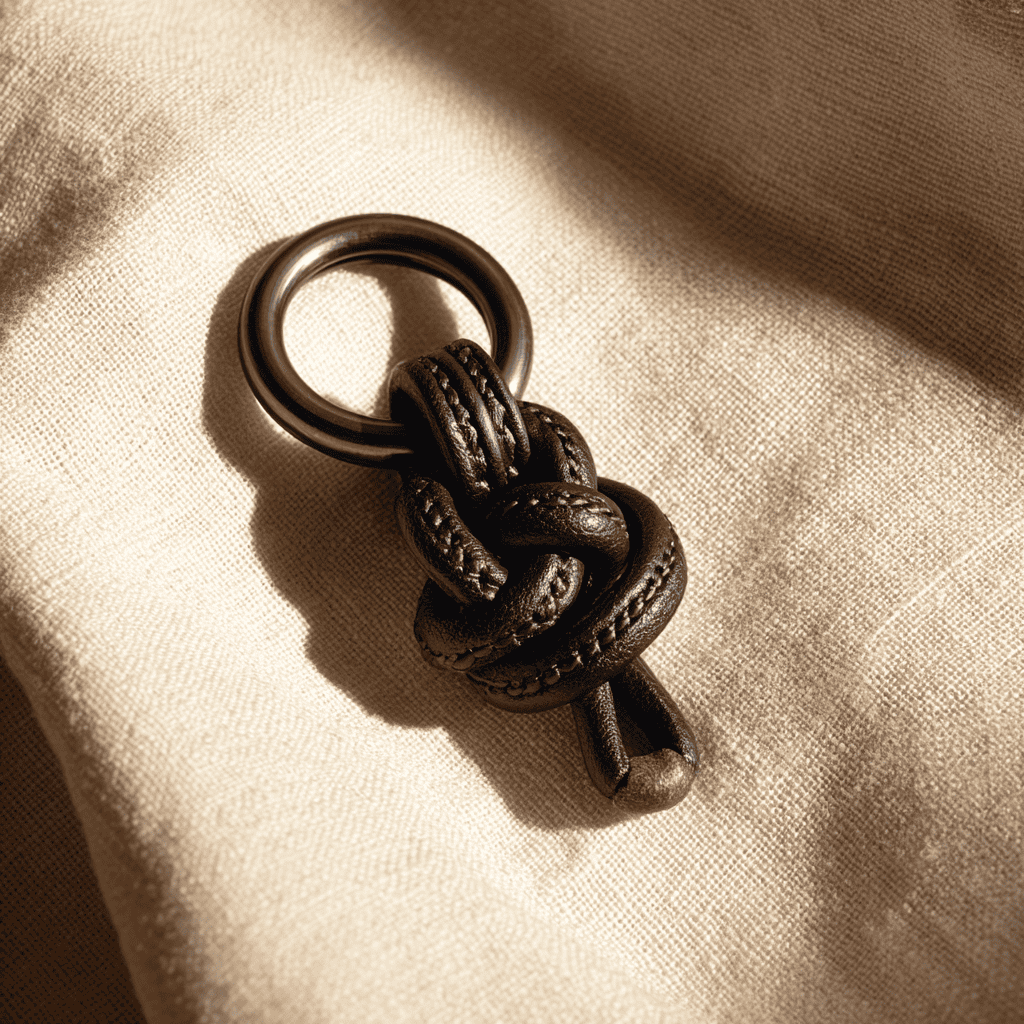
The single most successful luxury anime gift category of the past five years has been the Loewe x Studio Ghibli leather range. Jonathan Anderson’s tenure at Loewe produced three Ghibli capsules — Spirited Away, My Neighbour Totoro, Howl’s Moving Castle — and the small leather charms have done particularly well as gifts. The Susuwatari stud charm in classic calfskin works as a gift because it succeeds at every layer of recognition: as Loewe leather to anyone who knows the brand, as a small abstract sculpture to anyone who does not, and as a Spirited Away soot sprite to anyone who has watched the film. All three readings are correct. None of them displaces the others.
These Loewe Ghibli pieces work as gifts because they are made to Loewe’s actual leather standard. Construction is the same standard one would expect from a Hammock or Puzzle bag from the same house, applied at a smaller scale. Each piece will outlast the trend that produced it by decades, and the resale value tends to hold for the limited-edition pieces, which is unusual in the anime-collaboration space generally. For a milestone gift to an adult Ghibli fan, this is the answer that consistently lands. A wider gift conversation sits alongside this register — the curated gifts for the Japan lover piece covers the design-led adjacencies — ceramics, stationery, the small wooden objects that age well in adult homes.
For the Tokyo direct route — when travel permits — the Donguri Republic stores stock licensed Studio Ghibli small leather goods at a more accessible point, and the Loewe Harajuku store has stocked exclusive capsule pieces that did not appear in Western retail. Both are worth knowing about for the gift-giver who has the opportunity to source in person.
Books for the cabinet
The hardback art book is one of the most consistently successful gift categories for adult anime fans, partly because it sits comfortably in homes that the wrapped piece may not have anticipated. A Phaidon-style large-format hardback works on a coffee table, a study shelf, or a stack-of-three-books arrangement on a side table. Recipients do not need to display it as a fan object; it works as a book.
A current standout in this register is Studio Ghibli: Architecture in Animation, the VIZ Media hardback released in December 2024. It documents the architectural source material behind the buildings in Studio Ghibli’s films — the bath-house from Spirited Away, Howl’s moving castle, the Satsuki and Mei country home from Totoro — through a combination of concept art, sketches, background paintings, and commentary from both Hayao Miyazaki and the architect Terunobu Fujimori. For an adult Ghibli fan who has already watched the films many times, the book offers a layer of understanding that the films themselves cannot provide on their own.
Across the wider publishing landscape in this register, Tokuma Shoten and Kodansha publish the official Japanese-language artbooks for most of the major anime series, and the Stones Throw and Phaidon catalogues both contain serious works on individual directors. For the recipient drawn to the underlying Japanese cultural traditions, a calligraphy-set gift paired with the editorial primer on Japanese calligraphy works in the same register. The trick for the gift-giver is to match the book to the specific work or director the recipient cares about most. A general “anime art book” lands less well than a deeply-researched volume on a film the recipient has watched a dozen times.
The Anime Pilgrimage Map
A twelve-page editorial folio mapping the real Japan locations behind Your Name, Spirited Away, Demon Slayer, Suzume, and Slam Dunk. Sent on subscription; works as its own gift to the recipient who has already received the obvious things.
Music on vinyl
The Joe Hisaishi soundtrack on vinyl is one of the quietest and most consistently successful luxury anime gifts available. Hisaishi has scored every Studio Ghibli film since Nausicaä of the Valley of the Wind in 1984, and the soundtracks have, in the past five years, been remastered and released on properly-engineered double vinyl. Tokuma’s Spirited Away 2LP — recorded by the New Japan Philharmonic, gatefold sleeve, three sides of music with an etched fourth side — sits in the same register as serious classical or film score reissues from Music On Vinyl or Mondo.
What makes the vinyl work as a gift is that the music itself does the work. The recipient does not need to be a vinyl collector to appreciate it, only to own a turntable; and the act of putting on a Hisaishi side after dinner is a different domestic experience than streaming the same music from a phone. The gift carries an implicit invitation to slow down, to listen properly, to let the music occupy the space it was composed for. That is what separates the vinyl from a Spotify gift card.
For wider listening in this category, the Princess Mononoke, Howl’s Moving Castle, and My Neighbour Totoro soundtracks have all received the same vinyl remastering treatment, and the Cowboy Bebop soundtrack by Yoko Kanno is one of the more sought-after pieces for the non-Ghibli end of the conversation. Any of these works as a milestone gift to an adult anime fan with a turntable and a shelf for it.
Watches as milestone gifts
For a milestone occasion — a significant birthday, an engagement, a retirement — the watch category sits in its own register. A G-Shock anime collaboration is not the same kind of gift as a Loewe leather charm; it is closer to the Father’s Day or graduation watch tradition, dressed in a more interesting visual vocabulary. The GA-110EVA30-7A Evangelion 30th anniversary collaboration, designed by Ikuto Yamashita and released in October 2025, is the current standout in the category. The piece carries the reference for an adult recipient who knows the source, and reads as a serious G-Shock to anyone who does not.
What makes the G-Shock anime collaborations particularly suitable for milestone gifts is the daily-wear logic. A G-Shock works at the office, at the gym, on a Tuesday commute. Each collaboration adds a layer of meaning without compromising any of the wearability that made the watch worth owning in the first place. The recipient will, almost without exception, still be wearing the piece in five years.
Experiences as gifts
The largest gift category in this register is not an object at all. A trip to Japan that includes the Studio Ghibli Park near Nagoya, the Ghibli Museum in Mitaka, a stay at one of the considered ryokan, and the time to walk through the Tokyo districts where the films were drawn is a gift that no wrapped object can match. Tickets to Ghibli Park itself must be purchased through Lawson Ticket’s international portal for overseas visitors, with sales opening on the 10th of each month for two months in advance.
What makes the experience gift work is that the planning itself becomes part of what is being given. A bespoke trip that incorporates the recipient’s specific interests — the films they have watched most often, the regions of Japan they have always wanted to see, the kind of accommodation that would actually suit their travel style — is a gift built around them rather than around the gift-giver’s assumptions. Bespoke trip planning has emerged as one of the more substantial gift categories in this conversation precisely because it solves the problem that off-the-shelf gifts cannot. For the wider context, the luxury tourism in Japan piece covers what affluent travellers are actually asking for in 2026 — the data behind why the experience-as-gift category has grown.
On giving them well
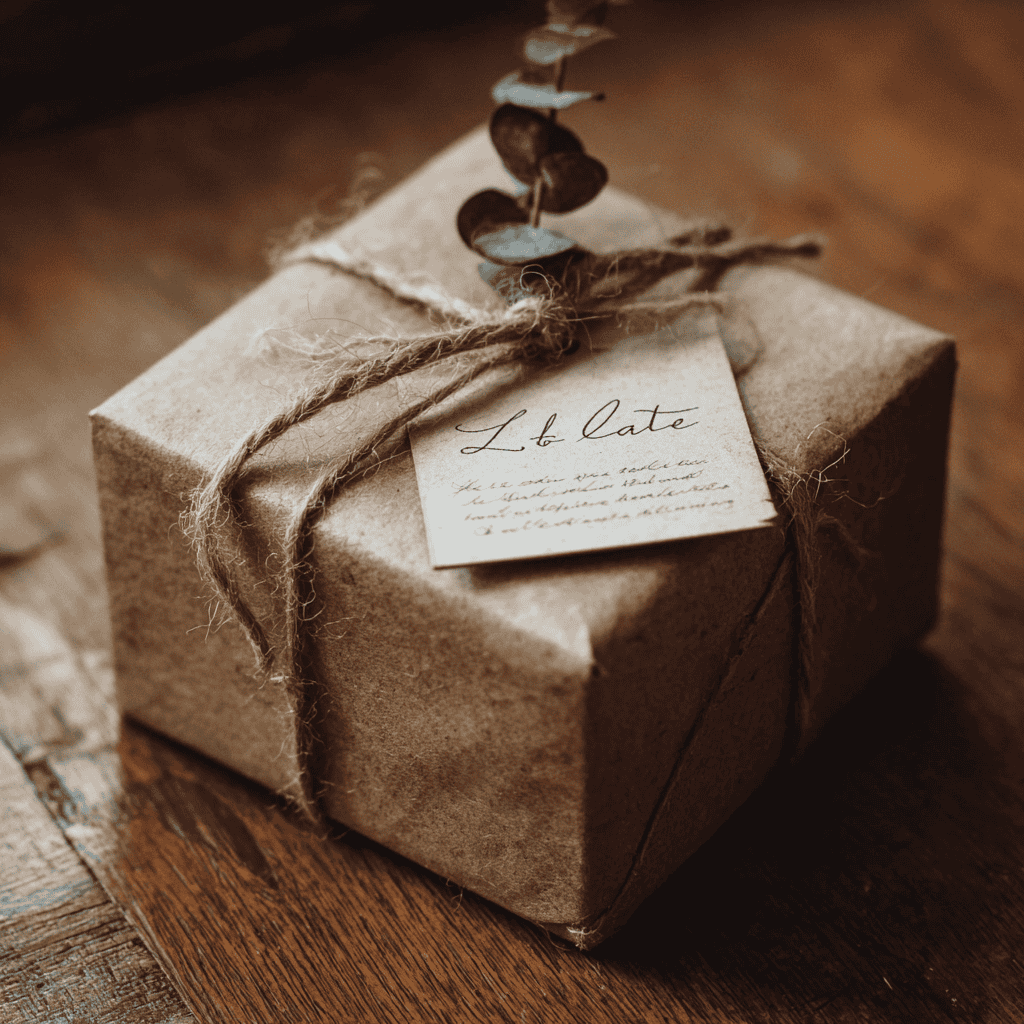
The presentation matters more than the gift-giver typically realises. A Loewe Ghibli charm in the Loewe gift packaging — the limited-edition box with the film characters printed on it — reads differently from the same charm slipped into a generic gift bag. A Phaidon hardback presented in proper paper with a tied ribbon reads differently from one in a plastic shopping bag. The packaging communicates the seriousness of the gift, and the seriousness of the gift communicates the seriousness of the relationship between giver and recipient.
Match the gift to the specific work
The gift that lands hardest is the one that demonstrates the giver knows the recipient’s actual relationship to the source material. A Spirited Away piece for the recipient whose favourite film is Spirited Away; a Princess Mononoke piece for the one whose is Princess Mononoke. Generic Ghibli gifts land fine but do not land deeply. Specific ones do.
Avoid the obvious traps
Character merchandise. Primary-colour packaging. Anything labelled as “for fans of.” Anything that suggests the giver chose the gift based on a search rather than on knowing the recipient. Pieces that work for adult recipients are the ones that look like considered design first and like anime gift second; the inverse is the failure mode.
Keep the card brief
A short handwritten note that mentions a specific scene, a specific character, or a specific moment in the recipient’s relationship to the source carries more weight than a long explanation of why the gift was chosen. The recipient knows why the gift was chosen if the gift was chosen well. The card is for marking the moment, not for explaining it.
Questions, briefly
What makes an anime gift ‘luxury’?
Luxury in this register means the gift is made to a serious material standard, references the source through design rather than depiction, and arrives in packaging that respects both the recipient and the source material. A Loewe Ghibli leather charm meets all three. A printed character mug from a museum gift shop does not.
How do you choose a gift for an adult anime fan you do not share the fandom with?
Lean into the visual or material register rather than the narrative one. A hardback book about Studio Ghibli’s architecture does not require the gift-giver to know the films; it only requires the recipient to. The Hisaishi soundtrack on vinyl is similar — the music itself is the gift, regardless of the giver’s familiarity with the film.
Where should I buy luxury anime gifts?
Direct from the brand for collaborations — Loewe.com for Ghibli, Casio for G-Shock anniversaries. Amazon for the hardback books and vinyl in the category. SSENSE for Japanese designer pieces from Issey Miyake and Master-piece. The Tokyo direct route — Donguri Republic for Ghibli, Dover Street Market Ginza for the wider conversation — when travel permits.
What about gifts for milestone occasions?
Milestone gifts — engagements, significant birthdays, retirements — warrant pieces that age across decades. The Loewe Ghibli leather goods, the larger Prime 1 statues, and the Issey Miyake Pleats Please clothing all sit in this register, alongside experience gifts like a stay at one of the most luxurious ryokans in Japan for the milestone occasion itself. The unifying property is that the recipient will still be carrying or wearing the piece on the tenth anniversary of receiving it.
How do I avoid gifts that read as childish?
Skip the character prints. Avoid primary colours. Steer clear of anything that reads as merchandise rather than as design. Pieces that work for adult recipients are the ones an informed observer would describe as ‘considered’ before they would describe them as ‘anime’ — Loewe leather, Phaidon hardbacks, Hisaishi vinyl, G-Shock collaboration watches.
Are there gift-appropriate experiences as well as objects?
The Studio Ghibli Park near Nagoya, the Ghibli Museum in Mitaka, and a stay at one of the considered Japan ryokan all work as gift experiences for adult recipients. The trip itself becomes the gift, and the planning that enables the trip is part of what is being offered.
What about gifts for someone who already has the obvious pieces?
Look to the smaller Japanese ateliers — Mashiko-yaki ceramics from kilns that supply Niwaki, the smaller Tokyo silversmiths who produce one-off pieces, the bookshop publications that document the source material at a scholarly level. The recipient who already owns the obvious pieces tends to appreciate gifts that demonstrate the giver did the research.
What this category finally rewards
The luxury anime gift, more than almost any other gift category, rewards the giver who has done the work of knowing the recipient. A Loewe Ghibli charm chosen for someone whose favourite film is Spirited Away lands differently from a generic Ghibli keychain. Hisaishi’s Princess Mononoke vinyl, given to the friend who has watched the film twenty times, lands differently from a generic anime soundtrack. A G-Shock Evangelion collaboration, given to the colleague who once mentioned watching the original 1995 broadcast, lands differently from a generic G-Shock. The work the giver does in advance — the listening, the asking, the noticing — is what separates the wrapped object that becomes treasured from the wrapped object that becomes a drawer item within a year.
What this means in practice is that there is no single best luxury anime gift. There is only the best gift for this specific recipient at this specific moment in their relationship to the source material. The category that this piece has tried to map — Loewe leather, Phaidon hardbacks, Hisaishi vinyl, G-Shock collaboration watches, considered Japan trips — provides the vocabulary. The specific gift is up to the giver, and the work of choosing well is, in the end, the actual gift. For the wardrobe-adjacent register, the accessories conversation covers the daily-wear pieces that sit alongside these milestone gifts; the designer fashion piece covers the wider context that the wardrobe sits inside.
The trip that becomes the gift
From Ghibli Park near Nagoya to the Tokyo districts where the films were drawn — bespoke Japan trip planning for milestone gifts that no wrapped object can match.