Tokyo Anime Tours for Adults: A Quieter Itinerary
The serious adult Tokyo anime circuit runs through Nakano Broadway, the older Akihabara archive shops, and the Mitaka morning hours — not the maid cafés and themed attractions of the standard tour.
Most of what gets sold as a Tokyo anime tour is engineered for the wrong audience. A bus through Akihabara with photo stops at maid cafés. Lunch at a chain restaurant decorated with character merchandise. Guided shopping that ends, predictably, in the gift shop of whatever attraction the tour operator has a partnership with. The result is novelty for visitors with no prior relationship to the films, photographed for social media, forgotten by the time the flight home departs. None of it would interest the adult anime fan who has read the manga, watched the films, and arrived in Tokyo wanting depth rather than spectacle.
This piece is the conversation about the other version of the circuit. Mandarake basement floors in Nakano Broadway where vintage cel art lives at prices that have not yet caught up with what they are worth. Smaller Akihabara archive shops where older Japanese collectors browse alongside the visitors. The Ghibli Museum morning that asks for unhurried attention rather than a checklist sweep. The full Anime Hub covers the wider conversation; this is the practical itinerary that grows from it.
Inside this piece
Nakano Broadway, the deep end
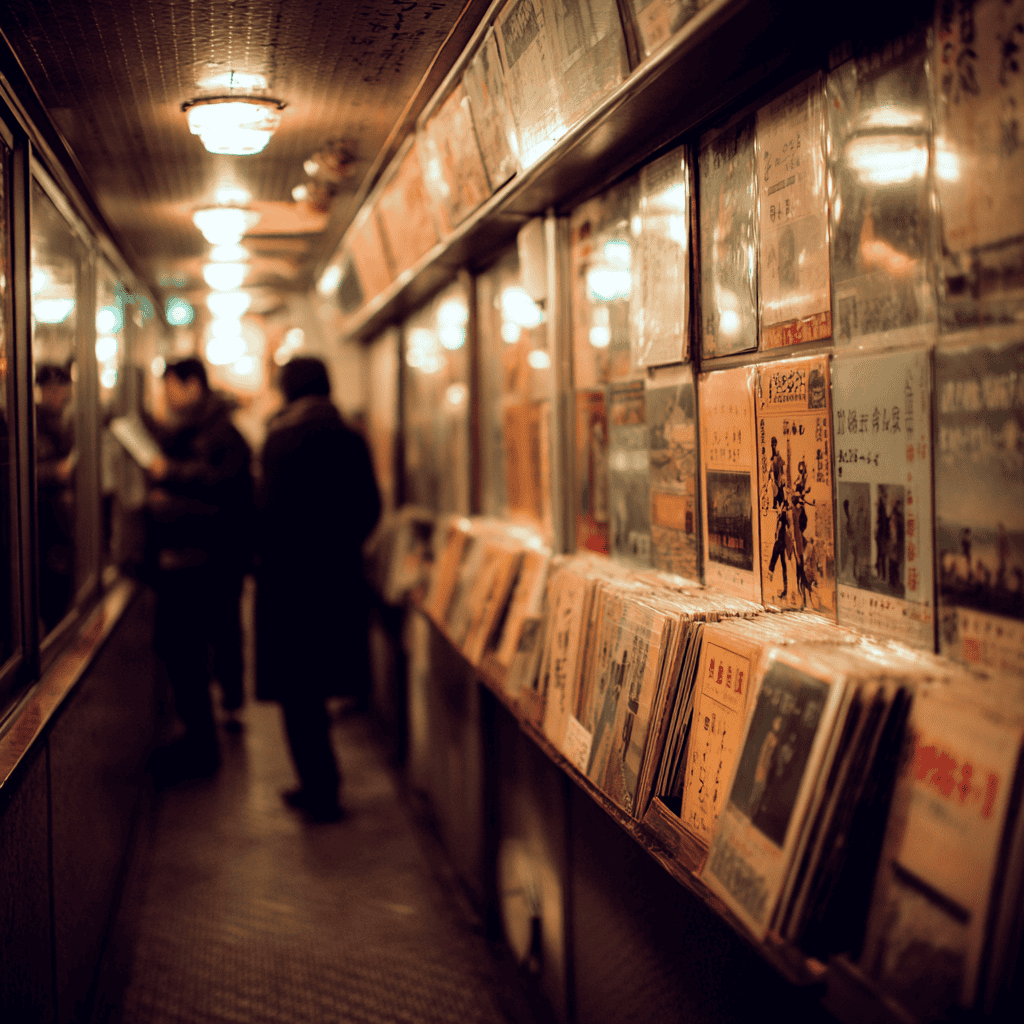
Nakano Broadway sits fifteen minutes west of Shinjuku on the JR Chuo line, in a four-storey shopping arcade that has been the home of serious Tokyo manga and anime collecting since the 1980s. The Mandarake chain operates more than thirty individual shops across Nakano Broadway’s upper floors and basement, each specialising in a particular slice of the collecting universe — vintage manga first editions, original animation cels, retro toy packaging, vinyl figures, doujinshi, the rarer end of the cosplay-craft material. The whole arcade is, effectively, a single distributed museum of postwar Japanese popular culture, with the difference that everything in it is also for sale.
What makes Nakano Broadway essential for the adult collector is the seriousness of the Mandarake operation. The original animation cels — pulled from the studio archives of major productions over the decades — are properly catalogued, properly preserved, and priced according to their actual rarity rather than their general appeal. A middle-range original cel from a beloved series can be acquired for less than the cost of a week’s accommodation; a major piece from a film with archival significance runs well into the territory that would have been a serious art purchase. Both are available, both are properly authenticated, and both reward the visitor who has done the research before walking into the basement.
For the wider Nakano Broadway experience, the smaller independent shops on the upper floors carry vintage Showa-era toys and packaging that no other location in Tokyo holds at comparable depth. The Daikoku Drug Store on the ground floor sells the kind of inexpensive Japanese skincare that returning visitors stockpile. A morning here, taking the time to walk the full circuit at a pace that lets the eyes adjust to the density, is the foundation of the serious adult Tokyo anime visit.
Akihabara, considered
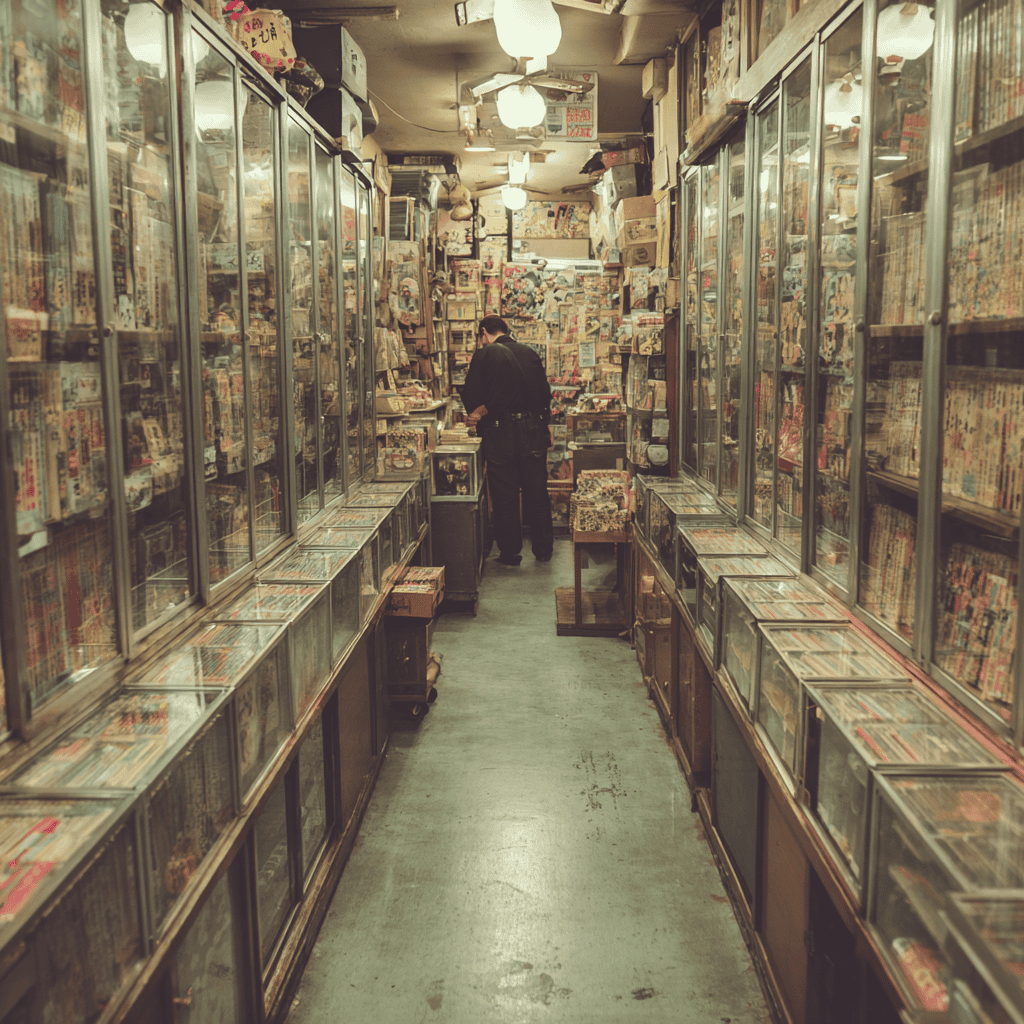
Akihabara is the conventional answer for any Tokyo anime visit, and the conventional answer is partially wrong. Over the past decade, the district has drifted heavily toward the maid café and themed attraction register, with the result that actual collector spaces have been crowded out by storefronts engineered for tourist traffic. Adult visitors need to know which streets to avoid as much as which to seek out.
Serious Akihabara concentrates on a handful of shops. The Mandarake Akihabara Complex sits a few minutes east of the main station and operates in the same archival register as the Nakano shops, with a slightly different focus — heavier on action figures and gunpla, lighter on vintage cel art. K-Books holds extensive vintage manga and doujinshi inventory across multiple floors. Animate’s flagship store carries new-release merchandise across a comprehensive range. Smaller hobby shops in the side streets of the western Akihabara district hold the rarer model kits, the specialist paint supplies, and the kind of inventory that larger chains do not stock.
What adult visitors avoid is the maid café strip immediately north of the main station, the chain-store electronics shops along the main avenue (which carry tourist-grade merchandise rather than collector inventory), and the themed restaurants engineered for the same audience. The wider Tokyo shopping districts piece maps the broader retail ecosystem that complements the collector circuit. A serious Akihabara visit lasts about three or four hours of focused walking through the western and southern side streets; the standard tour-bus itinerary covers none of this.
Mitaka and the quiet hours
The third anchor of the adult Tokyo anime circuit is Mitaka, twenty minutes west of Shinjuku on the JR Chuo line. The Ghibli Museum sits at the edge of Inokashira Park, and a morning slot at the museum followed by an unhurried lunch in the Kichijoji district to the north is the quietest and most rewarding segment of the entire circuit. Mitaka itself is residential and middle-class rather than commercial; the area immediately around the museum is parkland; the small Western-style coffee shops and bakeries in the wider neighbourhood clearly inspired some of the food preparation scenes in the films.
What this segment of the circuit offers that the Nakano and Akihabara segments cannot is unhurried attention. The museum itself is engineered for slowness. Surrounding parkland is engineered for the kind of walk that lets the morning’s images settle. A coffee shop afterwards offers the kind of unhurried hour that returns to the visitor across years afterwards. For the adult visitor whose relationship to anime is primarily about the films themselves rather than about the merchandise, this is the segment of the trip that lands hardest. The wider editorial guide to Tokyo cultural experiences covers the rest of the city register that complements this visit.
The Anime Pilgrimage Map
A twelve-page editorial folio mapping the real Japan locations behind Your Name, Spirited Away, Demon Slayer, Suzume, and Slam Dunk. Sent on subscription; works as the practical companion to this Tokyo itinerary.
The design district adjacencies
For the adult visitor whose interest in anime extends into the broader design conversation that grew up around it, two Tokyo districts reward an additional half-day each. Harajuku and Aoyama hold the design-led collaborations — the Loewe Harajuku store has stocked exclusive Studio Ghibli capsule pieces that did not appear in Western retail, the BEAMS flagship in Harajuku carries the broader Japanese designer landscape that informs the wider anime-coded fashion register, and the smaller boutiques in the Aoyama side streets hold the architecturally-leaning end of the same conversation. For the older Tokyo neighbourhoods that recognise themselves in some of the urban anime scenes, the Yanaka piece covers the nostalgic streets and traditional craft shops that sit at the opposite end of the city register.
Ginza, on the other side of the city, holds the high-luxury version of this register at Dover Street Market Ginza — six floors of carefully curated work from Comme des Garçons, Undercover, sacai, and the rotating capsule collaborations that often include Ghibli-adjacent and broader anime references. A half-day here, walked slowly, sits very comfortably alongside the Nakano-and-Mitaka days as a third element of the wider Tokyo anime cultural circuit.
On guided tours
The decision about whether to engage a guide for the Tokyo anime circuit comes down to two questions. How much research has the visitor done in advance, and how much does the language layer matter for the specific shops they want to visit. For the visitor who has read about Mandarake’s catalogue structure, knows which floor of Nakano Broadway holds which category, and has a working relationship with the names of the studios and series they want to source from — independent works fine, and the language barrier in the major Mandarake shops is manageable through pointing and the staff’s basic English.
For visitors who want depth on a single day without doing months of advance research, a half-day private guide through Nakano Broadway repays the cost many times over. A good guide handles the language layer at smaller independent shops, knows the cost ranges to expect across categories, can introduce the visitor to specific dealers who hold particular series in depth, and can manage the logistics of shipping larger purchases home. Serious tour operators in this register work with adult visitors rather than family groups, and structure the day around the visitor’s actual interests rather than around a fixed itinerary.
The off-the-shelf coach tours that appear in the standard Tokyo tourism marketing channels are, by contrast, almost universally calibrated to the wrong audience. The same logic applies to the maid café tours, the themed-restaurant lunches, and the bus circuits that try to cover Akihabara, Nakano, and Harajuku in a single day. Adult visitors who want depth tend to skip all of these and either work independently or engage a private guide for a focused half-day.
A worked two-day itinerary
A focused adult Tokyo anime itinerary fits comfortably into two days within a wider Japanese trip. Day one: morning slot at the Ghibli Museum, lunch in Kichijoji, an unhurried afternoon walking Inokashira Park and the Mitaka residential streets, evening return to central Tokyo. Day two: morning at Nakano Broadway, lunch at one of the small ramen or curry shops in the surrounding district, afternoon transfer to Akihabara for the focused western-and-southern circuit through the Mandarake Complex and the smaller archive shops, early evening return to the hotel before dinner.
The variant for visitors with three days available adds a half-day in Harajuku and Aoyama for the design-district adjacencies, with the second half of that day spent at Dover Street Market Ginza. The variant for visitors with only one day compresses to either Nakano-and-Akihabara (for collectors) or Mitaka-and-Kichijoji (for Ghibli-focused visitors), accepting that one day cannot do justice to both sides of the circuit. Bespoke trip planning lets the traveller balance these variants against the wider Japan itinerary; the off-the-shelf packages tend to default to the day-tour bus circuit and miss the depth entirely.
Questions, briefly
Are Tokyo anime tours suitable for adults without children?
Particularly so. The adult-focused version of the Tokyo anime circuit skips the maid cafés and themed attractions and instead concentrates on the serious archives, the design districts, and the older collectors’ neighbourhoods. Nakano Broadway, the Mandarake basement floors, the Ghibli Museum, the smaller Akihabara archive shops — all of these reward visitors who already know the films and want depth rather than novelty.
What is the best Tokyo neighbourhood for adult anime fans?
Nakano Broadway, fifteen minutes west of Shinjuku, is the deepest answer for serious collectors — Mandarake’s eight floors of vintage anime, manga, and collectible material set the standard. Akihabara remains the conventional answer for the broader scene, though the adult version concentrates on the older archive shops rather than the maid-café district. Mitaka, on the western edge of the city, holds the Ghibli Museum and the quieter side of the conversation.
How much time should I plan for the Tokyo anime circuit?
Two to three full days for a focused adult itinerary that covers Nakano, Akihabara, and Mitaka without rushing. A single day works if narrowed tightly to one neighbourhood. The mistake first-time visitors make is trying to cover all three districts in a day, which produces a circuit of train rides rather than actual time inside the shops and museums.
Should I book a guided tour or go independently?
Independent works for confident travellers who have done the homework. A guide adds value primarily for the language layer in the Mandarake basement floors, where the staff speak limited English and the older Japanese collectors have their own vocabulary for the categories. For first-time visitors who want depth on a single day, a half-day private guide through Nakano Broadway tends to repay the cost many times over.
What about the Tokyo anime tours that include maid cafés?
These are a different category of experience and a different audience. Adult anime fans visiting Tokyo for the cultural and collector depth tend to skip the maid café register entirely; the experience is engineered for novelty rather than for depth, and the photographs land badly with informed observers back home. The serious adult Tokyo anime itinerary does not include them.
When is the best time to visit?
October through November for the autumn weather, late March through early April if visiting around cherry blossom season. Avoid Golden Week (late April to early May), Obon (mid-August), and the New Year period when many of the smaller shops close. Mid-week tends to be quieter than weekends in Nakano and Akihabara, which produces a better browsing experience in the older archive shops.
How does this fit with the wider Japan trip?
The Tokyo anime circuit works as a two-day segment within a wider seven- to fourteen-day Japanese itinerary. Pairing it with a Ghibli Park day in Aichi, a Kyoto cultural segment, an Osaka extension to Den Den Town for the Western-Japan equivalent of Akihabara, and a forested ryokan stay produces the most balanced version of the trip. The Tokyo anime portion is one element rather than the entire itinerary.
What this circuit finally rewards
The Tokyo anime circuit, in its adult version, rewards the visitor who treats the city as the source material rather than as the backdrop. Mandarake basement floors are not just shopping; they are a working museum of how postwar Japan built a global cultural export from a hand-drawn cel tradition. The Mitaka morning is not just a museum visit; it is two hours inside a building designed by Hayao Miyazaki himself, surrounded by the trees that informed his films. The Akihabara archive shops are not just retail; they are the working memory of a generation of artists and collectors who have been preserving this material since the 1970s.
What the visitor takes home from this version of the circuit is not primarily a shopping bag. It is a different relationship to the films themselves — a deeper sense of where they came from, who made them possible, and what kind of city they grew up inside. For the wider register, the Ghibli pilgrimage piece covers the full multi-day version of the trip, and the manga shopping guide covers the deeper collector circuit beyond the obvious entry points.
The trip that earns the depth
From the Mandarake basement floors to the Mitaka morning hours — bespoke Tokyo anime itinerary planning for adult travellers who want depth rather than novelty.