The Ikigai Journal: Ninety Days to Knowing What Makes Your Days Worth Living
Built on the Japanese understanding of ikigai, not the Venn diagram. One prompt a day, on a tablet with a stylus or on paper with a pen.
Both editions ask you to notice the day you are already in, rather than optimise a career.
Digital: yours within the minute · Paperback: delivered anywhere
- Grounded in Mieko Kamiya’s clinical research on ikigai
- One of eight journals in the Cultural Reflection Collection
- Full refund within 14 days on the digital edition
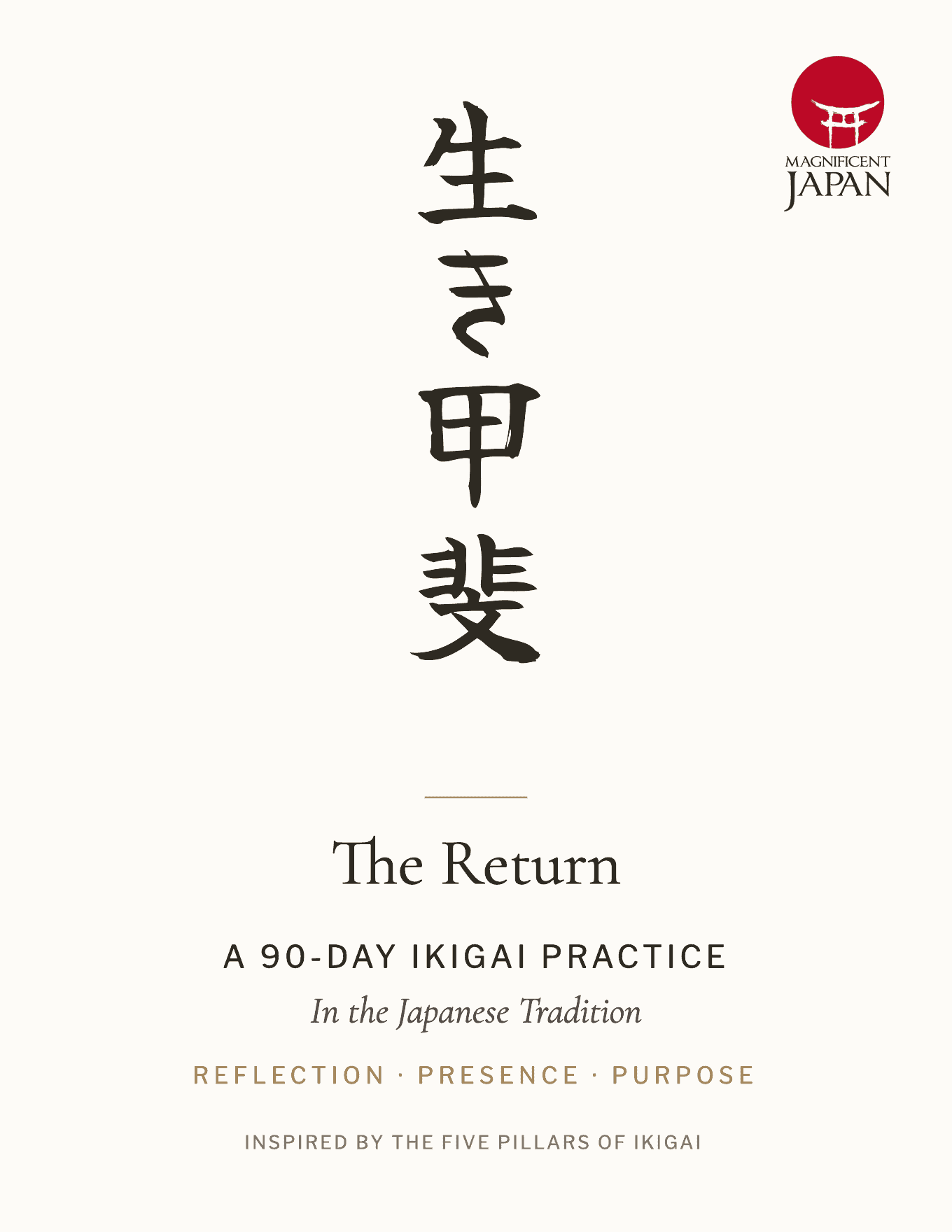
Twenty seconds inside the journal
The digital edition in use — a morning prompt, answered by hand while the coffee is still warm. Tap to play, with sound.
One page, one intention, one still moment.
Most ikigai journals start from the wrong picture
The four-circle diagram you have seen is not Japanese. A Western writer assembled it in 2014 by merging a Spanish purpose diagram with the Japanese word, and most ikigai journals are still built on it. This one is not, and the difference shapes every prompt inside.
What you love, what you are good at, what the world needs, what you can be paid for. It asks you to solve a career, and it tends to produce anxiety.
The sense that life is worth living, found in small recurring moments. It asks you to notice the day you are already in, and it tends to produce attention.
Japanese scholars of ikigai describe the diagram as misleading — the word never carried a career formula. The full story of where that diagram came from is worth reading on its own, as is a fuller piece on ikigai journaling, with fifteen prompts to try.

What ikigai actually means
Ikigai 生き甲斐 is the sense that life is worth living. The word joins iki, life, and gai, worth, and it resists clean translation — the concept of ikigai reaches well beyond any single diagram.
The psychiatrist Mieko Kamiya studied it first. She found that people locate ikigai in small, recurring moments far more than in achievement — a morning cup of tea, a familiar walk. There is a fuller explanation of ikigai if you want the longer version, and a guide to ikigai journaling for the habit itself.
Five pillars, ninety days
The prompts move through five dispositions that recur across Japanese writing on ikigai. Mieko Kamiya’s clinical research described how people hold ikigai through change. The Ohsaki Study followed more than 43,000 Japanese adults for seven years. Those with a sense of ikigai lived longer. You do not study the pillars — the prompts teach them, asking each disposition of you in turn and deepening as the weeks go on.




What the ikigai journal includes
Both editions carry the same ninety-day structure. The digital edition is a write-on PDF for GoodNotes, Notability, Noteshelf, or any annotation app; the paperback puts the same practice on paper.
- Ninety daily prompts — one a day, across three months
- Twelve weekly syntheses — a look back at each week
- Three monthly reviews — the longer view across each month
- A Day One assessment — revisited on Day Ninety, side by side
- Tap-through navigation — side tabs and day links, in the digital edition
- Research foundations — the sources, and where to read further
Begin the practice
One journal, two editions, one price. Choose the screen or the page — the ninety days are the same, and both are built to be returned to, not read through.
Not sure yet? Read the real first week before you decide.
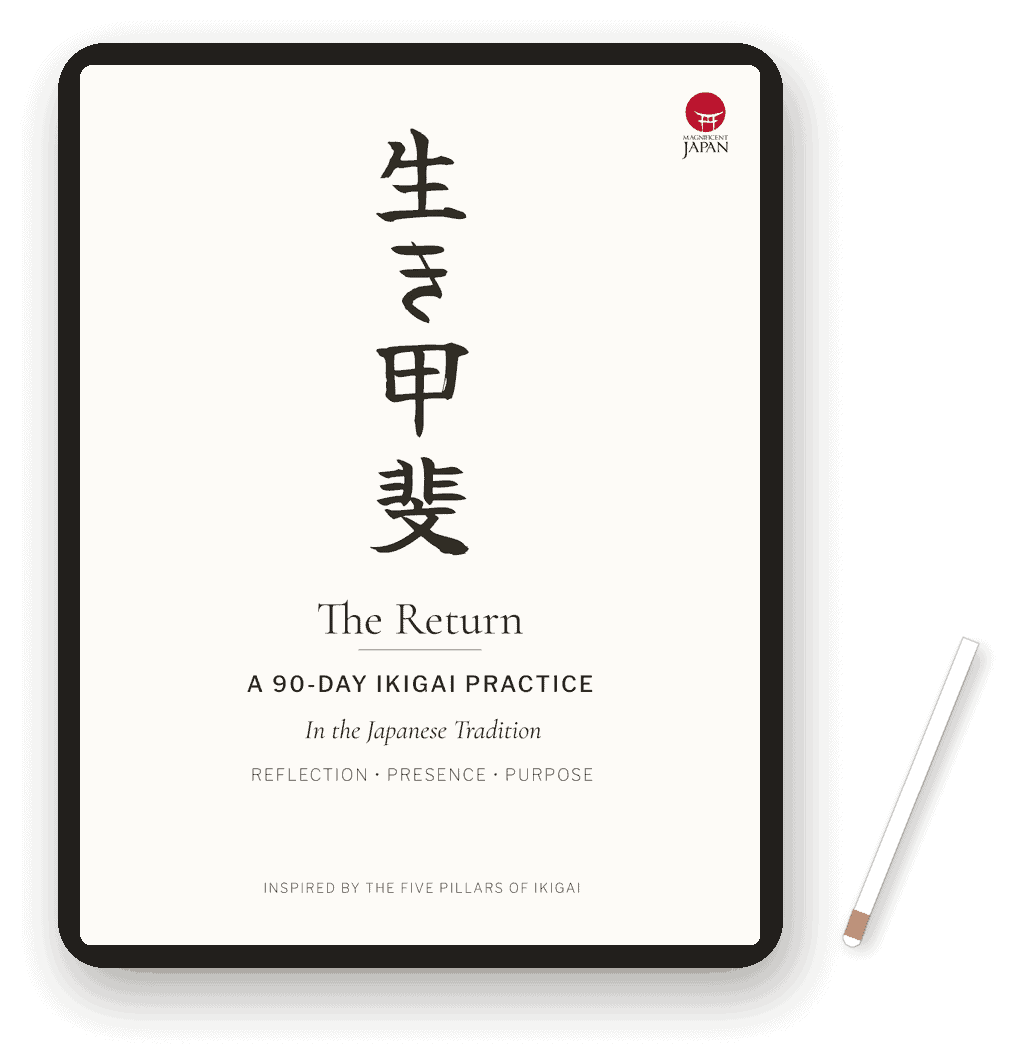
A write-on PDF for iPad and tablet, with tap-through side tabs and links to any day. Yours the moment you order.
The Digital EditionYours within the minute · Every major tablet app · Full refund within 14 days
The same ninety days in print — a matte-cover paperback for the desk, the bag, and the shelf it will one day join.
The Paperback EditionDelivered anywhere · Retailer’s standard returns · Part of the Cultural Collection
Look inside
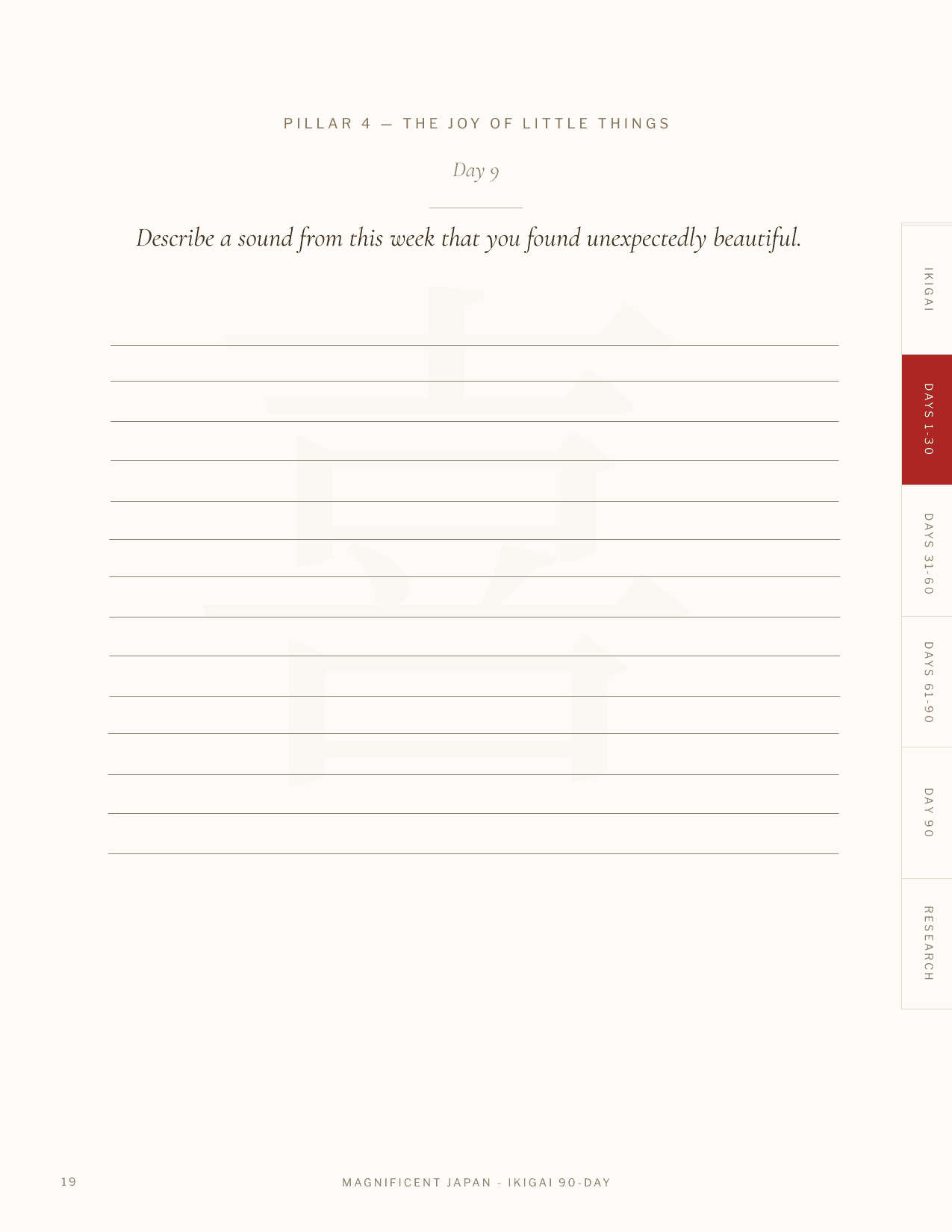
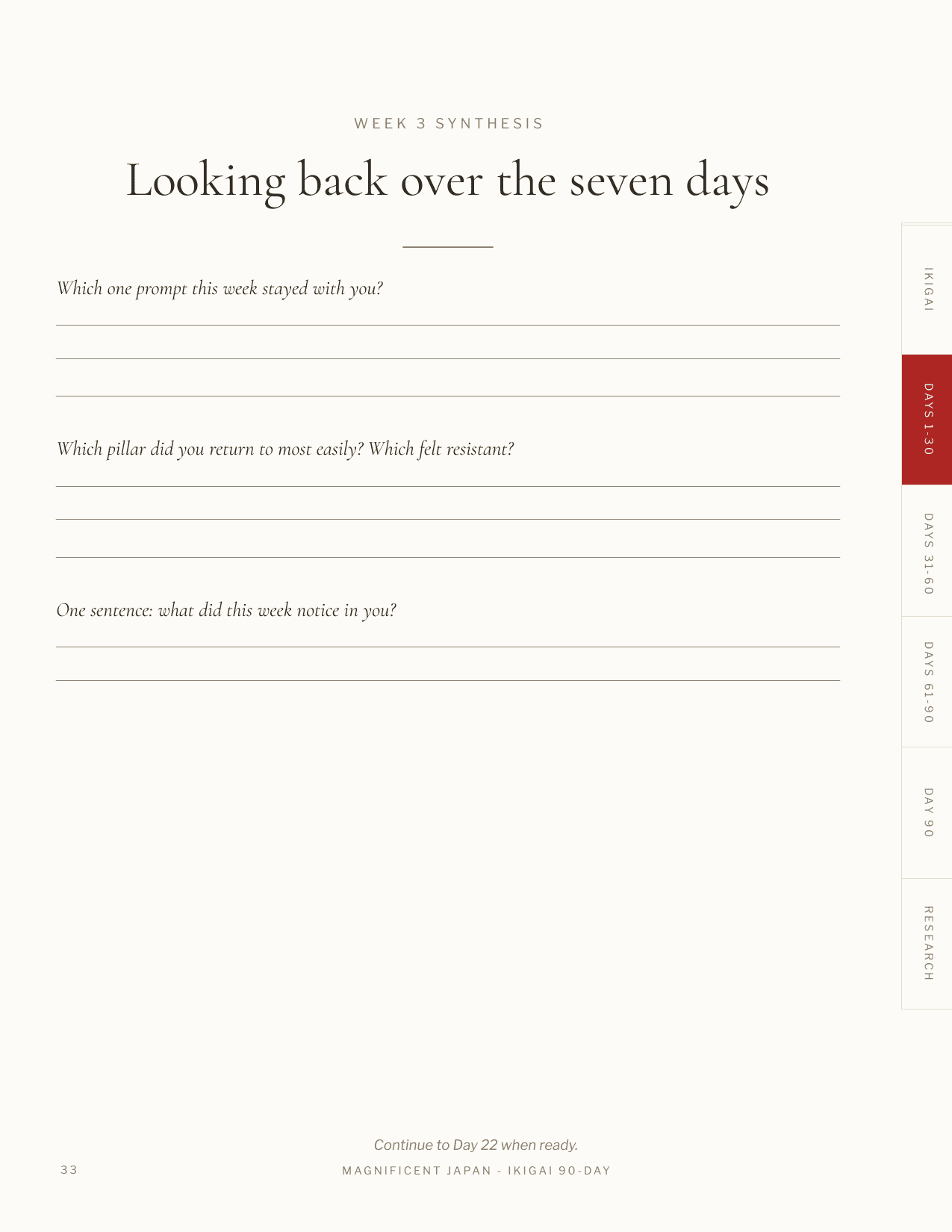
Three pages, shown full size — the Day One assessment you return to on Day Ninety, a daily prompt, and a weekly synthesis. Tap any page to open it larger. The pages are the same in both editions.
How it works
What ninety days does
A single prompt rarely changes much. Ninety of them, in sequence, do. The early weeks ask small questions, the kind you can answer before the tea goes cold. By the second month the prompts assume you have been paying attention, so they ask a little more.
By Day Ninety you hold three things you did not have on Day One. Twelve weekly syntheses, each naming what recurred that week. Three monthly reviews, each a longer look at what the weeks had in common. And a Day Ninety review that sets your first answers beside your last. The distance between them is the whole point.
Try seven days first
The seven-day sampler is the real first week of the practice, as a write-on PDF for your tablet. Read it before you decide; it follows by email.
One email a fortnight. Unsubscribe any time.Where the practice comes from
The ordinary moments this journal asks you to notice were, for many who first wrote about ikigai, Japanese ones. A tea house in late-afternoon light. A slow train through a valley. An inn where the evening keeps its own pace.
The practice works wherever you sit with it. Yet once it settles, some readers want to stand inside the unhurried Japan it draws from — and that is a journey worth shaping with care.
Slow mornings, a still tea room, a ryokan where the day softens. When you would like to step into the Japan this practice draws on, we shape the journey around how you want to travel.
Begin a Custom ItineraryQuestions Worth Asking
Is this a digital journal or a paper book?
Both. The Ikigai Journal comes as a write-on digital PDF for tablet annotation apps, and as a paperback print edition that ships worldwide. Both carry the same ninety days at the same price.
Which apps does the digital edition work in?
GoodNotes, Notability, Noteshelf, Penly, Xodo, and Samsung Notes. The side tabs and links work in any app that opens annotatable PDFs.
Do I have to journal every day?
No. The practice is built around returning to it, not around a perfect streak. You can move at your own pace in either edition.
Is this based on the ikigai Venn diagram?
No. It sets that four-circle diagram aside deliberately and works from the Japanese understanding instead.
Choosing your edition
Should I choose the digital or the paperback edition?
Choose digital if you write with a stylus — the tap-through side tabs and day links only work inside an annotation app. Choose the paperback if you prefer pen on paper; it is the same ninety-day practice in print, and it ships worldwide.
Will there be more journals?
Yes. The Ikigai journal opens the Magnificent Japan Cultural Reflection Collection. The collection now runs to eight ninety-day journals, each built on a single Japanese concept.
What is an ikigai journal?
An ikigai journal is a guided notebook for noticing what makes your days feel worth living. It gives you a short prompt each day, so you write a few lines instead of facing a blank page. Over weeks, the entries show the small, repeating sources of worth in your life.
How long does the ikigai journal take each day?
Most entries take five to fifteen minutes. Each day has one prompt, answered in a few lines, so the practice fits before work, over lunch or in the evening. The weekly look back takes a little longer, and the journal runs for ninety days in total.
What if the journal is not for me?
The digital edition carries a 14-day refund policy: ask within 14 days of purchase and you receive a full refund. The paperback is sold through the retailer and follows its standard returns policy. Before either, the seven-day sampler lets you read the real first week.
Part of a longer practice
The Cultural Reflection Collection opens with this ikigai journal — eight guided practices, each rooted in a single Japanese concept, on screen or on paper.
Digital: yours within the minute, full refund within 14 days · Paperback: delivered anywhere