Catch the Sakura — A Japanese Cherry Blossom Game
Move the basket. Catch the falling blossoms. Sharpen your reflexes, train your memory, and beat your best score.
A Japanese Cherry Blossom Game, Built to Play in Minutes
Catch the Sakura is a Japanese cherry blossom game you play straight in the browser. Pink petals drift down from the top. You slide the basket across and gather them before they land. The pace suits a short break, and the scoring rewards a steady hand. So children and grown-ups both pick it up in seconds.
The controls stay the same everywhere. On a computer you move with the mouse or the arrow keys. On a phone you drag anywhere on the screen. A round lasts as long as you keep catching, so a good run can stretch or end in a blink. Sparkles are worth chasing, while stray leaves cost a life. Once the basics click, the modes open up. There is a daily challenge, a calmer setting for small children, and a memory round that adds pattern work. None of it is locked, and none of it costs a thing.
What Is Catch the Sakura?
Catch the Sakura is a Japanese cherry blossom game you play in the browser. Quick reflexes live on the outside. A surprising depth of mechanics sits on the inside.
The premise stays simple. Pink blossoms fall from the top of the screen. The player moves a basket left and right to catch them. Sparkles reward bigger points. Leaves cost lives. Above that core loop sit several layers. Combo multipliers reward chains of consecutive catches. Rare golden sakura drop for bonus points. Power-ups warp time or stretch the basket. A memory-sequence challenge trains visual recall alongside hand-eye coordination.
Every session plays out differently. The Daily Challenge uses the same falling pattern for every player each day, so friends can compare scores fairly. Zen Mode strips out every fail condition for younger children. Parent Mode slows the pace while keeping the mechanics intact. Nothing is paywalled. Nothing is gated behind an account. The whole game lives on this page, no sign-up needed.
Hand-Eye Coordination and Memory Training
Every catch in Catch the Sakura trains fine motor precision. The basket must reach a specific position in under half a second, and every successful catch refines that movement. Through repetition, the player builds muscle memory. The same skill transfers to handwriting, typing, and sports.
The Memory Blossom feature adds a layer of pattern training. When a rare golden card drops, a short sequence flashes briefly across five positions. Players then reproduce that sequence by catching falling blossoms in the same order. The exercise combines visual recall with motor response, similar to patterns in cognitive training tools. Only here, the patterns are wrapped in sakura petals instead of grids and lights.
For younger children, Parent Mode slows everything down without removing the mechanics. The hand-eye loop stays intact; the pressure drops away. Zen Mode removes every failure condition. This helps children with focus challenges or sensory sensitivity engage at their own pace. Older siblings can chase high scores on Classic Mode while younger ones play the same game, gently, alongside them.
The reflection journals here pair naturally with the spring mood of the game. Many people open the Japanese cherry blossom game for a few quick rounds. Then they keep a page nearby for the season itself. The two habits sit well together. A round of catching petals takes a minute, and a written line takes barely longer. Spring passes fast in Japan, and a journal is one way to hold onto it. So the play and the page end up serving the same small ritual.
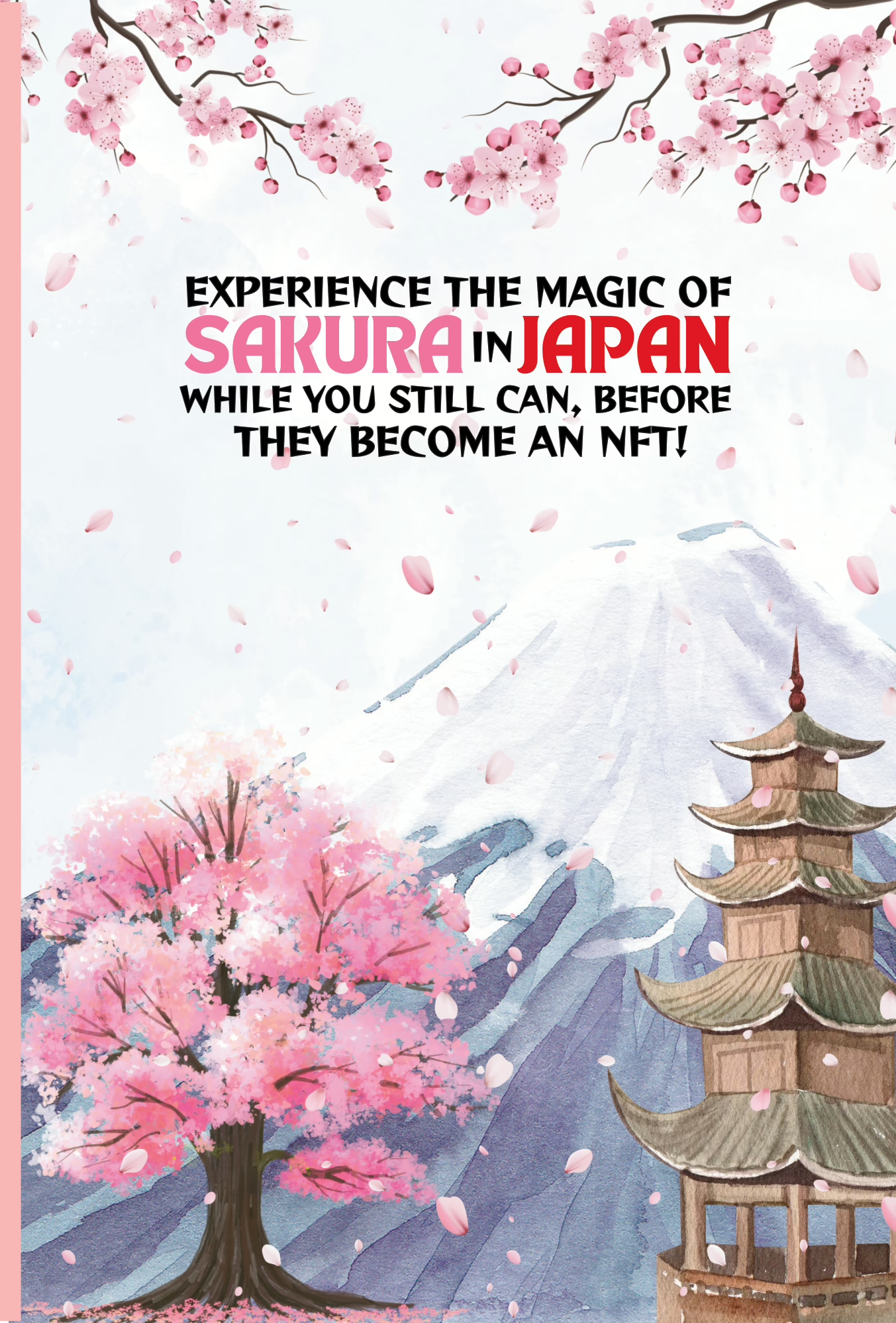
The Story of Sakura
Cherry blossoms — sakura — are Japan’s most iconic spring symbol. The blooms embody mono no aware: the bittersweet beauty of impermanence. Bloom windows are brief — often only a week from full bloom to petal-fall. People gather for hanami (flower viewing) under pale pink canopies in parks, along rivers, and across temple grounds.
The most common variety is the Somei-Yoshino, first bred in Edo-period Tokyo and now planted across the country. Timing shifts by region and weather — earlier in Kyushu in the south, later in Hokkaido in the north. The sakura front is tracked by the Japan Meteorological Agency each year. Watching its progress north is a minor national obsession.
The game distils that season into play. To see how Japan celebrates spring in person, the Magnificent Japan cherry blossom guide covers the rituals, regions, and timing in depth. To pair the visuals with the brushwork, our Calligraphy Practice Workbook traces 100 essential kanji stroke by stroke. Before booking a real-life sakura trip, check the Japan National Tourism Organization’s cherry blossom forecast.
Sakura season is famously short, so people plan their whole year around it. Full bloom to petal-fall can pass in a week. A cherry blossom game brings a little of that bloom to any month on the calendar. The petals fall the same way in July as they do in April. The mood carries over regardless of the date outside. For anyone counting down to a real trip, it makes a fair stand-in.
Beyond the game itself, the tools below carry the same interest in Japan a little further. Each one runs in the browser, exactly the way the sakura game does. There is nothing to download and nothing to sign up for. Calligraphy practice, a name generator, and a daily kanji card all sit a single click away. Together they turn a moment of play into the start of real study. Pick whichever one matches your mood today.
Tools and Workbooks From Magnificent Japan
Browser-based practice for calligraphy, names, and daily kanji study. Plus our published workbook series.
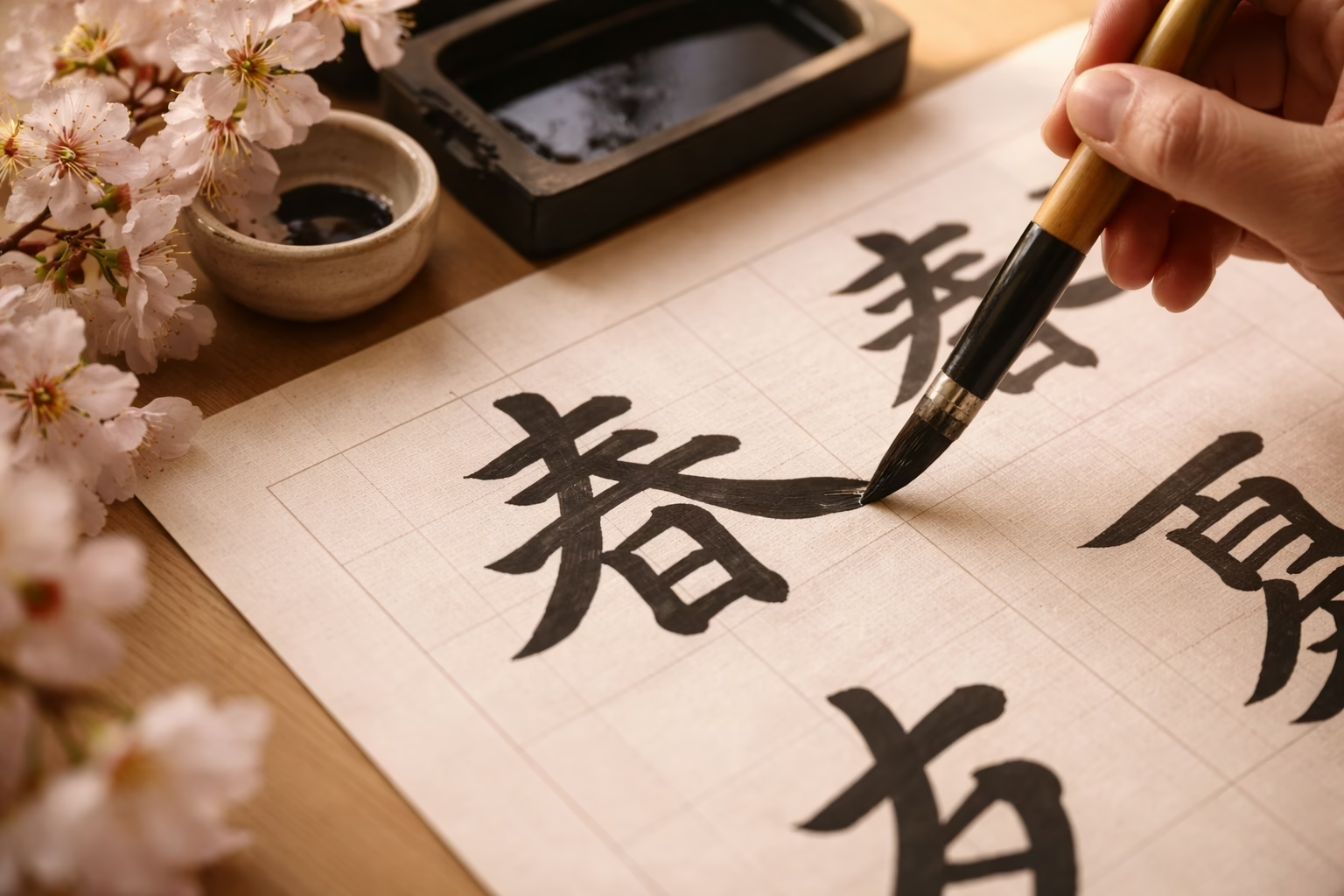
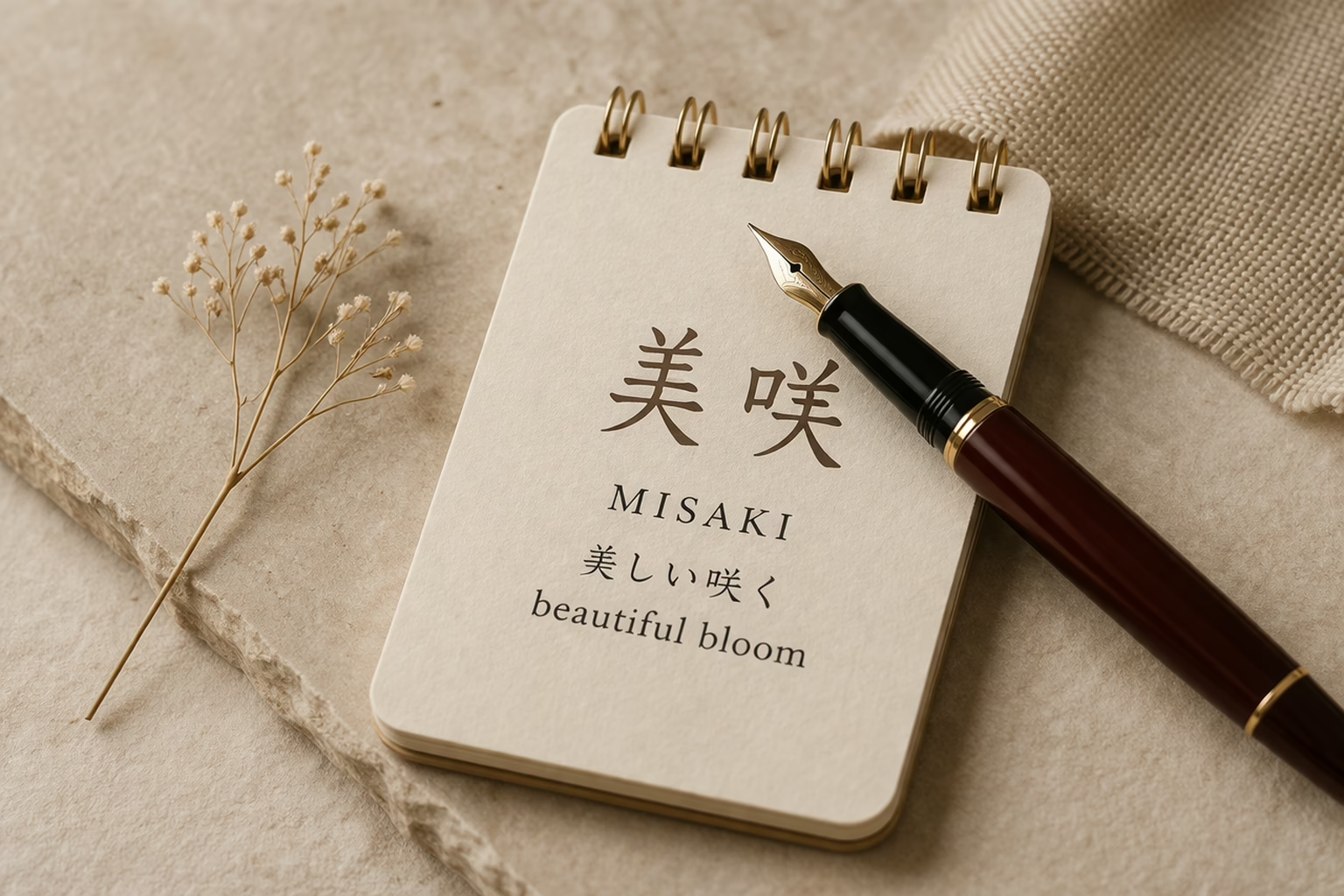
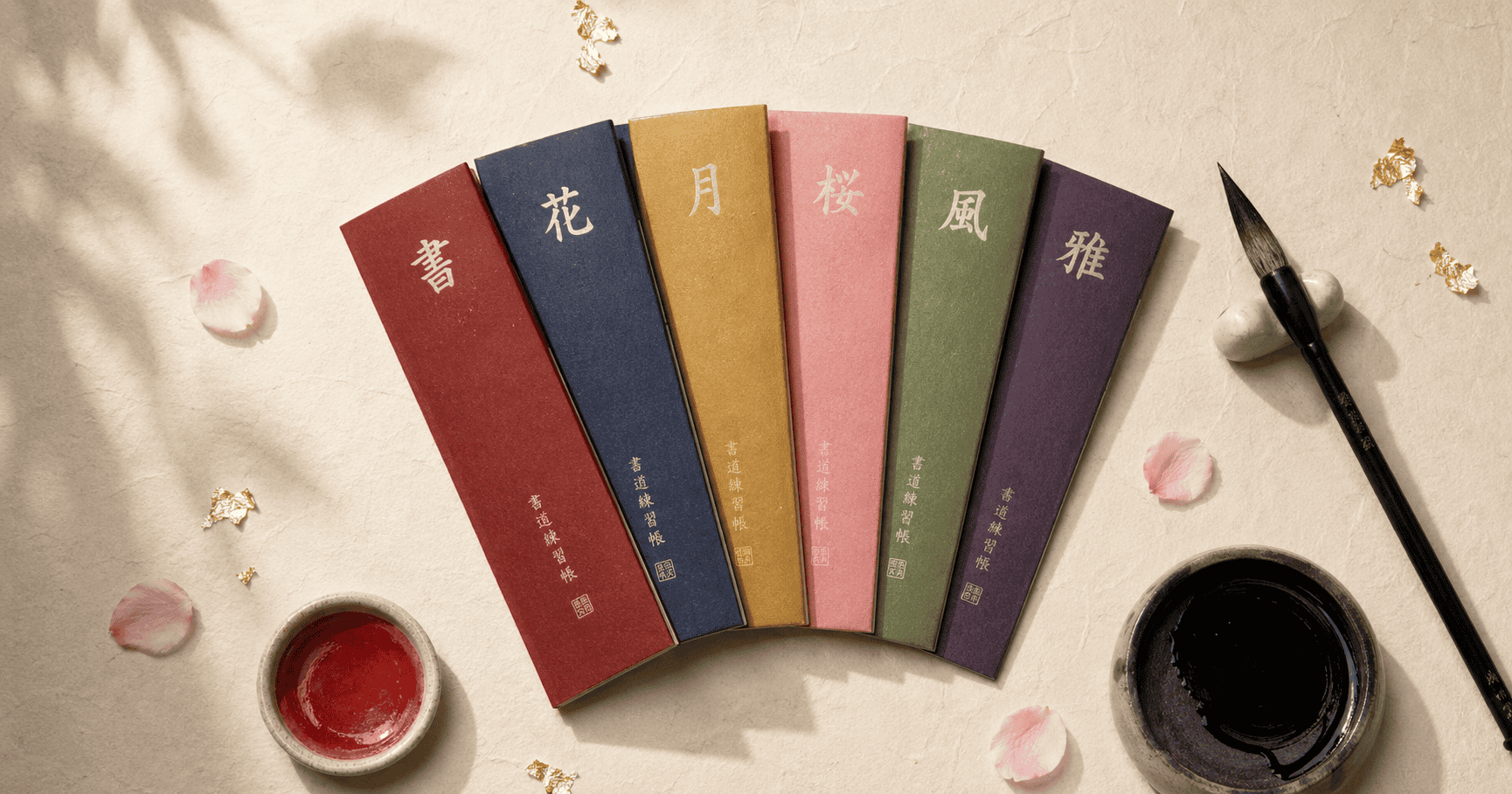
The journals return the mood to spring once more. After a round of the cherry blossom game, a blank page invites a line about the day. Some people sketch the petals they just caught. Others simply write what the season brings to mind. The book asks for nothing and holds whatever you give it. Play and reflection sit side by side here, without competing for attention.
Younger players often want to keep going long after the game ends. The coloring books below carry the same animals and spring scenes onto paper. Crayons pick up where the basket left off. Each page names its creature in Japanese, so an afternoon of coloring doubles as a first lesson. The books travel well, and they teach a little Japan along the way.

The finds below round out the sakura theme with objects rather than pages. They come from the wider Magnificent Japan shopping edit, chosen for the same spring mood. Some lean practical, and others lean purely pretty. Browse them the way you might wander a spring market stall. There is no pressure to buy a thing. Treat it as a window display that happens to be shoppable.
Sakura Season Finds
Curated Japan-inspired products from the Magnificent Japan shopping edit.
New tools and journals arrive through the year, and the cherry blossom game was one of them. The note below is simply how word gets out first. There is no set schedule and no weekly drumbeat. One message lands when something is genuinely ready to share. In between, your inbox stays its own. That is the whole promise, and there is nothing else to it.
The questions below cover what parents ask most about this Japanese cherry blossom game. Cost, safety, devices, and the right age all come up often. Each answer stays short and plain, with no fine print. If something you need is missing, the game page itself tends to answer it in play. Most worries fade once a child has caught a few petals. Still, it helps to have the basics set out first.
Everything Else You Might Want to Know
Does Catch the Sakura cost anything to play?
Is the game safe for young children?
Does it need a download?
What age group is Catch the Sakura for?
How does Catch the Sakura train hand-eye coordination?
Can I play Catch the Sakura on mobile?
The pages here continue the same thread, from daily kanji to the art of the brush. Each one sits a single click from the sakura game above. Some are tools you use in the browser, and others are guides worth a slower read. Follow whichever pulls at you. There is no right order to any of it.
A little language goes a long way before a trip to Japan. These two pick up where the cherry blossom game leaves off. One builds toward reading two thousand kanji in a year. The other hands you a Japanese name of your own, kanji and meaning included. Neither asks for more than curiosity to begin.
The game captures one bright week of Japan in petals. The real thing is worth planning a year around. Spring is the reason many travellers first go, and hanami is the heart of it. Blossoms open from south to north over several weeks. Catch the timing, and a whole country turns pink at once.
Loved the falling petals? See where they come from — the parks, the timing, and the rituals of hanami — in our cherry blossom season guide.
Explore Cherry Blossom Season →