The Wabi-Sabi Digital Journal, a Practice in Imperfection
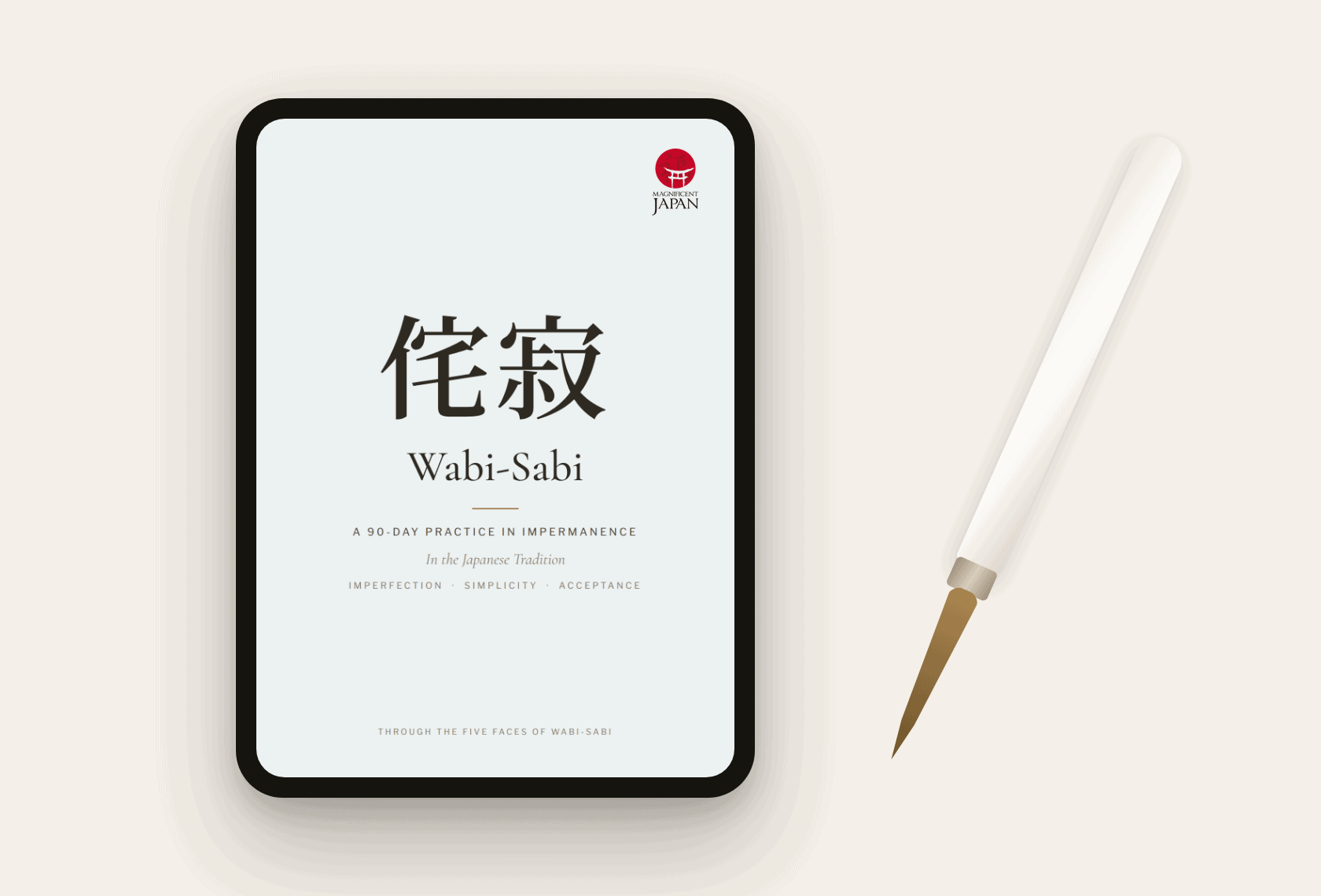
A ninety-day practice for iPad and tablet — one prompt a day, drawn from wabi-sabi, the Japanese art of finding beauty in the imperfect and the passing.
The wabi-sabi digital journal is a write-on PDF kept in your favourite annotation app. It asks you to look again at what is worn, unfinished, or fading — and to find, in it, something already complete. Ninety guided prompts follow, sequenced so the eye deepens week by week.
Instant download · works in every major tablet app
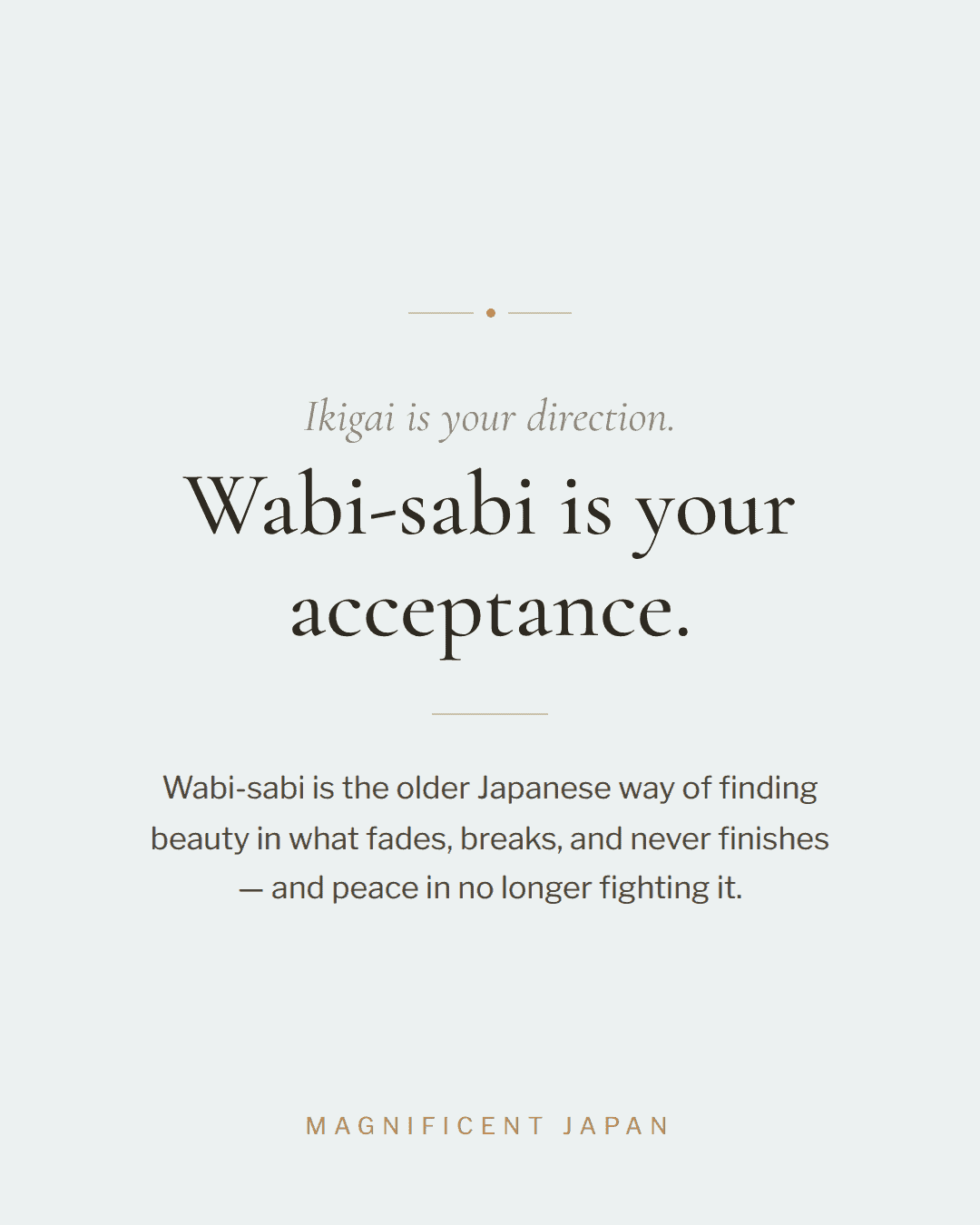
The world says fix it, finish it, replace it. Wabi-sabi says look again.
Wabi-sabi is the Japanese sense that the imperfect, the impermanent, and the incomplete are not lesser than the flawless and the new — and are often more. It is the eye the tea masters trained: one that finds the cracked, locally made bowl more alive than the imported, perfect one.
The flawless, the finished, the upgraded — what most of modern life pushes you toward, and rarely arrives at. Most of what we own and make is built to be replaced.
The worn, the unfinished, the passing — looked at clearly, and found complete as they are. A practice not in lowering your standards, but in changing what you look for. This is where the ninety days sit.
This is not a practice in resignation. It is a practice in attention — a trained eye that sits within the wider Cultural Reflection Collection.

What wabi-sabi means
Wabi-sabi 侘寂 joins two old words. Wabi 侘 turned, over centuries, from the loneliness of living simply toward the quiet richness found in austerity and restraint. Sabi 寂 is the beauty that age leaves — the patina on metal, the moss on stone, the grace a thing earns only by lasting.
It took its mature form in the tea room, where the sixteenth-century master Sen no Rikyū set a rough, locally made bowl beside imported perfection and found the plainer one more alive. Wabi-sabi is the eye he trained — one that prefers the handmade to the machined, the fading to the fixed.
Five faces, ninety days
The prompts move through five faces of wabi-sabi — five ways its beauty shows itself across a life. You do not study them; the prompts teach them, asking each in turn and deepening as the weeks go on.
Prompts that ask the right question
Most reflection prompts ask you to fix something, or to reach for more. These ask you to look again — at what is worn, passing, or unfinished — and to find the beauty already there. The ninety days are sequenced so the eye compounds in a way a flat list never could.
The early prompts are small, the kind you can answer before the tea goes cold. The later ones assume you have been looking, and ask a little more.
What the wabi-sabi digital journal includes
A write-on PDF for your tablet, sequenced across ninety days and kept in GoodNotes, Notability, Noteshelf, or any annotation app.
- Ninety daily prompts — one a day, across three months
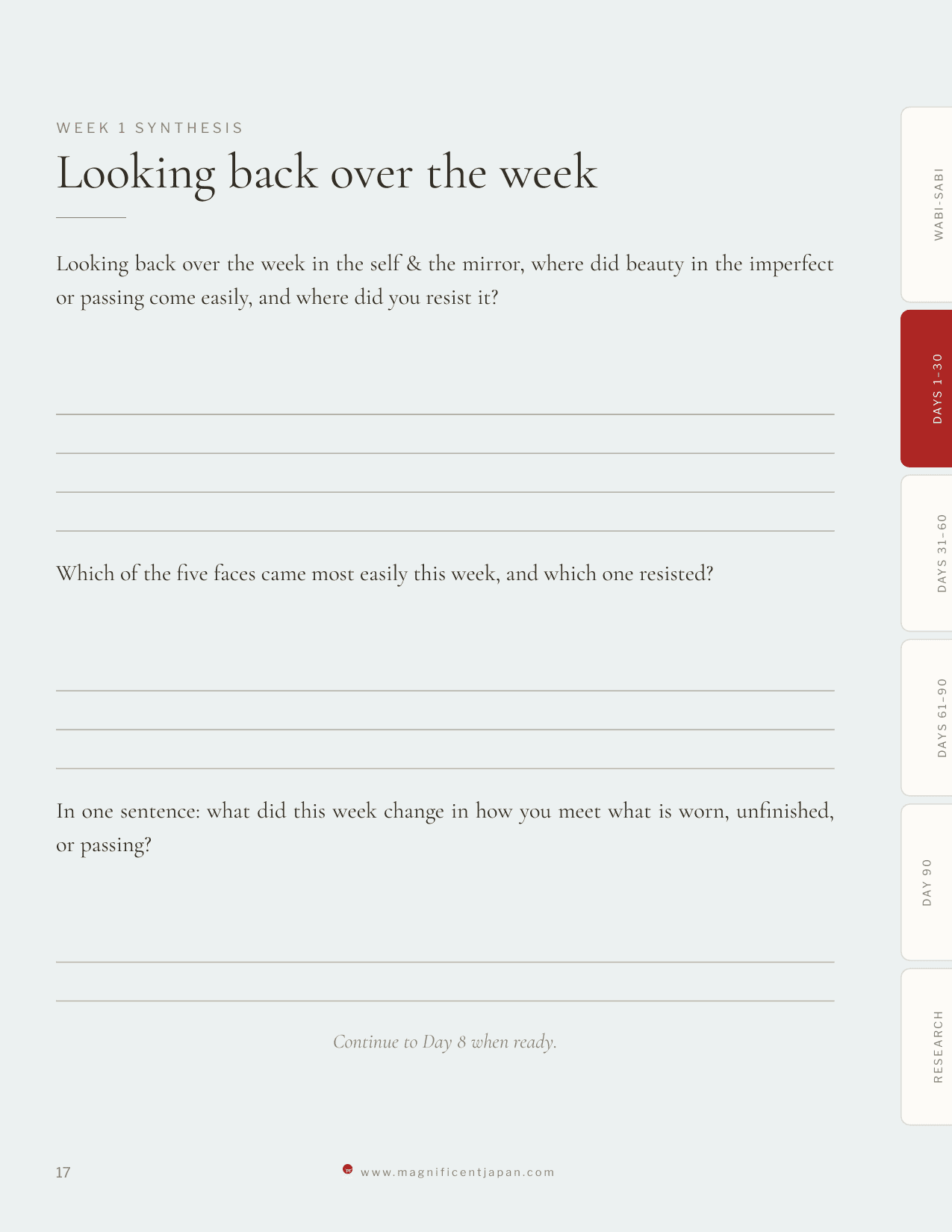
- Weekly syntheses — a look back at the close of each week
- Three monthly reviews — the longer view across each month
- Two Beginning pages — revisited on Day Ninety, to measure the distance
- Tap-through navigation — side tabs and links to any day or section
- Research foundations — the sources, and where to read further
Begin the practice
The wabi-sabi digital journal is one file, yours to keep, reusable as often as you like. It is built to be returned to, not read through.
Instant download · every major tablet app · part of the Cultural Reflection Collection
Look inside
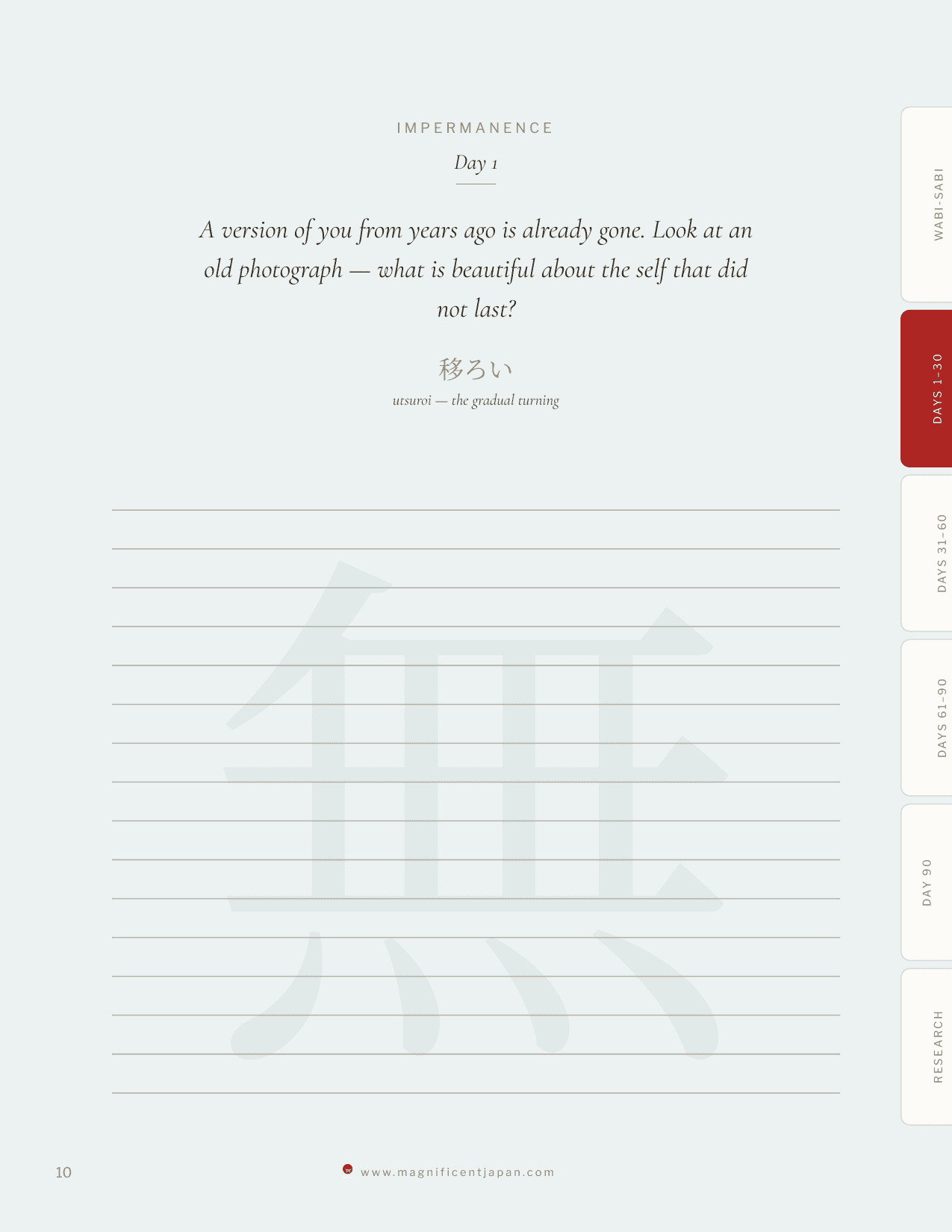
Three real pages, shown full size — a Beginning page you return to on Day Ninety, a daily prompt, and a weekly synthesis. Tap any page to open it larger.
How it works
What ninety days does
A single prompt rarely changes much. Ninety of them, in sequence, do something a list never could. The early weeks ask small questions — the worn thing you would once have replaced, what you let stay unfinished, the passing moment you stopped to notice.
By the second month the prompts assume you have been looking, so they ask a little more. On Day Ninety you return to the two pages you began with, and the distance between them is the whole point.

Try seven days first
The seven-day sampler is the real first week of the wabi-sabi digital journal, as a write-on PDF for your tablet. Leave your email and it arrives the moment it is ready.
One email a fortnight. Unsubscribe any time.Where the practice comes from
The eye the wabi-sabi digital journal trains — for the worn, the weathered, the slowly aging — runs through Japan itself. A tea room in late-afternoon light. A moss garden left to its own slow time. An old inn where the years show, with grace, on every surface.
The practice works wherever you sit with it. Yet once it settles, some readers want to stand inside the unhurried Japan it draws from — and that is a journey worth shaping with care.
A still tea room, a weathered garden, a ryokan where the day softens. When you would like to step into the Japan this practice draws on, we shape the journey around how you want to travel.
Begin a Custom ItineraryQuestions Worth Asking
Is this a printable or a paper book?
It is a digital PDF made for tablet annotation apps. You write on it with a stylus rather than printing it.
Which apps does it work in?
GoodNotes, Notability, Noteshelf, Penly, Xodo, and Samsung Notes. The side tabs and links work in any app that opens annotatable PDFs.
Do I have to journal every day?
No. The practice is built around returning to it, not around a perfect streak. You can move at your own pace.
How is this different from the Ikigai or Nagomi journal?
They are companions in the same format, part of one collection. Ikigai is about direction; nagomi is about balance; wabi-sabi is about meeting what is imperfect, passing, and unfinished, and finding it beautiful. Each stands on its own, and none repeats another’s prompts.
Can I print it?
It is designed for tablet annotation. The side-tab navigation and day-to-day links only work inside an app, so printing loses the structure.
Will there be more journals?
Yes. Wabi-sabi is part of the Magnificent Japan Cultural Reflection Collection, alongside the Ikigai and Nagomi journals, with further practices to follow.

Part of a longer practice
The Cultural Reflection Collection gathers guided practices rooted in single Japanese concepts. The wabi-sabi digital journal sits alongside The Ikigai 90-Day Journal — each a single concept, met a day at a time, until it becomes something you have lived rather than read.
Begin the Practice — $27