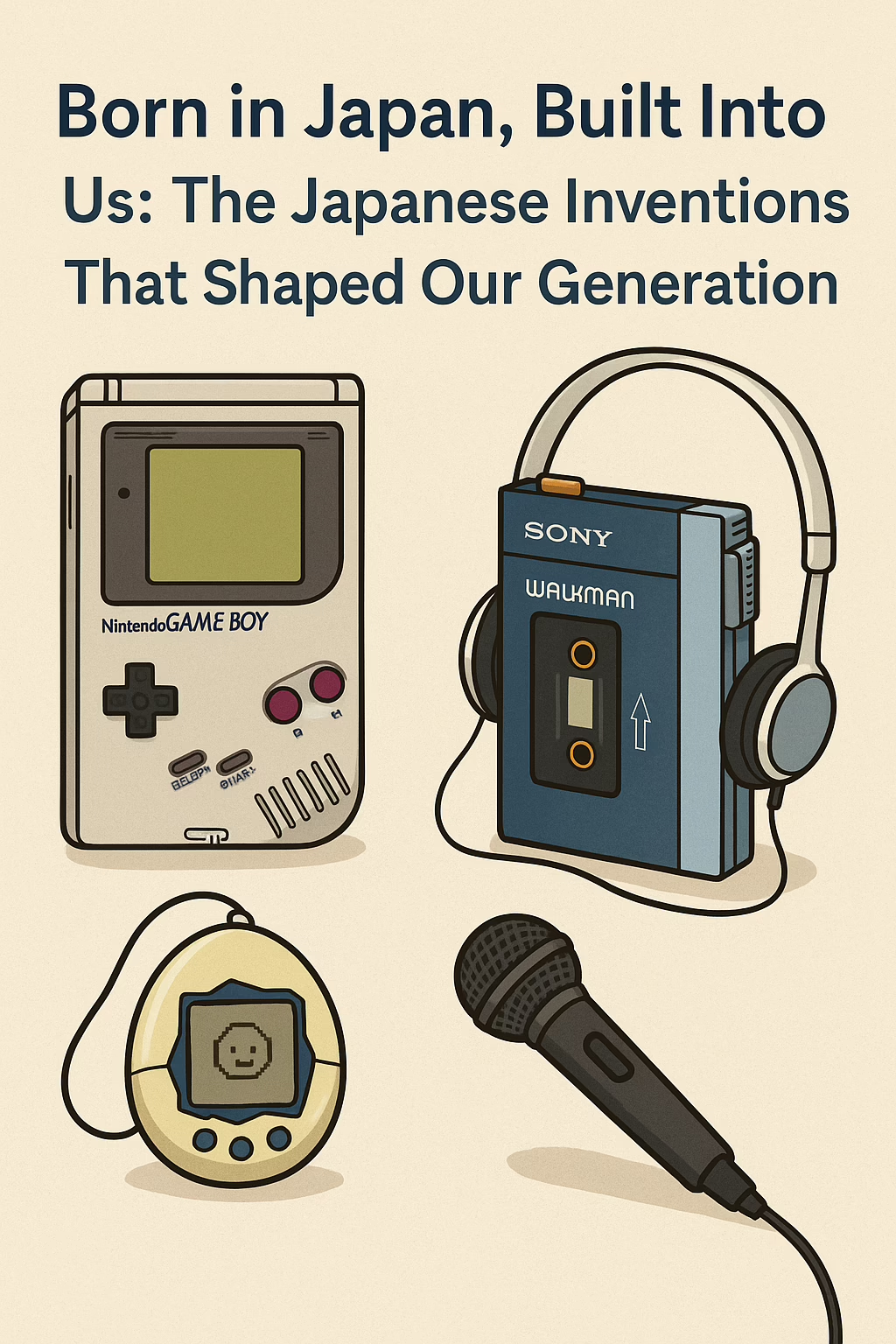
1980s Japanese Inventions That Shaped Our Generation
If you grew up between the 1980s and the early 2000s, your memories likely come with unmistakable sounds: the satisfying click of a Game Boy cartridge, the soothing hiss of a Walkman tape, the frantic beeping of a Tamagotchi about to “die,” and off‑key karaoke sessions stretching into the early hours. These aren’t just nostalgic noises — they’re audio time capsules that transport us back to the heart of our childhoods. Many of the gadgets that defined our youth were born in Japan, and their influence extends far beyond play — quietly reshaping how we played, traveled, socialized, and even how we see ourselves today. From portable gaming to personal tech that transformed everyday life, this era of invention laid the groundwork for much of the technology we take for granted now.
In this guide, we’ll explore the Japanese inventions that changed our generation, uncover why they mattered so deeply, and show you how to turn that nostalgia into an unforgettable journey — from dreaming about these iconic creations to experiencing Japan firsthand. You can also kickstart your adventure with the Adventure Starter Pack, and a Magnificent Journal hub a curated guide to help plan your trip, capture memories, and make the most of every experience.
Why These Japanese Inventions Feel So Personal
What made these inventions different wasn’t just the tech specs. It was how intimate they were:
- They fit in your hand or your pocket.
- They travelled with you – to school, on buses, on family holidays.
- They created tiny worlds that felt like they belonged only to you.
Japan specialised in human-scale tech – small, portable devices built for daily life rather than display cabinets. That’s why they still feel “built into us” decades later.
Game Boy: A Whole World in Your Pocket
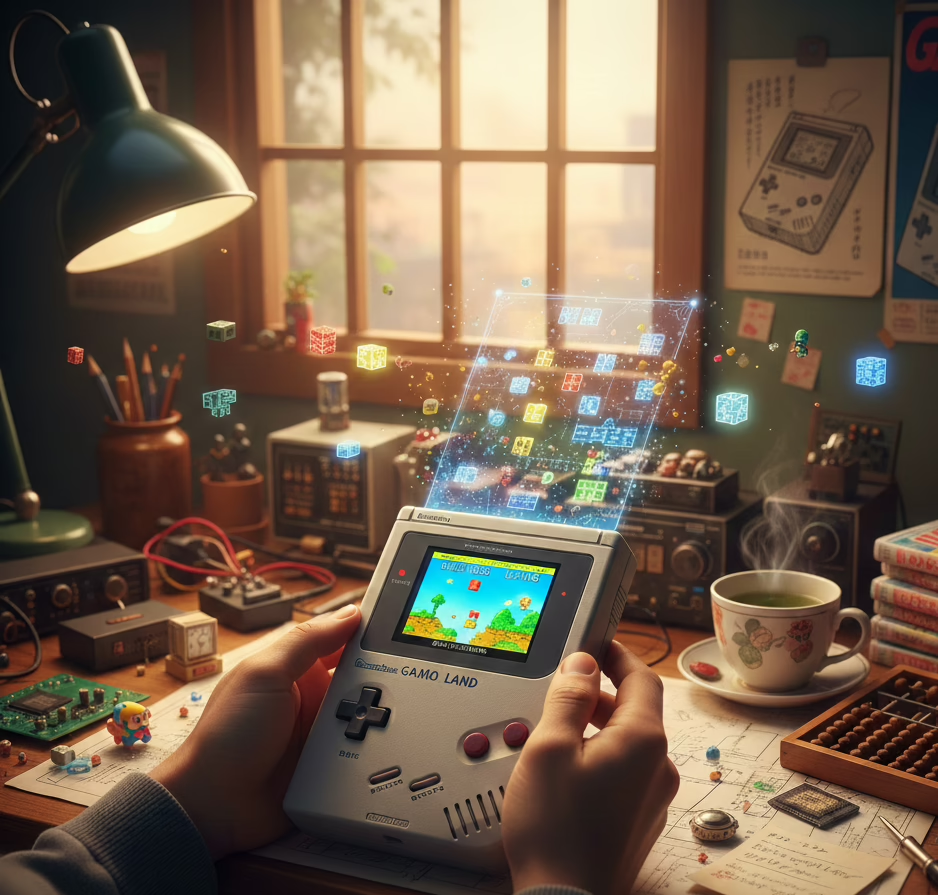
Launched in 1989, the Game Boy took video games off the living-room TV and into our backpacks.
Yes, the screen was green and a bit blurry, but it didn’t matter. Game Boy:
- Turned commuting, school breaks and long flights into gaming time.
- Made titles like Tetris and Pokémon part of everyday life.
- Became a genuine cultural icon – there’s even an original Game Boy on display at the Smithsonian’s National Museum of American History.
If you miss that feeling of a chunky handheld in your palms, you can still pick up retro-style consoles that run classic-inspired games but charge via USB instead of eating AA batteries. In Japan now, you can wander through Akihabara in Tokyo or Den Den Town in Osaka and find shelves of used cartridges and modded units. It’s like walking into your childhood bedroom – just turned up to 100. To recreate that “endless train journey with a Game Boy” feeling, plan a route heavy on rail travel and long-distance hops. The JR Pass guide for long stays shows you how to turn slow travel days into built-in nostalgia time between citie
Walkman: Your First Personal Soundtrack
Before spotify playlists and noise-cancelling headphones, there was the Walkman.
Sony’s portable cassette player, released in 1979, changed how the world listened to music by turning it into a fully private experience – your tape, your headphones, your mood.
For teens and young adults, the Walkman meant:
- Putting your entire mood on your ears and shutting the world out.
- Curating who you were through mixtapes shared with friends.
- A first taste of the idea that everyday life could have a soundtrack.
Modern Japan still leans into that love of audio. In districts like Akihabara and Nakano, you’ll find listening bars and headphone shops where you can test high-end gear in quiet booths. It’s the grown-up version of lying on your bed with a tape and cheap foam-covered headphones. If you want a small taste of that feeling again, look for a portable cassette player with a more modern twist, or combine a sleek digital player with over-ear retro-inspired headphones before your flight. Boarding a Tokyo-bound plane with your own soundtrack hits very differently.
Tamagotchi: The Digital Pet That Trained Us for Smartphones
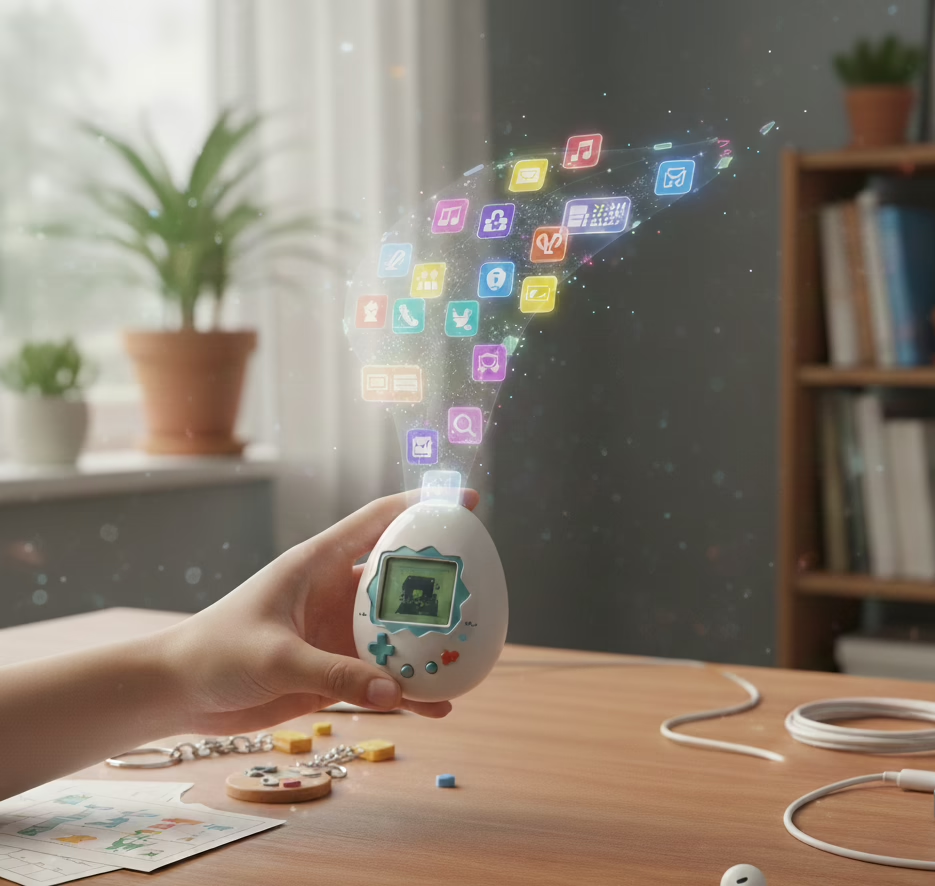
When Tamagotchi arrived in 1996, it felt like magic: a tiny digital pet that lived in an egg-shaped keychain and demanded constant care.
Tamagotchi quietly trained a generation to:
- Check a small screen for urgent notifications.
- Feel genuine responsibility for a virtual “life”.
- Talk about digital events – evolutions, escapes, “deaths” – as if they were real.
The toy sold tens of millions of units worldwide and has recently enjoyed a comeback, with new versions and spiritual successors popping up in toy aisles and retro-themed launches. If you want to carry a little piece of that chaotic energy on your trip, you can still grab a current-generation digital pet and clip it to your bag. Then go hunt for the “real thing” in Tokyo – character stores in Harajuku, Ikebukuro and Shibuya are full of Tamagotchi releases, gacha machines and limited-edition merch.
Karaoke: The Original Social App
Long before apps turned singing and lip-syncing into content, Japan invented a way to share badly sung songs in real time. Karaoke machines emerged in the late 1960s and early 1970s, with early coin-operated prototypes allowing people to sing along to backing tracks without a live band.
By the 80s and 90s, karaoke had spread worldwide and quietly changed how we socialised:
- It gave shy people an excuse to be loud for exactly one song.
- It flattened office hierarchies for a night.
- It made singing badly not just acceptable, but fun.
In modern Japan, karaoke boxes are still one of the easiest ways to step inside everyday local culture. For a pure nostalgia night, book a private room, load it with 90s playlists and order too many snacks. If you’re building a whole evening around it, plug “retro gaming and karaoke” into the AI Japan Trip Planner and let it link up arcades, dinner and your karaoke session into one smooth route.
Instant Ramen and Konbini: The Comfort-First Revolution
Not every influential invention has a power button. Instant ramen, created by Momofuku Ando in 1958, rewired our idea of “fast food” by putting hot, comforting meals just a kettle away.
For students and young workers, cup noodles and microwaveable konbini meals became:
- Survival tools during exam weeks and all-nighters.
- A first gateway to Japanese flavours like shoyu, miso and tonkotsu.
- A symbol of hacking time and budget without totally sacrificing taste.
Walking into a real Japanese convenience store for the first time feels weirdly emotional. The onigiri wall, the hot snack counter, the rows of cup noodles – it’s like stepping inside the origin story of every late-night study session you ever had. If you’re the type who documents everything, pick up a dedicated Japan travel notebook and turn each konbini run into a tiny tasting log: what you tried, what you’d buy again, what surprised you.
Camera Phones: The First Step Toward the Selfie Era
Years before smartphones took over, Japan was already experimenting with phones that took photos. In 1999, Kyocera released the VP-210 in Japan – a mobile device with a built-in camera that could send still images over the network.
It wasn’t sleek by today’s standards, but it quietly did three huge things:
- Made photography casual and constant, not limited to “special moments”.
- Turned everyday life into potential content.
- Opened the door to selfie culture, social feeds and the idea that your day should be documented.
Modern Japan still leads in cute photo-centric culture: purikura booths, themed cafés designed for photos, and entire neighbourhoods optimised for “just one more shot”. If you’re planning to chase that aesthetic, jump into MJ’s travel guides to find districts, viewpoints and experiences that look as good in your camera roll as they feel in person.
How These Inventions Rewired Our Brains
Look at all of these side by side and a pattern appears:
- Portable – Game Boy, Walkman, Tamagotchi, camera phones, cup noodles… all built for movement.
- Interactive – you had to play, feed, sing, photograph, choose.
- Personal – your mixtape, your Pokémon team, your preferred noodle flavour.
Media scholars have pointed out that devices like the Walkman and Game Boy changed how we experience public space, turning commutes and waiting rooms into semi-private bubbles. In other words, long before algorithms, these Japanese inventions taught us to curate our own tiny universes – a habit that flows straight into how we use phones and apps now.
How to Turn Nostalgia Into a Real Trip to Japan
If this is hitting you in the feelings, you can absolutely build a trip around it.
1. Create a Retro-Tech Route
- In Tokyo, mark out Akihabara and Nakano Broadway for game shops, retro consoles and audio gear.
- In Osaka, add Den Den Town for more second-hand treasures.
- Drop in a few museums or galleries that cover design and tech history when they line up with your dates.
Put all of that into the AI Japan Trip Planner and let it arrange the days in a way that actually works with trains, opening hours and your budget. If you’re staying longer or bouncing around the country by rail, keep the JR Pass long-stay guide handy – it’s written exactly for “I want to see everything and still afford it” itineraries.
2. Eat Like Your Younger Self (But Better)
Plan a mix of:
- Late-night konbini snacks.
- Proper ramen shops that take your instant-noodle loyalty up several levels.
- Themed cafés that lean into gaming, anime or kawaii culture.
3. Capture It Like It Matters
Before you go, browse MJ’s culture and experiences section to find food and tech mashups – robot restaurants, high-end omakase with futuristic touches, and other experiences that feel like the grown-up version of your childhood obsessions.
These inventions changed how we record life – so give this trip a more intentional layer than random photos.
- Choose a favourite design from the MJ journals collection and turn it into your “iconic inventions” log – game shops you found, karaoke songs you sang, gadgets you bought.
- Keep daily notes on how each neighbourhood feels compared to the way you imagined Japan as a kid.
- If you’re into language, mix in kanji scribbles, lyrics and phrases you overhear.
By the time you fly home, the journal plus photos will feel like a grown-up version of the sticker books, mixtapes or high-score notebooks you kept as a kid.
Born in Japan, Still Built Into Us
The hardware changed shape – Game Boy became Switch, Walkman became streaming, Tamagotchi became apps – but the emotional pattern is the same. Japan’s mix of playfulness, precision and human-scale design is still quietly reshaping how we live, work and travel.
If you’re ready to move from “remember when…” to “we actually went”, start sketching your own route:
- Use the AI Japan Trip Planner to build a retro-tech itinerary that doesn’t feel like a generic tour.
- Pick a cover you love from the Japan journals and give those childhood gadgets the full-circle ending they deserve – ink on paper, in the country where it all began.