For more than 1,500 years, Japan has been home to the world’s oldest continuous hereditary monarchy, with its sovereigns serving as the revered custodians of the sacred Chrysanthemum Throne—a symbol of the nation’s cultural heritage, spiritual identity, and unity. This extraordinary dynasty stands as a living testament to Japan’s rich traditions and enduring sense of continuity, making it one of the most distinctive royal institutions in the modern world. As the Land of the Rising Sun navigates the delicate balance between ancient customs and contemporary democracy, the Imperial Household of Japan remains essential to understanding the historical roots and modern relevance of Japanese royalty—how its sacred rituals, court traditions, and national symbolism continue to shape cultural life.
Visitors seeking to connect with these timeless traditions can begin their journey through Japanese culture with immersive experiences like respectful cultural etiquette practices, tranquil stays at traditional ryokan, and deeper explorations of Japan’s heritage on travel guides like those in the Adventure Starter at Magnificent Japan. For further reading about Japan’s history and culture, you might enjoy insightful perspectives in theMJ Journals.
History of Japanese Royalty: The World’s Longest-Reigning Monarchy
The history of Japanese royalty spans an extraordinary timeline, making it the world’s longest continuous monarchy. According to the ancient chronicles Kojiki and Nihon Shoki, the Imperial Family traces its divine lineage directly to the sun goddess Amaterasu, the most revered deity in Japan’s indigenous Shinto religion. This sacred ancestry has shaped not only Japan’s spiritual traditions but also its cultural identity and national unity. Over more than 1,500 years, the Chrysanthemum Throne has remained a symbol of continuity, connecting the past with the present. Even today, the Imperial Household plays a central role in preserving ceremonial rituals, court etiquette, and historic customs. Visitors can gain insight into these traditions through immersive cultural experiences such as traditional ryokan stays and etiquette-focused tours.
Emperor Jimmu and the Divine Foundation
Emperor Jimmu, the legendary first mortal emperor, established the imperial line in 660 BCE. Leading his people from Kyushu to the Yamato region (modern‑day Nara Prefecture), Jimmu’s ascension marked the crucial transition from divine to human rule while maintaining the sacred connection to heavenly kami spirits. This unbroken chain of imperial succession has survived political upheavals, samurai rule, foreign invasions, and the dramatic transformations of Japan’s modernization — a testament to the monarchy’s remarkable resilience and cultural significance (see The Yamato Dynasty: The Secret History of Japan’s Imperial Family and The Chrysanthemum and the Sword: Patterns of Japanese Culture for deeper context on Japan’s imperial history and culture). The Imperial Household Agency maintains detailed records of this extraordinary lineage.
Evolution Through the Ages
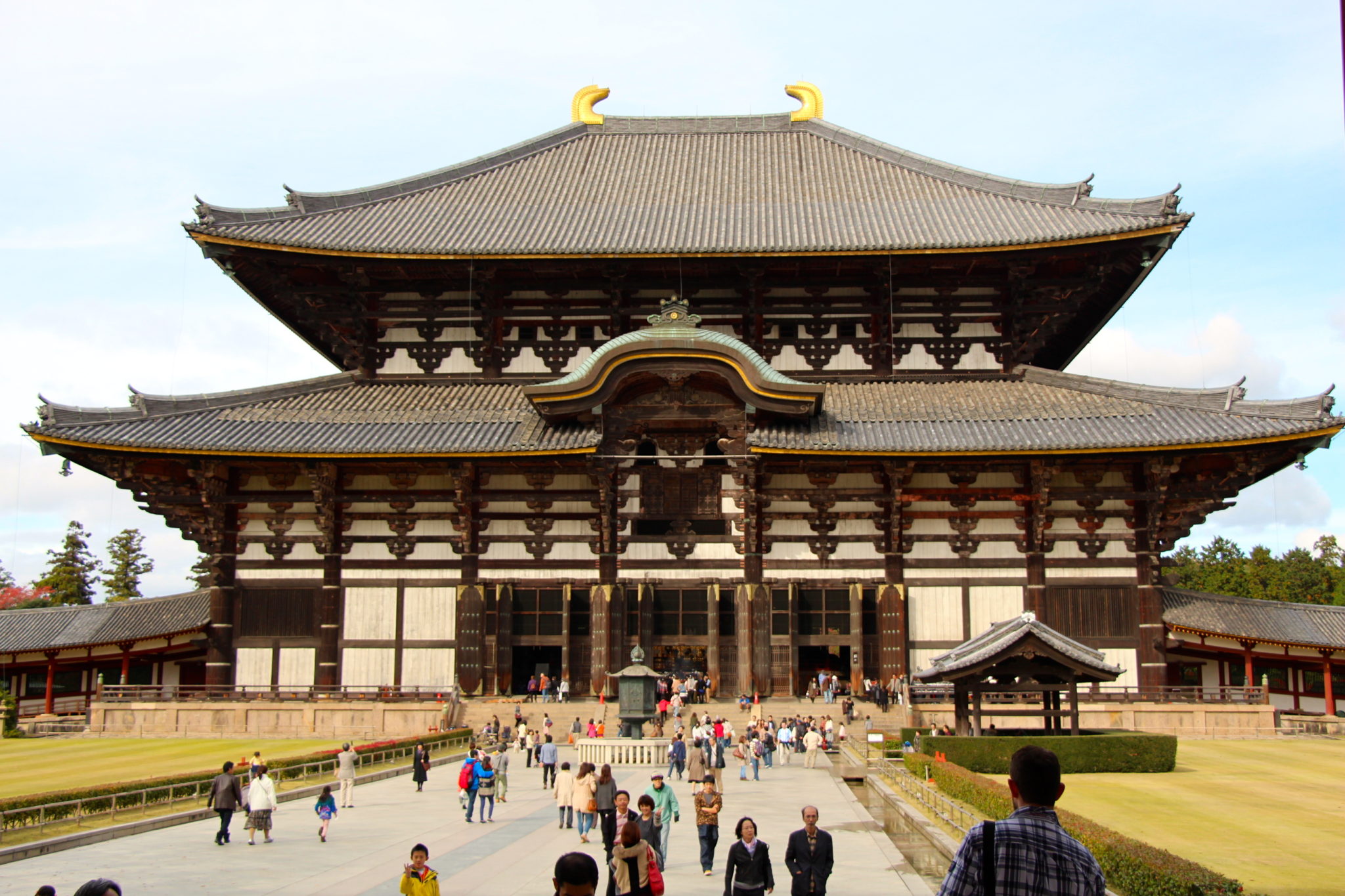
Throughout its history, Japanese royalty has evolved from absolute divine rule to its current constitutional role, embodying both tradition and modernity. For over 1,500 years, the Imperial Family has served as the custodians of the sacred Chrysanthemum Throne, representing Japan’s cultural heritage and spiritual identity. They have weathered the transformative Meiji Restoration, the upheavals of two world wars, and post-war democratization, yet their essential function as symbols of national unity and continuity has remained steadfast. Today, the Imperial Household continues to play a central role in preserving Japan’s rituals, court traditions, and ceremonial customs. Visitors can explore these rich traditions through immersive cultural experiences, including learning proper etiquette and staying in traditional ryokan accommodations. For those looking to deepen their understanding, resources like Japan – Culture Smart! provides detailed insights into Japanese customs, etiquette, and historical traditions. By balancing centuries-old practices with contemporary relevance, the Japanese monarchy offers a unique window into the past, present, and future of the nation.
Current Japanese Royalty: Meet the Imperial Household
The modern Imperial Household consists of distinguished figures who each play vital roles in preserving Japan’s monarchical traditions and representing the nation on the global stage, a dynamic explored in depth in Japan’s Imperial House in the Postwar Era, 1945–2019 and other historical studies of the Chrysanthemum Throne.
Emperor Naruhito: The 126th Emperor of Japan
Emperor Naruhito ascended the sacred Chrysanthemum Throne on May 1, 2019, beginning the Reiwa era (“beautiful harmony”) following his father’s historic abdication. As Japan’s 126th emperor, he serves as the nation’s symbolic head of state under the postwar constitution, performing crucial ceremonial duties while remaining politically neutral. Emperor Naruhito brings modern perspectives to ancient traditions, having studied at Oxford University and served as a goodwill ambassador before his enthronement. His reign emphasizes environmental consciousness, cultural preservation, and strengthening Japan’s international relationships through traditional cultural practices.
Empress Masako: Scholar and Diplomat
Empress Masako, a Harvard-educated former diplomat fluent in multiple languages, represents the modern evolution of imperial consorts. Her international background and career experience bring contemporary insights to traditional royal protocols, particularly in cultural and humanitarian initiatives. Despite facing personal challenges adapting to imperial life, Empress Masako has emerged as a respected figure supporting educational initiatives, cultural exchanges, and diplomatic relations worldwide. Her work reflects the same dedication to service found in Japanese community traditions.
Crown Prince Akishino and the Imperial Succession
Crown Prince Akishino, Emperor Naruhito’s younger brother, stands next in line to inherit the throne according to Japan’s male-only succession laws. Together with Crown Princess Kiko, he represents Japan in official engagements while supporting conservation efforts and cultural preservation projects.
Prince Hisahito: The Future of Imperial Succession
Prince Hisahito, son of Crown Prince Akishino, represents the future of Japanese imperial succession as the only male heir of his generation. His education and development are closely watched as he prepares for eventual imperial responsibilities, highlighting the ongoing succession challenges facing the monarchy.
Emperor Emeritus Akihito and Empress Emerita Michiko
Emperor Emeritus Akihito, who abdicated in 2019 after a 30-year reign, and Empress Emerita Michiko continue supporting cultural activities while enjoying a quieter life. Their abdication marked the first in over 200 years, demonstrating the monarchy’s ability to adapt to changing circumstances.
Sacred Imperial Ceremonies and Traditions
The spiritual significance of Japanese royalty centers on their profound connection to Shinto, Japan’s indigenous religion. For readers interested in deepening their understanding of this tradition and its imperial context, books like A New History of Shinto provide valuable background on Shinto’s development and its rituals across history. As direct descendants of sun goddess Amaterasu, the emperor serves as the highest authority in Shinto rituals, maintaining unique relationships with divine spirits (kami) through sacred ceremonies—an aspect explored further in works such as Shinto: A History.
Enthronement Ceremony (Sokui no Rei): A Sacred Transformation
The enthronement ceremony represents the most sacred imperial ritual, legitimizing a new emperor’s divine authority. Emperor Naruhito’s 2019 enthronement ceremony exemplified these ancient traditions on a grand scale:
- Cost and Scale: 16.6 billion yen celebration with 2,000+ dignitaries from 195 countries
- Sacred Attire: Traditional sokutai robes for the Emperor, 12-layered jūnihitoe (33 lbs) for the Empress
- Throne Ceremony: Sacred proclamation from the 6.5-meter Takamikura throne
- Three Sacred Treasures: Presentation of the Imperial Regalia symbolizing divine legitimacy
- Five Sub-Ceremonies: Including sword presentation, government meetings, and official banquets
Daijōsai: The Great Thanksgiving Festival
The Daijōsai represents the most sacred ceremony in imperial succession, performed only once per reign. This deeply spiritual ritual connects the new emperor directly with ancestral kami spirits:
- Sacred Timing: November 14-15, 2019 (6:30 PM – 3:30 AM ceremonies)
- Divine Offerings: Sacred rice, sake, abalone, and other foods offered to Amaterasu
- Ritual Attire: White silk Shinto priest robes with ceremonial train
- Sacred Spaces: Two specially-built halls (Yukiden & Sukiden) then dismantled
- Ancient Traditions: Rice selected through turtle shell divination dating to 701 AD
- Sacred Protection: Special mats and phoenix umbrella ensure emperor never touches ground
Annual Court Rituals (Kyūchū Saishi)
Throughout the year, Japanese royalty performs regular ceremonial duties that strengthen their connection with the Japanese people:
- New Year’s Greeting (Choken no-gi): Public appearance from Imperial Palace balcony on January 2nd
- Niiname-sai Harvest Festival: November thanksgiving ceremony for successful harvests
- Emperor’s Birthday Celebration: February 23rd public greeting and well-wishes
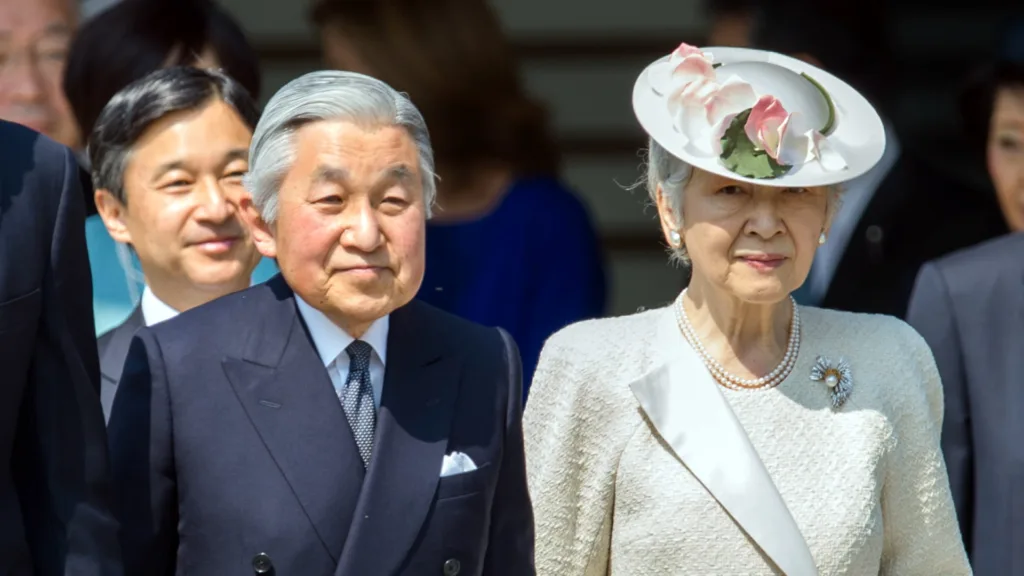
- Cherry Blossom Viewing Party: Spring celebration in Imperial Palace gardens
- Three Palace Sanctuaries Rituals: Regular offerings at Kashikodokoro, Koureiden, and Shinden shrines
Imperial Palace: The Heart of Japan’s Monarchy
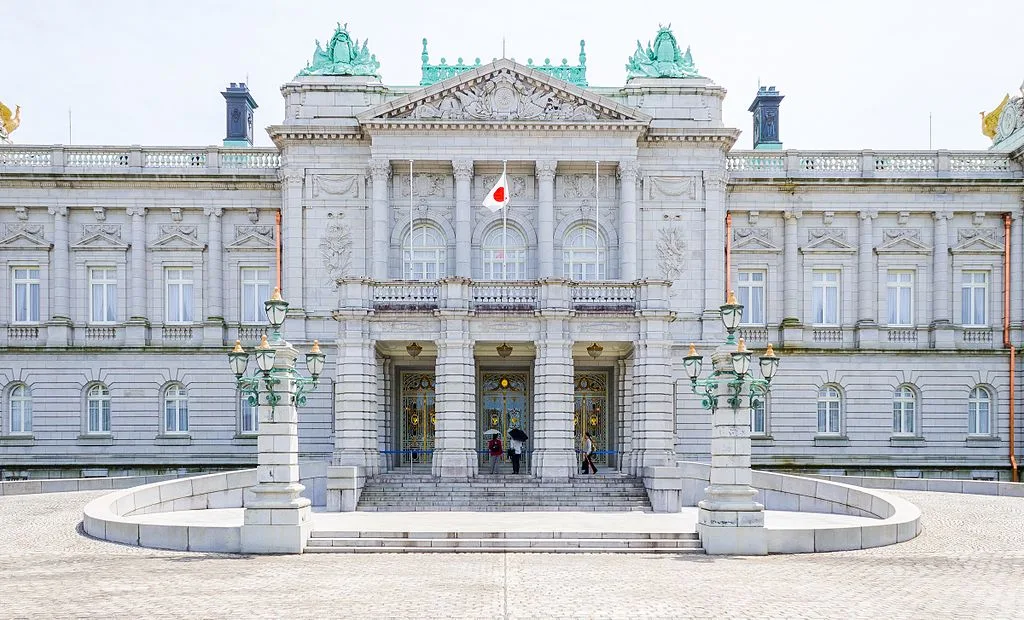
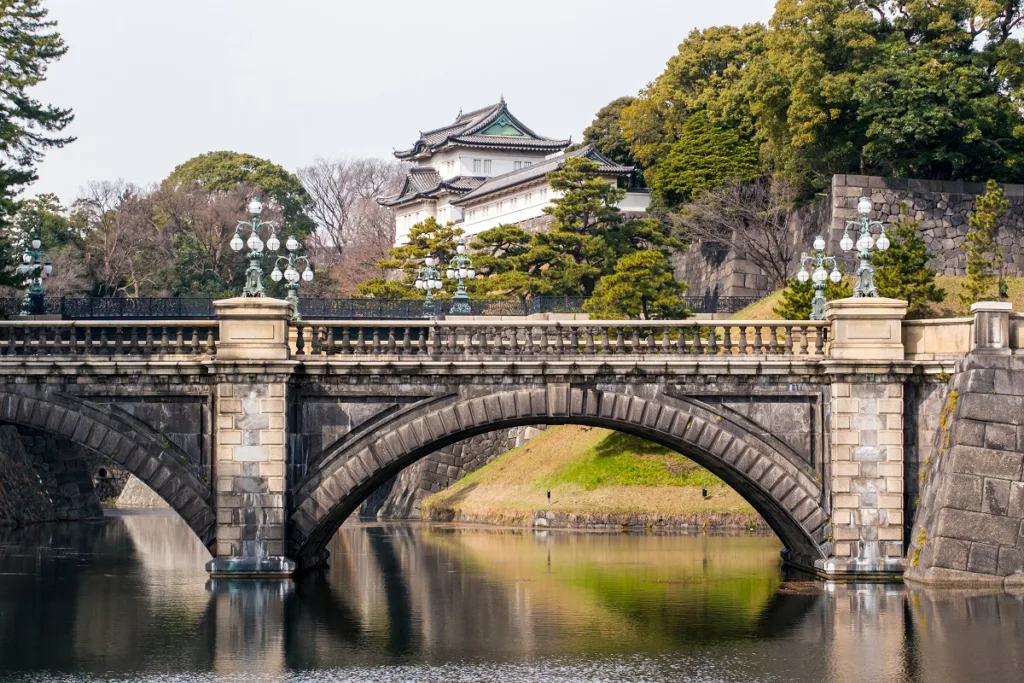
The Imperial Palace in Tokyo serves as both the official residence and ceremonial center of Japan’s monarchy. Built on the historic site of Edo Castle, this magnificent complex symbolizes the continuity between Japan’s feudal past and modern imperial present. The Japan Guide offers detailed information about visiting the palace grounds and understanding its historical significance.
Key Palace Features
- Matsu-no-Ma (Pine Hall): The most prestigious room for major state ceremonies
- Three Palace Sanctuaries: Sacred Shinto shrines within the palace grounds
- Imperial Rice Fields: Where the emperor personally plants and harvests rice for ritual offerings
- Nijubashi Bridge: Iconic double-arched entrance visible during public ceremonies
- East Gardens: Former Edo Castle grounds open to the public year-round
Imperial Economics and Financial Structure of Japanese Royalty
The financing of Japanese royalty operates through a unique system that balances transparency with constitutional requirements. The Imperial Family’s financial management is administered by the Imperial Household Agency under the Cabinet Office.
Annual Budget and Expenses
The Imperial Family’s annual budget for 2024 totaled approximately 32.4 billion yen (roughly $240 million USD), divided into specific categories:
- Court Expenses (Kyūtei-hi): 6.7 billion yen for official ceremonies, state banquets, and diplomatic functions
- Internal Court Expenses (Naiteishi-hi): 3.2 billion yen for the Emperor’s personal and family expenses
- Imperial Estate Expenses: 22.5 billion yen for maintaining palaces, gardens, security, and staff salaries
Revenue Sources and Property Management
Beyond government funding, Japanese royalty manages substantial assets:
- Real Estate Holdings: The Imperial Palace grounds alone are valued at over $12 billion
- Art Collections: Priceless artifacts, paintings, and cultural treasures accumulated over centuries
- Agricultural Operations: Imperial farms producing rice for ceremonial use and silk cultivation
- Forest Management: Extensive woodland properties contributing to environmental conservation
International Royal Relations: Japanese Royalty on the Global Stage
Japanese royalty maintains sophisticated relationships with royal houses worldwide, serving as crucial instruments of cultural diplomacy and international goodwill. Through state visits, official ceremonies, and cultural exchanges, the Imperial Family fosters mutual respect and strengthens ties between nations. These interactions not only highlight Japan’s rich heritage but also promote cross-cultural understanding and collaboration. The monarchy’s presence at international events underscores its role as a symbol of continuity, stability, and national identity. By blending tradition with diplomacy, Japanese royalty helps convey the values, arts, and history of Japan to a global audience. Ultimately, these connections reinforce both Japan’s international relationships and the enduring significance of its centuries-old monarchy.
European Royal Connections
Japanese royalty has cultivated particularly strong relationships with European monarchies:
- British Royal Family: Regular state visits and cultural exchanges, with shared interests in environmental conservation
- Swedish Royal House: Scientific collaboration through the Nobel Prize ceremonies and academic partnerships
- Dutch Royal Family: Historical trade relationships dating to Japan’s isolationist period
- Spanish Monarchy: Cultural diplomacy focused on art exchanges and historical studies
Asian Regional Leadership
Within Asia, Japanese royalty serves as a stabilizing diplomatic presence:
- Thai Royal Family: Deep cultural exchanges and Buddhist scholarly cooperation
- Brunei Sultanate: Economic and cultural partnership initiatives
- Malaysian Royal Houses: Educational and technological collaboration programs
Imperial Art and Cultural Patronage in Japanese Royalty
Traditional Craft Support

Imperial patronage has preserved numerous traditional Japanese arts:
- Gagaku Court Music: The Imperial Household maintains the world’s oldest continuous musical tradition, with court musicians performing 1,300-year-old compositions
- Noh Theater: Imperial support ensures the survival of this classical dramatic art form
- Traditional Textiles: The Empress personally practices sericulture (silk cultivation) to support traditional weaving arts
- Ceramic Arts: Imperial commissions sustain master potters and regional pottery traditions
Modern Cultural Initiatives
Contemporary imperial cultural programs include:
- International Artist Exchanges: Annual programs bringing foreign artists to study Japanese techniques
- Youth Cultural Education: School programs introducing traditional arts to new generations
- Digital Preservation Projects: Technology initiatives documenting cultural practices for future preservation
Daily Life Protocols and Imperial Etiquette
Japanese royalty operates according to intricate protocols that govern everything from daily schedules to public appearances, maintaining the dignity and accessibility of the monarchy.
Court Ceremonial Procedures
Imperial court life follows precisely choreographed procedures:
- Morning Rituals: Daily Shinto observances at the Three Palace Sanctuaries beginning at 6 AM
- Audience Protocols: Formal procedures for receiving domestic and international dignitaries
- Seasonal Ceremonies: Monthly observances marking agricultural cycles and traditional calendar events
- Public Engagement Rules: Carefully planned interactions with citizens during official visits
Modern Accessibility Measures
Recent decades have seen efforts to make Japanese royalty more accessible:
- Public Garden Openings: Regular access to Imperial Palace East Gardens
- Educational Visits: School groups welcomed for cultural education programs
- Digital Documentation: Online archives making imperial cultural treasures available worldwide
Regional Imperial Connections: Japanese Royalty Across the Nation
Japanese royalty maintains meaningful connections with communities across Japan, visiting various regions throughout the year to engage directly with local residents. These visits often coincide with traditional festivals, ceremonies, and important cultural events, allowing the Imperial Family to honor and preserve regional heritage. By participating in such occasions, they help strengthen the bond between the monarchy and the diverse local cultures that make up the nation. The royal family also actively supports regional initiatives, including arts, crafts, and historical preservation projects, ensuring that unique traditions continue to thrive. These efforts highlight the monarchy’s role not only as a national symbol but also as a living link to Japan’s local histories and customs. Through these ongoing engagements, Japanese royalty fosters unity and respect between the central government and the country’s many distinct communities.
Annual Regional Tours
Imperial visits to Japan’s prefectures serve multiple important functions:
- Cultural Festivals: Imperial presence at regional matsuri celebrations strengthens local traditions
- Disaster Recovery Support: Post-earthquake and tsunami visits providing comfort and encouragement
- Agricultural Celebrations: Harvest festivals honoring farming communities across Japan
- Educational Institution Visits: Support for local schools and universities
Prefecture-Specific Traditions
Each region maintains unique relationships with Japanese royalty:
- Ise Prefecture: Sacred connection through Ise Grand Shrine and the Sacred Mirror
- Nara Prefecture: Historical significance as the ancient imperial capital
- Hiroshima Prefecture: Peace memorial activities and international reconciliation efforts
- Okinawa Prefecture: Cultural bridge-building and historical acknowledgment initiatives
The Three Sacred Treasures: Imperial Regalia of Divine Authority
The Imperial Regalia consists of three sacred treasures that legitimize imperial rule, symbolizing essential virtues required for righteous governance in Japanese royalty:
- Yata no Kagami (Sacred Mirror): Housed at Ise Grand Shrine, representing wisdom and honesty
- Kusanagi no Tsurugi (Sacred Sword): Kept at Atsuta Shrine in Nagoya, symbolizing valor and courage
- Yasakani no Magatama (Sacred Jewel): Remains within the Imperial Palace, embodying benevolence
Modern Challenges: Succession Crisis and Gender Equality
Contemporary Japanese royalty faces significant challenges balancing ancient traditions with modern democratic values, particularly regarding succession laws and gender equality. The Cambridge Journal of Government and Opposition has published extensive research on constitutional monarchy evolution in modern democracies.
The Succession Crisis
Japan’s Imperial House Law restricts throne succession to male heirs only, creating an unprecedented succession crisis:
- Current Situation: Princess Aiko, Emperor Naruhito’s only child, cannot inherit despite being the direct descendant
- Male Heir Shortage: Prince Hisahito remains the sole male heir of his generation
- Future Uncertainty: The monarchy’s continuity depends entirely on one teenage prince
- International Comparison: Many European monarchies have adopted gender-neutral succession laws
Gender Equality Debates
The restriction of female succession has sparked nationwide debates:
- Public Opinion: 2024 surveys show 81% of Japanese support allowing female emperors
- Historical Precedent: Eight empresses ruled Japan in ancient times
- Modern Context: Gender equality concerns affect the monarchy’s relevance to younger generations
Imperial Traditions in Daily Life: Cultural Connections
For those interested in experiencing imperial cultural traditions, several items provide authentic connections to royal heritage:
- Traditional Kimono: Formal Japanese garments worn during imperial ceremonies
- Japanese Tea Set: Experience the art of tea ceremonies beloved by the imperial family
- Calligraphy Set: Practice the ancient art form highly valued in imperial court culture
- Japanese Fan: Elegant accessories seen in imperial court performances
- Lacquerware: Traditional tableware used during formal imperial occasions
The Future of Japanese Royalty: Balancing Tradition and Innovation
As Japanese royalty advances into the 21st century, they continue demonstrating remarkable adaptability while preserving essential cultural functions.
Modernization Under Emperor Naruhito
The current reign emphasizes progressive approaches:
- Environmental Leadership: Climate change awareness and conservation advocacy
- Mental Health Awareness: Open discussion of psychological well-being challenges
- Digital Engagement: Enhanced online presence and virtual ceremonial participation
- International Relations: Strengthened cultural diplomacy and global partnerships
- Youth Connection: Efforts to engage younger generations
The Enduring Legacy of Japanese Royalty
Japanese royalty represents one of history’s most remarkable institutions – a living bridge connecting ancient spiritual traditions with contemporary democratic society. As the world’s oldest continuous monarchy, they embody Japan’s extraordinary ability to preserve cultural heritage while adapting to changing global circumstances. From their divine origins through sun goddess Amaterasu to their modern role as symbols of national unity, Japanese royalty continues shaping the nation’s identity through sacred ceremonies, cultural preservation, and international diplomacy. The emperor’s unique position as both constitutional head of state and spiritual leader creates an institution unlike any other monarchy worldwide.
Contemporary challenges regarding succession laws, gender equality, and generational relevance reflect broader Japanese society’s evolution toward modern democratic values. How Japanese royalty navigates these challenges will determine their continued significance in Japan’s future development. The magnificent imperial palaces, sacred ceremonies, and cultural traditions maintained by Japanese royalty offer visitors and scholars fascinating insights into a civilization that has masterfully balanced preservation with innovation for over fifteen centuries.
For those seeking to understand Japan’s unique position in the modern world, studying Japanese royalty provides essential context for appreciating how this remarkable nation honors its past while embracing its future. The legacy of Japanese royalty extends far beyond ceremonial functions — it represents the very essence of what makes Japan a distinctive and influential presence on the global stage. A deeper look into Japan: A Documentary History: The Dawn of History to the Late Eighteenth Century offers original historical documents that illuminate the evolution of Japan’s society and governance through the ages, while Japan: A Concise History provides a clear, comprehensive overview of how Japan’s imperial traditions shaped its cultural and political identity. As Emperor Naruhito and Empress Masako lead Japanese royalty into the Reiwa era, their commitment to environmental stewardship, cultural diplomacy, and public service ensures that the Imperial Family will remain relevant and respected for generations to come. The world’s oldest monarchy continues writing new chapters in its extraordinary story, maintaining its role as guardian of Japan’s soul while adapting to the possibilities and challenges of the modern world.